
Designing Medical Devices for the Ear
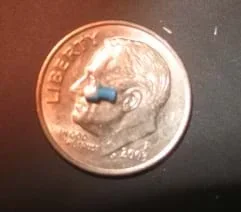 Biomedical engineers designed this small ear tube medical device.
Students are introduced to engineering, specifically to biomedical engineering and the engineering design process, through a short lecture and an associated hands-on activity in which they design their own medical devices for retrieving foreign bodies from the ear canal. Through the lesson, they learn the basics of ear anatomy and how ear infections occur and are treated. Besides antibiotic treatment, the most common treatment for chronic ear infections is the insertion of ear tubes to drain fluid from the middle ear space to relieve pressure on the ear drum. Medical devices for this procedure, a very common children's surgery, are limited, sometimes resulting in unnecessary complications from a simple procedure. Thus, biomedical engineers must think creatively to develop new solutions (that is, new and improved medical devices/instruments) for inserting ear tubes into the ear drum. The class learns the engineering design process from this ear tube example of a medical device design problem. In the associated activity, students explore biomedical engineering on their own by designing prototype medical devices to solve another ear problem commonly experienced by children: the lodging of a foreign body (such as a pebble, bead or popcorn kernel) in the ear canal. The activity concludes by teams sharing and verbally analyzing their devices.
Students learn what biomedical engineers do and how they typically design medical device solutions. Engineers follow the steps of the engineering design process when developing new products or creating new technologies. The class goes through this same process of identifying a problem, drawing on previous knowledge (in this case, the ear anatomy and hearing), brainstorming possible solutions, picking a solution, and evaluating the prototype device as they discover how ear infections occur and what surgical measures can be taken to alleviate pain. Biomedical engineers draw on knowledge of the body as they develop devices and surgical techniques and perform testing experiments to validate, troubleshoot and iteratively improve their designs—the class will do the same as they complete the lesson and activity.
After this lesson, students should be able to:
- Identify examples of products designed by biomedical engineers.
- Describe how engineers go about solving problems.
- List the steps of the engineering design process.
- Give examples of how material learned in science or math class can be applied to engineering.
- CCSS.Math.Content.7.EE.B Solve real-life and mathematical problems using numerical and algebraic expressions and equations.
Grade 7
Do you agree with this alignment?
- Advances and innovations in medical technologies are used to improve healthcare.
Grades 6-8
Do you agree with this alignment? - STEL-1J Develop innovative products and systems that solve problems and extend capabilities based on individual or collective needs and wants.
Grades 6-8
Do you agree with this alignment? - STEL-7P Illustrate the benefits and opportunities associated with different approaches to design.
Grades 6-8
Do you agree with this alignment?
- MS-ETS1-1 Define the criteria and constraints of a design problem with sufficient precision to ensure a successful solution, taking into account relevant scientific principles and potential impacts on people and the natural environment that may limit possible solutions.
Grades 6-8
This resource focuses on the following Three Dimensional Learning aspects of NGSS:
Science & Engineering Practices- Define a design problem that can be solved through the development of an object, tool, process or system and includes multiple criteria and constraints, including scientific knowledge that may limit possible solutions.Do you agree with this alignment?
Disciplinary Core Ideas- The more precisely a design task's criteria and constraints can be defined, the more likely it is that the designed solution will be successful. Specification of constraints includes consideration of scientific principles and other relevant knowledge that is likely to limit possible solutions.Do you agree with this alignment?
Crosscutting Concepts- The uses of technologies and any limitations on their use are driven by individual or societal needs, desires, and values; by the findings of scientific research; and by differences in such factors as climate, natural resources, and economic conditions.Do you agree with this alignment?
- All human activity draws on natural resources and has both short and long-term consequences, positive as well as negative, for the health of people and the natural environment.Do you agree with this alignment?
Do you agree with this alignment? - Define a design problem that can be solved through the development of an object, tool, process or system and includes multiple criteria and constraints, including scientific knowledge that may limit possible solutions.
- CCSS.Math.Content.7.EE.B Solve real-life and mathematical problems using numerical and algebraic expressions and equations.
Grade 7
Do you agree with this alignment?
- The student will investigate and understand relationships between cell structure and function. Key concepts include
Grades 9-12
Do you agree with this alignment? - The student will demonstrate an understanding of scientific reasoning, logic, and the nature of science by planning and conducting investigations in which
Grades 7-8
Do you agree with this alignment? - models and simulations are constructed and used to illustrate and explain phenomena;
Grades 7-8
Do you agree with this alignment?
Familiarity with ear anatomy and function. A good resource to learn this is at How Stuff Works's web page titled, "Why do loud noises cause your ears to Ring?".
Below is additional information on the major lesson topics.
Engineering
Engineering is pervasive, useful and fun. Evidence of engineering is everywhere and involves development of a large variety of tools, devices, structures, processes and products. The engineering type most familiar to children, civil engineers design and build buildings and bridges, while mechanical engineers create device mechanisms, such as the gears in a cordless drill. Other engineering specialty areas include industrial or manufacturing engineering that enable the large-scale production of products including students' clothing, school supplies and chairs. Environmental engineers analyze the impact of development, structures, and use of natural resources on the environment. For example, how would a cell phone tower in a certain location affect the wildlife in the area? Or how would the quality of water in a particular area be affected if a building was built in nearby? Aerospace engineers design aircraft carriers. The list continues, but the idea is the same: The work of engineers is everywhere. (optional: Show students the What Is Engineering? video)
The engineering design process is iterative. The steps of the engineering design process are followed in all engineering disciplines. Though it is presented as a straight-forward process, it rarely is. For example, after researching, one may have to change constraints, or after failing to design, a team may need to pick a different solution. In this way, the engineering design process is iterative. Sometimes the steps are listed in a different order than presented here, but they all attempt to describe the same cyclical approach that culminates in achieving the best design for a specific situation.
- Identify the problem
- Brainstorm
- Research prior art
- Brainstorm
- Select the best solution
- Design
- Iterate (do it again!)
The engineering design process is creative. Rarely do engineers have all the resources, time or equipment they desire. Also, the first, prototype, design of a device seldom works exactly as planned. These elements both require creativity. If an engineering team lacks a particular material that is vital to the design, it must be creative, working with what is available, to achieve the most optimal outcome. Similarly, when a design doesn't go exactly according to plan, engineers must be creative in, first, identifying all possible problems, and second, find ways to solve them!
Engineering design is all about working within constraints and weighing options (tradeoffs!). The concept of engineering design constraints is often difficult for students to understand. Constraints are simply characteristics or specifications that an engineer or team of engineers sets for the product. If, for example, you were designing a ladder, you might say it has the following constraints (sometimes also called requirements): it must be able to hold a 250-pound person; it must reach 12 feet; it must cost less that $60; it must stand alone. For the extraction device in the associated activity, students may say constraints are: it must be safe; it must be easy to use; it cannot scratch the inside of the ear canal or leave anything in the ear; it cannot be too expensive. Ideally, constraints are quantitative; meaning that they have hard and fast numbers incorporated into them, as in the ladder example. In engineering, customers often impose numerous constraints, but rarely can the design meet all of them. Choosing which constraints to meet and which to give up is at the heart of engineering. Engineering design is all about tradeoffs—you must prioritize the most important aspects of your solution.
Engineers work in teams. Engineers most often work in teams. With the wide range of impact and variety of users, a great need exists for an equally diverse set of expertise. For example, in the case of medical devices, an engineering team may include biomedical engineers who understand technology's interface with the body, mechanical engineers who understand the mechanisms of the device, software engineers who create user interfaces that make sense to people, doctors who understand how the device will be used with patients, manufacturing engineers who design the factory machines that produce the device, and others who have unique perspectives. Additionally, engineers work in teams to be most efficient and effective in their work. Within a single project, several smaller parts of the project must be completed concurrently so as to have the entire project completed on time. For example, if an engineering team were to build a building, one engineer may work with an architect on the structural details while another works to prepare the land for the foundation. If the building details were not started until the land were completely prepped, the whole process would take much longer and most likely not meet client demands. Finally, engineers work in teams to enhance brainstorming, problem solving and creativity. The old saying, "two heads are better than one" holds true. More input from multiple people gives the team the greatest chance at developing a solution that fits the constraints.
For more on engineering and the engineering design process refer to https://www.teachengineering.org/k12engineering/designprocess.
Biomedical Engineering
Biomedical engineering is one of many, many different types of engineering. While biomedical engineers design medical devices, such as MRI machines, prosthetic limbs, surgical instruments like catheters and ear tub insertion devices, and implantable devices like pacemakers, they also conduct research in labs in order to understand the effects of various molecules and proteins on systems of the body that may eventually lead to drug development or the fabrication of artificially engineered tissues, such as an engineered bladder.
Biomedical engineers work in industry, academia and government. Once devices are designed, they must be manufactured, sold and maintained. Biomedical engineers also work in large companies, like Medtronic (a major medical device company) doing just that—making devices and getting them to customers. In academia, biomedical engineers often run labs, similar to Tony Atala's lab discussed earlier.
The Human Ear
Ear Infections: Beyond what is presented in the lesson, great information on ear infections can be found at https://medlineplus.gov/earinfections.html.
Ear Anatomy: The article, "Why do loud noises cause your ears to ring?" on HowStuffWorks.com, includes a great drawing of the anatomy of the ear. https://health.howstuffworks.com/human-body/systems/ear/loud-noise-ear.htm#pt1
Medical Care: The following articles describe treatments use to deal with foreign objects in the ear. Q-tips should not be used to remove objects from inside the ear!
Hi everyone! I want to talk with you today about biomedical engineering! (Write on board.) There's a lot in those two words so let's start with engineering. Who are engineers and what they do? Can I hear some of your thoughts and ideas? (Write responses on board. Expected answers: Engineers build stuff, use math and science, rain drivers, fix things.) Great thoughts! One of you mentioned that engineers build and design stuff, and I want to point out that nearly everything you have used or touched today involved engineering SOMEWHERE in the process of getting it to you. Whether it's the pencil you're using, the clothes you're wearing, the toaster you used for breakfast—SOMEWHERE an engineer was involved. Nearly every occupation and everything you do in one way or another involves engineers.
Let's shift gears for a second. When you think of a hospital, what comes to mind? (Expected answers: Needles, medicine, sick people, doctors, nurses.) Well, engineers are ALSO involved in hospitals. What are some things you can think of in a hospital that engineers may have designed or created? (Possible answers: X-ray machines, MRI machines, CT scans, hospital beds, heart beat monitors, IV machines, artificial arms and legs.) The types of engineers who typically design these are called biomedical engineers. Remember that was our first word—"biomedical."
Is everyone still with me? Do you have any questions yet? We're talking about biomedical engineering. Engineers are involved in all kinds of stuff, including things at the hospital. One of you mentioned that engineers use math and science to solve problems, but to be in the hospital they have to know more than calculus and physics. While they DO have to know that stuff, they also have to know quite a bit about the human body, right? Let's look at a specific example. Who has heard of acute otitis media? (Expect no hands to raise.) Who has heard of an ear infection? (Expect lots of hands.) Great! In the fall (for NC schools in 7th grade) your class looked at the human body as a complex system. Can you share with me what you know about the parts of the ear and how we hear? (Expected answers: Three bones in the ear, fluid in the ear used for balance, the cochlea helps us hear and get feedback; use what they say to segue to a diagram or overhead projection of the ear.)
Right, so in the ear, you've got your ear canal and at the end you have an ear drum that vibrates to help you hear. But the drum isn't the end of it, right? Behind the drum, the eustachian tubes connect to the rest of your sinuses. Looking at the diagram, can you tell me what you think might happen in an ear infection? (Gather feedback, responses will vary.) In an ear infection, fluid can build up behind the ear drum because the eustachian tubes swell as they react to sickness. (Use ear diagram in HowStuffWorks.com article to show where fluid could be trapped between the ear drum and swollen tubes.) Why might this be bad? (Listen to student ideas.) Basically, pressure builds up in the ear drum—this makes hearing difficult because the ear drum wouldn't vibrate as well and the pressure on the ear drum can hurt! Have any of you ever had an ear infection? What did it feel like?
Let's take a minute and talk about pressure. Pressure is calculated by using the equation: pressure = force / area. In pairs, pick a few whole numbers to represent your force and area. Explain the relationship between F and A. (Take a minute to let students plug numbers into the equation; use the worksheet space for this.) So what effect does the area have on how much pressure is felt in the ear drum? If the area is really small, will this increase or decrease the amount of pressure felt on the ear drum? (Increase!) So it doesn't take much force to create a large amount of pressure, and that can be painful!
Okay—does everyone generally have an idea as to what happens with ear infections? We have a pressure build up of fluid behind the ear drum. What are some ways that we could relieve this pressure? (Possible student responses: Antibiotics, draw out the fluid, put in ear tubes.) When a person has ear infections over and over, doctors cut a small slit in the ear drum and put in ear tubes. The insertion of these tubes creates an open passage for the fluid to come out. (Could ask: Has anyone ever had ear tubes put in or know of anyone who has?) Has anyone ever SEEN an ear tube? (Show pictures of ear tube and emphasize very, very, very small size.) So how do you think a doctor can put this really, really small tube in a very small area?
Now—let's be engineers!! We have a problem: We have to put this ear tube into place in the ear drum. (Hand out the worksheet.) At the top of the worksheet, notice the steps of the engineering design process. Engineers have a standard approach to solving problems and biomedical engineers are no different.
We've already established the problem: How would a doctor insert this very small tube in the ear drum? Fluid build-up and pressure behind the ear. What's the next step? (Identify constraints) A constraint is a requirement for your device or something you need to consider when designing your device. For example, if you were to design a new band-aid, you would need to make sure that it sticks well to the skin, but didn't stick to cuts, and that it wasn't too expensive. If each band-aid cost $50, it is unlikely anyone would buy it. So constraints are requirements or characteristics your device must have. After we identify our constraints, then what? (Brainstorming for ideas!)
Great! Okay—tell me some possible ideas! (Gather ideas.)
Another great way to get ideas is to incorporate what other people have done. This is the next step—research prior art. Prior art refers by the patent office to describe all of the devices that have been invented and designed in the past. Looking at what has been done tells you what has already been successful or failed. And you can see if anyone has obtained patents on one of your ideas. If so, you cannot legally make and sell that device without the patent owner's permission. During this stage you also want to do lots of research. Just a few minutes ago we looked at the structure of the ear, how ear infections happen, what doctors do and why. We might also think about classes we've had or other things we've learned and take all of that into consideration.
At this point, we have a lot of information. We want to do one more brainstorming session and see if we can improve on any of our previous ideas, applying anything we've learned from our prior art review or studies. After this, we want to apply our constraints and select the best idea to move forward with. What happens after this? (Student response: Design!) Now we get to make whatever we selected as the best solution. In the case of the ear tubes, a team at the University of Virginia developed this device. (Show picture of first ear tube insertion device.) As you can see on your worksheet, design is not the last step of the process, is it? We now have to evaluate and iterate (do it again, making improvements). Looking at this device, what is good about it? (Expected answers: It is easy to use, it is curved, it has a collar to hold the tube, etc.) What is bad about this prototype device? (Expected answer: It may be too simple, no way to release the tube, it could hurt someone's ear canal.)The biggest problem with this device is that the plastic collar prevents doctors from seeing the ear tube! It blocks the line of sight. To fix this problem, the team made a second generation of the design without the big plastic collar (show second generation device picture). Any questions? Now it is your turn to be the bio-medical engineers to design a solution to remove a pebble from an ear in the associated activity, Designing Medical Devices to Extract Foreign Bodies from Ears.
(As a class, wrap up the topics covered.) Can someone remind me—what is the last step of the engineering design process? (Evaluate and iterate)
Great! Now we're now going to go around the room so each team can share what they developed and give us at least one problem they had or something that needs to be improved. (Each team presents.)
As a final wrap-up, can someone tell me what engineers do? (Possible answers: Solve problems, design and develop, engineers are everywhere, etc.)
And more specifically, can someone tell me what biomedical engineers do? (Possible answers: Develop and design instruments for the human body, make tools that are used in hospitals, etc.)
- prior art
- Previous inventions designed to achieve a common result. Generally used in patent law. For example, prior art in the area of ear wax removal includes current devices used to irrigate the ear canal with water.
- biomedical engineering
- The application of engineering principles and techniques to the medical field
- constraint
- A requirement or something to consider when designing.
Pre-Activity Writing: As homework the night before starting this lesson, assign students to write short paragraphs about what engineers are and what they do, which they may be asked to share with the class at the start of the lesson the next day.
Pre/Post-Activity Quizzes: Before starting the activity, administer the short middle school Pre-Activity Quiz (PDF). At lesson (or activity) end, administer the short (and similar) middle school Post-Activity Quiz (located in the same attached file) to compare students' change in understanding and attitudes about engineering.
Post-Assessment Reflection: At lesson end, ask students to write responses to the following questions. Review their answers to gauge their comprehension of the subject matter.
- What are two examples of products designed by engineering teams that likely included biomedical engineers? (two short paragraphs)
- How do engineers go about problem solving? (Alternative question: What are the steps of the engineering design process?)
- What are two examples of how material learned in science or math classes can be applied to engineering problem solving?
Consider conducting the following related Teach Engineering lessons and activities:
- Sound for Sight lesson
- Medical Instrumentation lesson
- Surgical Resident for a Day activity
- Biomedical Engineering and the Human Body unit
Ear Infections. Last Updated: March 16, 2010. MedlinePlus. Accessed March 28, 2010. http://www.nlm.nih.gov/medlineplus/earinfections.html
Conger, Cristen. "Why do loud noises cause your ears to ring?" HowStuffWorks, Discovery Co. Accessed March 28, 2010. http://health.howstuffworks.com/human-body/systems/ear/loud-noise-ear1.htm
Engineering design process. Last Modified: March 26, 2010. Wikipedia. Accessed March 28, 2010. http://en.wikipedia.org/wiki/Engineering_design_process
Richardson, Karen. Miracles in the Making. Created Fall 2005. Wake Forest University Baptist Medical Center. Accessed March 28, 2010. http://www1.wfubmc.edu/articles/Miracles+in+the+Making
- Designing Medical Devices for the Ear
Contributors
Shayn Peirce-Cottler; Leyf Starling; Derek Harbin; Krista Warner
Supporting Program
Biomedical Engineering, University of Virginia
Acknowledgements
Created by students in Dr. Shayn Peirce-Cottler's biomedical engineering senior design course.
Copyright
2013 by Regents of the University of Colorado; original © 2007 University of Virginia