
Common and Natural Logarithms and Solving Equations
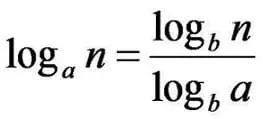 Change of base formula.
Students continue an examination of logarithms in the Research and Revise stage by studying two types of logarithms—common logarithms and natural logarithm. In this study, they take notes about the two special types of logarithms, why they are useful, and how to convert to these forms by using the change of base formula. Then students can solidify their understanding with the associated activity to see how these types of logarithms can be applied to solve exponential equations. They compute a set of practice problems and apply the skills learned in class.
All types of engineers use natural and common logarithms.Chemical engineers use them to measure radioactive decay, and pH solutions, which are measured on a logarithmic scale. Exponential equations and logarithms are used to measure earthquakes and to predict how fast your bank account might grow. Biomedical engineers use them to measure cell decay and growth, and also to measure light intensity for bone mineral density measurements, the focus of this unit.
After this lesson, students should be able to:
- Define the number e.
- Define the common and natural logarithms.
- Use common and natural logarithms to evaluate expressions.
- Use the change of base formula to convert to a common or natural logarithm in order to evaluate expressions and solve equations.
- CCSS.Math.Content.HSA-SSE.B.3 Choose and produce an equivalent form of an expression to reveal and explain properties of the quantity represented by the expression.
Grades 9-12
Do you agree with this alignment? - CCSS.Math.Content.HSF-BF.B.5 (+) Understand the inverse relationship between exponents and logarithms and use this relationship to solve problems involving logarithms and exponents.
Grades 9-12
Do you agree with this alignment? - CCSS.Math.Content.HSF-LE.A.4 For exponential models, express as a logarithm the solution to abct = d where a, c, and d are numbers and the base b is 2, 10, or e; evaluate the logarithm using technology.
Grades 9-12
Do you agree with this alignment?
- STEL-3H Analyze how technology transfer occurs when a user applies an existing innovation developed for one function to a different purpose.
Grades 9-12
Do you agree with this alignment?
- Common and Natural Logarithms (ppt)
- Common and Natural Logarithms (pdf)
- Common and Natural Logarithms with Examples (ppt)
- Common and Natural Logarithms with Examples (pdf)
- Common and Natural Logs: Student Notes (doc)
- Common and Natural Logs: Student Notes (pdf)
- Student Notes Answers (doc)
- Student Notes Answers (pdf)
- Common and Natural Logs: Practice Problems (doc)
- Common and Natural Logs: Practice Problems (pdf)
- Practice Problem Answers (doc)
- Practice Problem Answers (pdf)
- Solving Exponential Equations (pptx)
- Solving Exponential Equations (pdf)
- Solving Exponential Equations with Solutions (pptx)
- Solving Exponential Functions with Solutions (pdf)
- Solving Equations Using Logs: Practice (docx)
- Solving Equations Using Logs: Practice (pdf)
- Solving Equations Using Logs: Practice Solutions (docx)
- Solving Equations Using Logs: Practice Solutions (pdf)
Common Logarithms
- A common logarithm has a base of 10.
- If no base is given explicitly, it is common.
- You can easily find common logs of powers of 10.
- You can use your calculator to evaluate common logs.
Natural Logarithms
- Natural logarithms have a base of e.
- We write natural logarithms as ln.
- In other words, loge x = ln x.
- The mathematical constant e is the unique real number such that the derivative (the slope of the tangent line) of the function f(x) = ex is f '(x) = ex, and its value at the point x = 0, is exactly 1.
- The function ex so defined is called the exponential function.
- The inverse of the exponential function is the natural logarithm, or logarithm with base e.
- The number e is also commonly defined as the base of the natural logarithm (using an integral to define the latter), as the limit of a certain sequence, or as the sum of a certain series.
- The number e is one of the most important numbers in mathematics, alongside the additive and multiplicative identities 0 and 1, the constant π , and the imaginary number i.
- e is irrational, and as such its value cannot be given exactly as a finite or eventually repeating decimal. The numerical value of e truncated to 20 decimal places is: 2.71828 18284 59045 23536.
We are going to continue our study of logarithms today. Do you remember what we read a few days ago about the bone mineral density test and how we found out that we needed to know about logarithms in order to be able to read the bone mineral density image? Now that we have learned about the basics of logarithms—that they are the inverse of exponents, and some of their algebraic properties—let's move on to learn about the different types of logarithms.
You may have noticed that all the logarithms we have seen so far have a subscript number next to them. This is called the base. We have been working with other bases, usually small whole number, such as 2, 3 and 5. When no base is given, it is implied that the base is 10. These types of logarithms are called common logarithms. Today, we will compare the common logarithm to the natural logarithm, which instead of having a base of 10, has a base of e. Following this activity have students complete the Linear Regression of Bone Mineral Density Scanners activity to practice their gained knowledge by completing an exercise that shows logarithmic relationships byrelating the number of BMD scanners to time.
Practice Problems: Assign students the practice problems. Grade their answers to assess the learning objectives.
- Bone Mineral Density and Logarithms
- Bone Density Challenge Introduction
- Bone Density Math and Logarithm Introduction
- Common and Natural Logarithms and Solving Equations
- Bone Mineral Density Math and Beer's Law
Contributors
Kristyn Shaffer; Megan Johnston
Supporting Program
VU Bioengineering RET Program, School of Engineering, Vanderbilt University
Acknowledgements
The contents of this digital library curriculum were developed under National Science Foundation RET grant nos. 0338092 and 0742871. However, these contents do not necessarily represent the policies of the NSF, and you should not assume endorsement by the federal government..
Copyright
2013 by Regents of the University of Colorado; original © 2006 Vanderbilt University