
See the Genes: Communicating Your Work, Findings and Ideas
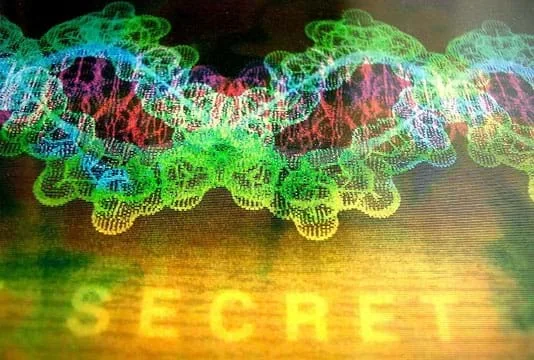 Nanotechnology has enabled us to do and see things that were previously impossible.Copyright 2005 jurvetson, Wikimedia Commons http://commons.wikimedia.org/wiki/File:Nanotechnology_book_cover.jpg
Through this concluding lesson and its associated activity, students experience one valuable and often overlooked skill of successful scientists and engineers—communicating your work and ideas. They explore the importance of scientific communication, including the basic, essential elements of communicating new information to the public and pitfalls to avoid. In the associated activity, student groups create posters depicting their solutions to the unit's challenge question—accurate, efficient methods for detecting cancer-causing genes using optical biosensors—which includes providing a specific example with relevant equations. Students are also individually assessed on their understanding of refraction via a short quiz. This lesson and its associated activity conclude the unit and serve as the culminating Go Public phase of the Legacy Cycle, providing unit review and summative assessment.
Many good, or even great, scientific discoveries and engineering inventions never became a part of everyday life because of a failure in presenting and disseminating their concepts. Hence, for any new product that solves a problem or need that exists in society, part of a successful engineering design process is the ability to effectively present tested solutions to others. For example, if an engineering team develops a device that reduces automobile emissions, the engineers must present that device concept to automobile companies in such a way that convinces them that the product is workable, reliable and cost-effective. In this lesson, students act as engineers in that they practice communicating ideas effectively, and in the associated activity, use a poster format to logically and cohesively present their solutions for gene detection in a way that people unfamiliar with the topic can be convinced of their value.
After this lesson, students should be able to:
- Explain at least three key components of presenting scientific information.
- Present a reliable, efficient method for detecting the presence of specific genes.
- Solve a real-world problem using the refraction concepts and equations.
- STEL-7DD Apply a broad range of making skills to their design process.
Grades 9-12
Do you agree with this alignment?
- HS-ETS1-1 Analyze a major global challenge to specify qualitative and quantitative criteria and constraints for solutions that account for societal needs and wants.
Grades 9-12
This resource focuses on the following Three Dimensional Learning aspects of NGSS:
Science & Engineering Practices- Analyze complex real-world problems by specifying criteria and constraints for successful solutions.Do you agree with this alignment?
Disciplinary Core Ideas- Criteria and constraints also include satisfying any requirements set by society, such as taking issues of risk mitigation into account, and they should be quantified to the extent possible and stated in such a way that one can tell if a given design meets them.Do you agree with this alignment?
- Humanity faces major global challenges today, such as the need for supplies of clean water and food or for energy sources that minimize pollution, which can be addressed through engineering. These global challenges also may have manifestations in local communities.Do you agree with this alignment?
Crosscutting Concepts- New technologies can have deep impacts on society and the environment, including some that were not anticipated. Analysis of costs and benefits is a critical aspect of decisions about technology.Do you agree with this alignment?
Do you agree with this alignment? - Analyze complex real-world problems by specifying criteria and constraints for successful solutions.
- 3231.4.8 Solve problems related to Snell's law [Index of refraction: n = (sin θr / sin θi); Snell's law: ni sin θi = nr sin θr].
Grades 9-12
Do you agree with this alignment?
- How Typefaces Influence the Way We Think Article (docx)
- How Typefaces Influence the Way We Think Article (pdf)
- Example Scientific Rubric (docx)
- Example Scientific Rubric (pdf)
- Basics of Communication Worksheet (docx)
- Basics of Communication Worksheet (pdf)
- Basics of Communication Worksheet Example Answers (docx)
- Basics of Communication Worksheet Example Answers (pdf)
- Presenting the Optical Biosensor Poster Requirements & Rubric (docx)
- Presenting the Optical Biosensor Poster Requirements & Rubric (pdf)
- Refraction and Biosensors Quiz (docx)
- Refraction and Biosensors Quiz (pdf)
- Refraction and Biosensors Quiz Answer Key (docx)
- Refraction and Biosensors Quiz Answer Key (pdf)
Students need:
- A basic knowledge of algebra and trigonometry.
- An understanding of the concept of refraction.
- The ability to solve problems using equations related to refraction.
- An understanding of the challenge problem presented in the first lesson, Tell Me Doc—Will I Get Cancer?
Legacy Cycle Information
This fourth lesson of the unit constitutes the last phase of the Legacy Cycle, Go Public, in which students present the results of their work. After learning about the best practices of scientific communication in this lesson, student groups create posters in the associated activity that depict their solutions to the unit's challenge question— how optical biosensors might work to detect specific genes. This poster, along with a short quiz (at lesson end), serves as a summative assessment of the unit.
Lecture Information
This lesson is the culmination of the entire unit, so it serves as review and assessment of the unit, which is an integral part of the learning process because it gives students feedback and clears up any points of confusion before moving on to a new unit. The lesson also teaches students the basics of presenting research findings.
In advance of the lesson, make copies of the How Typefaces Influence the Way We Think Article (PDF), Example Scientific Rubric (PDF), Basics of Communication Worksheet (PDF), and Refraction and Biosensors Quiz (PDF), one each per student, and the Presenting the Optical Biosensor Poster Requirements & Rubric (PDF), one per group. Alternatively, if students have Internet access, have them read the article online at http://theweek.com/article/index/245632/how-typeface-influences-the-way-we-read-and-think.
Follow this sequence of steps to present the lesson and associated activity:
- After presenting the Introduction/Motivation content, review with students the major concepts and definitions presented in the first lesson of this unit, as described in the Assessment section. This pre-assessment indicates whether or not students are ready to move on.
- Hand out the article and example rubric and have students read them, either as a class, in groups or individually.
- Divide the class into groups of three students each. Hand out the worksheets for students to complete in their teams. Make sure each group member is assigned one of the following team roles: chair (to guide the discussion and clear up points of confusion), time keeper (to keep track of time to make sure the task is completed in the allotted time), and secretary (to make sure all members of the group have the same answers written down and that answers are grammatically correct). Circulate the classroom to monitor progress and offer feedback.
- Call the class to attention and ask groups to share their answers to each question. For question #2, compile on the classroom board a list of the top five or six student responses of factors affecting the acceptance of scientific work. Have students add to their worksheets any of these that they did not already have listed. For question #4, list on the board the overall top three factors from student responses and have students add to their worksheets any that they did not already list.
- Discuss with students the importance of presenting scientific work, and how one can go about ensuring a quality presentation. Use this as a springboard to review the requirements & rubric document with them, and how they can include what they just learned about presenting information to the creation of their own posters. It may be helpful to list on the board student responses on how to effectively organize a poster. Also, note that the associated activity, Show Me the Genes, includes an opportunity to discuss the poster rubric, so you may want to save this portion of the discussion for the activity. Next, proceed to conduct the associated activity, during which students create their posters.
- Then, conclude the lesson/activity by having students individually complete the quiz.
So, we have finally arrived! We began with a challenge problem that you knew nothing about, learned about refraction, the equations for refraction, and how we can combine what we learned with the properties of a very interesting material, porous silicon, to theoretically create a device that can detect the presence of cancer-indicator genes! Next, we need to share what we know with the rest of the world! Today we're going to learn how to do just that!
Momentarily, we will read and respond to an article about publishing scientific research and discoveries, then begin creating a poster presenting our work over this entire unit! We will review the grading rubric for this poster so you have a clear idea of the expectations. This is also the final phase of the Legacy Cycle, Go Public, in which we communicate and publish what we have discovered. After this is done, you can go home and tell your family that your work helped move the world one step closer to a cure for cancer! Let's get started!
- antigen
- An organism or biological molecule that inhibits the normal functioning of an organism.
- biosensor
- A non-organic (human-made) device capable of detecting biological molecules.
- cancer
- A disease in which abnormal cells divide uncontrollably.
- microchip
- A slice of semiconducting material used in integrated circuits (small electronics).
- mutation
- A change in the structure of a gene causing a variant form that can be passed to subsequent generations.
- optical
- Of or relating to the eye or light.
- risk analysis
- A method of combining potential factors into a percent probability of an event occurring. Example: "Based on your family history, you have a 55% chance of getting cancer."
- wavelength
- The straight-line distance between equal points on a wave. Light waves exhibit different properties based on their wavelengths.
Pre-Lesson Assessment
Review: Find out whether or not students are ready for this lesson/activity (the unit's summative assessment) by reviewing with them the major concepts and definitions presented in the first lesson of the unit. With the class, revisit the unit challenge question and ask students how they could apply the knowledge they gained from what they have learned in this unit to solving the challenge question:
"In 2013, actress Angelina Jolie underwent a double mastectomy, not because she had been diagnosed with breast cancer, but merely to lower her cancer risk. But what if she never inherited the gene(s) that are linked to breast cancer and endured surgery unnecessarily? Can we create a new method of assessing people's genetic risks of breast cancer that is both efficient and cost-effective?"
Also review the vocabulary first presented in the first lesson of this unit (see the Vocabulary section of this activity) to ensure that students now understand these terms and how they relate to solving the challenge question.
Post-Introduction Assessment
Worksheet & Discussion: After students have examined the How Typefaces Influence the Way We Think Article (PDF) and Example Scientific Rubric (PDF), have them complete the four-question Basics of Communication Worksheet (PDF) in their groups. Then, as a class, have students share and discuss their answers, enabling you to assess their comprehension of the article and rubric content. Compile on the classroom board their top responses to questions #2 and 4, especially useful information for preparing posters (as they will do in the associated activity). Refer to the Basics of Communication Worksheet Example Answers (PDF).
Lesson Summary Assessment
Concluding Quiz: Have students individually complete the two-question Refraction and Biosensors Quiz (PDF), and grade it as an assessment of the learning objectives. Assign a percentage score to measure each student's mastery of the lesson content, with 80% or above indicating individual mastery. Together, the poster (completed and assessed in the associated activity) and quiz comprise the unit assessment. The poster assesses the group collectively while the quiz provides individual assessment.
Guyomali, Chris. "How Typeface Influences the Way We Read and Think." Published June 14, 2013. The Week. Accessed December 10, 2013. (an article students read as part of the lesson) http://theweek.com/article/index/245632/how-typeface-influences-the-way-we-read-and-think
Klein, Stacy S., Harris, Alene H. "A User's Guide to the Legacy Cycle." Journal of Education and Human Development. Vol. 1, No. 1, 2007. http://www.scientificjournals.org/journals2007/articles/1088.pdf
- Tell Me the Odds (of Cancer)
- Tell Me Doc—Will I Get Cancer?
- What Does Light See?
- Quantifying Refraction
- See the Genes: Communicating Your Work, Findings and Ideas
Contributors
Caleb Swartz
Supporting Program
VU Bioengineering RET Program, School of Engineering, Vanderbilt University
Acknowledgements
The contents of this digital library curriculum were developed under National Science Foundation RET grant nos. 0338092 and 0742871. However, these contents do not necessarily represent the policies of the National Science Foundation, and you should not assume endorsement by the federal government.
Copyright
2014 by Regents of the University of Colorado; original © 2012 Vanderbilt University