
Engineering: Simple Machines
Simple machines are devices with few or no moving parts that make work easier. Students are introduced to the six types of simple machines — the wedge, wheel and axle, lever, inclined plane, screw, and pulley — in the context of the construction of a pyramid, gaining high-level insights into tools that have been used since ancient times and are still in use today. In two hands-on activities, students begin their own pyramid design by performing materials calculations, and evaluating and selecting a construction site. The six simple machines are examined in more depth in subsequent lessons in this unit.
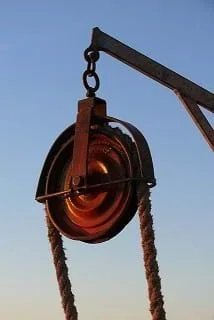 A pulley is an example of a simple machineCopyright Flickr https://www.flickr.com/photos/56380734@N05/5401212929
Why do engineers care about simple machines? How do such devices help engineers improve society? Simple machines are important and common in our world today in the form of everyday devices (crowbars, wheelbarrows, highway ramps, etc.) that individuals, and especially engineers, use on a daily basis. The same physical principles and mechanical advantages of simple machines used by ancient engineers to build pyramids are employed by today's engineers to construct modern structures such as houses, bridges and skyscrapers. Simple machines give engineers added tools for solving everyday challenges.
After this lesson, students should be able to:
- Understand what a simple machine is and how it would help an engineer to build something.
- Identify six types of simple machines.
- Understand how the same physical principles used by engineers today to build skyscrapers were employed in ancient times by engineers to build pyramids.
- Generate and compare multiple possible solutions to creating a simple lever machine based on how well each met the constraints of the challenge.
- STEL-1H Design solutions by safely using tools, materials, and skills.
Grades 3-5
Do you agree with this alignment?
- DCI.PS2.A.3-5.1 Each force acts on one particular object and has both strength and a direction. An object at rest typically has multiple forces acting on it, but they add to give zero net force on the object. Forces that do not sum to zero can cause changes in the object's speed or direction of motion. (Boundary: Qualitative and conceptual, but not quantitative addition of forces are used at this level.)
Grade 3
Do you agree with this alignment? - DCI.PS2.B.3-5.1 Objects in contact exert forces on each other.
Grade 3
Do you agree with this alignment?
- Introduction to Simple Machines Presentation (pptx)
- Simple Machines Reference Sheet (docx)
- Simple Machines Reference Sheet (pdf)
- Simple Machines Worksheet (docx)
- Simple Machines Worksheet (pdf)
- Simple Machines Worksheet Answers (docx)
- Simple Machines Worksheet Answers (pdf)
- Extension Activity: Simple Machines Scavenger Hunt! Worksheet (docx)
- Extension Activity: Simple Machines Scavenger Hunt! Worksheet (pdf)
- Extension Activity: Simple Machines Scavenger Hunt! Worksheet Answers (docx)
- Extension Activity: Simple Machines Scavenger Hunt! Worksheet Answers (pdf)
Use the attached Introduction to Simple Machines PowerPoint presentation (PPTX) and Simple Machines Reference Sheet (PDF) as helpful classroom tools. (Show the PowerPoint presentation, or print out the slides to use with an overhead projector. The presentation is animated to promote an inquiry-based style; each click reveals a new point about each machine; have students suggest characteristics and examples before you reveal them.)
Simple machines are everywhere; we use them everyday to perform simple tasks. Simple machines have also been in use since the early days of human existence. While simple machines take many shapes, they come in six basic types:
- Wedge: A device that forces things apart.
- Wheel and axle: Used to reduce friction.
- Lever: Moves around a pivot point to increase or decrease mechanical advantage.
- Inclined plane: Raises objects by moving up a slope.
- Screw: A device that can lift or hold things together.
- Pulley: Changes the direction of a force.
Simple Machines
We use simple machines because they make work easier. The scientific definition of work is the amount of force that is applied to an object multiplied by the distance the object is moved. Thus, work consists of force and distance. Each job takes a specific amount of work to finish it, and this number does not change. Thus, the force times the distance always equals the same amount of work. This means that if you move something a smaller distance you need to exert a greater force. On the other hand, if you want to exert less force, you need to move it over a greater distance. This is the force and distance trade off, or mechanical advantage, which is common to all simple machines. With mechanical advantage, the longer a job takes, the less force you need to use throughout the job. Most of the time, we feel that a task is hard because it requires us to use a lot of force. Therefore, using the trade off between distance and force can make our task much easier to complete.
Wedge
The wedge is a simple machine that forces objects or substances apart by applying force to a large surface area on the wedge, with that force magnified to a smaller area on the wedge to do the actual work. A nail is a common wedge with a wide nail head area where the force is applied, and a small point area where the concentrated force is exerted. The force is magnified at the point, enabling the nail to pierce wood. As the nail sinks into the wood, the wedge shape at the point of the nail moves forward, and forces the wood apart.
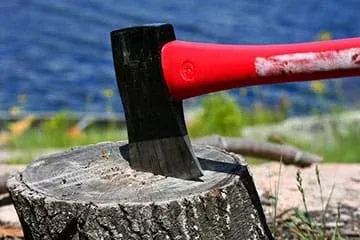 Figure 1: An axe is an example of a wedge.Copyright Martin Cathrae, Flickr https://www.flickr.com/photos/suckamc/3743184350
Everyday examples of wedges include an axe (see Figure 1), nail, doorstop, chisel, saw, jackhammer, zipper, bulldozer, snow plow, horse plow, zipper, airplane wing, knife, fork and bow of a boat or ship.
Wheel and Axle
The wheel and axle is a simple machine that reduces the friction involved in moving an object, making the object easier to transport. When an object is pushed, the force of friction must be overcome to start it moving. Once the object is moving, the force of friction opposes the force exerted on the object. The wheel and axle makes this easier by reducing the friction involved in moving an object. The wheel rotates around an axle (essentially a rod that goes through the wheel, letting the wheel turn), rolling over the surface and minimizing friction. Imagine trying to push a 9,000-kilogram (~10-ton) block of stone. Wouldn't it be easier to roll it along using logs placed underneath the stone?
Everyday examples of the wheel and axle include a car, bicycle, office chair, wheel barrow, shopping cart, hand truck and roller skates.
Lever
A lever simple machine consists of a load, a fulcrum and effort (or force). The load is the object that is moved or lifted. The fulcrum is the pivot point, and the effort is the force required to lift or move the load. By exerting a force on one end of the lever (the applied force), a force at the other end of the lever is created. The applied force is either increased or decreased, depending on the distance from the fulcrum (the point or support on which a lever pivots) to the load, and from the fulcrum to the effort.
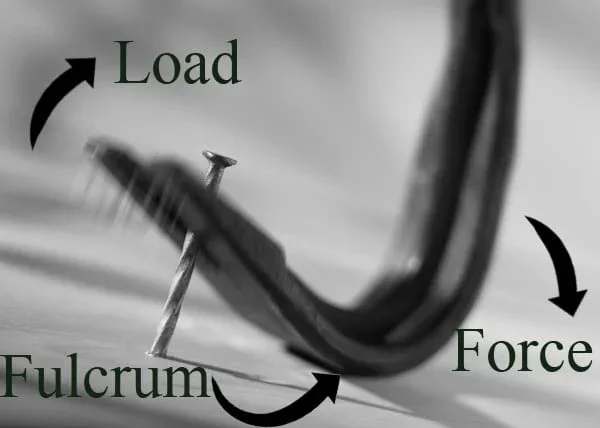 Figure 2: A crowbar is an example of a lever.Copyright 2004 Microsoft Corporation, One Microsoft Way, Redmond, WA 98052-6399 USA. All rights reserved. With notations by the ITL Program, University of Colorado at Boulder, 2005.
Everyday examples of levers include a teeter-totter or see-saw, crane arm, crow bar, hammer (using the claw end), fishing pole and bottle opener. Think of a how you use a crowbar (see Figure 2). By pushing down on the long end of the crowbar, a force is created at the load end over a smaller distance, once again, demonstrating the tradeoff between force and distance.
Inclined Plane
Inclined planes make it easier to lift something. Think of a ramp. Engineers use ramps to easily move objects to a greater height. There are two ways to raise an object: by lifting it straight up, or by pushing it diagonally up. Lifting an object straight up moves it over the shortest distance, but you must exert a greater force. On the other hand, using an inclined plane requires a smaller force, but you must exert it over a longer distance.
Everyday examples of inclined planes include highway access ramps, sidewalk ramps, stairs, inclined conveyor belts, and switchback roads or trails.
Screw
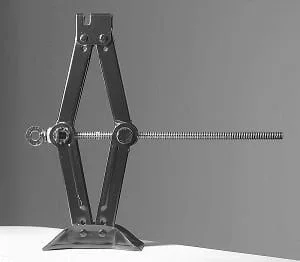 Figure 3: A car jack is an example of a screw-type simple machine that enables one person to lift up the side of a car.Copyright https://en.wikipedia.org/wiki/Jack_(device)#/media/File:Jackscrew.jpg
A screw is essentially an inclined plane wrapped around a shaft. Screws have two primary functions: they hold things together, or they lift objects. A screw is good for holding things together because of the threading around the shaft. The threads grip the surrounding material like teeth, resulting in a secure hold; the only way to remove a screw is to unwind it. A car jack is an example of a screw being used to lift something (see Figure 3).
Everyday examples of screws include a screw, bolt, clamp, jar lid, car jack, spinning stool and spiral staircase.
Pulley
 Figure 4: A pulley on a ship helps people pull in a heavy fishing net.Copyright 2004 Microsoft Corporation, One Microsoft Way, Redmond, WA 98052-6399 USA. All rights reserved.
A pulley is a simple machine used to change the direction of a force. Think of raising a flag or lifting a heavy stone. To lift a stone up into its place on a pyramid, one would have to exert a force that pulls it up. By using a pulley made from a grooved wheel and rope, one can pull down on the rope, capitalizing on the force of gravity, to lift the stone up. Even more valuable, a system of several pulleys can be used together to reduce the force needed to lift an object.
Everyday examples of pulleys in use include flag poles, elevators, sails, fishing nets (see Figure 4), clothes lines, cranes, window shades and blinds, and rock climbing gear.
Compound Machines
A compound machine is a device that combines two or more simple machines. For example, a wheelbarrow combines the use of a wheel and axle with a lever. Using the six basic simple machines, all sorts of compound machines can be made. There are many simple and compound machines in your home and classroom. Some examples of the compound machines you may find are a can opener (wedge and lever), exercise machines/cranes/tow trucks (levers and pulleys), shovel (lever and wedge), car jack (lever and screw), wheel barrow (wheel and axle and lever) and bicycle (wheel and axle and pulley).
How did the Egyptians build the Great Pyramids thousands of years ago (~2,500 BCE)? Could you build a pyramid using 9,000-kilogram (~10-ton or 20,000-lb) blocks of stone with your bare hands? That's like trying to move a large elephant with your bare hands! How many people might it take to move a block that big? It would still be a challenge to build a pyramid today even with modern tools, such as jackhammers, cranes, trucks and bulldozers. But without these modern tools, how did Egyptian workers cut, shape, transport and place enormous stones? Well, one key to accomplishing this amazing and difficult task was the use of simple machines.
Simple machines are devices with no, or very few, moving parts that make work easier. Many of today's complex tools are really just more complicated forms of the six simple machines. By using simple machines, ordinary people can split huge rocks, hoist large stones, and move blocks over great distances.
However, it took more than just simple machines to build the pyramids. It also took tremendous planning and a great design. Planning, designing, working as a team and using tools to create something, or to get a job done, is what engineering is all about. Engineers use their knowledge, creativity and problem-solving skills to accomplish some amazing feats to solve real-world challenges. People call on engineers to use their understanding of how things work to do seemingly impossible jobs and make everyday activities easier. It is surprising how many times engineers turn to simple machines to solve these problems.
Once we understand simple machines, you will recognize them in many common activities and everyday items. (Hand out Simple Machines Reference Sheet (PDF).) These are the six simple machines: wedge, wheel and axle, lever, inclined plane, screw, and pulley. Now that you see the pictures, do you recognize some of these simple machines? Can you see any of these simple machines around the classroom? How do they work? Well, an important vocabulary term when learning about simple machines is the phenomenon of mechanical advantage. Mechanical advantage of simple machines means we can use less force to move an object, but we have to move it a longer distance. A good example is pushing a heavy object up a ramp. It may be easier to push the object up a ramp instead of just lifting it up to the right height, but it takes a longer distance. A ramp is an example of the simple machine called an inclined plane. We are going to learn a lot more about each of these six simple machines that are a simple solution to helping engineers, and all humans, do hard work.
Sometimes it is difficult to recognize simple machines in our lives because they look different than the examples we see at school. To make our study of simple machines easier, let's imagine that we are living in ancient Egypt and that the leader of the country has hired us as engineers to build a pyramid. Students can act as engineers with the fun and hands-on activities: Stack It Up! and Choosing a Pyramid Site to design and plan the construction of a new pyramid. Today's availability of electricity and technologically-advanced machines make it difficult for us to see what the simple machine is accomplishing. But in the context of ancient Egypt, the simple machines that we will study are the much more basic tools of the time. After we develop an understanding of simple machines, we will shift our context to building a skyscraper in the present day, so we can compare and contrast how simple machines were used across the centuries and are still used today.
Today, we have discussed six simple machines. Who can name them for me? (Answer: Wedge, wheel and axle, lever, inclined plane, screw, and pulley.) How do simple machines make work easier? (Answer: Mechanical advantage enables us to use less force to move an object, but we have to move it a longer distance.) Why do engineers use simple machines? (Possible answers: Engineers creatively use their knowledge of science and math to make our lives better, often using simple machines. They invent tools that make work easier. They accomplish huge tasks that could not be done without the mechanical advantage of simple machines. They design structures and tools to use our environmental resources better and more efficiently.) Tonight, at home, think about everyday examples of the six simple machines. See how many you can find around your house!
Complete the KWL Assessment Chart (see the Assessment section). Gauge students' understanding of the lesson by assigning the Simple Machines Worksheet (PDF) as a take-home quiz. As an extension, use the attached Simple Machines Scavenger Hunt! Worksheet (PDF) to conduct a simple machines scavenger hunt in which students find examples of simple machines used in the classroom and at home.
In other lessons of this unit, students study each simple machine in more detail and see how each could be used as a tool to build a pyramid or a modern building.
- design
- (verb) To plan out in systematic, often graphic form. To create for a particular purpose or effect. Design a building. (noun) A well thought-out plan.
- engineering
- Applying scientific and mathematical principles to practical ends such as the design, manufacture and operation of efficient and economical structures, machines, processes and systems.
- force
- A push or pull on an object.
- inclined plane
- A simple machine that raises an object to greater height. Usually a straight slanted surface and no moving parts, such as a ramp, sloping road or stairs.
- lever
- A simple machine that increases or decreases the force to lift something. Usually a bar pivoted on a fixed point (fulcrum) to which force is applied to do work.
- mechanical advantage
- An advantage gained by using simple machines to accomplish work with less effort. Making the task easier (which means it requires less force), but may require more time or room to work (more distance, rope, etc.). For example, applying a smaller force over a longer distance to achieve the same effect as applying a large force over a small distance. The ratio of the output force exerted by a machine to the input force applied to it.
- pyramid
- A massive structure of ancient Egypt and Mesoamerica used for a crypt or tomb. The typical shape is a square or rectangular base at the ground with sides (faces) in the form of four triangles that meet in a point at the top. Mesoamerican temples have stepped sides and a flat top surmounted by chambers.
- pulley
- A simple machine that changes the direction of a force, often to lift a load. Usually consists of a grooved wheel in which a pulled rope or chain runs.
- screw
- A simple machine that lifts or holds materials together. Often a cylindrical rod incised with a spiral thread.
- simple machine
- A machine with few or no moving parts that is used to make work easier (provides a mechanical advantage). For example, a wedge, wheel and axle, lever, inclined plane, screw, or pulley.
- spiral
- A curve that winds around a fixed center point (or axis) at a continuously increasing or decreasing distance from that point.
- tool
- A device used to do work.
- wedge
- A simple machine that forces materials apart. Used for splitting, tightening, securing or levering. It is thick at one end and tapered to a thin edge at the other.
- wheel and axle
- A simple machine that reduces the friction of moving by rolling. A wheel is a disk designed to turn around an axle passed through the center of the wheel. An axle is a supporting cylinder on which a wheel or a set of wheels revolves.
- work
- Force on an object multiplied by the distance it moves. W = F x d (force multiplied by distance).
Pre-Lesson Assessment
Know / Want to Know / Learn (KWL) Chart: Create a classroom KWL chart to help organize learning about a new topic. On a large sheet of paper or on the classroom board, draw a chart with the title "Building with Simple Machines." Draw three columns titled, K, W and L, representing what students know about simple machines, what they want to know about simple machines and what they learned about simple machines. Fill out the K and W sections during the lesson introduction as facts and questions emerge. Fill out the L section at the end of the lesson.
Post-Introduction Assessment
Reference Sheet: Hand out the attached Simple Machines Reference Sheet (PDF). Review the information and answer any questions. Suggest the students keep the sheet handy in their desks, folders or journals.
Observations: Show students an example of each simple machine and have them make observations and discuss any patterns that can be used to predict future motion.
Lesson Summary Assessment
Closing Discussion: Conduct an informal class discussion, asking the students what they learned from the activities. Ask the students:
- Who can name the different types of simple machines? (Answer: Wedge, wheel and axle, lever, inclined plane, screw, and pulley.)
- How do simple machines make work easier? (Answer: Mechanical advantage enables us to use less force to move an object, but we have to move it a longer distance.)
- Why do engineers use simple machines? (Possible answers: Engineers creatively use their knowledge of science and math to make our lives better, often using simple machines. They invent tools that make work easier. They accomplish huge tasks that could not be done without the mechanical advantage of simple machines. They design structures and tools to use our environmental resources better and more efficiently.)
Remind students that engineers consider many factors when they plan, design and create something. Ask the students:
- What are the considerations an engineer must keep in mind when designing a new structure? (Possible answers: Size and shape (design) of the structure, available construction materials, calculation of materials needed, comparing materials and costs, making drawings, etc.)
- What are the considerations an engineer must keep in mind when choosing a site to build a new structure? (Possible answers: Site physical characteristics [topography, soil foundation], distance to construction resources [wood, stone, water, concrete], suitability for the structure's purpose [locate a school or grocery store near where people live].)
KWL Chart (Conclusion): As a class, finish column L of the KWL Chart as described in the Pre-Lesson Assessment section. List all of the things they learned about simple machines. Were all of the W questions answered? What new things did they learn?
Homework
Take-Home Quiz: Gauge students' understanding of the lesson by assigning the Simple Machines Worksheet (PDF) as a take-home quiz.
Use the attached Simple Machines Scavenger Hunt! Worksheet (PDF) to conduct a fun scavenger hunt. Have the students find examples of all the simple machines used in the classroom and their homes.
Bring in everyday examples of simple machines and demonstrate how they work.
Illustrate the power of simple machines by asking students to do a task without using a simple machine, and then with one. For example, create a lever demonstration by hammering a nail into a piece of wood. Have students try to pull the nail out, first using only their hands
Bring in a variety of everyday examples of simple machines. Hand out one out to each student and have them think about what type of simple machine it is. Next, have students place the items into categories by simple machines and explain why they chose to place their item there. Ask students what life would be like without this item. Emphasize that simple machines make our life easier.
See the Edheads website for an interactive game on simple machines: http://edheads.org.
Engineering Design Fun with Levers: Give each pair of students a paint stirrer, 3 small plastic cups, a piece of duct tape and a wooden block or spool (or anything similar). Challenge the students to design a simple machine lever that will throw a ping pong ball (or any other type of small ball) as high as possible. In the re-design phase, allow the students to request materials to add on to their design. Have a small competition to see which group was able to send the ping pong ball flying high. Discuss with the class why that particular design was successful versus other variations seen during the competition.
See http://edheads.org for a good simple machines website with curricular materials including educational games and activities.
Dictionary.com. Lexico Publishing Group, LLC. Accessed January 11, 2006. (Source of some vocabulary definitions, with some adaptation) http://www.dictionary.com
Simple Machines. inQuiry Almanack, The Franklin Institute Online, Unisys and Drexel eLearning. Accessed January 11, 2006. http://sln.fi.edu/qa97/spotlight3/spotlight3.html
Contributors
Greg Ramsey; Glen Sirakavit; Lawrence E. Carlson; Jacquelyn Sullivan; Malinda Schaefer Zarske; Denise Carlson
Supporting Program
Integrated Teaching and Learning Program, College of Engineering, University of Colorado Boulder
Acknowledgements
The contents of these digital library curricula were developed by the Integrated Teaching and Learning Program under National Science Foundation GK-12 grant no. 0338326. However, these contents do not necessarily represent the policies of the National Science Foundation, and you should not assume endorsement by the federal government.
Copyright
2005 by Regents of the University of Colorado.