
Introduction to Environmental Engineering
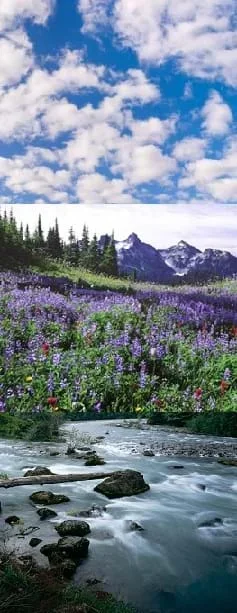 Environmental engineers focus on improving air, land and water quality.Copyright (top to bottom) Air Resources Board, California Environmental Protection Agency; Michael Larson, National Park Service; Scott Church, National Park Service http://www.arb.ca.gov/research/research.htm
http://www.nps.gov/mora/planyourvisit/paradise.htm
http://www.nps.gov/olym/naturescience/elwha-faq.htm
Environmental engineers focus on improving air, land and water quality.Copyright (top to bottom) Air Resources Board, California Environmental Protection Agency; Michael Larson, National Park Service; Scott Church, National Park Service http://www.arb.ca.gov/research/research.htm
http://www.nps.gov/mora/planyourvisit/paradise.htm
http://www.nps.gov/olym/naturescience/elwha-faq.htm
Students are presented with examples of the types of problems that environmental engineers solve, specifically focusing on air and land quality issues. Air quality topics include air pollution sources, results of poor air quality including global warming, acid rain and air pollution, as well as ways to reduce air pollution. Land quality topics include the differences between renewable and non-renewable resources, the results of non-renewable resource misuse and ways to reduce land pollution. (Water quality is introduced in a later lesson in a separate presentation, as it is the focal point of this unit curriculum.)
Environmental engineering topics related to air and land quality are highly relevant issues facing engineers, as well as communities and ecosystems at large. Example issues include global warming, geologic carbon sequestration, and pesticide and herbicide contamination on produce.
After this lesson, students should be able to:
- Define what environmental engineers do and identify current problems they face.
- Describe sources and consequences of poor air quality as well as ways to reduce air pollution.
- Relate the greenhouse effect to increases in carbon dioxide emissions and global warming.
- Recognize effects of land pollution and ways to minimize use of non-renewable resources.
- Students will develop an understanding of the effects of technology on the environment.
Grades K-12
Do you agree with this alignment? - The management of waste produced by technological systems is an important societal issue.
Grades 6-8
Do you agree with this alignment? - STEL-4L Analyze how the creation and use of technologies consumes renewable and non-renewable resources and creates waste.
Grades 6-8
Do you agree with this alignment? - STEL-4R Assess a technology that minimizes resource use and resulting waste to achieve a goal.
Grades 9-12
Do you agree with this alignment?
- Describe the role atmosphere (e.g., clouds, ozone) plays in precipitation, reflecting and filtering light from the Sun, and trapping heat energy emitted from the Earth's surface
Grade 7
Do you agree with this alignment? - Identify and evaluate the physical, social, economic, and/or environmental problems that may be overcome using science and technology (e.g., the need for alternative fuels, human travel in space, AIDS)
Grade 8
Do you agree with this alignment?
- MS-ESS3-5 Ask questions to clarify evidence of the factors that have caused the rise in global temperatures over the past century.
Grades 6-8
This resource focuses on the following Three Dimensional Learning aspects of NGSS:
Science & Engineering Practices- Ask questions to identify and clarify evidence of an argument.Do you agree with this alignment?
Disciplinary Core Ideas- Human activities, such as the release of greenhouse gases from burning fossil fuels, are major factors in the current rise in Earth's mean surface temperature (global warming). Reducing the level of climate change and reducing human vulnerability to whatever climate changes do occur depend on the understanding of climate science, engineering capabilities, and other kinds of knowledge, such as understanding of human behavior and on applying that knowledge wisely in decisions and activities.Do you agree with this alignment?
Crosscutting Concepts- Stability might be disturbed either by sudden events or gradual changes that accumulate over time.Do you agree with this alignment?
Do you agree with this alignment? - Ask questions to identify and clarify evidence of an argument.
- Introduction to Environmental Engineering Presentation (ppt)
- Introduction to Environmental Engineering Presentation (pdf)
- Introduction to Environmental Engineering Worksheet (doc)
- Introduction to Environmental Engineering Worksheet (pdf)
- Introduction to Environmental Engineering Worksheet Answers (doc)
- Introduction to Environmental Engineering Worksheet Answers (pdf)
(Hand out copies of the worksheet for students to complete during the PowerPoint presentation (PPTX). The slides are "animated," so clicking the mouse or space bar brings up the next item.)
Slide 1: Introduction to Environmental Engineering
Slide 2: What is environmental engineering? Review the definition with students: The application of science and engineering knowledge and concepts to care for and/or restore our natural environment and/or solve environmental problems.
Slide 3: Who does it affect? Environmental engineers are concerned with the negative impacts of human activity on the environment from the micro- to macro-scale, so this includes organisms from bacteria to insects to humans and, consequently, the entire planet.
Slide 4: What are environmental issues? As mentioned earlier, these are the broad areas that environmental engineers are concerned with keeping healthful. (Water quality will be discussed in a presentation in a later lesson in this unit.)
Slide 5: Air quality: Why is air quality so important? Clean air is essential to our lives! Poor air quality can lead to smog, acid rain, respiratory and other illnesses, and global warming. Smog is severe heavy air pollution that can lead to respiratory problems and other illnesses in humans. We'll discuss acid rain and global warming in more detail in a bit.
Slide 6: From where do air pollutants come? Ask students if they know the image on the right (caption: Air pollution in China). It is the Bird's Nest Stadium in Beijing, China, home of the 2008 Summer Olympics. China has a huge problem with air pollution due to high levels of industrial pollution and a large number of vehicles on the roads. Some Olympics participants reported respiratory problems because of the air pollution. Looking at the image, you can see how air appears when it is heavily polluted.
The three images on the left represent common air pollution sources: industrial processing and vehicle exhaust. These smoke stacks show one big source of air pollution: factories that use burning and/or chemical processing to produce products. When this happens, exhaust and fumes leave by smoke stacks like these and enter the atmosphere, polluting the air. Even though most industries are required by the government to limit how much pollution they release into the atmosphere, air pollutants are still being released through thousands of plants like this all over the world.
Ask students to think about how many cars and trucks they see on the roads. A combustion reaction occurs when vehicles burn gasoline for fuel. It is not a very efficient process and the products of this reaction include harmful air pollutants that are released into the air through exhaust fumes. This same process also occurs in "off-road" vehicles such as airplanes, trains and tractors.
Slide 7: Air Quality: Review the definition of air pollutant: a known substance in the air that can cause harm to humans and the environment. This slide describes common air pollutant chemicals that arise from the sources mentioned in the previous slide.
Nitrogen oxides (NOx) include nitrogen oxide (NO) and nitrogen dioxide (NO2). Nitrogen dioxide is the primary nitrogen oxide component released from vehicle exhaust.
Sulfur oxides (SOx), particularly sulfur dioxide (SO2), are released from industrial plants. A lot of coal and petroleum contain sulfur, so when burned, they produce sulfur dioxide. Once the sulfur dioxide reaches the clouds in the atmosphere, it combines with water vapor to produce acidic rain, which has a lower pH than normal rain water.
The poisonous gas carbon monoxide results from incomplete combustion of gasoline and other fuels. Many homes now have carbon monoxide detectors. (Depending on students' familiarity with chemistry, write on the board an example of a combustion reaction to show how carbon monoxide forms from incomplete combustion.) Carbon dioxide is a key air pollutant that directly relates to global climate change; it is a greenhouse gas generated from the combustion of fuels by people.
Slide 8: Greenhouse Gases and Global Warming: Ask students who have been in a greenhouse to describe the temperature they felt while inside. Explain how the Sun's heat is captured inside the glass greenhouse walls and roof. This "greenhouse effect" takes place in our planet's atmosphere when the presence of so many air pollutants, such as carbon dioxide, traps the heat from the Sun within our atmosphere, heating up the air around the Earth.
Review the definitions with students. Global warming is an increase in the average air temperature of the Earth. The greenhouse effect is when heat from Sun gets trapped inside the glass of a greenhouse and heats up its air.
Regardless of its causes, global warming is happening in our lifetimes, as evidenced by measurements that show the Earth's average air temperature increasing each year. An increase in Earth's air temperature results in the melting of polar ice caps, altering agricultural conditions for producing crops, and ecological and climate conditions that affect animals and plants.
Slide 9: How do we reduce air pollutants? A list of possible ways to reduce the amount of harmful emissions into the atmosphere is provided. People can carpool, walk, bike, or use some type of public transportation to reduce the number of vehicles used. Recently, car manufacturers started making hybrid cars, which burn less gasoline than typical cars use. The U.S. Environmental Protection Agency limits companies and vehicles on the amount of emissions they are permitted to release.
The development and use of alternative fuels is another environmental engineering topic. Ask students what is happening with the amount of oil in the world. (Answer: Since oil is a non-renewable resource, it will eventually run out.) Two promising options for alternative fuels are hydrogen and algae fuel. A hydrogen car would consume hydrogen instead of gasoline and produce water vapor instead of carbon monoxide and carbon dioxide. Algae uses photosynthesis to convert carbon dioxide into oxygen and biomass, so driving cars could have the effect of reducing the amount of carbon dioxide in the atmosphere.
Another environmental engineering topic is geologic carbon sequestration (GCS). GCS is a way to reduce the amount of carbon dioxide released into the atmosphere by capturing carbon dioxide from industrial plants and pumping it deep underground into aquifers (underground storage of groundwater) where it can be trapped by the capstone and other rock formations for long periods of time.
Environmental engineers are working on the details to make this option work, such as what happens if the sequestration leaks and surfaces to groundwater level, or will injecting carbon dioxide underground cause any harmful mineral components to dissolve?
Slide 10: Land Quality: Review a few definitions that are important when discussing land quality: land pollution, natural resources, renewable resources and non-renewable resources.
Slide 11: Examples: Renewable resources include sunshine, water and trees (wood). For example, we generate electricity by capturing sunlight and building dams. A renewable resource can become a non-renewable resource if it is used up faster than it can be replaced. For example, if forests are cut down for wood, but not re-grown fast enough, then trees would be considered a non-renewable resource.
Non-renewable resources primarily include oil and natural gas, which are used as energy sources. While the reserves of these fossil fuels are being used up, engineers are looking for alternative fuels to replace them. Oil spills can be disastrous to plants, animals and people's livelihoods (fishing, tourist business, water quality). Looking at the photograph of a coal train reminds us of how many processes and industries rely on coal-fired energy for production while the amount of mineable coal is becoming scarce.
Slide 12: What problems arise from land pollution? Acid mine drainage is the outflow of acidic water from abandoned mines. This water is so acidic that it turns yellow and kills any marine and plant life nearby. It ends up poisoning the land and getting into our water supplies.
This man is handling chemicals to be applied to crops, maybe to the growing of corn, soybeans or cotton. Pesticides are dangerous chemicals with the purpose to kill insects, and herbicides are harmful chemicals with the purpose to kill weeds. Fertilizers are additional chemicals added to the mix. If these chemicals are overused, they can ruin crops and soils. When it rains, the sprayed chemicals on plant material can runoff from the fields into groundwater and nearby bodies of water. We know that if ingested in large amounts, the chemicals in pesticides can cause birth defects in humans.
Landfills exist all over the world. All the trash that humans produce winds up in landfills to slowly decay over time. The decaying materials release methane (CH4) gas, which is another greenhouse gas (much worse than carbon dioxide) and also destroy the soil.
Slide 13: How do we reduce land pollution? Students can help reduce land pollution by reducing what they use, recycling, re-using existing items, and choosing to use biodegradable items (paper over plastic) to help cut back on volume of materials going to landfills. Also, raising and purchasing foods that have been grown in a non-damaging manner (such as organic food) is better for the health of people and our planet. Refer to the associated activity Thinking Green! to have students follow the steps of the engineering design process to create ideas for services or technologies to help solve environmental issues.
(In advance, make copies of the Introduction to Environmental Engineering Worksheet (PDF) and prepare to show the class the attached 13-slide Introduction to Environmental Engineering Presentation (PPTX), a PowerPoint file.)
Today's presentation is a quick introduction to the types of problems environmental engineers solve. When you think of environmental engineering, you think about the environment, right? And when you think about the environment what comes to mind? (Listen to student responses. Expect students to say: the Earth or some body of water or the atmosphere.) Today's presentation focuses on land and air quality. These are terms environmental engineers use when classifying their areas of study. We'll focus on water quality later. By the end of this presentation, you should be able to identify sources of air and land pollution, understand how pollution negatively affects the environment, and have learned some ways to reduce pollution.
(Continue on to present students with the information found in the Lesson Background section.)
- air pollutant
- A known substance in the air that can cause harm to humans and the environment.
- environmental engineering
- The application of science and engineering knowledge and concepts to care for and/or restore our natural environment and/or solve environmental problems.
- global warming
- An increase in the average air temperature of the Earth.
- greenhouse effect
- When heat from the Sun gets trapped inside the glass of a greenhouse and heats up its air. This analogy is used to describe a phenomenon seen with our planet. Similar to how a greenhouse works by trapping radiation that comes through glass to heat the greenhouse, the greenhouse effect refers to radiation from the Sun that is trapped in the Earth's atmosphere and warms the surface of the Earth.
- land pollution
- Destruction of the Earth's surface caused by human activities and the misuse of natural resources.
- natural resources
- Land and raw materials that exist naturally in the environment undisturbed by humans.
- non-renewable resource
- A natural resource that cannot be produced, re-grown or reused.
- renewable resources
- A natural resource that can be replaced by a natural process.
Questions: Have students come up with questions to ask eachother about global warming (i.e., what factors have caused the rise in global temperatures over the past century?). After the lesson, have students answer the questions.
Worksheet: Have students complete the Introduction to Environmental Engineering Worksheet (PDF) by writing definitions and answering questions while the teacher presents the attached PowerPoint presentation. Collect, review and grade the worksheets to assess student engagement and comprehension of the presented material.
Follow this lesson by conducting the "Greenhouse Gas Exposed" lab available at ECOHEALTH. In this activity, students directly measure the effect of increased greenhouse gases, specifically carbon dioxide, on air temperature. By performing a simple reaction of baking soda and vinegar, they generate carbon dioxide and monitor the increase in air temperature with time, compared to "unpolluted" air. This lab makes global warming more tangible because students can easily see the effect of greenhouse gases. See: http://ecohealth101.org/index.php?option=com_content&view=article&id=180%3Ateachers-lp-greenhouse-article&catid=130&Itemid=272
Greenhouse Gas Emissions. Last updated September 27, 2012. Climate Change, U.S. Environmental Protection Agency. Accessed December 27, 2012. http://www.epa.gov/climatechange/ghgemissions/index.html
Major Air Pollutants. 2007. Fact Monster. Information Please Database. Pearson Education, Inc. Accessed December 27, 2012. http://www.factmonster.com/ipka/A0004695.html
Natural resource (definition, adapted). Last updated November 1, 2012. Wikipedia, The Free Encyclopedia. Accessed November 1, 2012. http://en.wikipedia.org/wiki/Natural_resource
(optional: Show students the What Is Engineering? video)
Contributors
Jessica Ray; Phyllis Balcerzak; Barry Williams
Supporting Program
GK-12 Program, School of Engineering and Applied Science, Washington University in St. Louis
Acknowledgements
This curriculum was developed with support from National Science Foundation GK-12 grant number DGE 0538541. However, these contents do not necessarily represent the policies of the NSF, and you should not assume endorsement by the federal government.
Copyright
2013 by Regents of the University of Colorado; original © 2010 Washington University in St. Louis