
Pea Soup Ponds: Algae Investigation & Analysis for Water Quality
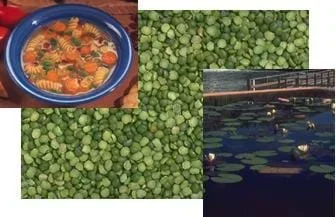 Students model pollution by algal bloomsCopyright 2004 Microsoft Corporation, One Microsoft Way, Redmond, WA 98052-6399 USA. All rights reserved.
In this activity, students learn how water can be polluted by algal blooms. They grow algae with different concentrations of fertilizer or nutrients and analyze their results as environmental engineers working to protect a local water resource.
Engineers strive to create situations in which water is usable by humans or other living organisms, including plant and animal life. Algae is one method in which engineers can determine the relative health of a water source. For example, a pond with high concentrations of algae will have low oxygen levels. Engineers would test and monitor this water source to ensure that the algae levels return to normal levels, creating a safe habitat for its consumers. Effective pollution control strategies or water treatment technologies would be employed to return the water to its normal condition.
After this activity, students should be able to:
- Determine the effects of fertilizers on algae growth.
- Discuss how algae can become a problem for stream habitats and engineered processes if too much of it grows in a stream or pond.
- Mathematically represent algae growth in the form of a graph and chart.
- Develop a basic engineering presentation to explain the results of their algae investigation and what course of action could be taken next.
- 6.3.1.d.i Display numerical data in plots on a number line, including dot plots, histograms, and box plots.
Grade 6
Do you agree with this alignment?
- Identify problems, and propose solutions related to water quality, circulation, and distribution – both locally and worldwide
Grade 6
Do you agree with this alignment?
- CCSS.Math.Content.5.G.A.2 Represent real world and mathematical problems by graphing points in the first quadrant of the coordinate plane, and interpret coordinate values of points in the context of the situation.
Grade 5
Do you agree with this alignment? - CCSS.Math.Content.6.SP.B.4 Display numerical data in plots on a number line, including dot plots, histograms, and box plots.
Grade 6
Do you agree with this alignment? - CCSS.Math.Content.8.SP.A.1 Construct and interpret scatter plots for bivariate measurement data to investigate patterns of association between two quantities. Describe patterns such as clustering, outliers, positive or negative association, linear association, and nonlinear association.
Grade 8
Do you agree with this alignment?
- STEL-5G Evaluate trade-offs based on various perspectives as part of a decision process that recognizes the need for careful compromises among competing factors.
Grades 6-8
Do you agree with this alignment?
- MS-ESS3-3 Apply scientific principles to design a method for monitoring and minimizing a human impact on the environment.
Grades 6-8
This resource focuses on the following Three Dimensional Learning aspects of NGSS:
Science & Engineering Practices- Apply scientific principles to design an object, tool, process or system.Do you agree with this alignment?
Disciplinary Core Ideas- Human activities have significantly altered the biosphere, sometimes damaging or destroying natural habitats and causing the extinction of other species. But changes to Earth's environments can have different impacts (negative and positive) for different living things.Do you agree with this alignment?
Crosscutting Concepts- The uses of technologies and any limitations on their use are driven by individual or societal needs, desires, and values; by the findings of scientific research; and by differences in such factors as climate, natural resources, and economic conditions. Thus technology use varies from region to region and over time.Do you agree with this alignment?
- Relationships can be classified as causal or correlational, and correlation does not necessarily imply causation.Do you agree with this alignment?
Do you agree with this alignment? - Apply scientific principles to design an object, tool, process or system.
- MS-ETS1-2 Evaluate competing design solutions using a systematic process to determine how well they meet the criteria and constraints of the problem.
Grades 6-8
This resource focuses on the following Three Dimensional Learning aspects of NGSS:
Science & Engineering Practices- Evaluate competing design solutions based on jointly developed and agreed-upon design criteria.Do you agree with this alignment?
Disciplinary Core Ideas- There are systematic processes for evaluating solutions with respect to how well they meet the criteria and constraints of a problem.Do you agree with this alignment?
Do you agree with this alignment? - Evaluate competing design solutions based on jointly developed and agreed-upon design criteria.
- MS-LS2-1 Analyze and interpret data to provide evidence for the effects of resource availability on organisms and populations of organisms in an ecosystem.
Grades 6-8
This resource focuses on the following Three Dimensional Learning aspects of NGSS:
Science & Engineering Practices- Analyze and interpret data to provide evidence for phenomena.Do you agree with this alignment?
Disciplinary Core Ideas- Organisms, and populations of organisms, are dependent on their environmental interactions both with other living things and with nonliving factors.Do you agree with this alignment?
- In any ecosystem, organisms and populations with similar requirements for food, water, oxygen, or other resources may compete with each other for limited resources, access to which consequently constrains their growth and reproduction.Do you agree with this alignment?
- Growth of organisms and population increases are limited by access to resources.Do you agree with this alignment?
Crosscutting Concepts- Cause and effect relationships may be used to predict phenomena in natural or designed systems.Do you agree with this alignment?
Do you agree with this alignment? - Analyze and interpret data to provide evidence for phenomena.
- MS-LS2-4 Construct an argument supported by empirical evidence that changes to physical or biological components of an ecosystem affect populations.
Grades 6-8
This resource focuses on the following Three Dimensional Learning aspects of NGSS:
Science & Engineering Practices- Construct an oral and written argument supported by empirical evidence and scientific reasoning to support or refute an explanation or a model for a phenomenon or a solution to a problem.Do you agree with this alignment?
- Science disciplines share common rules of obtaining and evaluating empirical evidence.Do you agree with this alignment?
Disciplinary Core Ideas- Ecosystems are dynamic in nature; their characteristics can vary over time. Disruptions to any physical or biological component of an ecosystem can lead to shifts in all its populations.Do you agree with this alignment?
Crosscutting Concepts- Small changes in one part of a system might cause large changes in another part.Do you agree with this alignment?
Do you agree with this alignment? - Construct an oral and written argument supported by empirical evidence and scientific reasoning to support or refute an explanation or a model for a phenomenon or a solution to a problem.
Each group needs:
- 4 baby food jars or Petri dishes
- Hot tap water that has been aged for one day
- 1 eyedropper
- Algal culture (from a biological supplier or scraped from a local fish tank)
- Commercially packaged plant fertilizer pellets or loose fertilizer (any type of commercial plant food may be substituted)
- Artificial light source, preferably fluorescent
- 4 2-3" strips of masking tape or wax pencil
- 1 copy of the Algae Growth Chart (PDF)
Graphing skills
Engineers often look at algae and small organisms to help determine the health of a river, lake or pond. Green algae are often called plants because they are green like plants and carry out photosynthesis, but under most classification schemes, they are neither plants nor animals but are protists — an organism that is microscopic and shares traits with both plants and animals. When dissolved nutrients — such as nitrogen and phosphorus, found in fertilizers and waste products — are added to a lake, algae can reproduce very quickly because they have plenty to "eat." The lake turns greenish, and the water situation is called an algae bloom.
When those algae start to die in large numbers, which can be noticed by the presence of a strong odor, the real problems begin. As bacteria start to decompose the dead algae, they use up the existing oxygen. This often leads to dangerously low concentrations of oxygen that are needed for the survival of organisms, such as fish. Low oxygen also puts a strain on water treatment processes designed by engineers. For example, the increase in algae can block or plug water treatment filters and tanks. This happens even more rapidly in the winter, when the lake is covered with snow and ice, because the lake water is too dark for algae to produce much oxygen, and it is not in contact with air that could replenish its oxygen.
Algal blooms can greatly speed up eutrophication, the natural aging process of the lake. This is where lakes become rich in nutrients, which increase the growth of aquatic plant life, and eventually deplete the oxygen supply to support the diverse organisms of a healthy lake. Algal blooms can be controlled by preventing the release of excess nutrients into surface and groundwater. Environmental engineers have worked to support this by developing pollution control regulations and efficient sewage treatment facilities.
Before the Activity
- Order the algal culture in advance from a biology supplier.
- Make copies of the Algae Growth Chart (PDF).
- Purchase fertilizer. It is best if all students use varying amounts of the same fertilizer; however, an extension of this lesson is to compare different types of fertilizers, such as liquid vs. dry, organic vs. synthetic, and fertilizers with different concentrations of nitrogen and phosphorus.
- Prepare culture water by drawing 1 gallon of hot water from the tap and letting it stand for 1 day.
With the Students
- Discuss algal blooms with the students, including common causes. (Answer: industrial wastes and fertilizer runoff) Review why engineers would be interested in preventing algal blooms. (Answers: To determine the health of a body of water, to protect other living organisms, to prevent the strain on water treatment processes for drinking water and other water resources.)
- Explain that each group will have four identical jars of water and algae, and their job as environmental engineers will be to experiment to find the effect of fertilizer on algae. Tell students that 1 of the 4 jars should be left as a "control sample," that is, it should be a reference against which the other jars can be compared. The control jar should have a concentration of zero, meaning students should not add any fertilizer to the jar.
- Break students into groups of four. Each student should have his/her own jar. Number each group or let students pick a team name.
- Introduce the fertilizer to be used, and determine how it should be measured (for example, eyedroppers full for liquids, teaspoons for dry fertilizer, or numbers of pellets). Groups should plan their own experiments by selecting four different fertilizer concentrations (remember: one concentration they choose must be zero). Within the class, there should be a broad range of concentrations.
- Label the jars with masking tape or wax pencils. Include the group number or name, student's name, and amount of fertilizer added. Have the students add fertilizer first, and then fill with aged tap water to within a centimeter of the top.
- Add one eyedropper full of live algae to each sample jar. Leave jars uncovered.
- Have students wash their hands after handling fertilizer or algae.
- Place all jars in areas with similar light intensities. An artificial light source may be used if needed. Make sure the source of light is held constant for all jars. Dark at night is fine.
- Have students observe their jars daily for any visual evidence of algal growth. Keep records on the algae growth charts or in engineering log books. After about three days, algae growth should become obvious as indicated by an increased 'greenness' in the jars and possibly odor. Have students (7th and 8th grade) determine a way to quantify their algae growth (for example, percent of greenness in jars or percent of light blocked when jar is held up to light).
- At the end of one week, have students fill out the "Growth After 1 Week" section of the Algae Growth Chart. The members of each group should work together to decide how the algal growth in their control jar compares with their other jars. They may also record any other observations on their growth chart.
- Discuss different ways the data could be presented. One way would be to use water color paints or crayons to color in a square for each fertilizer concentration, showing that each concentration resulted in a different shade of green. There are many other options. Have students make a graph of their results. Their graphs should be a line graph or a bar graph and should have time along the x-axis. Concentration of algal growth should be recorded on the y-axis either as a quantified percent of greens or light or a relative amount; i.e., high, medium and low algal growth.
- Have groups present their results. Did different groups have similar findings?
- Ask if any students observed any dead algae on the bottom of their jars. If yes, what will eventually happen to the algae? (Answer: Bacteria will decompose the dead algae.) Would this be good or bad for animals living in the water? (Answer: It would be bad, since it would use up the existing oxygen.) How would this affect a wastewater treatment plant? (Answer: More decomposition would change the chemistry of the water entering the treatment plant.)
- Conclude by discussing with students why an excess of algae can be harmful to lakes. Are there any practices students have seen that could contribute to this problem? (Possible ideas: fertilizing lawns, fertilizing just before rainstorms, and throwing or sweeping organic matter like leaves or grass clippings in a lake.) Are there actions students could take that would improve the situation? (Possible ideas: reducing or eliminating lawn fertilizer, using a different — low phosphorus — fertilizer, or composting organic matter.) How might engineers solve this problem? (Possible ideas: providing legislature with evidence of poor farming and industrial habits so that laws and regulations can be created, plan alternative water treatment operations for times of high algal stress.)
- Clean up: The algal cultures should be poured on the ground, especially in areas that could use fertilizer. Avoid adding the cultures to surface water. If you pour them down the drain, they may burden your sewage treatment system.
Pre Activity Assessment
Brainstorming: In small groups, have the students engage in open discussion. Remind students that in brainstorming, no idea or suggestion is "silly." All ideas should be respectfully heard. Encourage wild ideas and discourage criticism of ideas. Ask the students what things could cause pollution of a stream. Record their answers on the board. (Possible ideas include: chemicals, gasoline, garbage, human waste.)
Discussion Question: Solicit, integrate and summarize student responses.
- Ask students if they think too much food can ever be a bad thing? (Answer: It can if there are too many nutrients or oxygen in a stream. Too much algae can then result, which then takes nutrients and oxygen from other organisms living there.)
Activity Embedded Assessment
Algae Growth Chart: Have the students record observations and follow along with the activity on their Algae Growth Chart. After students have completed their charts, have them compare answers with their peers.
Graphing: Have students make a graph of their results. Their graphs can be a line graph or a bar graph and should have time along the x-axis. Concentration of algal growth should be recorded on the y-axis either as a quantified percent of greens or light or a relative amount (i.e., high medium and low algal growth).
Post-Activity Assessment
Presentations: Each group should present their results to the rest of the class as if they were a small environmental engineering group monitoring the water quality and health of a specific body of water near some agricultural land that uses the same brand of fertilizer that they used in their experiment. Their presentations should include the following:
- Experimental set up – Listing of what concentrations of fertilizer they used in each jar and which jar was the control jar.
- Results – How much algae grew in each jar (for older students as a quantified number such as percent of green/light block or for younger students have them report how much algae grew in a relative sense; for example, jar one grew more algae then jar number two. They should show any graphs created.
- Conclusions – What do the results say? Did fertilizer affect the growth of algae? What could the agricultural farmers do to help prevent harmful algae growth? What could their engineering group do to prevent harmful algae growth? What else did the students learn from the experiment?
- (If time permits, see activity scaling for 8th grade to add additional components to this presentation.)
Students are working with live algae; they should wash their hands thoroughly after the activity is finished.
Have students prepare their set-up on paper or trays to promote easy clean up.
For 6th grade, have students present their graphs to the class. Ask students to explain what happened to the algae in their different jars. Did fertilizer affect the growth of algae? What could we do to help prevent harmful algae growth? What could engineers do to prevent harmful algae growth?
For 7th grade, do activity as is.
For 8th grade, have student groups develop an engineering action plan (how an engineering firm would be useful for this problem) for a small community whose water supply is threatened by a fertilizer factory that is dumping excess fertilizer into the water, right before the community's drinking water treatment plant. Have the students use at least two graphs in their report to support their argument. Have students use experimental data from other groups (or their own, if time allows) to justify how different fertilizers affect the algae growth. How might the shading of the stream affect the algae as well?
Adapted from U.S. Environmental Protection Agency, Teaching Center, Water Curriculum Resources. water.epa.gov/learn/training/wacademy/toprelated.cfm
- Environmental Engineering
- Oil Spill Consequences and Cleanup Technologies
- How Clean is that Water?
- Pea Soup Ponds: Algae Investigation & Analysis for Water Quality
- Stream Consciousness
- An Underground River
- Who's Down the Well?
- Landfills: Building Them Better
- You Are What You Drink!
- The Air We Breathe
Supporting Program
Integrated Teaching and Learning Program, College of Engineering, University of Colorado Boulder
Acknowledgements
The contents of this digital library curriculum were developed under a grant from the Fund for the Improvement of Postsecondary Education (FIPSE), U.S. Department of Education and National Science Foundation GK-12 grant no. 0338326. However, these contents do not necessarily represent the policies of the Department of Education or National Science Foundation, and you should not assume endorsement by the federal government.
Copyright
2004 by Regents of the University of Colorado.