
The Air We Breathe
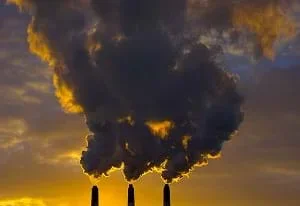 What causes air pollution?Copyright Flickr https://www.flickr.com/photos/ojbyrne/2167696800
Students learn what causes air pollution and how to investigate the different pollutants that exist, such as toxic gases and particulate matter. They investigate the technologies developed by engineers to reduce air pollution.
Engineers continually work to prevent pollution so our air is safe to breathe, have students investigate what is in air in the associated activity I Breathe WHAT??. One mechanical engineering invention is a catalytic converter that reduces smog by changing hydrocarbons and carbon monoxide in automobile exhaust into less harmful carbon dioxide and water vapor. Engineers continue to explore new, creative ideas to lower the emissions into the air, such as designing more efficient vehicles, industrial filters to reduce the amount of particulate matter released into the atmosphere, and indoor air filters to keep our indoor air clean. Have students investigate engineering and using air quality systems with the associated activity Cleaning the Air.
After this lesson, students should be able to:
- Identify some of the major causes and characteristics of air pollution.
- List several technologies developed by engineers to reduce air pollution.
- Identify resource-related activities that they could do to reduce air pollution.
- Describe some historical events that occurred because of air pollution.
- STEL-4M Devise strategies for reducing, reusing, and recycling waste caused from the creation and use of technology.
Grades 6-8
Do you agree with this alignment? - STEL-6B Create representations of the tools people made, how they cultivated food, made clothing, and built shelters to protect themselves.
Grades 3-5
Do you agree with this alignment?
- MS-ESS3-3 Apply scientific principles to design a method for monitoring and minimizing a human impact on the environment.
Grades 6-8
This resource focuses on the following Three Dimensional Learning aspects of NGSS:
Science & Engineering Practices- Apply scientific principles to design an object, tool, process or system.Do you agree with this alignment?
Disciplinary Core Ideas- Human activities have significantly altered the biosphere, sometimes damaging or destroying natural habitats and causing the extinction of other species. But changes to Earth's environments can have different impacts (negative and positive) for different living things.Do you agree with this alignment?
Crosscutting Concepts- The uses of technologies and any limitations on their use are driven by individual or societal needs, desires, and values; by the findings of scientific research; and by differences in such factors as climate, natural resources, and economic conditions. Thus technology use varies from region to region and over time.Do you agree with this alignment?
- Relationships can be classified as causal or correlational, and correlation does not necessarily imply causation.Do you agree with this alignment?
Do you agree with this alignment? - Apply scientific principles to design an object, tool, process or system.
Air Pollution Sources
Air pollution comes from many different sources. Every time something is combusted — like coal, gasoline or wood — pollutants are produced. Sources of pollution can be either natural or man-made. Some naturally caused air pollution includes large amounts of small pieces of pollen and dirt called particulate matter that is naturally stirred up into the sky during windy periods. Our bodies are designed to filter out a small amount of this type of air pollution, so it is not dangerous, therefore, unless you breathe in a lot of it. For example, forest fires are a natural event that produces a lot of particulate matter in the form of ash. People who live in areas typically plagued by forest fires can be in danger of respiratory problems. Environmental engineers design indoor air filters for people who live in forest fire-prone areas.
The major man made sources of air pollution include coal-burning energy plants and cars (see Figure 1). Coal plants and cars produce most of the major pollutants of concern including, toxic gases like sulfur oxides (SOx), nitrogen dioxide (NO2) and carbon monoxide (CO) as well as particulate matter, like ash. Another major pollutant is ozone (O3). Ozone is a little different than other pollutants because it does not come directly from the source, but rather from when other chemicals react with the oxygen in the sky. Toxic gases are the cause of many global problems, such as acid rain or acid deposition and global climate change.
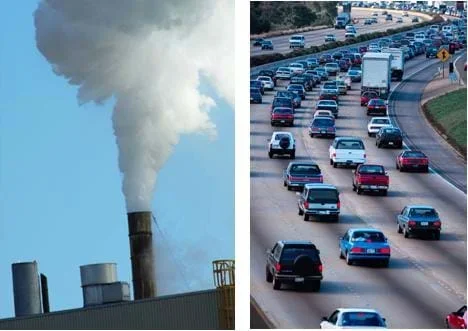 Figure 1. (left) Smoke billowing from a factory. (right) Traffic congestion on a busy highway.Copyright 2004 Microsoft Corporation, One Microsoft Way, Redmond, WA 98052-6399 USA. All rights reserved.
Air Pollution Prevention
The best way to prevent air pollution is to not create it, which means burning less coal and driving fewer cars and even making fewer trips in cars. Unfortunately, it takes a lot of energy to support the American life style, and most people are quite dependant on their cars. Engineers work to reduce pollution by developing renewable energy sources and designing more efficient cars. They also design filters to remove air pollution before it is released into the atmosphere. To remove particulate matter, commonly engineered systems include gravity settlers, cyclones, electrostatic precipitators, scrubbers and fabric or fiber filters.
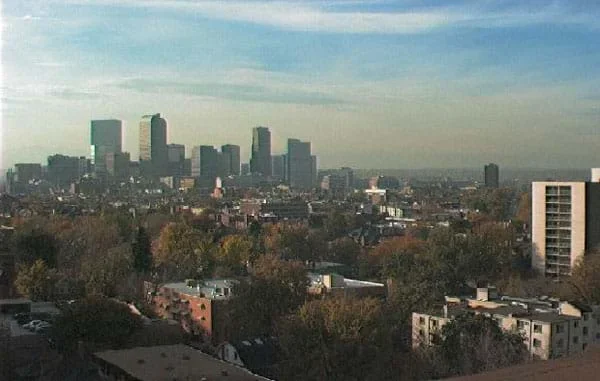 Figure 2. The air over Denver, CO, on October 27, 2005.Copyright http://apcd.state.co.us/psi/chpark.jpg
Settling chambers rely on gravity to settle coarse particles out of the air stream and are normally costly, so are not often used. Cyclones and scrubbers are commonly used to filter out coarse particulate matter. Cyclones, as the name implies, use centripetal force to separate particles out while the air stream spins round and round in a cyclone. A scrubber passes the polluted air up through water. Coarse particulate matter in the air stream will dissolve into the water as it passes through the device. Electrostatic precipitators are able to remove smaller particles from the air by passing the polluted air over electrically charged plates. Because particulate matter often has a slightly positive or negative charge, the pollutant particles will stick (and subsequently collect on) the electrically charged plates. They are commonly used after a cyclone or a scrubber.
Finally, fabric or fiber filters send the air through a physical filter that does not let certain particles through.
There has always been air pollution. Whenever anything is burned or combusted, air pollution is created. Therefore, when cave men had fires in caves without chimneys (for ventilation), significant pollution was created. Air pollution first became a problem during the industrial revolution when the use of coal increased. Initially, it seemed adequate for industries to protect humans from harmful smoke emissions by building smoke stacks that delivered the smoke high into the air, away from the people. This thinking was logical at the time: if harmful smoke was emitted high in the atmosphere, then natural weather patterns — such as changing wind and rain storms — would disperse the pollutants throughout the atmosphere. Unfortunately, humans started to produce more pollution than natural weather patterns could disperse. Air pollution began to attract people's attention in the 1950s when several pollution incidences lead to illness and even death of local residents. The worst incident occurred in London, England, in 1952 during a four-day period in which the air sat stagnant over the city because there were no changes in the weather and little wind. The stagnant air, combined with the large amount of pollution emitted in an industrial city, proved to be devastating. A thick blanket of black smog (a combination of smoke and soot) covered the city, making it difficult to see. Breathing in this harmful smoke is thought to have killed 4,000 residents and caused illness for many others. As a result of the deaths in London, legislation controlling air pollution was passed.
Do you think air pollution affects you right now? Do you live in a big city? Is there a lot of industry around? Is there pollution in this classroom? Yes, there are many things floating in the air called particulate matter. Mostly they are not very harmful, but if a person inhales a lot of particulate matter over lengthy periods of time, it can have adverse health effects. Students can conduct a hands-on investigation as to what is suspended in the air around them with the I Breathe WHAT?? activity. Then students can design and build their own filters to counteract harmful air-particulates with the activity Cleaning the Air.
Particulate matter is made up of lots of little things: from dirt and ash mentioned above to heavy metals like lead and arsenic. The most concerning of the particulate matter is the very small pieces (less then 2.5 microns — one micron is a millionth of a meter). Because of their microscopic size, our bodies have trouble filtering out these very small pieces of particulate matter, and they can collect in our lungs and then cause many different respiratory diseases, like asthma.
Environmental engineers work to correct and help stop air pollution. They have designed many ways to lower the emissions of air pollution, such as a catalytic converter on vehicles, which prevents cars from emitting harmful gases. Engineers also design air filters for indoor air pollution and processes for industry to remove pollutants at the smoke stack before they reach the outside air. To remove particulate matter, commonly engineered systems include gravity settlers, cyclones, electrostatic precipitators, scrubbers and fabric or fiber filters.
Air pollution is all around us. What are some causes of air pollution? (Answer: Sources of pollution can be either natural or man-made, including: ash, particulate matter, dust/dirt, emissions from industries, whenever anything is burned or combusted.) What are some things environmental engineers do to help clean particulate matter from the air? (Answer: They design technologies to prevent air pollution from entering the atmosphere. They also work to develop renewable resource technologies to help reduce the amount of combustion we use in industries and power plants.) How can we prevent and clean air pollution? (Have students share one thing they can do to help reduce air pollution and create a list on the board.)
- particulate matter
- Matter in the air, usually less than 10 micrometers in diameter. Usually dirt or some sort of ash.
- air pollution
- Pollution in the air.
- air filter
- A devices that filters pollutant from the air.
- combustion
- The process of burning.
- co
- Carbon monoxide.
Pre-Lesson Assessment
Pair-Share Brainstorm: Ask students to think about what causes air pollution. Have them discuss answers with the student sitting next to them and write down one thing that causes the most pollution down on a piece of paper. Have students volunteer their answers and write them on the board. Group answers into general categories.
Post-Introduction Assessment
Question/Answer: Solicit and discuss the answers to the following questions.
- How is air pollution created? (Answer: Sources of pollution can be either natural or man-made, including: ash, particulate matter, dust/dirt, emissions from industries, whenever anything is burned or combusted.)
- What happened in London in 1952? (Answer: The air was stagnant for four days, and pollutants in the air made it difficult to breath. It is believed that breathing this toxic air pollution caused the deaths of ~4,000 people.)
- What are the major causes of pollution? (Answer: The major human-made sources of pollution are automobiles and burning coal; the major natural sources of pollution are forest fires.)
- What can environmental engineers do to prevent pollution? (Answer: The best way to stop air pollution is by not creating it. In addition, environmental engineers can engineer filters such as gravity settlers, cyclones, electrostatic precipitators, scrubbers and fabric or fiber filters.)
Lesson Summary Assessment
Economic Decisions: Have groups of three or four students each discuss air pollution and the ways to prevent and stop it. Tell students that they work for the EPA and have been granted a 1 million dollars to help fight air pollution (the president decided to balance the budget and allocated more money to help the environment and education). Tell the students they need to decide what to do with the 1 million dollars to help reduce air pollution in the US. They can do one thing and one thing only. Have students discuss (for a set amount of time: 5 or 10 minutes) what they will do and write down two reasons why they think that will help stop air pollution. Each group should present their decision to the class.
Class Debate: Divide the class into two groups. Have one group argue for (agree with) the topic and one group talk against (disagree with) the topic. Give the teams a few minutes to come up with their arguments before the class debate. They should debate the following topic:
- Should we require citizens to carpool or use alternative transportation methods for commuting to work or school?
Concept Reflections / Journal Writing: Have students reflect on the air pollution around them, and write a journal entry on their thoughts. Suggest the following to them:
Sit outside somewhere this evening and observe your community. Can you see examples of pollutant transport around you? How will you know if invisible pollutants are involved? What is the likelihood that pollutants are being transported inside your school? Are the pollutants traveling outside of your state? How does this make you feel?
See the lesson Pollution Solutions, in which students build and observe a variety of simple models of engineering pollutant recovery methods: scrubber, electrostatic precipitator, cyclone and baghouse.
Have students research the Clean Air Act and the regulations it sets for air pollution emissions.
Have students identify different air pollutants and their health effects. With this information, they can create an informative flyer or poster that explains the dangers of their pollutant to other students in the school.
Students can monitor the air quality index (AQI) of their community through a local newspaper or website. Have the students keep track of the AQI and compare it to the weather conditions for that period of time. Is there a correlation between a good AQI and weather?
Edward, A. K., Environmental Geology, Seventh Edition, Upper Saddle River, New Jersey: Prentice Hall, 1996.
Howard Hughes Medical Institute, Cool Science for Kids. "Air Junk: Specks, Flecks and Particles in the Air," http://www.hhmi.org/coolscience/airjunk/nosep2.htm
Nazaroff, W. W., & Alvarez-Cohen, L. Environmental Engineering Science, New York: John Wiley & Sons, Inc., 2001.
Contributors
Malinda Schaefer Zarske; Janet Yowell; Melissa Straten
Supporting Program
Integrated Teaching and Learning Program, College of Engineering, University of Colorado Boulder
Acknowledgements
The contents of this digital library curriculum were developed under a grant from the Fund for the Improvement of Postsecondary Education (FIPSE), U.S. Department of Education and National Science Foundation GK-12 grant no. 0338326. However, these contents do not necessarily represent the policies of the Department of Education or National Science Foundation, and you should not assume endorsement by the federal government.
Copyright
2005 by Regents of the University of Colorado.