
How Clean is that Water?
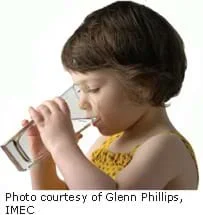 Figure 1. Is our water drinkable?Copyright U.S. Department of the Interior, U.S. Geological Survey, http://ga.water.usgs.gov/edu/ , photo by Glenn Phillips, IMEC.
This lesson plan helps students understand the factors that affect water quality and the conditions that allow for different animals and plants to survive. Students look at the effects of water quality on various water-related activities and describe water as an environmental, economic and social resource. The students also learn how engineers use water quality information to make decisions about stream modifications.
Engineers make sure that our water supply is safe to drink and use. Environmental and civil engineers guard the quality of our water resources in many ways. They design water and sewage treatment plants that clean water for human use, and design industrial systems and filters that make sure factory-released water is not polluting. They also monitor surface and aquifer water levels and quality, and mitigate any damaging impact from irrigation, fertilizer, pesticide, chemical and industrial wastes.
After this lesson, students should be able to:
- Explain the interaction and interdependence of nonliving and living components within ecosystems.
- Describe several factors that could affect water quality.
- Describe water as an environmental, economic and social resource.
- Explain how engineers help maintain water quality for health and recreation through monitoring and treatment.
- Identify the various causes and effects of water pollution in local and world water distributions
Grade 6
Do you agree with this alignment?
- The management of waste produced by technological systems is an important societal issue.
Grades 6-8
Do you agree with this alignment? - STEL-4L Analyze how the creation and use of technologies consumes renewable and non-renewable resources and creates waste.
Grades 6-8
Do you agree with this alignment?
- MS-ESS3-3 Apply scientific principles to design a method for monitoring and minimizing a human impact on the environment.
Grades 6-8
This resource focuses on the following Three Dimensional Learning aspects of NGSS:
Science & Engineering Practices- Apply scientific principles to design an object, tool, process or system.Do you agree with this alignment?
Disciplinary Core Ideas- Human activities have significantly altered the biosphere, sometimes damaging or destroying natural habitats and causing the extinction of other species. But changes to Earth's environments can have different impacts (negative and positive) for different living things.Do you agree with this alignment?
Crosscutting Concepts- The uses of technologies and any limitations on their use are driven by individual or societal needs, desires, and values; by the findings of scientific research; and by differences in such factors as climate, natural resources, and economic conditions. Thus technology use varies from region to region and over time.Do you agree with this alignment?
- Relationships can be classified as causal or correlational, and correlation does not necessarily imply causation.Do you agree with this alignment?
Do you agree with this alignment? - Apply scientific principles to design an object, tool, process or system.
What is water quality?
Water quality is commonly defined by its biological, physical, chemical and aesthetic (appearance and smell) characteristics. A healthy environment is one in which the water quality supports a rich and varied community of organisms and does not harm public health. The water quality of a body of water influences the way in which communities use the water for activities such as drinking, swimming or commercial purposes. It is an important environmental, economic and social resource in our world.
What are some indicators of water quality?
Water quality can be evaluated by how many and how varied the biota (living organisms) is in a stream. There are many factors that are important to the biota that use the stream. The chemical factors that influence the biota are dissolved major ions, dissolved nutrients, dissolved organic matter, dissolved gases (oxygen, carbon dioxide) and trace metals. Variation in these factors is determined by the type and amount of rocks, weathering, precipitation type and amount, and proximity to the sea. Seasonality also has an influence on chemical factors. Areas of high rainfall and surface water runoff have more dilute stream water compared to areas that are arid and have greater evaporation. Biological influences of these factors are normally seen only during times of extreme change. For example, anthropogenic (human) inputs of pollution or wastes may change the stream water chemistry to a pH below 5.0, which would drastically affect the flora and fauna. Refer to the associated activity Stream Consciousness to have students use macro invertebrates as an indicator of water quality.
Physical factors of a stream also influence the biota that uses the stream. Many physical factors provide challenges as well as benefits for the flora and fauna that inhabit the area. Current (how fast the stream moves), substrate (rock, stream bed and gravel), and temperature are a few of the more prominent physical factors. Current can provide transportation for organisms, but also poses the risk of the organisms being swept away. The substrates in a stream may provide shelter for a fish from the current or its enemies, and may determine the types of plants and algae that can grow there. Students can investigate algae in water with the associated activity Pea Soup Ponds: Algae Investigation & Analysis for Water Quality. The water temperature affects growth rates, productivity and life cycles of the organisms in a stream system.
Oxygen, a chemical factor, is affected by all of these physical factors. Current replenishes oxygen in the system by bringing the water into contact with air. Temperature affects the amount of oxygen in the stream because solubility of oxygen in water decreases as temperature increases. Lastly, certain organisms breathe better in certain environments.
Have you ever walked or driven by a polluted stream and looked at it in disgust? Have you taken a drink of water from a fountain and turned up your nose in distaste? Clean water is important to a person's health and lifestyle, and it is engineers who insure that our water is safe to drink and use. Environmental and civil engineers help maintain the quality of our water resources. They design treatment plants, monitor surface and groundwater, work with streams to sanitize drinking water, as well as deal with the prevention of streams from disappearing altogether from irrigation and industrial waste inputs.
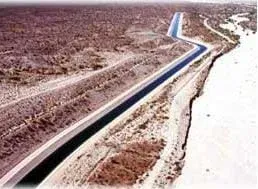 Figure 2. The Hayden-Rhodes Aqueduct in Arizona.Copyright U.S. Department of the Interior, U.S. Geological Survey, http://ga.water.usgs.gov/edu/aqueduct1.html , photo courtesy of the U.S. Bureau of Reclamation.
Engineers have been involved with water regulation for quite a while. Rivers and streams have been modified since ancient times to regulate boat and barge traffic, to prevent flooding of populated areas, and to be redirected for drinking water purposes. The earliest known irrigation ditches, in Egypt, date to 3200 BC. Engineers of ancient Rome constructed the famous aqueducts from flowing water. The ancient Romans also created ditches — that still exist across the nation today (see Figure 2) — to move water from one area to another and to carry away waste products.
From about 1750-1900, Europe developed regulation schemes for almost all of its large rivers. From 1900-1940, there was a boom in dam building in North America, Southeast Asia and Europe. Hoover Dam, on the Colorado River in Boulder City, Nevada, was completed in 1936 and still ranks 14th in height and 23rd in volume among world dams. The period from 1950 to 1980 marks the peak of popularity in dam building, and today the practice has slowed to a pace of about 500 dams per year.
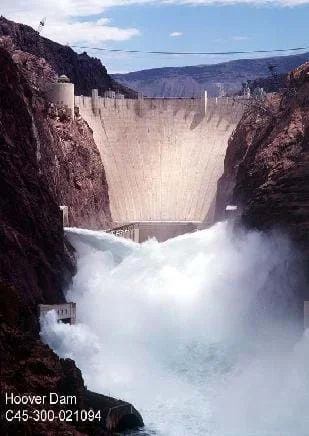 Figure 3. Hoover Dam, Boulder City, Nevada.Copyright U.S. Department of the Interior, U.S. Bureau of Reclamation, http://www.usbr.gov/lc/hooverdam/gallery/damviews.html , photo courtesy of the U.S. Bureau of Reclamation, #C45-300-021094.
How many of you have been to a local stream and really looked at it? Have you ever seen a fish in a stream? What about an insect or a plant? Stream water has many different characteristics and many different creatures living in it. What have you seen that might indicate a healthy or unhealthy stream? For example, lots of fish = healthy; lots of trash in the water = unhealthy. Many different species benefit from healthy water, including humans and animals that drink from the water. Name the many uses for streams and rivers. For example, recreation (boating, canoeing, swimming), fishing, drinking water supply, crop irrigation, stock/animal water supply, education and scientific studies.
It is important to keep streams and rivers healthy for all of these different uses. Water removal from irrigation and diversions reduces river flow and alters the quality of the water habitat. Also, pollution from organic wastes (fertilizers, human waste water, etc.) and industrial wastes have decreased in the last 20 years, but still remain a great threat to the water quality of a stream or river. These are the challenges that engineers face daily.
Explain in your own words what water quality is. What are some personal examples from your own experiences of good and bad water quality? What might be a cause of "bad" water quality? Why would engineers be involved in regulating water quality? As a class, list at least three reasons on the board. (Possible answers: To be able to achieve clean drinking water, to improve irrigation processes, to improve industrial waste processes.)
- algal bloom
- A period of excessive growth of algae.
- benthic
- Of, relating to, or occurring at the bottom of a body of water.
- eutrophication
- The process by which a body of water becomes enriched in dissolved nutrients (as phosphates) that stimulate the growth of aquatic plant life, usually resulting in the depletion of dissolved oxygen.
- irrigate
- To supply with water by artificial means.
- invertebrate
- An animal that does not have a backbone and are cold-blooded; their body temperature depends on the temperature of their environment. Some major groups of invertebrates include: protozoans (very primitive, simple animals like amoebas) and some of the metazoans (porifera [sponges], jellyfish, corals, tapeworms, flukes, insects, arachnids, crustaceans, mollusks, echinoderms, etc.).
- macro-invertebrate
- An animal without a backbone living in one stage of its life cycle, usually the nymph or larval stage. Macro invertebrates can spend a few years living in this stage in a freshwater habitat and can be seen without a microscope. Many macro invertebrates are benthic organisms (bottom dwellers).
- non-point source of pollution
- Pollution that cannot be traced to a single location.
- pollute
- To make physically impure or unclean, especially environmental contamination with man-made waste.
- protist
- Any unicellular, colonial or multicellular organism that is microscopic and shares traits with both plants and animals. These usually include the protozoans (as amoebas and paramecia) and most algae, some or all fungi and sometimes the sponges.
Pre-Lesson Assessment
What's Wrong with this Picture?
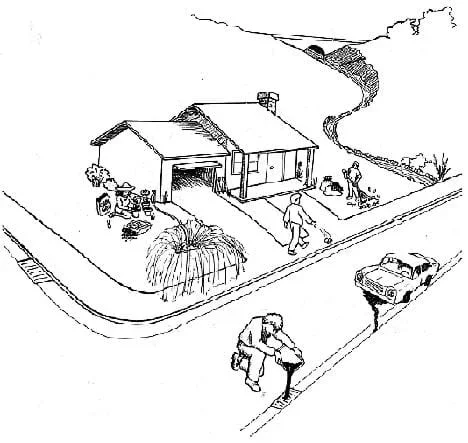 Figure 4. What's wrong with this picture?Copyright U.S. Environmental Protection Agency, Office of Water, http://www.epa.gov/owow/NPS/kids/
If you have access to a computer lab, Figure 4 (from the EPA website at http://www.epa.gov/owow/NPS/kids/archive/whatwrng.htm ) makes a great overhead to introduce this lesson on water quality. Students click on the picture where people might be doing something to affect the environment and the link describes what is being done wrong and what the person could change to help the environment. The activities shown are all non-point sources of pollution (pollution that cannot be traced to a single location) and all can affect the water system.
• If you do not have access to a computer lab, show students an overhead of Figure 4 (a larger version is provided as an attachment to this lesson). Tell students to examine the picture and ask them the following questions to facilitate discussion. Remind them to volunteer answers and that all of their answers are important.
- What is wrong with this picture? (Answers may include: oil is spilling into street gutter, someone is dumping paint into the street gutter, someone is littering, gardener could be applying pesticides to the garden, the sidewalk is being watered (wasting water).
- Do you think the stream is cleaner above or below the house? (Answer: The stream is cleaner above the house — that is higher into the mountains.)
- Do the community residents have a direct impact on the water quality of the stream? (Answer: yes)
- The people who live just down stream from the houses in Figure 2 use the stream as the source of their drinking water, should they drink the water? (Answer: Knowing that the water in contaminated with oil and/or other pollution, they should not drink the water.)
- What should they do? (Answer: First, educate the people in the picture so that they stop polluting the water; next, treat the water to remove pollutants.)
- Other then drinking water, for what other purpose can streams be used? (Possible answers: recreation [boating, canoeing and swimming], fishing, crop irrigation, stock/animal water supply, education and scientific studies.)
- Can people use water that comes from polluted streams for the above purposes? (Answer: no)
Post-Introduction Assessment
Send-a-Problem: Have students break into teams of 3-4 and create flash cards on water quality. Have student groups create 2-5 flash cards with a question on one side and the answer on the other. If the team cannot agree on an answer, they should consult the teacher. Pass the flashcards to the next team. Each member of the team reads a flashcard and everyone attempts to answer it. If they are right, they pass the card on to another team. If they feel they have another correct answer, they can write the new answer on the back of the flashcard as an alternative answer. Once all teams have tested themselves on all the flashcards, clarify any questions for which students have questions.
Lesson Summary Assessment
Engineering Methods: Have students act as environmental engineers and create a water quality monitoring plan for a local water resource. Why would they monitor this resource? What is its use? What specifically would they do to monitor the waterway (what would they look for)? How often would they monitor it? What would they do with their results?
Ask a water quality engineer from your local state Department of the Environment or Department of Natural Resources to discuss the health of your local waterways. Have students research a body of water that has had past water quality issues. For example have students find a magazine article about a large fish kill or an industry that has polluted a particular stream. Have them determine what environmental engineers have done to help the water quality of that particular body of water.
InfoRoma www.inforoma.it Accessed September 14, 2005
Kagan, Spencer. Cooperative Learning, Kagan Cooperative Learning, 1997.
New South Wales, Environmental Protection Authority, Department of Environment and Conservation www.epa.nsw.gov.au/envirom/waterqual.htm
U.S. Department of the Interior, U.S. Bureau of Reclamation http://www.usbr.gov/lc/hooverdam/gallery/damviews.html Accessed September 21, 2005
U.S. Department of the Interior, U.S. Geological Survey, Water Resources Outreach Program – Water Education Posters water.usgs.gov/outreach/OutReach.html Accessed September 21, 2005
U.S. Department of the Interior, U.S. Geological Survey ga.water.usgs.gov/edu/wudo.html Accessed September 21,2005
U.S. Environmental Protection Agency, Office of Water http://www.epa.gov/owow/NPS/kids/archive/whatwrng.htm Accessed September 21, 2005
Contributors
Malinda Schaefer Zarske; Janet Yowell; Melissa Straten
Supporting Program
Integrated Teaching and Learning Program, College of Engineering, University of Colorado Boulder
Copyright
2005 by Regents of the University of Colorado.