
Controlling Sound
In this activity, students use a variety of materials to design and create headphones that absorb sound. Students apply steps of the engineering design process to identify a problem, develop possible solutions, select the most promising solution, create their prototypes, and test and evaluate their prototypes as well as make needed improvements.
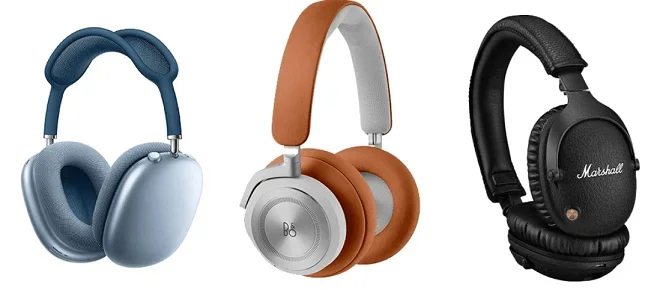 Students create headphones that absorb soundCopyright https://www.sciencefocus.com/buyers-guides/best-noise-cancelling-headphones/
Acoustical engineers study sound and design headphones that reflect and absorb sound to protect against hearing damage. In this activity, students are acting as acoustical engineers as they design headphones using sound-absorbing materials. Engineers use the engineering design process to design prototypes which students will have the opportunity to do in today's activity.
After this activity, students should be able to:
- Explain that some materials absorb sound, while others reflect it.
- Apply the engineering design process to design and test headphones that absorb sound.
- Students will develop an understanding of the attributes of design.
Grades K-12
Do you agree with this alignment? - Students will develop abilities to apply the design process.
Grades K-12
Do you agree with this alignment? - Identify and collect information about everyday problems that can be solved by technology, and generate ideas and requirements for solving a problem.
Grades 3-5
Do you agree with this alignment? - Test and evaluate the solutions for the design problem.
Grades 3-5
Do you agree with this alignment? - STEL-2I Describe the properties of different materials.
Grades 3-5
Do you agree with this alignment?
- 3-5-ETS1-1 Define a simple design problem reflecting a need or a want that includes specified criteria for success and constraints on materials, time, or cost.
Grades 3-5
This resource focuses on the following Three Dimensional Learning aspects of NGSS:
Science & Engineering Practices- Define a simple design problem that can be solved through the development of an object, tool, process, or system and includes several criteria for success and constraints on materials, time, or cost.Do you agree with this alignment?
Disciplinary Core Ideas- Possible solutions to a problem are limited by available materials and resources (constraints). The success of a designed solution is determined by considering the desired features of a solution (criteria). Different proposals for solutions can be compared on the basis of how well each one meets the specified criteria for success or how well each takes the constraints into account.Do you agree with this alignment?
Crosscutting Concepts- People's needs and wants change over time, as do their demands for new and improved technologies.Do you agree with this alignment?
Do you agree with this alignment? - Define a simple design problem that can be solved through the development of an object, tool, process, or system and includes several criteria for success and constraints on materials, time, or cost.
- 3-5-ETS1-2 Generate and compare multiple possible solutions to a problem based on how well each is likely to meet the criteria and constraints of the problem.
Grades 3-5
This resource focuses on the following Three Dimensional Learning aspects of NGSS:
Science & Engineering Practices- Generate and compare multiple solutions to a problem based on how well they meet the criteria and constraints of the design problem.Do you agree with this alignment?
Disciplinary Core Ideas- Research on a problem should be carried out before beginning to design a solution. Testing a solution involves investigating how well it performs under a range of likely conditions.Do you agree with this alignment?
- At whatever stage, communicating with peers about proposed solutions is an important part of the design process, and shared ideas can lead to improved designs.Do you agree with this alignment?
Crosscutting Concepts- Engineers improve existing technologies or develop new ones to increase their benefits, to decrease known risks, and to meet societal demands.Do you agree with this alignment?
Do you agree with this alignment? - Generate and compare multiple solutions to a problem based on how well they meet the criteria and constraints of the design problem.
- 3-5-ETS1-3 Plan and carry out fair tests in which variables are controlled and failure points are considered to identify aspects of a model or prototype that can be improved.
Grades 3-5
This resource focuses on the following Three Dimensional Learning aspects of NGSS:
Science & Engineering Practices- Plan and conduct an investigation collaboratively to produce data to serve as the basis for evidence, using fair tests in which variables are controlled and the number of trials considered.Do you agree with this alignment?
- Develop models to describe phenomena.Do you agree with this alignment?
Disciplinary Core Ideas- Tests are often designed to identify failure points or difficulties, which suggest the elements of the design that need to be improved.Do you agree with this alignment?
- Different solutions need to be tested in order to determine which of them best solves the problem, given the criteria and the constraints.Do you agree with this alignment?
Do you agree with this alignment? - Plan and conduct an investigation collaboratively to produce data to serve as the basis for evidence, using fair tests in which variables are controlled and the number of trials considered.
For pre-activity:
- one pair of working headphones (the kind that covers the entire ear)
Each group/individual needs:
- various materials such as cloth, sponges, foam, cotton balls, cotton batting, small carpet samples, and any other materials that will absorb sound (see example list of Materials below with their assigned "cost" for students to choose for their designs)
- something to hold the earpieces together, such as old headphones without the earpieces or a piece of material that will bend without breaking (vinyl strips from a mini-blind or inexpensive plastic headbands)
- Dixie cups (work well as earpieces and can be stuffed with sound-absorbing materials)
- rubber bands
- duct tape
- masking tape
- scissors
- 2 copies of Headphone Design Planning Sheet (PDF)
Example materials list with assigned costs for students to choose from
- Paper cup - $4
- Egg carton cup - $3
- Cupcake wrapper - $2
- Coffee filter - $3
- Paper bag - $3
- Bubble wrap - $8
- Cotton stuffing -$8
- Mesh netting - $2
- Marshmallow (2) - $5
- Masking tape (6 in.) - $3
- Pipe cleaner - $5
- Rubber band - $1
- Plastic straw - $2
- Sponge/foam - $7
- Paper bag - $3
- Felt - $6
- Ball of clay - $10
- Tissue paper - $5
- Aluminum foil (6 in.) - $3
- Decorations (each) - $2
- Paper towel roll - $4
- Toilet paper roll - $2
- Plastic bottle - $9
Sometimes being in a rock band can be pretty fun, and other times all of the loud noise can take a toll on your body! A one-time exposure to extremely loud sounds or listening to loud sounds for a long time can cause hearing loss. The band “The Enginerz” has hired your team as acoustical engineers to design a pair of noise-cancelling headphones so that they can continue to jam safely on stage without hurting their ears! The band will choose their new headphones based on the best looking, the best feeling, and the best noise reduction (blocks the most sound).
The bandmates have agreed upon a budget of $50 to spend for each pair of headphones. Your team can spend less money than this, however, you cannot spend more. Since your team cannot afford all the materials, make sure to choose wisely! Also, the band doesn’t want to give up style for safety so make sure your team’s design rocks!
Background
In this activity, students need to use substances that absorb sound. Materials that absorb sound send back few or no sound reflections or echoes. These types of materials can be found in classrooms, offices and other places to help reduce sound.
Review the engineering design process.
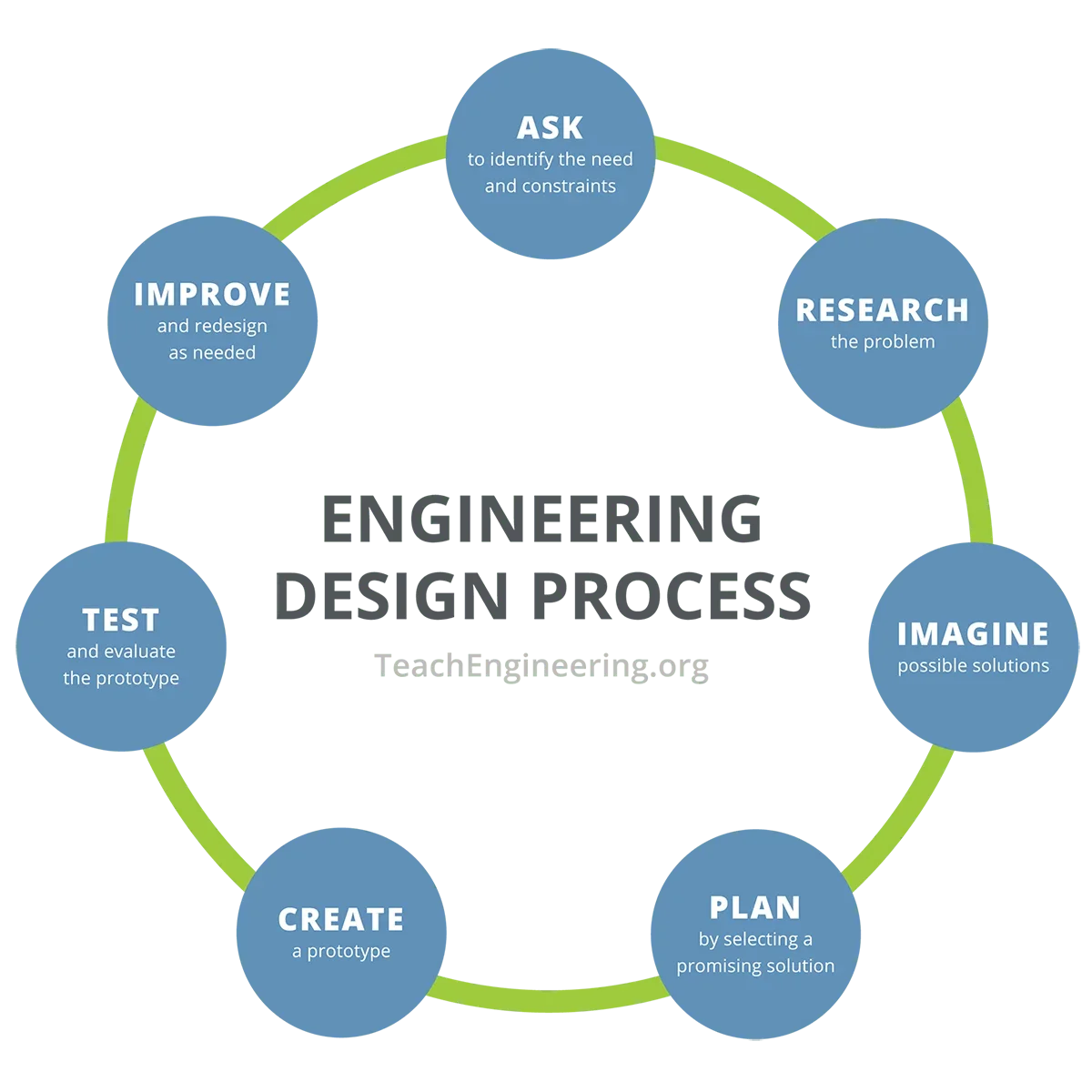 The engineering design process.Copyright TeachEngineering.org
Before the Activity
- Gather materials
- Make copies of the Headphone Design Planning Sheet (PDF) (one per group, or one per student if working individually)
- It may be helpful to set up several "construction stations" on various desks throughout the room so that the students can easily access the materials
With the Students
- Divide class into teams.
- In their teams, have students do the pre-activity to try out regular headphones to get an idea of what they will need to build.
Hearing Test:
Have students use their thumb to indicate what they are hearing with the headphones on:
- Thumbs up if they hear a sound clearly
- Thumbs held halfway if they can kind of hear sound
- Thumbs down whenever they do not hear a sound
https://www.youtube.com/watch?v=0VpI_2DTQhY
- Hand out the Headphone Design Planning Sheet (PDF) to each student.
- Students should review the engineering challenge and the design criteria and constraints. Students then work as a team to brainstorm ideas and generate multiple possible solutions. Students should review the Materials list and the cost of each material to stay within the budget. Make sure students discuss what materials they are going to use and why.
- Ask students to select the most promising solution and then draw their design on the Headphone Design Planning Sheet (PDF) (keeping within the $50 budget). Encourage students to make their design as detailed as possible.
- Remind teams to get their design drawing and materials list checked off before beginning to build.
- Give students time to build their design as a team.
- Teams should test their headphones to see how they work, by using computer generated sounds (or buzzers, bells, etc.). Using a classroom speaker, teams can test their headphone design all at once, if preferred.
Rock n’ Roll Sound Check:
Start with no volume and very slowly increase the volume and stop as soon as the student wearing headphones raises their hand indicating that they can hear the music.
Song 1: https://www.youtube.com/watch?v=5XfRjVo5wOE
Song 2: https://www.youtube.com/watch?v=CQ0ftoiIQxU
Song 3: https://www.youtube.com/watch?v=2KGe_4leh_Y
- Teams may iterate on their headphone design after testing and re-test.
- Encourage students to try each other's headphones, and talk with each other about designs and materials that work well at absorbing sound.
- Have a class discussion about the teams’ headphone designs. Which ones worked best and why? Discuss how engineers design, then build, and finally test their ideas. Engineers often have to redesign, rebuild and retest many times before they perfect their creation.
Pre-Activity Assessment
Absorb or Reflect?: Make a list on the board of materials that reflect sound and another list of materials that absorb it. Tell the students that today they are going to be using absorbent materials to create headphones that absorb sound. When would we want to use materials that reflect sound? (Answer: When we want something to be very loud, such as cymbals or bells).
Activity Embedded Assessment
Engineering Design Check-off: Since students need to get their designs checked off, use this time to talk with them about the features of their designs. Encourage students to add as many details to their designs as possible, including labeling the various parts. Have students discuss why they chose the materials they did. Make sure that students understand they are using materials that absorb sound.
Post-Activity Assessment
Best Features: As a class, talk about which features of the various headphones worked the best and why. Review how these absorbent materials "soak up" or absorb sounds (soft, squishy, & sponge like materials absorb sound (sound decreases) while hard, dense, & thin materials reflect sound (sound “bounces”)).
Making Sense: Have students reflect about what they explored and/or the science and engineering skills they used by completing the Making Sense Assessment (PDF).
Assist students with scissors as needed.
Be sure to encourage students to periodically test their headphones as they build. If time allows, let students redesign and rebuild their headphones in order to make them even better.
As a class, design a room that will absorb sound. Create a miniature model of the room and discuss what features contribute to its acoustics.
Take a field trip to a radio station and talk with the disk jockeys about the importance of headphones (and microphones) in their work.
- For upper grades, limit either the amount of materials, time available or both. Also discuss the importance of collaboration, teamwork and learning from others in engineering.
- For lower grades, remove the cost constraint.
Contributors
Teresa Ellis; Frank Burkholder; Abigail Watrous; Janet Yowell
Supporting Program
Integrated Teaching and Learning Program, College of Engineering, University of Colorado Boulder
Acknowledgements
The contents of this digital library curriculum were developed under a grant from the Fund for the Improvement of Postsecondary Education (FIPSE), U.S. Department of Education, and National Science Foundation GK-12 grant no 0338326. However, these contents do not necessarily represent the policies of the Department of Education or National Science Foundation, and you should not assume endorsement by the federal government.
Copyright
2007 by Regents of the University of Colorado