
Surf's Up!
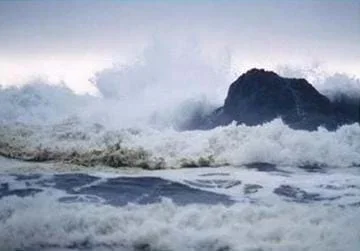 Students take a closer look at wavesCopyright Olympic Coast, National Marine Sanctuary, http://olympiccoast.nos.noaa.gov/living/ocean_processes/ waves_currents/welcome.html
This lesson introduces the concepts of longitudinal and transverse waves. Students see several demonstrations of waves and characterize them by transverse and longitudinal behavior. This lesson also introduces the Sunken Treasure theme of the Sound and Light unit — a continuous story line throughout the lessons.
Engineers use sound and light waves for many reasons in our society. Sonar, reading glasses, light bulbs, stereo equipment, and lasers all rely on either sound and/or light waves. Engineers must have an excellent understanding of how sound and light waves work in order to apply them to new technology. Naval engineers design ships to travel on ocean waves.
After this lesson, students should be able to:
- Define what a wave is and give examples of waves.
- Explain the difference between longitudinal and transverse waves.
- Describe an ocean wave as having characteristics of both longitudinal and transverse waves.
- Identify and describe the variety of energy sources
Grade 4
Do you agree with this alignment?
- STEL-2J Demonstrate how tools and machines extend human capabilities, such as holding, lifting, carrying, fastening, separating, and computing.
Grades 3-5
Do you agree with this alignment? - STEL-3D Explain how various relationships can exist between technology and engineering and other content areas.
Grades 3-5
Do you agree with this alignment?
- 4-PS4-1 Develop a model of waves to describe patterns in terms of amplitude and wavelength and that waves can cause objects to move.
Grade 4
This resource focuses on the following Three Dimensional Learning aspects of NGSS:
Science & Engineering Practices- Develop a model using an analogy, example, or abstract representation to describe a scientific principle.Do you agree with this alignment?
- Science findings are based on recognizing patterns.Do you agree with this alignment?
Disciplinary Core Ideas- Waves, which are regular patterns of motion, can be made in water by disturbing the surface. When waves move across the surface of deep water, the water goes up and down in place; there is no net motion in the direction of the wave except when the water meets a beach. (Note: This grade band endpoint was moved from K-2.)Do you agree with this alignment?
- Waves of the same type can differ in amplitude (height of the wave) and wavelength (spacing between wave peaks).Do you agree with this alignment?
Crosscutting Concepts- Similarities and differences in patterns can be used to sort and classify natural phenomena.Do you agree with this alignment?
Do you agree with this alignment? - Develop a model using an analogy, example, or abstract representation to describe a scientific principle.
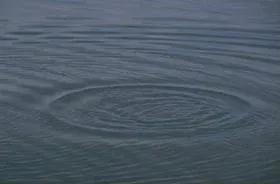 Figure 1. Pond ripples.Copyright 2006 Microsoft Corporation, One Microsoft Way, Redmond, WA 98052-6399 USA. All rights reserved.
A wave is a moving disturbance in a medium. Ripples in a pond are good examples of waves (see Figure 1). If there is no wind, a pond will be smooth until a rock is thrown in and disturbs the water. Then ripples, "disturbances" in the pond, travel to the edge. The "medium" in this case is the water that the ripples travel through.
Waves move in two ways: longitudinally and transversely. A transverse waves oscillates (moves back and forth) in a direction perpendicular to its motion. For instance, pond ripples oscillate up and down but move horizontally towards the edge of the pond. Because the ripples oscillate perpendicular to their horizontal motion towards the edge, they can be classified as transverse waves.
Longitudinal waves oscillate in the same direction that they travel. Think about a set of billiard balls on a pool table, in a straight line — one next to another. The first ball is hit so that it hits the next ball, then that ball hits the next ball in line, and so on. The "disturbance" is the collision of the billiard balls, and it travels through the balls as it moves down the table and gets to the end of the line of balls. The medium (the ball) is not actually transported from location to location on the table. Since the disturbance travels in the same direction that the wave travels, it is a longitudinal wave.
Angie and Harmon are elementary school kids on summer vacation with their parents in the Bahamas. One afternoon they head out into the North Atlantic Ocean to try surfing. Angie catches a big wave right away and rides it in toward the beach until a shiny golden object from the sea floor distracts her and causes her to wipe out. When Harmon paddles over to check on her, Angie tells him what she saw. They paddle back and dive down to look for it. Harmon comes up with an old gold coin. How did it get there? To understand how the coin arrived at its resting place on the sea floor, you need to understand waves.
A wave is a change (a variation) that travels through a substance (or medium). You can often see the change, such as the increased height of a traveling ocean, but what is important to understand is that the medium itself does not travel with the wave. This can be confusing, so let's think about an example.
A good example of a wave is the type of "wave" performed in a football — or any athletic stadium — by the fans. A person stands up, raises her arms, then the person next to her stands up and raises her arms, the next person stands up, etc. In this way, a wave travels around the stadium, while all the people that made the wave only travel up and down (stand up and sit down). So, the change (or variation) is traveling all the way around the stadium, while the people (or medium) really stay in the same spot.
The "football wave" is an example of a transverse wave. In a transverse wave, the medium vibrates in the opposite direction than the wave travels. In the football wave, the wave traveled right or left while the people (the medium) moved up and down. The wave moved perpendicular to the movement of the medium.
Demonstration: (Refer to the associated activity Make Some Waves for more instructions) Another example of a transverse wave is a string tied to a doorknob. When the free end of the string is pulled up suddenly from the floor, a transverse wave moves down the length of the string towards the doorknob. (Do this for the students). Note that the string did not actually move towards the doorknob, but the wave did.
A different type of wave is a longitudinal wave. In a longitudinal wave, the particles oscillate back and forth in the same direction that the wave travels.
Demonstration: A Slinky® can create a longitudinal wave. Have two students stretch a slinky between them. Now have one of the students suddenly push her end of the slinky towards the other student. They should not move it up and down, as that creates a transverse wave instead of a longitudinal wave. When the student pushes her end toward the other student, the class should see a bunching together of slinky coils that moves towards the other student and back again. In this case, the medium is the coils of the slinky, while the wave is the region of coils close together that moves from one student to the other. When the coils bunch close together and then move farther apart they are moving left and right, just as the wave itself moves left and right. In a longitudinal wave, the medium oscillates in the same direction that the wave travels.
The type of wave that most students have experience with is an ocean wave, or a water wave. Ask students whether they think ocean waves are transverse waves or longitudinal waves. Visually speaking, most students will say transverse wave. This is correct, but ocean waves also show longitudinal wave behavior. The medium (water molecules) moves up and down (the crest and troughs of the wave) as well as left and right, but the water does not actually travel with the wave. So, ocean waves are both longitudinal and transverse waves.
Since this is confusing to understand, students may get a clearer picture of the concept if they can see it visually. If possible, show students the following animation to clarify the motion of the water molecules: http://www.acs.psu.edu/drussell/Demos/waves/wavemotion.html. For each type of wave, follow one black dot to understand the oscillation of the dot vs. actual movement of the dot. Or, visit http://members.aol.com/nicholashl/waves/movingwaves.htm to see a second example, which closely resembles the Slinky® demonstration.
A naval engineer is someone who designs ships to travel on the ocean. One thing that influences the shape and size of a ship is the waves that it needs to travel through. Why are the fronts of most ships pointed? (Answer: They are pointed so that the ship can separate the water and waves in front of the boat, allowing it to glide right through the water.) Why are the decks of many ships slightly curved upward? (Answer: To make the waves that crash on the deck run off.) Acting as naval engineers, what else would students have to think about when designing a ship?
Now that we know about transverse and longitudinal waves, do you know what caused the gold coin to come to rest where it did on the ocean floor? That's right: the transverse and longitudinal motion of water waves pushed it there over time. What does this mean? Well, somewhere further out to sea, there is probably a sunken treasure ship with more treasures to find! Actually, it means that waves move all sorts of treasures (and other debris) around in the ocean. Have you ever read a book or watched a movie about someone stranded on an island who puts a note in a bottle, plugs the bottle and the sends it out to sea? Well, their hope is that the waves carry the bottle to another location that is populated, which might lead to their eventual rescue. Who knows? With the wonder of waves, it could happen.
- longitudinal wave
- A wave whose particles oscillate in the same direction as the wave travels.
- oscillate
- To vibrate back and forth.
- transverse wave
- A wave whose particles oscillate perpendicular to the direction that the wave travels.
- wave
- A traveling disturbance in a medium.
Pre-Lesson Assessment
Discussion Question: Ask the students to give you as many examples of waves as they can think of and write them on the board. Save this list for later. Then ask them what makes each thing on the list a wave. Tell them that today they are going to learn more about waves so that they can improve their definitions of waves.
Post-Introduction Assessment
Voting: For each wave listed on the board, ask the students to vote if they think it is a transverse wave or a longitudinal wave. After the students vote, ask for volunteers to explain their answer to the rest of the class.
Lesson Summary Assessment
Question/Answer: Ask the students:
- What is a wave? (Answer: A wave is a disturbance that travels through a medium.)
- What are the two types of waves? (Answer: transverse and longitudinal waves)
- Who can define each type of wave? (Note: See if students can define the two types of waves in their own words. Answer: A transverse wave is a wave that moves perpendicular — opposite — against the direction of the wave; a longitudinal wave is a wave that moves horizontally with the direction of the wave.)
- In which type of wave does the medium oscillate in the same direction that the wave travels? (Answer: longitudinal wave)
- Can you think of a real-life example of this type of wave? (Answer: Slinky® waves, a line of students where one student bumps into the other, sound waves, water waves)
- In which type of wave does the medium oscillate opposite to the direction that the wave travels? (Answer: transverse wave)
- What are some real life examples of these types of waves? (Answer: fans making a wave in a stadium, a string moved up and down, water waves)
- Which kind of wave is an ocean wave? (Answer: both longitudinal and transverse)
Russel, Dan, 1999. KetterlingUniversity Applied Physics, Acoustics Animations, "Longitudinal and Transverse Wave Motion," accessed January 18, 2007. http://www.acs.psu.edu/drussell/Demos.html
U.S. Department of Commerce, National Oceanic and Atmospheric Administration, Olympic Coast, National Marine Sanctuary, "Waves and Currents," July 30, 2004, accessed January 18, 2007. http://sanctuaries.noaa.gov/science/condition/ocnms/resources.html
"Waves," accessed January 18, 2007. http://members.aol.com/nicholashl/waves/movingwaves.html
Contributors
Frank Burkholder; Abigail Watrous; Janet Yowell
Supporting Program
Integrated Teaching and Learning Program, College of Engineering, University of Colorado Boulder
Acknowledgements
The contents of these digital library curricula were developed by the Integrated Teaching and Learning Program under National Science Foundation GK-12 grant no. 0338326. However, these contents do not necessarily represent the policies of the National Science Foundation, and you should not assume endorsement by the federal government.
Copyright
2007 by Regents of the University of Colorado.