
Visible Light and the Electromagnetic Spectrum
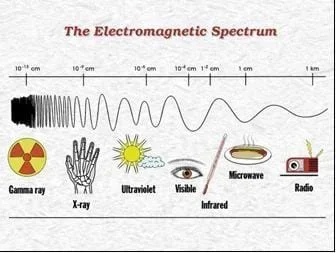 Figure 1. The electromagnetic spectrum.Copyright National Aeronautics and Space Administration, Langley Research Center http://www.nasa.gov/centers/langley/images/content/114284main_EM_Spectrum500.jpg
During this lesson, the electromagnetic spectrum is explained and students learn that visible light makes up only a portion of this wide spectrum. Students also learn that engineers use electromagnetic waves for many different applications.
Engineers use many types of electromagnetic waves. Gamma radiation is emitted by fuel rods in nuclear power plants, x-rays are used to see inside our bodies, ultraviolet light can be used to sanitize things, microwaves are used to cook, and radio waves allow us to communicate over large distances.
After this lesson, students should be able to:
- Explain that light can be considered an electromagnetic wave.
- Give two examples of how engineers use electromagnetic waves.
- Explain that we can only see a small portion of all electromagnetic waves.
- Identify and describe the variety of energy sources
Grade 4
Do you agree with this alignment?
- STEL-2J Demonstrate how tools and machines extend human capabilities, such as holding, lifting, carrying, fastening, separating, and computing.
Grades 3-5
Do you agree with this alignment? - STEL-3D Explain how various relationships can exist between technology and engineering and other content areas.
Grades 3-5
Do you agree with this alignment?
- 4-PS3-2 Make observations to provide evidence that energy can be transferred from place to place by sound, light, heat, and electric currents.
Grade 4
This resource focuses on the following Three Dimensional Learning aspects of NGSS:
Science & Engineering Practices- Make observations to produce data to serve as the basis for evidence for an explanation of a phenomenon or test a design solution.Do you agree with this alignment?
Disciplinary Core Ideas- Energy can be moved from place to place by moving objects or through sound, light, or electric currents.Do you agree with this alignment?
- Energy is present whenever there are moving objects, sound, light, or heat. When objects collide, energy can be transferred from one object to another, thereby changing their motion. In such collisions, some energy is typically also transferred to the surrounding air; as a result, the air gets heated and sound is produced.Do you agree with this alignment?
- Light also transfers energy from place to place.Do you agree with this alignment?
- Energy can also be transferred from place to place by electric currents, which can then be used locally to produce motion, sound, heat, or light. The currents may have been produced to begin with by transforming the energy of motion into electrical energy.Do you agree with this alignment?
Crosscutting Concepts- Energy can be transferred in various ways and between objects.Do you agree with this alignment?
Do you agree with this alignment? - Make observations to produce data to serve as the basis for evidence for an explanation of a phenomenon or test a design solution.
- 4-PS4-1 Develop a model of waves to describe patterns in terms of amplitude and wavelength and that waves can cause objects to move.
Grade 4
This resource focuses on the following Three Dimensional Learning aspects of NGSS:
Science & Engineering Practices- Develop a model using an analogy, example, or abstract representation to describe a scientific principle.Do you agree with this alignment?
- Science findings are based on recognizing patterns.Do you agree with this alignment?
Disciplinary Core Ideas- Waves, which are regular patterns of motion, can be made in water by disturbing the surface. When waves move across the surface of deep water, the water goes up and down in place; there is no net motion in the direction of the wave except when the water meets a beach. (Note: This grade band endpoint was moved from K-2.)Do you agree with this alignment?
- Waves of the same type can differ in amplitude (height of the wave) and wavelength (spacing between wave peaks).Do you agree with this alignment?
Crosscutting Concepts- Similarities and differences in patterns can be used to sort and classify natural phenomena.Do you agree with this alignment?
Do you agree with this alignment? - Develop a model using an analogy, example, or abstract representation to describe a scientific principle.
This lesson follows Lessons 1-6 of the Sound and Light Unit.
A wave is a change (a variation) that travels through a substance (or medium). You can often see the change, such as the increased height of a traveling ocean, but what is important to understand is that the medium itself does not travel with the wave.
Ripples in a pond are good examples of waves. If no wind, a pond is smooth until a rock is thrown in and disturbs the water. Then ripples, "disturbances" in the pond, travel to the edges. The medium in this case is the water, through which the ripples travel. The water is not actually moving, but the waves (ripples) are.
Waves move in two ways: longitudinally and transversely. Transverse waves oscillate (move back and forth) in a direction perpendicular to their motion. Our pond ripples, for instance, oscillate up and down but move horizontally towards the edge of the pond. Because the ripples oscillate perpendicular to their horizontal motion towards the edge, they can be classified as transverse waves.
An electromagnetic wave is a transverse wave that can travel through empty space or a vacuum. Literally, electromagnetic waves are able to travel through "emptiness," unlike sound waves, which need "something" to travel through (for example, water or air). Electromagnetic waves have two parts to them: electric and magnetic. Both of these parts are considered transverse waves.
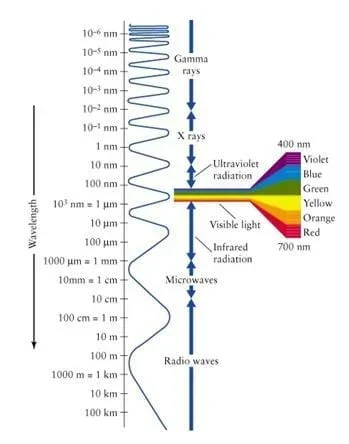 Figure 3. The visual spectrum occurs between 400 nm (violet) and 700 nm (red).Copyright National Aeronautics and Space Administration, Atmospheric Sciences Data Center http://eosweb.larc.nasa.gov/EDDOCS/images/Erb/wavelength_figure.jpg
Waves with high frequencies have a lot of energy, and, waves with smaller frequencies have less energy. Most electromagnetic waves are not visible. However, a small section of the spectrum includes waves that we can see — it is called the visible spectrum (see Figure 3). These visible wavelengths allow us to see the colors of the rainbow: red, orange, yellow, green, blue, indigo and violet. We do not usually think of visible light (the visible spectrum) as being an electromagnetic wave, but it is.
The electromagnetic spectrum can be considered from another perspective — in nanometers — specifically from 400 nm to 700 nm. Each color in this visual range has a different wavelength. Red has the longest wavelength (700 nm) and violet has the shortest wavelength (400 nm). Green occurs near the middle at about 550 nm. A prism divides light into the wavelengths that make it up. Seen together, color waves make white light. White light is especially dramatic because many different colors of the visual spectrum can combine to make white light. Two "white" light sources can have very different spectral compositions. When white light shines on a prism, the colors in white light separate from each other because they refract at different angles depending on their wavelength (see Figure 4). Water droplets in the air refract sunlight to create rainbows.
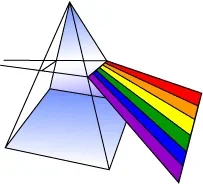 Figure 4. White light shining through a prism breaks apart into the colors of the visible light spectrum.Copyright National Aeronautics and Space Administration, Science@NASA http://science.hq.nasa.gov/kids/imagers/ems/visible.html
Light can be absorbed, reflected (or diffused) and refracted. Some materials can affect how light bends in more than one way, refracting and reflecting at the same time. Objects made of more than one substance usually have different reflective, refractive and absorptive properties.
Light reflects at a predictable angle: the angle of the light that strikes a surface equals the angle of the light that bounces off the surface. Rough surfaces scatter — or diffuse — light, which can cause glare, blur an image or prevent us from seeing an image.
Light changes speed and direction — refracts — when it moves from one transparent medium to another. The refractive property of transparent materials can be used to make lenses that focus light (for example, cameras, eyeglasses, telescopes).
Since visible light is the part of the electromagnetic spectrum that our eyes can see (remember, we cannot see most electromagnetic waves), our whole world is oriented around it and the colors that are produced through this visible spectrum. Understanding these visible electromagnetic waves has enabled engineers to develop many instruments that can see farther and more clearly than our eyes. That is why we use satellites to look at the Earth, and telescopes to look at the Sky!
*Note: These concepts might be very difficult to visualize; if possible, create transparencies of the lesson figures for students to look at during class discussions.
Let's think about our brave adventurers for a minute – who remembers what Angie and Harmon need to do next to find the treasure? That's right – they want to use lights underwater to find the sunken treasure ship. But first, they need to learn something about light waves so that they can choose the right kind of lights to use in their exploration.
When we learned about sound, we discovered that sound travels in waves. Light can also be thought of as a wave – light is a form of an electromagnetic wave. That's a big word, so let's write it on the board.
An electromagnetic wave is a type of wave that can travel through empty space... Yes, you heard correctly, empty space. Unlike sound waves, which need "something" to travel through (for example, water or air), electromagnetic waves are able to travel through "emptiness" or a vacuum.
This picture (show Electromagnetic Transparency #1– in the Attachments section) shows different kinds of electromagnetic waves. Engineers use electromagnetic waves for many different purposes. Gamma rays (nuclear power plant radiation), x-rays, light, microwaves, and radio waves (including cell phone waves) are all electromagnetic waves. What makes all these waves different from each other are their wavelengths and frequencies.
Who would like to remind the class what frequency is? That's right! The frequency of a wave is the number of times a crest occurs each second. Some waves have really big — or even really small — frequencies. If a wave has a higher frequency (many waves in a certain amount of time), it has more energy. And, if a wave has a smaller frequency (fewer waves in a certain amount of time), it has less energy.
Let's look at another picture (show Electromagnetic Transparency #2) to see if we can figure out which waves have the most energy. Which waves do you think are the most powerful? That's right! gamma waves have very high frequencies and, consequently, have a lot of energy. This extreme amount of energy is one reason why gamma waves are very dangerous if improperly used.
Have any of you ever had an x-ray? X-rays are not as strong as gamma rays, but they are still very powerful. A sunburn? Have any of you ever burned your skin when out in the hot sun (or overcast as well) too long? Sunburns come from ultraviolet light, which we cannot see, but can still burn our skin. Radio waves and microwaves have a smaller frequency, so they are much less powerful than x-rays or ultraviolet light. Waves are fascinating, that's for sure!
We know that waves with high frequencies have a lot of energy. And, the waves that have smaller frequencies have less energy — think of these wave types as energetic waves that move very fast and lazy waves that move slow. Did you know that we cannot see most electromagnetic waves? The small section of the spectrum with the waves that we can see is called the visible spectrum, and the wavelengths that we can see allow us to see the colors of red, orange, yellow, green, blue, indigo, violet — the colors of the rainbow! We do not usually think of visible light (the visible spectrum) as being an electromagnetic wave, but it is. Figure 2 shows where visible light falls on the electromagnetic spectrum.
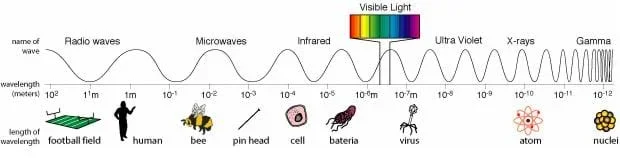 Figure 2. The electromagnetic spectrum in detail.Copyright National Aeronautics and Space Administration, Science@NASA, Science Fun http://science.hq.nasa.gov/kids/imagers/ems/waves3.html
Engineers use electromagnetic waves in all sorts of different inventions. We cannot see most electromagnetic waves, but you do observe these waves every day when you see visible light. Today we are going to build a fascinating invention so that we can see the different colors that are a part of visible light. Following the lesson, students can use the associated activity Building a Fancy Spectrograph to build their own device from simple materials to observe the spectra of different light sources! Then students can follow-up with the associated activity The Visual Spectrum to compare their findings between different light sources. Let's get started!
You all did a great job today of being good listeners and thinking hard about light! We learned that light can be thought of as a wave, just as sound is a wave. We also learned that our eyes can only see some wavelengths of electromagnetic radiation. What do we call the set of wavelengths that our eyes can see ? That's right---the visible spectrum. We also discovered that engineers use many different electromagnetic waves for many different applications. In our next lesson, we are going to learn about rainbows, and continue to follow the adventures of Angie and Harmon. What do you think will happen to them next?
- electromagnetic wave
- A transverse wave with electric and magnetic parts that travels at 300,000 km/sec. Examples are gamma waves, x-rays, light waves, microwaves, and radio waves.
- visual spectrum
- The range of the electromagnetic spectrum — between 400 nm and 700 nm — that our eyes can see.
Pre-Lesson Assessment
Discussion Question: Turn on a radio, and tune it to a station. Next turn on a lamp. Ask the students what the two devices (radio and lamp) have in common. (Answer: They both use electromagnetic waves.) Tell students that today we are going to learn about a few different types of electromagnetic waves.
Post-Introduction Assessment
Fill in the Table: On the left side of the classroom board, list the types of electromagnetic waves. Then work with the students to fill in the right side with ways that engineers use each type of wave. Examples of waves and their uses are:
- Gamma waves – emitted by nuclear power plants
- X-rays – used for healthcare
- Light waves – for seeing visible light
- Microwaves – for cooking
- Radio waves – for communication
Lesson Summary Assessment
What I Learned Today: At lesson end, give students time to think about what they learned. Invite a few students to volunteer something new that they learned through the lesson. (If students do not mention it, remind them that they learned that visible light is an electromagnetic wave and the only electromagnetic wave we can see; also it is only a small portion of the overall spectrum of electromagnetic waves.)
Bring in small prisms for students to experiment with and explore how they break light into different wavelengths/colors.
Have students create an electromagnetic wave journal of different electromagnetic waves they experience throughout the week (for example, microwaving food, seeing a rainbow, listening to the radio, etc.).
Invite an engineer to visit the class and talk about how s/he uses electromagnetic waves in his/her research or work.
Dunbar, Brian. National Aeronautics and Space Administration, Langley Research Center, Multimedia, April 13, 2007. Accessed June 1, 2007. http://www.nasa.gov/centers/langley/images/content/114284main_EM_Spectrum500.jpg
Ferebee, Michelle T. National Aeronautics and Space Administration, Atmospheric Sciences Data Center, April 10, 2006. Accessed April 17, 2012. http://science-edu.larc.nasa.gov/EDDOCS/images/Erb/wavelength_figure.jpg
Sample, Sharon. National Aeronautics and Space Administration, Science@NASA, Science Fun, November 22, 2004. Accessed June 7, 2007. http://science.hq.nasa.gov/kids/imagers/ems/waves3.html
Contributors
Luke Simmons; Frank Burkholder; Abigail Watrous; Janet Yowell
Supporting Program
Integrated Teaching and Learning Program, College of Engineering, University of Colorado Boulder
Acknowledgements
The contents of these digital library curricula were developed by the Integrated Teaching and Learning Program under National Science Foundation GK-12 grant no. 0338326. However, these contents do not necessarily represent the policies of the National Science Foundation, and you should not assume endorsement by the federal government.
Copyright
2007 by Regents of the University of Colorado.