
Creative Engineering Design: Paper Tower Design Challenge
 Copyright Alezzandra Diaz
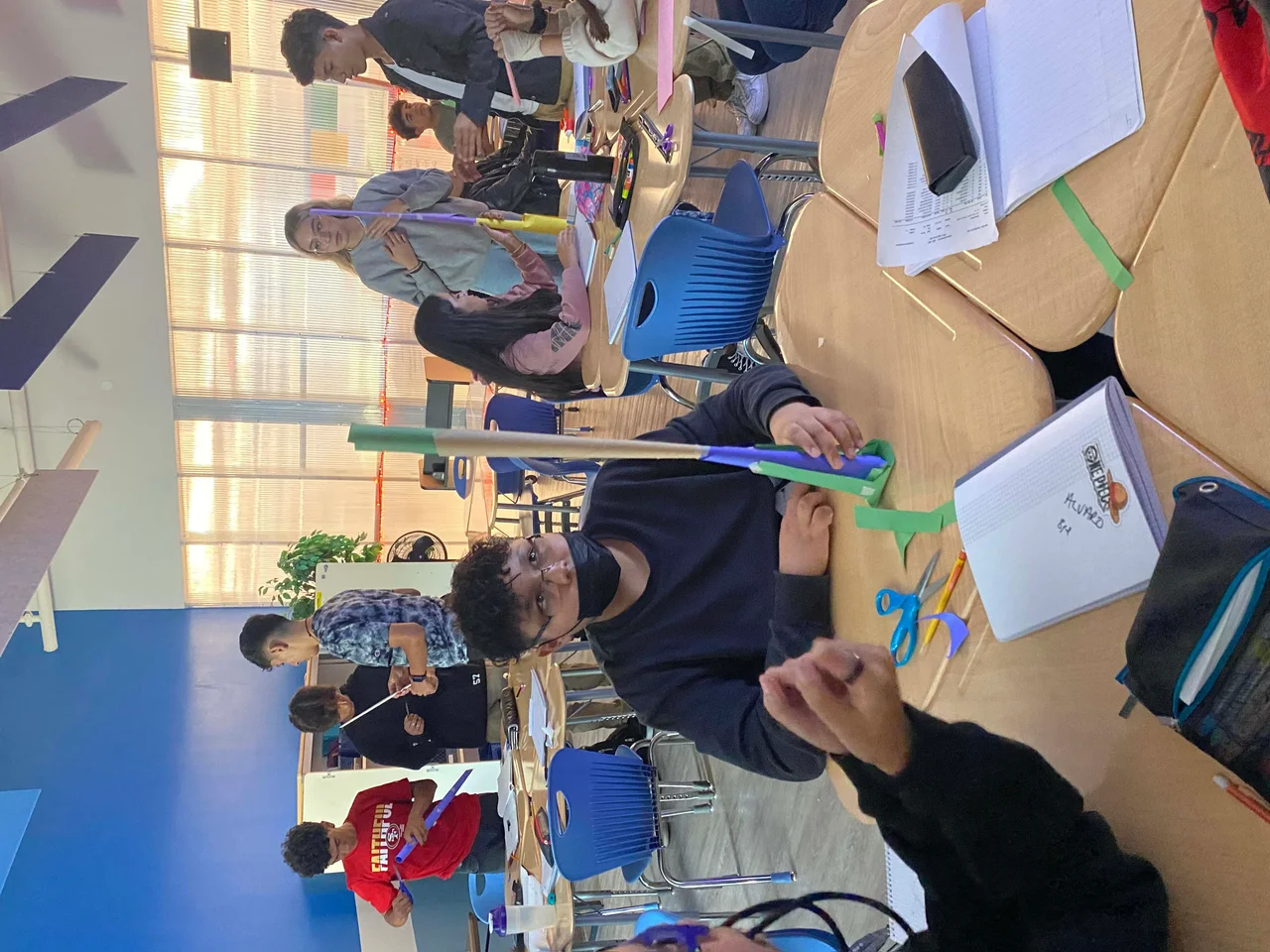
Students work as civil engineering teams in small groups to design and construct model towers out of paper with minimal teacher guidance on completing the challenge. Each team is given limited supplies (three sheets of paper, tape, and scissors) and limited time (one class period), paralleling the real-world resource/cost limitations faced by engineers. Teams aim to build their towers for maximum height and stability to withstand a simulated lateral "wind" load.
Engineers brainstorm, design, and test solutions to real-life problems. For example, civil engineers who design new buildings are challenged to create homes, buildings, and skyscrapers that are both eco-friendly and structurally sound.
After this activity, students should be able to:
- Identify ways to maximize limited supplies of paper to maximize tower height.
- Identify which designs can and cannot withstand the self-weight of the paper tower as well as a lateral wind load.
- Work effectively in small teams to communicate, plan, build and test a paper tower.
- CCSS.Math.Content.HSG-MG.A.3 Apply geometric methods to solve design problems (e.g., designing an object or structure to satisfy physical constraints or minimize cost; working with typographic grid systems based on ratios).
Grades 9-12
Do you agree with this alignment?
- STEL-7AA Illustrate principles, elements, and factors of design.
Grades 9-12
Do you agree with this alignment?
- HS-ETS1-3 Evaluate a solution to a complex real-world problem based on prioritized criteria and trade-offs that account for a range of constraints, including cost, safety, reliability, and aesthetics, as well as possible social, cultural, and environmental impacts.
Grades 9-12
This resource focuses on the following Three Dimensional Learning aspects of NGSS:
Science & Engineering Practices- Evaluate a solution to a complex real-world problem, based on scientific knowledge, student-generated sources of evidence, prioritized criteria, and tradeoff considerations.Do you agree with this alignment?
- Communicate technical information or ideas (e.g. about phenomena and/or the process of development and the design and performance of a proposed process or system) in multiple formats (including orally, graphically, textually, and mathematically).Do you agree with this alignment?
- Plan and conduct an investigation individually and collaboratively to produce data to serve as the basis for evidence, and in the design: decide on types, how much, and accuracy of data needed to produce reliable measurements and consider limitations on the precision of the data (e.g., number of trials, cost, risk, time), and refine the design accordingly.Do you agree with this alignment?
Disciplinary Core Ideas- When evaluating solutions it is important to take into account a range of constraints including cost, safety, reliability and aesthetics and to consider social, cultural and environmental impacts.Do you agree with this alignment?
- Criteria and constraints also include satisfying any requirements set by society, such as taking issues of risk mitigation into account, and they should be quantified to the extent possible and stated in such a way that one can tell if a given design meets them.Do you agree with this alignment?
Crosscutting Concepts- New technologies can have deep impacts on society and the environment, including some that were not anticipated. Analysis of costs and benefits is a critical aspect of decisions about technology.Do you agree with this alignment?
Do you agree with this alignment? - Evaluate a solution to a complex real-world problem, based on scientific knowledge, student-generated sources of evidence, prioritized criteria, and tradeoff considerations.
Each team needs:
- 3 sheets of paper (construction paper works well)
- 24 inches (60 cm) office tape (masking or Scotch tape)
- 1 pair of scissors
- Paper Towers Worksheet (PDF), one per student
For the entire class to share:
- white board and marker or laptop with projector (to record/compare tower heights)
- 1-meter stick/measuring tape
- (optional) Paper Towers PowerPoint Presentation (PPTX)
- (optional) electric fan
Today, you will be working as civil engineering design teams to take on a design challenge to construct a model tower using only paper, tape, and scissors. Your team will be given a set amount of supplies and a time limit (constraints) to complete this design challenge: limited supplies — only paper, tape and scissors — in a limited amount of time (one class period). The tower must be as tall as you can make it. The tower also must be freestanding; it cannot be attached or secured to a table, the wall, the floor or any other piece of furniture.
Your task mirrors the challenges that engineers are given in the real world—with objectives, requirements, and constraints such as budgets, material limitations, and deadlines. An engineering team that can design a structure to meet the objectives with the fewest materials (hence, less cost), is favored over other teams that cannot utilize the given materials as effectively.
When you are brainstorming about your design approach in your teams, think about the real skyscrapers you have seen as inspiration, including the tallest buildings and towers you have ever seen. What are their shapes? What are their foundations like?
Background
In this activity, students act as civil engineers as they design and build paper towers. They must pay particular attention to designing the tower to withstand the forces of high winds, a problem that students may not have considered in the construction of tall buildings.
Several solutions to this design challenge are more obvious than others, although students can surprise you with unexpected designs that work quite well.
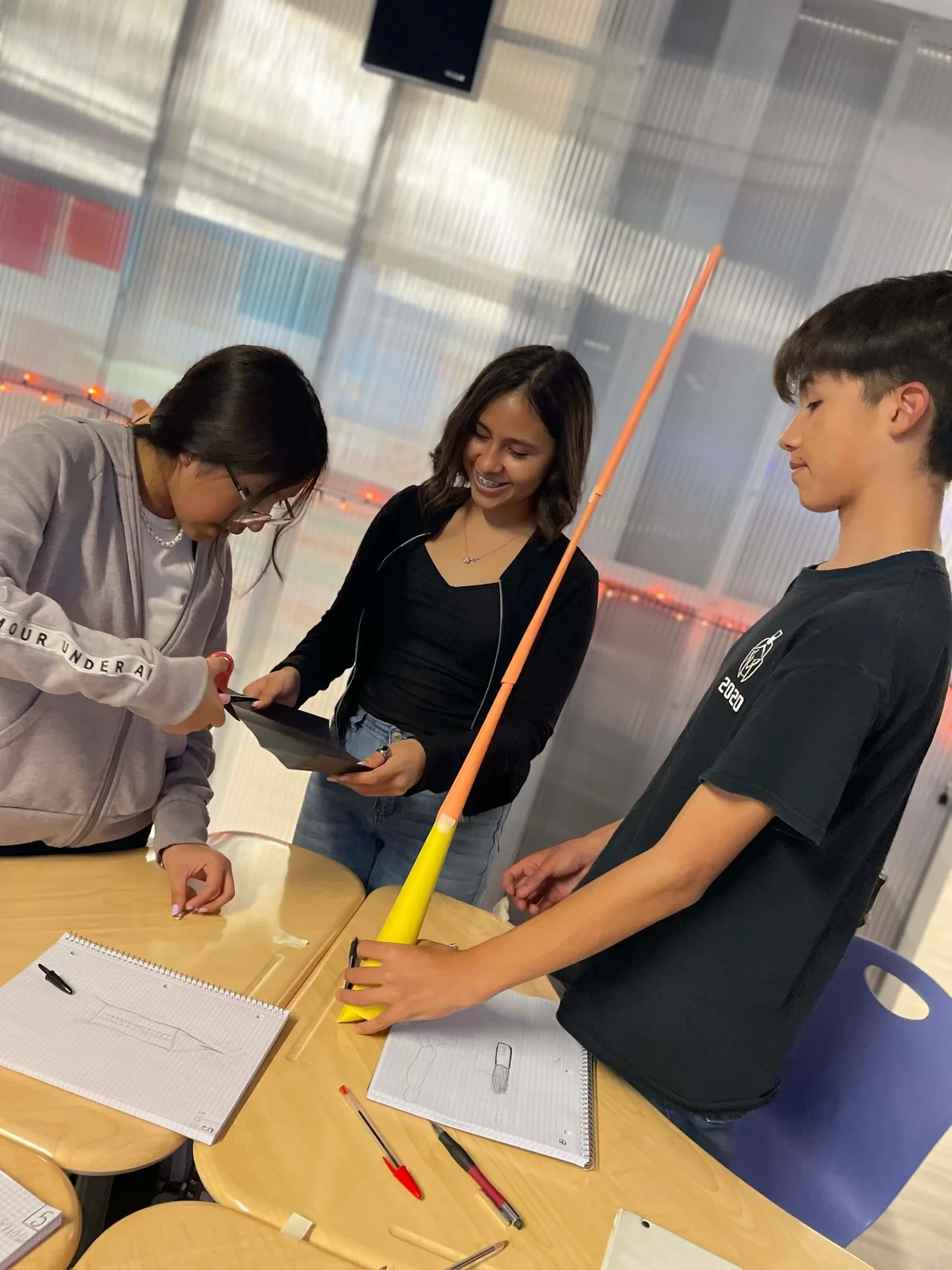
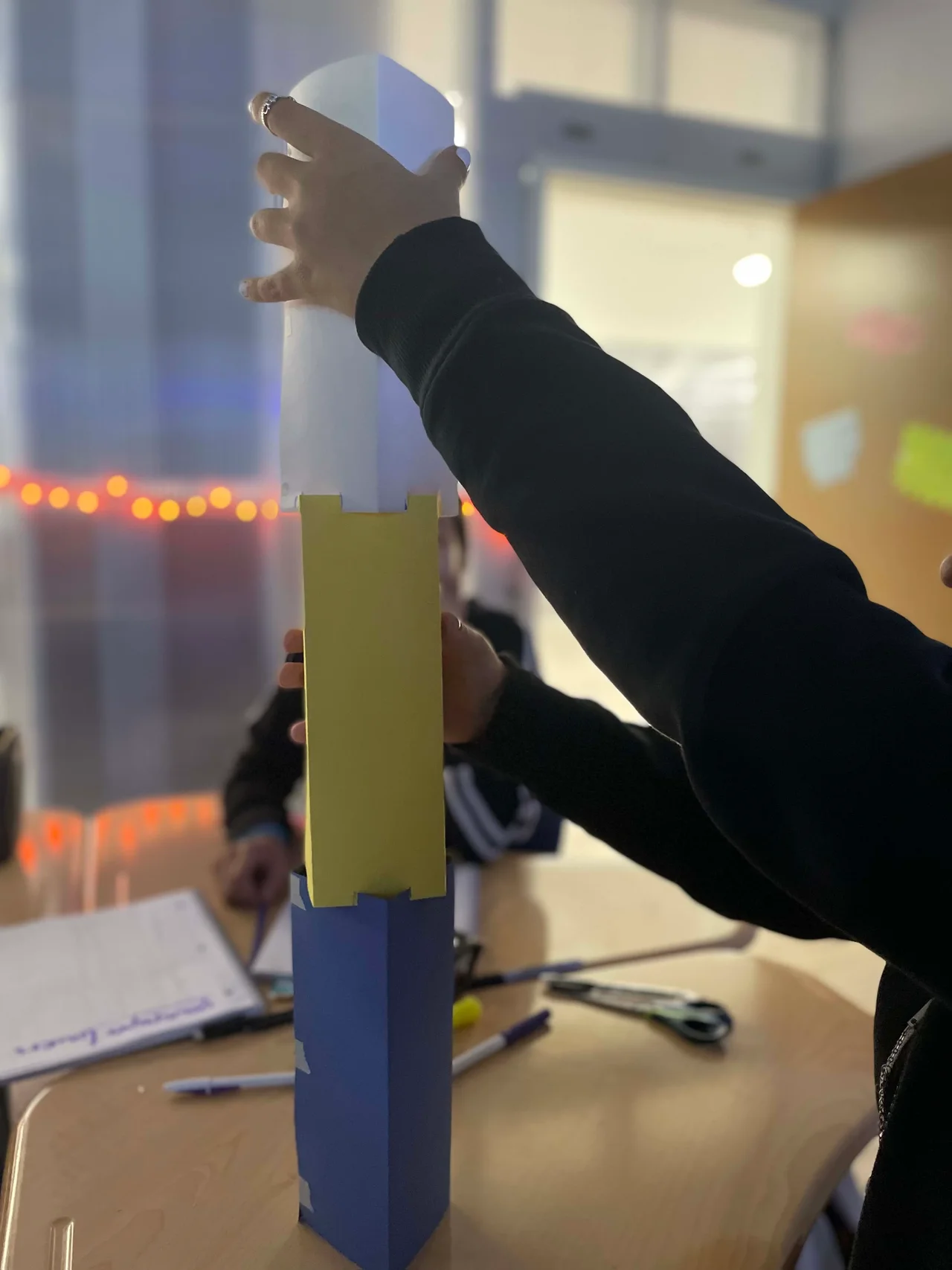
- Rolling several small tubes to attach to the bottom or a central tube of paper is a good design. The cylinder shape allows the tower to have the wind go around the building. The narrower and more slender the tower is at height the better it can withstand the "wind" because less surface exists for the wind to act upon.
- Another solution is a tripod-type design. While most of the paper is used to build up, toward the bottom, three tightly wound paper rolls extend down from the tower to the table at an angle. This gives the tower more resistance against toppling in the wind load.
- Another solution involves having a wide base for the tower to sit on, like a foundation.
Before the Activity
- Gather materials. Separate out tape and paper so each team has two sets of 12-inch (30 cm) strips and 3 sheets of paper, respectively.
- Make copies of the Paper Towers Worksheet (PDF).
- (optional) Have the Paper Towers PowerPoint Presentation (PPTX) ready to show (you may also choose to save and show it as a Google Slides presentation).
With the Students
- (10 min) Introduction to Activity
- (optional) Show the Paper Towers PowerPoint Presentation (PPTX) via PowerPoint or Google Slides on the projector.
- Read the Introduction/Motivation section aloud.
- Emphasize the constraints:
- Materials: one pair of scissors, 24 inches (60 cm) of tape, three sheets of paper.
- Time: one class period to finish.
- Other: tower must be freestanding and must withstand a “hurricane wind”
- Divide the class into teams of three students each.
- Distribute materials to each team, including one pair of scissors, 24 inches (60cm) of tape, and three sheets of paper.
- (15 min) Give teams 15 minutes to design and test different tower designs. The test includes having students step away from their tower so it is at arm's length and have them blow out a full breath to simulate a hurricane. A successful tower will not topple over. Ensure the tower is not secured to a table, the floor, or any other piece of furniture or wall. Students should record their tower height and whether it withstood the “hurricane wind” on their worksheets.
 Copyright Alezzandra Diaz
 Copyright Alezzandra Diaz
 - After 15 minutes, inform students that now they will construct and test their final design. Students are allowed to return their original materials to the teacher in exchange for another 24 inches (60cm) of tape and three more sheets of paper.
- (10 min) Give students an additional 10 minutes of construction time.
- (5 min) With 10 minutes left of the class, have students conduct their final test, measuring and recording the height of their final tower. Students should record their tower height and whether it withstood the “hurricane wind” on the whiteboard/large Post-It Note/laptop with projector.
- (5 min) during the last 5 minutes of class, have a quick class discussion about what worked and what didn’t work for their paper towers.
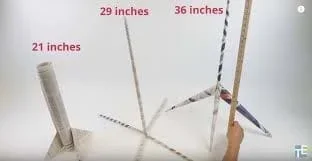 Examples of newspaper towers.Copyright Screenshot (time 2:01-min) from https://www.youtube.com/watch?v=w5f95zfBVi4
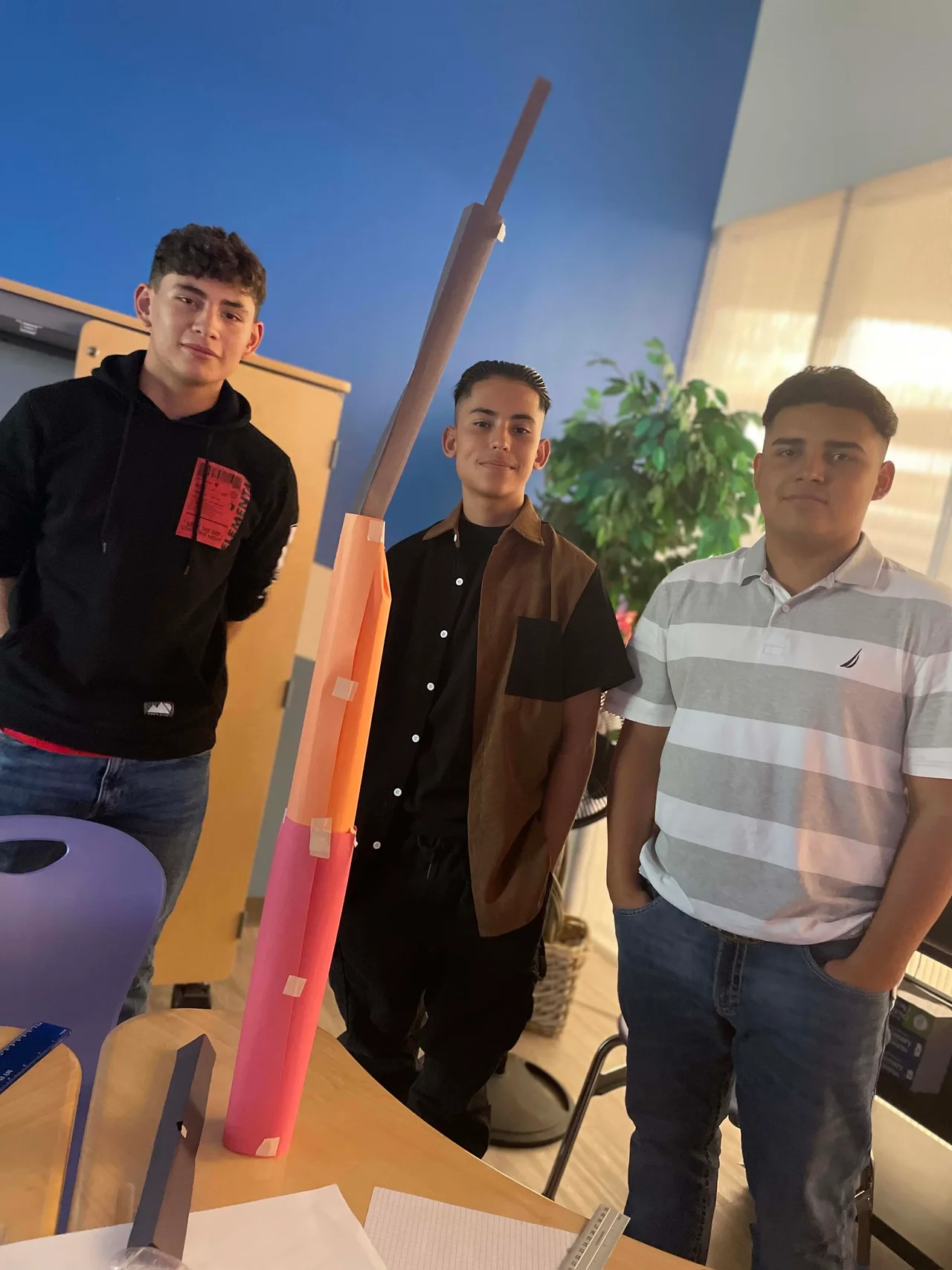 Copyright Alezzandra Diaz
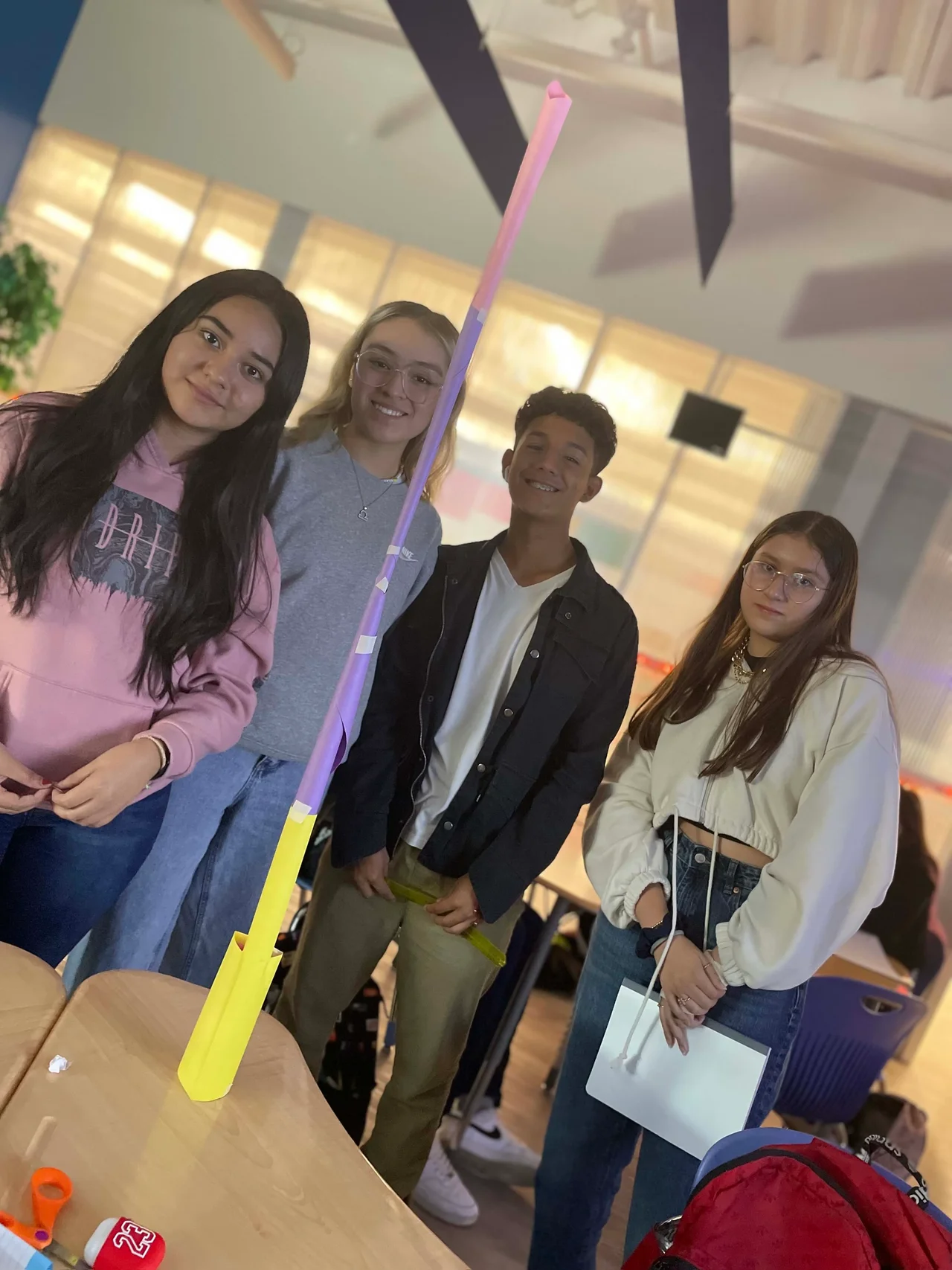 Copyright Alezzandra Diaz
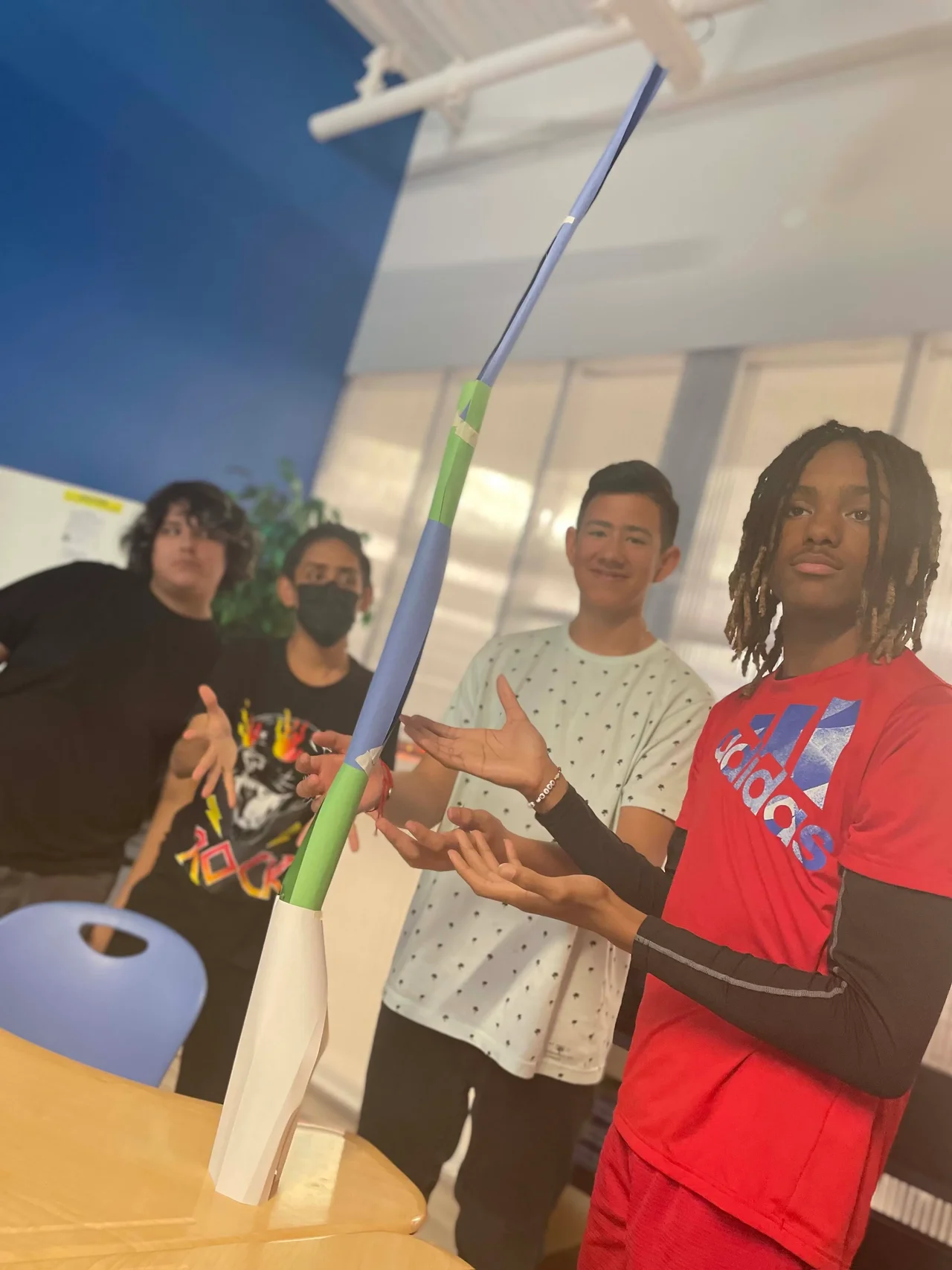 Copyright Alezzandra Diaz
- buckling
- When a column fails by bending at some point in the height of the column, usually towards the midpoint caused by a vertical force.
- civil engineering
- The field of engineering pertaining to non-moving structures such as roads, sewers, towers, buildings and bridges.
- constraint
- A limitation or restriction.
- design
- A plan or drawing produced to show the look and function or workings of a building, garment, or other object before it is built or made.
- lateral force
- A force that impacts a structure horizontally (that is, wind and earthquakes).
- load
- A weight or source of pressure borne by someone or something.
Pre-Activity Assessment
Opening Questions: In the introduction/motivation section, ask students about their observations of real skyscrapers. What are their shapes? What are their foundations like?
Activity Embedded (Formative) Assessment
Worksheet: Students fill out the Paper Towers Worksheet (PDF) as they plan, build, test and improve their designs.
Post-Activity (Summative) Assessment
Class Debrief and Discussion: Have students discuss as a class what designs did and did not work and why. (Examples of successful design approaches included: triangular base, wide base, small tower surface area, tubes, etc. Examples of unsuccessful design approaches include: large flat surfaces for tower sides, small bases, etc.)
Making Sense Assessment: Have students reflect on the science concepts they explored and/or the science and engineering skills they used by completing the Making Sense Assessment (PDF).
Students should be careful with the scissors.
- If students are struggling, consider allowing more time or providing more materials.
- If students are struggling for design ideas, suggest they think about tall buildings they may have seen in cities or in their own towns that have cylindrical shapes or large foundations or triangular trusses for support. If necessary, suggest more specifics, such as the idea of rolling the paper for strength and/or using a triangular or wider base.
- Use an electric fan to simulate stronger “hurricane winds.” Set the fan to a given speed and place it three feet from the tower, then move closer until the tower falls.
- For advanced students, have students plot the height of the tower (independent) versus the distance between the fan and the tower (dependent); discuss any patterns.
- Watch the "How are Skyscrapers Built?" video to connect the activity to civil engineering concepts.
Devereaux, Kelly; Burnham, Benjamin; Techtronics Program, Pratt School of Engineering, Duke University. Newspaper Tower. Last Modified March 8, 2022. TeachEngineering.org. https://www.teachengineering.org/activities/view/duk_tower_tech_act
Teach Engineering. Newspaper Towers. August 6, 2018. YouTube. https://www.youtube.com/watch?v=w5f95zfBVi4&t=8s
- ASPIRE Creative Engineering Design
- Creative Engineering Design: Paper Tower Design Challenge
- Creative Engineering Design: Efficient Car Design
- Creative Engineering Design: Straw Bridge Design Challenge
- Creative Engineering Design: Engineering Design Process & Design Thinking
- Creative Engineering Design: Creative Crash Testing Design Challenge
- Creative Engineering Design: Environmental Impact StoryMap Collection
- Creative Engineering Design: Mouse Trap Car Design Challenge
- Creative Engineering Design: Tinkercad 3D Design & EV Concept Car Workshop
- Creative Engineering Design: Carbon Footprints and Transportation
- Creative Engineering Design: Tinkercad Circuits & EV Motor Workshop
- Creative Engineering Design: Transportation Fuels Debate
- Creative Engineering Design: Model EV Design Challenge
Contributors
Kelly Devereaux; Benjamin Burnham; Jennifer Taylor; Ellen Parrish; Alezzandra Diaz
Supporting Program
Integrated Teaching and Learning Program, College of Engineering, University of Colorado Boulder (original Techtronics Program, Pratt School of Engineering, Duke University)
Acknowledgements
This curriculum was developed under National Science Foundation grant numbers 1941524 and 1941701. Any opinions, findings, and conclusions, or recommendations expressed in this material are those of the authors and do not necessarily reflect the views of the National Science Foundation.
Copyright
2022 by Regents of the University of Colorado; original © 2004 Duke University