
ASPIRE Creative Engineering Design
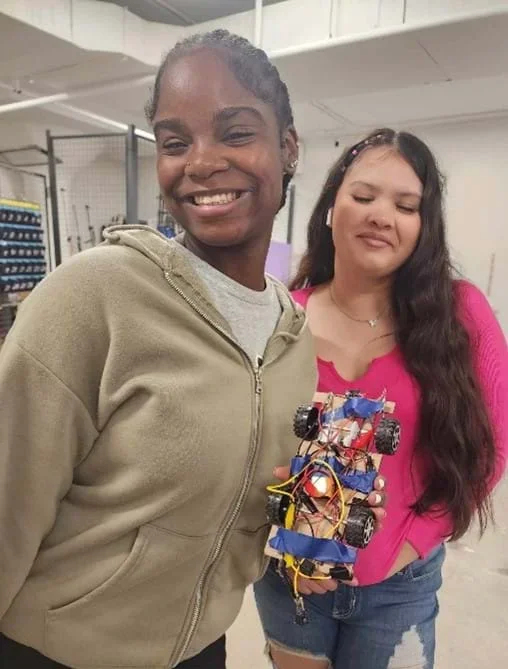 The summative assessment of the ASPIRE Creative Engineering Design unit is an engineering design challenge where student teams build, test, and iterate their own model EV car.Copyright Greg Nowling, Purdue Polytechnic High School Englewood
The ASPIRE Creative Engineering Design unit modules can be differentiated for introductory to advanced engineering classes.
Module 1 Introductory Rapid Design Challenges
Module 2 Engineering Design Process, Creative Crash Testing Design Challenge
Module 3 Environmental Impact StoryMaps, Mousetrap Car Design Challenge
Module 4 3D Design workshop, Carbon Footprint & Transportation Activity
Module 5 Circuits & EV Motor Workshop, Fuels Debate
Module 6 Electric Vehicle Design Challenge Summative Assessment
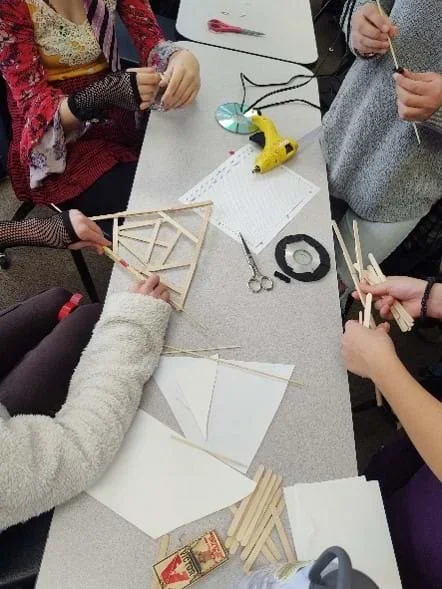 Each of the design challenges in the ASPIRE Creative Engineering Design unit, such as the mousetrap car pictured here, can be adapted based on available time and materials.Copyright Greg Nowling, Purdue Polytechnic High School Englewood
The ASPIRE Creative Engineering Design curriculum explores the intersection of electric vehicles (EV), the environment, and engineering. Numerous engineering fields take part in developing and building EVs. For example, Electrical, Mechanical, and Software Engineers work together to design and develop EV systems including electric motor and power electronics, chassis and suspension, and charging and battery management. Chemical Engineers contribute to designing and refining EV batteries to improve their performance, efficiency, and safety. Environmental Engineers engage in air quality management to address air pollution through developing air pollution control systems and strategies for sustainable practices.
The ASPIRE Creative Engineering Design unit modules are organized in a suggested scope and sequence based on pilot teacher feedback. Each module is adaptable to fit any instructional time frame—quarter, semester, and year-long classes—and offers much flexibility to extend learning objectives to include related STEM content.
Module | Topic | Learning Highlights |
1 | Students work as civil engineering teams in small groups to design and construct model towers out of paper with minimal teacher guidance on completing the challenge. | |
1 | Students learn how a car's aerodynamics and rolling resistance affect its energy efficiency by designing and constructing model cars out of simple materials. | |
1 | Working as engineering teams, students use the engineering design process to plan, create, and test model bridges. | |
2 | Students are formally introduced to the seven-step EDP using the various Engineering Design Process (EDP) steps in the previous design challenges. | |
2 | Students utilize the full Engineering Design Process (EDP) as they become next-generation engineers working on the safety features for passenger vehicles. | |
3 | The Environmental Impact StoryMap Collection actively engages students in exploring ethics-based, transportation-related topics. | |
3 | Students design, build, and test mousetrap cars as they apply the Engineering Design Process (EDP) in this individual engineering design challenge. | |
4 | Students follow a guided engineering skills workshop presentation using the free online Tinkercad web app to design a model 3D EV concept car design. | |
4 | Students consider choices in transportation and calculate their carbon footprint to learn about their impacts and making informed choices. | |
5 | Students follow a guided engineering skills workshop presentation using the free online Tinkercad web app learning the basics about circuits, using a simulator to create circuits, and applying these skills to build a model EV electric motor. | |
5 | Student teams learn about transportation fuels and then are assigned to represent the different fuels. Working cooperatively, the students develop arguments on the pros and cons of their fuel with the other fuel types. | |
6 | Students creatively collaborate in teams to design, build, test, and iterate a model electric vehicle (EV) car that runs on a battery-powered electric motor circuit. In a final design expo, teams have the opportunity to present their final EV model, their design process journey, and their perspectives on the intersection of engineering and environmental resiliency regarding EVs. Teams can also participate in fun model EV races and aesthetic design competitions. |
- ASPIRE Creative Engineering Design
- Creative Engineering Design: Paper Tower Design Challenge
- Creative Engineering Design: Efficient Car Design
- Creative Engineering Design: Straw Bridge Design Challenge
- Creative Engineering Design: Engineering Design Process & Design Thinking
- Creative Engineering Design: Creative Crash Testing Design Challenge
- Creative Engineering Design: Environmental Impact StoryMap Collection
- Creative Engineering Design: Mouse Trap Car Design Challenge
- Creative Engineering Design: Tinkercad 3D Design & EV Concept Car Workshop
- Creative Engineering Design: Carbon Footprints and Transportation
- Creative Engineering Design: Tinkercad Circuits & EV Motor Workshop
- Creative Engineering Design: Transportation Fuels Debate
- Creative Engineering Design: Model EV Design Challenge
Supporting Program
Integrated Teaching and Learning Program, College of Engineering, University of Colorado Boulder
Acknowledgements
This curriculum was developed under National Science Foundation grant numbers 1941524 and 1941701. Any opinions, findings, and conclusions, or recommendations expressed in this material are those of the authors and do not necessarily reflect the views of the National Science Foundation.
Copyright
2025 by Regents of the University of Colorado Boulder