
Polluted Air = Polluted Lungs
To gain a better understanding of the roles and functions of components of the human respiratory system and our need for clean air, students construct model lungs that include a diaphragm and chest cavity. They see how air moving in and out of the lungs coincides with diaphragm movement. Then student teams design and build a prototype face mask pollution filter. They use their model lungs to evaluate their prototypes to design requirements.
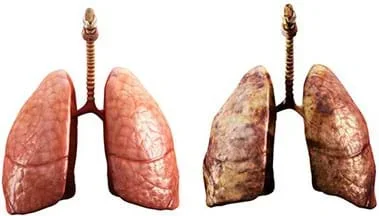 Students create model lungs to see the impact of polluted air on the lungsCopyright Pinterest, https://www.pinterest.com/pin/350366045986803362/.
Engineers often make models of systems to better understand how they work, their inputs and outputs, and how they change as inputs change. Systems sometimes change depending on their inputs, and engineers know that air quality affects the respiratory system. Many engineering disciplines are involved in measuring and maintaining acceptable outdoor and indoor air quality. In addition, engineers work with medical professionals to find innovative ways to assist the human respiratory system when its functions fail due to various factors, including damage because of poor air input to the lungs. To create good solutions to problems, engineers create prototypes of new designs, which they test and improve many times.
After this activity, students should be able to:
- Explain how the air in the lungs and chest cavity changes according to air intake and diaphragm movement, and how this is impacted by polluted air.
- Develop a prototype air filter to be worn over the nose and mouth.
- Describe engineers' roles in the function and/or maintenance of the respiratory system and the air that it takes in.
- 6.3.1.d.ii.1 Report the number of observations.
Grade 6
Do you agree with this alignment?
- The human body is composed of atoms, molecules, cells, tissues, organs, and organ systems that have specific functions and interactions
Grade 7
Do you agree with this alignment? - Develop, communicate, and justify an evidence-based scientific explanation regarding the functions and interactions of the human body
Grade 7
Do you agree with this alignment? - Gather, analyze, and interpret data and models on the functions and interactions of the human body
Grade 7
Do you agree with this alignment?
- CCSS.Math.Content.6.SP.B.5a Reporting the number of observations.
Grade 6
Do you agree with this alignment?
- Students will develop an understanding of the attributes of design.
Grades K-12
Do you agree with this alignment? - Students will develop an understanding of engineering design.
Grades K-12
Do you agree with this alignment? - Students will develop an understanding of the relationships among technologies and the connections between technology and other fields of study.
Grades K-12
Do you agree with this alignment? - Advances and innovations in medical technologies are used to improve healthcare.
Grades 6-8
Do you agree with this alignment? - STEL-7R Refine design solutions to address criteria and constraints.
Grades 6-8
Do you agree with this alignment?
- MS-ETS1-1 Define the criteria and constraints of a design problem with sufficient precision to ensure a successful solution, taking into account relevant scientific principles and potential impacts on people and the natural environment that may limit possible solutions.
Grades 6-8
This resource focuses on the following Three Dimensional Learning aspects of NGSS:
Science & Engineering Practices- Define a design problem that can be solved through the development of an object, tool, process or system and includes multiple criteria and constraints, including scientific knowledge that may limit possible solutions.Do you agree with this alignment?
Disciplinary Core Ideas- The more precisely a design task's criteria and constraints can be defined, the more likely it is that the designed solution will be successful. Specification of constraints includes consideration of scientific principles and other relevant knowledge that is likely to limit possible solutions.Do you agree with this alignment?
Crosscutting Concepts- The uses of technologies and any limitations on their use are driven by individual or societal needs, desires, and values; by the findings of scientific research; and by differences in such factors as climate, natural resources, and economic conditions.Do you agree with this alignment?
- All human activity draws on natural resources and has both short and long-term consequences, positive as well as negative, for the health of people and the natural environment.Do you agree with this alignment?
Do you agree with this alignment? - Define a design problem that can be solved through the development of an object, tool, process or system and includes multiple criteria and constraints, including scientific knowledge that may limit possible solutions.
- MS-ETS1-2 Evaluate competing design solutions using a systematic process to determine how well they meet the criteria and constraints of the problem.
Grades 6-8
This resource focuses on the following Three Dimensional Learning aspects of NGSS:
Science & Engineering Practices- Evaluate competing design solutions based on jointly developed and agreed-upon design criteria.Do you agree with this alignment?
Disciplinary Core Ideas- There are systematic processes for evaluating solutions with respect to how well they meet the criteria and constraints of a problem.Do you agree with this alignment?
Do you agree with this alignment? - Evaluate competing design solutions based on jointly developed and agreed-upon design criteria.
- MS-ETS1-4 Develop a model to generate data for iterative testing and modification of a proposed object, tool, or process such that an optimal design can be achieved.
Grades 6-8
This resource focuses on the following Three Dimensional Learning aspects of NGSS:
Science & Engineering Practices- Develop a model to generate data to test ideas about designed systems, including those representing inputs and outputs.Do you agree with this alignment?
Disciplinary Core Ideas- Models of all kinds are important for testing solutions.Do you agree with this alignment?
- The iterative process of testing the most promising solutions and modifying what is proposed on the basis of the test results leads to greater refinement and ultimately to an optimal solution.Do you agree with this alignment?
Do you agree with this alignment? - Develop a model to generate data to test ideas about designed systems, including those representing inputs and outputs.
For Part 1 - Creating a Model Lung, each group needs:
- two-liter plastic bottle with cap, with the bottom cut off and holes drilled into the cap
- 2 plastic drinking straws or 6 inches (15 cm) of tubing (clear flexible tubing works well, 0.5-1.0 cm in diameter; available at hardware or pet supply stores)\
- 3 balloons (1 large enough to stretch over bottom of two-liter bottle; 2 smaller ones, representing lungs)
- 2 rubber bands
- 2-inch (5-cm) cube of soft modeling clay
- Respiratory System Worksheet (PDF), one per person
- Face Mask Filter Design Worksheet (PDF)
For Part 1 - Creating a Model Lung, the teacher needs:
- scissors, to cut plastic bottle
- drill, to make two holes in bottle cap to receive straws or tubing
For Part 2 – Creating a Face Mask Pollution Filter, each group needs:
- 1 model lung from first part of activity
- A variety of materials from which students may select to make a face mask filter, such as white paper, cotton balls, coffee filters, cloth, felt, gauze, foam, cotton batting, string, rubber bands, tape, etc.
- Scissors
For Part 2 - Creating a Face Mask Pollution Filter, for the entire class to share:
- spray bottle of water
- timing device
- Dust in the Respiratory System Visual Aid (PDF), overhead transparency or handout
- Respiratory System Worksheet (pdf)
- Respiratory System Worksheet (doc)
- Dust in the Respiratory System Visual Aid (pdf) (suitable for an overhead transparency or handout)
- Dust in the Respiratory System Visual Aid (doc) (suitable for an overhead transparency or handout)
- Face Mask Filter Design Worksheet (pdf)
- Face Mask Filter Design Worksheet (doc)
A basic knowledge of lungs and the human respiratory system, as provided in the Biomedical Engineering and the Human Body unit, lesson 4: Breathe In, Breathe Out.
Put your hands on your ribcage and take a few deep breaths. Can you feel expansion occurring? When the rib muscles contract, the ribs lift slightly. At the same time, the diaphragm contracts down. This allows for more space in the lungs as the air enters (inhalation). Air travels through the trachea, branches into the bronchi and into the lungs. The opposite occurs during exhalation. To better understand how a system works, engineers often create models. The respiratory system is one such system in which creating a model helps us understand it and figure out what might happen to it if some input to the system changes. Engineers must understand the respiratory process in detail if they are to design machines and medicines to help people whose respiratory systems are not functioning properly.
So what happens when polluted air enters your body? What happens to your lungs? What happens to your diaphragm? How does our respiratory system adapt to polluted air? What is in polluted air? Polluted air may contain many things, including dust, mold spores, pollen, car exhaust toxins, ozone, lead and bacteria. When air pollutants and bacteria in the air enter the body, the respiratory system's functions may become impaired.
Environmental engineers are concerned with how air pollution occurs (both outdoors and indoors), how to mediate it (clean it up), and how to prevent it. Biomedical, electrical and chemical engineers are interested in finding ways to help a person's respiratory system if the system is weakened by disease, air pollution or other factors. They might design an artificial lung or a respiration machine for patients whose lungs are recovering from injury or illness, or are waiting for a transplant. Biomedical and materials engineers also create products that can keep people safe from air pollution before their lungs are affected.
One easy way to protect your respiratory system from harmful air pollutants is a face mask. A variety of face masks are on the market today for use by people with allergies, medical personnel in hospitals, and even bicyclists and pedestrians who travel through heavy traffic areas. Engineers design these masks to filter the air by combining different materials. Materials might include porous foam, activated charcoal, filter paper, absorbent cellulose and gauze. Engineers design different face masks for different situations. Something that works effectively at filtering pollen out of the air may not work as well in filtering carbon monoxide from car exhaust.
What do you think an engineer must consider when designing a face mask filter? (Listen to student suggestions. Write these "design requirements" on the board.) Engineers think about the problem to be solved and translate the needs of the problem into design requirements. These requirements and limitations must be considered when designing a workable solution to a problem. Some things they might consider are that the mask covers both the mouth and nose, it allows the person to normally breathe in and out through the filter, and it captures the particles in the air that the person wants to avoid. Comfort (easy to put on, stays in place, non irritating) and repeated use are also considerations in designing a face mask filter.
Today, we will model the respiratory system lungs and diaphragm, and design a face mask filter that could be worn to prevent air pollution from entering the respiratory system.
Before the Activity
- Gather materials and make copies of the Respiratory System Worksheet (PDF) (one per person) and the Face Mask Filter Design Worksheet (PDF) (one per group).
- Make available the Dust in the Respiratory System Visual (PDF) as an overhead transparency or handout.
- Cut the bottom off each team's two-liter bottle.
- Drill two holes in each bottle lid, big enough for straws (or tubing).
With the Students: Part 1 – Creating a Model Lung
- Review the primary respiratory system components. Do this by having students label parts and describe their functions on the Respiratory System Worksheet, as described in the Assessment section.
- Divide the class into groups of two students each. Provide each team with the materials, cut-off bottle, screw lid with holes, straws (or tubing), balloons, rubber bands and clay.
- Direct teams to use the materials to make basic, functioning models of the human respiratory system, with tubes to carry air into lungs and a diaphragm that when pushed or pulled illustrates what happens to the lung cavity. Note: This portion of the activity is not open-ended, as each team should come up with the same design [see Figure 1], but do not give instructions on how to do it; let the students figure it out!
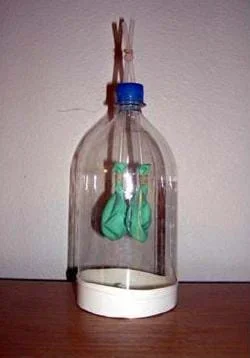 Figure 1. Example lung/diaphragm model made by students.Copyright 2005 Teresa Ellis, ITL Program, University of Colorado at Boulder.
- Guide students who are having trouble by asking questions, such as: Which material might be used to move air through? Which materials might be able to be filled up with air? Of what might the bottom of the chest cavity be made?
- (For teacher only) How to construct the lung/diaphragm model: Step 1) Stick two straws [or tubing] through the two holes in the bottle cap. The straws represent the bronchi. Step 2) Place a balloon on the end of each straw [or tube] and secure with a rubber band. The balloons represent the lungs. Step 3) Feed the balloon ends of the straws through the top of the bottle and screw the lid on tightly. As necessary, use the clay to secure the straws in place. Step 4) Stretch out the larger balloon and place it over the open [cut-off] bottom of the bottle. The larger balloon represents the diaphragm.
- Once teams have constructed their model lungs, have them use their models to demonstrate what happens when the cavity fills up with air. Ask the students: What happens when the diaphragm is pulled? (Pulling the diaphragm down, away from the lungs, inflates the lungs by making the chest cavity larger and decreasing the pressure.) What happens when the diaphragm is pushed? (Pushing the diaphragm in, towards the lungs, deflates the lungs by making the chest cavity smaller and increasing the pressure.) (Make sure students see how air moving in and out of the lungs coincides with diaphragm movement.)
- Have one student in each group blow into the straws to inflate the lungs. Time the class together for one minute, having them count how many breaths they can take through the straws in one minute. Record this number to use when testing the face mask filters later.
With the Student: Part 2 – Creating a Face Mask Pollution Filter
- Now that we all have functioning lung/diaphragm respiratory system models, let's look at the entire system. What are the inputs to the system? (Answer: Air.) What are the outputs to the system? (Answer: Cleaned oxygen and carbon dioxide.) What might happen if the air intake is not clean? What types of things pollute the air? What happens to our lungs and respiratory system when these things pollute the air we breathe?
- Show students the attached Dust in the Respiratory System Visual Aid (PDF) (also see Figure 2) and review what happens at each step of the respiratory system with the inhalation of dust.
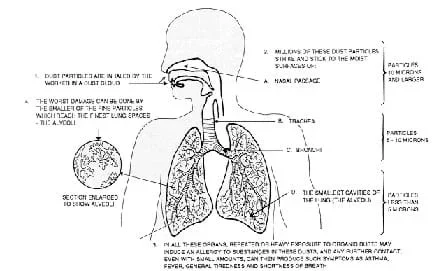 Figure 2. Dust entering the human respiratory system.Copyright Ontario Ministry of Agriculture, Food and Rural Affairs http://www.omafra.gov.on.ca/english/livestock/swine/facts/93-003f1.gif
- Today, our goal is to design a face mask filter that removes some pollutants from the air as a person breathes through it. The filter is for a person to wear over his/her nose and mouth when breathing in polluted air. We will test the filter to see how easy it is to breathe or move air through our model lungs.
- Hand out a design worksheet to each team. Have students fill out their names and define the problem on their worksheets
- Show students the available materials. Using the worksheet, have student teams brainstorm what materials they would use in their design of a filter that could be worn over the mouth to prevent polluted air from entering the respiratory system. Have them draw their designs on their worksheets.
- Have students construct their designs. Allow 15-20 minutes for them to create their face mask filter prototypes (see Figure 3).
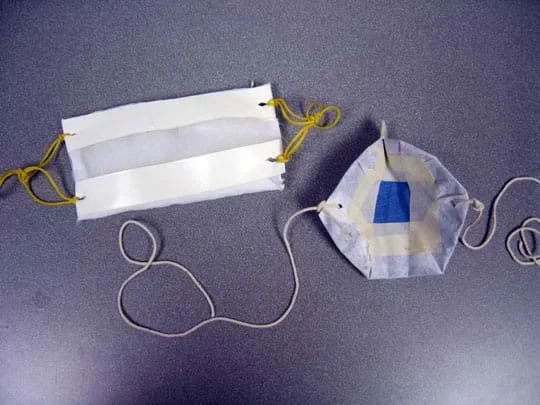 Figure 3: Example face mask filter prototypes made by students.Copyright 2005 Malinda Zarske, ITL Program, University of Colorado at Boulder.
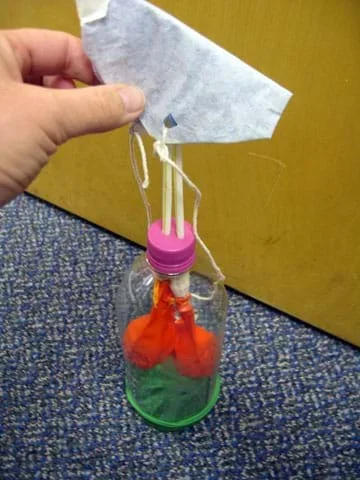 Figure 4: To prepare for testing, a student folds her filter over her lung model.Copyright 2005 Malinda Zarske, ITL Program, University of Colorado at Boulder.
Guide and encourage students by asking them questions, such as: What should engineers consider when designing this type of filter? (Possible answers: Is it is big enough (so that the mask covers both the mouth and nose)? Does it allow the person to still breathe in and out? Does it have gaps where polluted air might still enter the airway? Does it capture the particles that the person wants to avoid? Is it comfortable to wear? How long does it last? How does the filter fit or attach to the face?) Also refer to the "design requirements" generated and written on the board during the activity introduction.
After students have finished their filter prototypes, have them complete the analysis portion of their worksheets. This includes rating the comfort of the mask, how well it attaches to the face, and how well it performs when wet (spray the filter mask with one mist of water to simulate the humidity that results after a time of breathing through the mask).
- Next, have students fold their filter masks over the two straws in their lung models (see Figure 4). Have them blow into the straws, through the filter, to inflate the lungs. Ask the students: Was it harder to inflate the lungs than before? Is it easy to breathe through the filter? Time the class together for one minute, having them count how many breaths they can take through their filters into their model lungs in one minute. Record and compare this number on the worksheets.
- Lead a class discussion about the effectiveness of their filters. Discuss with students the need for filtering devices that can be placed over the nose and mouth when breathing in situations that involve pollution, dust or diseases. Engineers test a variety of materials to find the best combination of materials and design for this type of filter. Ask the students: Did your prototypes perform as you hoped? Did your prototypes meet your desired design requirements? Explain what worked and what did not work. If you could, what changes would you make to create an improved version of your face filter design?
- bioengineering
- The use of artificial tissues, organs or organ components to replace damaged or absent parts of the body, such as artificial limbs and heart pacemakers. Source: The Oxford Pocket Dictionary of Current English, http://encyclopedia.com/doc/1O999-bioengineering.html
- biomedical engineer
- A person who blends traditional engineering techniques with the biological sciences and medicine to improve the quality of human health and life. Biomedical engineers design artificial body parts, medical devices, diagnostic tools, and medical treatment methods.
- constraint
- A limitation or restriction. For engineers, constraints are the limitations and requirements that must be considered when designing a workable solution to a problem.
- diaphragm
- A strong wall of muscle that, when moved downward, creates suction in the chest that draws in air and expands the lungs. The diaphragm separates the chest cavity from the abdominal cavity.
- engineer
- A person who applies his/her understanding of science and math to creating things for the benefit of humanity and our world.
- model
- (noun) A representation of something for imitation, comparison or analysis, sometimes on a different scale. (verb) To simulate, make or construct something to help visualize or learn about something else (as a product, process or system) that is difficult to directly observed or experimented upon.
- prototype
- A first attempt or early design of a new product or creation. May be revised many times.
- system
- An assembly of parts and processes forming a whole:
Pre-Activity Assessment
Worksheet: To review the primary respiratory system components, have students label parts and describe their functions on the Respiratory System Worksheet (PDF). After students are finished, have them volunteer to write the parts and functions on a larger diagram to post in the classroom, or on a projected overhead transparency of the worksheet.
Activity Embedded Assessment
Part 1 - Guiding Questions: Ask students the following questions as they are making and using their lung models:
- What happens when the diaphragm is pulled? Why? (Answer: The lungs expand, increasing volume in the chest cavity, or inhalation.)
- What happens when the diaphragm is pushed? Why? (Answer: The lungs contract, reducing volume in the chest cavity, or exhalation.)
- What happens when you blow air into the straws? Why? (Answer: The lungs expand; air is pushed into the lungs.)
- Why can some people inhale more air than others? (Answer: Just like some people are taller than others, some people have a large chest cavity than others.)
Part 2 - Guiding Questions: Ask students the following questions as they are designing and building the face mask filters:
- What happens when air pollutants get into the lungs? What happens when a lot of pollutants get into the lungs? What might restrict air flow? What happens to the chest cavity? (Some effects include reduced air intake, rapid breathing, mucus build-up, etc.)
Post-Activity Assessment
Sales Pitch! Have student teams pretend to be salespeople who are trying to sell their face mask filters to a manufacturer or a consumer. Have teams create a persuasive poster or flyer, as well as a 10-minute sales pitch of their design for presentation at the next class. Have them incorporate into their sales pitch the components, materials and features of the face mask filter and how it works.
- If students are having trouble breathing through the filter it might be too thick or not porous enough. Suggest they remove the filter mask and re-design it for better air flow.
Have students research indoor and outdoor air pollution health effects and risk factors. What types of air pollution technologies are being designed and improved by engineers? As part of this, have students complete any of the five air pollution technologies activities from Teach Engineering's Pollution Solutions lesson in the Air Pollution unit.
Have students combine the respiratory system model with a circulatory system model. How might an engineer design an artificial lung that hooks into the circulatory system?
- For younger students, create the model lungs following detailed instructions in Teach Engineering's grades 3-5 Just Breathe activity. Then, with a more limited amount of supplies, give students 10 minutes to create their face mask design prototype and 10 minutes to improve their design after testing.
- For older students, see if they can figure out what they might need in order to extend the model to the circulatory system, If they can figure what they need, have them construct it.
Every Breath You Take. 7th Grade Lesson Plan. Posted July 13, 2007. Download Clean Air Lesson Plans, Clean Air Campaign, Georgia Learning Connections. Accessed December 16, 2008. (Source of activity before modifications and additions) http://www.cleanaircampaign.com/for_schools/clean_air_lesson_plans/download_clean_air_lesson_plans
- Biomedical Engineering and the Human Body
Contributors
Malinda Schaefer Zarske; Jay Shah; Denise W. Carlson
Supporting Program
Integrated Teaching and Learning Program, College of Engineering, University of Colorado Boulder
Acknowledgements
The contents of this digital library curriculum were developed under a grant from the Fund for the Improvement of Postsecondary Education (FIPSE), U.S. Department of Education and National Science Foundation GK-12 grant no. 0338326. However, these contents do not necessarily represent the policies of the Department of Education or National Science Foundation, and you should not assume endorsement by the federal government.
Copyright
2008 by Regents of the University of Colorado.