
Sounds All Around
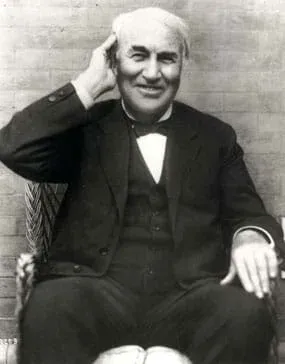 Listen closely.Copyright US National Park Service, public domain image http://www.nps.gov/edis/images/taehandtoear022605007_1.jpg
Students follow the steps of the engineering design process to create their own ear trumpet devices (used before modern-day hearing aids), including testing them with a set of reproducible sounds. They learn to recognize different pitches, and see how engineers must test designs and materials to achieve the best amplifying properties.
Some engineers design devices that assist people with medical disadvantages. To do this, they must understand how the parts of our bodies operate so they can invent devices that mimic the body parts of that require repair or assistance. To design hearing aids, biomedical engineers consider comfort, functionality and shape; electrical enineers design the tiny circuits inside modern hearing aids; and material engineers design a suitable encasement for the circuit. Together, these engineers create a very small, yet very appreciated device.
After this activity, students should be able to:
- Describe the basic concept of a hearing-aid and how sound can be amplified.
- Describe the need for the modern-day hearing aid and how engineers have improved the device with new materials and technologies.
- Describe the differences between background and foreground noises, and high-pitch and low-pitch sounds.
- 5.3.1.a Represent and interpret data.
Grade 5
Do you agree with this alignment?
- The human body is composed of atoms, molecules, cells, tissues, organs, and organ systems that have specific functions and interactions
Grade 7
Do you agree with this alignment? - Create and evaluate models of human body systems and organs
Grade 5
Do you agree with this alignment?
- CCSS.Math.Content.5.MD.B Represent and interpret data.
Grade 5
Do you agree with this alignment?
- Students will develop an understanding of the attributes of design.
Grades K-12
Do you agree with this alignment? - Students will develop an understanding of engineering design.
Grades K-12
Do you agree with this alignment? - Students will develop abilities to apply the design process.
Grades K-12
Do you agree with this alignment? - Students will develop an understanding of the relationships among technologies and the connections between technology and other fields of study.
Grades K-12
Do you agree with this alignment? - Test and evaluate the solutions for the design problem.
Grades 3-5
Do you agree with this alignment? - Technological advances have made it possible to create new devices, to repair or replace certain parts of the body, and to provide a means for mobility.
Grades 3-5
Do you agree with this alignment? - Advances and innovations in medical technologies are used to improve healthcare.
Grades 6-8
Do you agree with this alignment?
- MS-ETS1-1 Define the criteria and constraints of a design problem with sufficient precision to ensure a successful solution, taking into account relevant scientific principles and potential impacts on people and the natural environment that may limit possible solutions.
Grades 6-8
This resource focuses on the following Three Dimensional Learning aspects of NGSS:
Science & Engineering Practices- Define a design problem that can be solved through the development of an object, tool, process or system and includes multiple criteria and constraints, including scientific knowledge that may limit possible solutions.Do you agree with this alignment?
Disciplinary Core Ideas- The more precisely a design task's criteria and constraints can be defined, the more likely it is that the designed solution will be successful. Specification of constraints includes consideration of scientific principles and other relevant knowledge that is likely to limit possible solutions.Do you agree with this alignment?
Crosscutting Concepts- The uses of technologies and any limitations on their use are driven by individual or societal needs, desires, and values; by the findings of scientific research; and by differences in such factors as climate, natural resources, and economic conditions.Do you agree with this alignment?
- All human activity draws on natural resources and has both short and long-term consequences, positive as well as negative, for the health of people and the natural environment.Do you agree with this alignment?
Do you agree with this alignment? - Define a design problem that can be solved through the development of an object, tool, process or system and includes multiple criteria and constraints, including scientific knowledge that may limit possible solutions.
- MS-ETS1-2 Evaluate competing design solutions using a systematic process to determine how well they meet the criteria and constraints of the problem.
Grades 6-8
This resource focuses on the following Three Dimensional Learning aspects of NGSS:
Science & Engineering Practices- Evaluate competing design solutions based on jointly developed and agreed-upon design criteria.Do you agree with this alignment?
Disciplinary Core Ideas- There are systematic processes for evaluating solutions with respect to how well they meet the criteria and constraints of a problem.Do you agree with this alignment?
Do you agree with this alignment? - Evaluate competing design solutions based on jointly developed and agreed-upon design criteria.
- MS-ETS1-4 Develop a model to generate data for iterative testing and modification of a proposed object, tool, or process such that an optimal design can be achieved.
Grades 6-8
This resource focuses on the following Three Dimensional Learning aspects of NGSS:
Science & Engineering Practices- Develop a model to generate data to test ideas about designed systems, including those representing inputs and outputs.Do you agree with this alignment?
Disciplinary Core Ideas- Models of all kinds are important for testing solutions.Do you agree with this alignment?
- The iterative process of testing the most promising solutions and modifying what is proposed on the basis of the test results leads to greater refinement and ultimately to an optimal solution.Do you agree with this alignment?
Do you agree with this alignment? - Develop a model to generate data to test ideas about designed systems, including those representing inputs and outputs.
For the introductory demonstration, the teacher needs:
- ear trumpet images to show students (either print out pictures or overhead transparencies, or view website images; recommend sources: Hearing Aid Museum website at http://www.hearingaidmuseum.com/gallery.htm or Phisick's Antique Ear Trumpet Gallery available through the Deafness and Hearing website:http://phisick.com/item/rein-silver-plated-grand-opera-dome-ear-trumpet/ )
- overhead projector
- clear tub of water and various sized pebbles or marbles, to demonstrate wave propagation
Each group needs:
- scissors
- masking tape, 20 cm
- cotton balls, 2 large
- office or construction paper, 4 sheets
- blindfold
- Shhh... Do You Hear That? Worksheet (PDF), one per person
- Sounds All Around Design & Evaluation Worksheet (PDF), one per person
For the entire class to share:
- roll of paper towels
- assorted raw materials from which teams can design their own ear trumpets, such as plastic soda bottles, disposable cups, cardboard tubes, tubing and plastic sheets, as described next
- 6-8 plastic soda bottles with the bottoms cut off; get the 360 ml (12 oz) size
- 6-8 each, cups made of Styrofoam, plastic and paper; get the 180-240 ml (6-8 oz) size
- 6-8 cardboard tubes from paper towel or toilet paper rolls
- 4-6 segments clear rubber tubing, 0.7 cm inner diameter, 50-80 cm length
- 4-6 segments plastic tubing, 1.5 cm inner diameter, 10-15 cm length
- 4-6 pliable plastic sheets, 15 cm x 12 cm, available at craft stores; alternatively, use blank overhead transparency sheets
- (optional) 4 funnels of various sizes; plastic works best
- Shhh... Did You Hear That? Worksheet (listening and describing sound) (pdf)
- Shhh... Did You Hear That? Worksheet (listening and describing sound) (doc)
- Sounds All Around Design & Evaluation Worksheet (designing ear trumpets) (pdf)
- Sounds All Around Design & Evaluation Worksheet (designing ear trumpets) (doc)
Students should have an understanding of high and low pitch as well as amplitude (different levels of loudness); an understanding of decibels is not necessary. Students should also have an understanding of the parts of the ear, including the pinna and the ear canal, and the concept of a sound wave.
(Demonstration: Have on hand images of ear trumpets, an overhead projector, and a clear tub of water and various sized pebbles or marbles. See Materials List for recommended website sources for ear trumpet images.)
Do you know anyone who has trouble hearing? I know a boy who lost his hearing because he developed an ear infection. Has anyone here had an ear infection before? Lucky for this boy, his hearing loss was not permanent. Once the ear infection went away, all of his hearing returned to normal. But, during the time when he lost his hearing, he had a very rough time — peoples' voices were muffled, and he could not hear the phone, the microwave buzzer, or the school bell. What do you think would have helped him solve this problem at the time? (A temporary hearing aid!)
Have you ever cupped your hand around your ear so you can hear better? Try it! Do things seem louder? Why do you think this is? (Get students to think about the shape; your cupped hand acts to "catch" more of the sound.) Great! A few centuries ago, people used ear horns or ear trumpets to help them hear. Take a look at some of these funny-looking contraptions. (Show students images of ear trumpets.) Some of these were even considered fashion accessories! Why do you think they are shaped the way they are? (Just like our hands, the cone shape helps funnel the sound into the ear canal.) Remember that sound is a wave and sound waves move away from the source in all directions, just like these waves do when I drop an object into the water. (Show this to students by dropping a pebble into a clear tub of water placed on an overhead projector.) For sound though, we cannot see the wave — but we hear it instead.
In today's activity, we are going to explore how ear trumpets work. We will follow the engineering design process to design, build and test our own ear trumpets! Can anyone remember the seven basic steps to the engineering design process? (Ask, Research, Imagine, Plan, Create, Test, and Improve.) Great! Before we get started, let's explore all the sounds around us. Many sounds go unnoticed — these are considered background noises — while others seem to stand out, like my voice or the sounds of music. Let's start today by being very quiet and listening to the sounds around us. (Hand out the Shhh... Do You Hear That?" Worksheet (PDF)and begin the activity.)
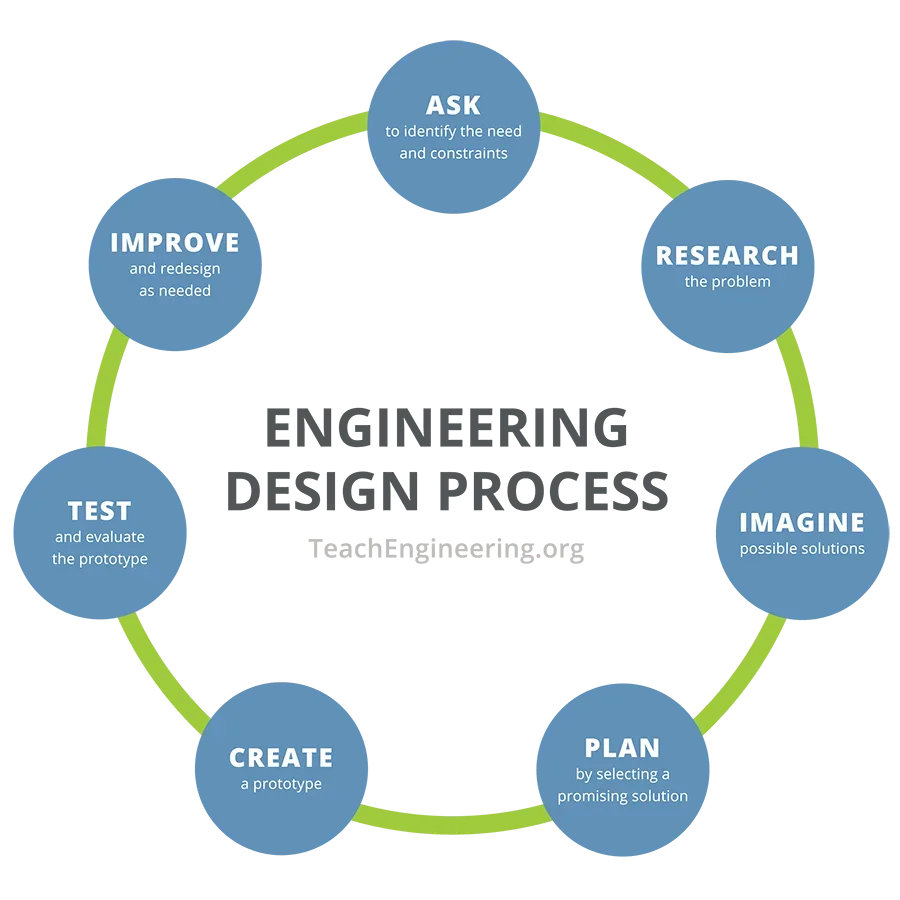 The steps of the engineering design process.Copyright 2014 TeachEngineering.org. All rights reserved.
Background
In historic times, ear trumpets (also known as ear horns) were made from hollowed-out horns from cows, rams or other animals. In later centuries, engineers experimented with different materials such as silver, brass, ocean shells, and more recently, plastic. To aid in his deafness, composer and pianist Ludwig van Beethoven used many of these devices, which in the 1700s and 1800s, were considered a fashion accessory. Today, the ear horn has been replaced with the modern hearing aid, typically worn in the outer ear.
To achieve the highest quality of amplified sound, engineers experimented with different materials and shapes for ear trumpets over the years. Amplitude measures how much energy a particular wave carries. For humans, amplitude is interpreted as loudness or intensity. A material's ability to transmit sound depends on its properties. For example, stiff plastics and rubber tubing transmit sound energy well, while cloth and porous foam absorb sound energy. In addition, the more layers through which sound waves must travel, the more energy that is absorbed and the quieter the sound seems.
Sound travels at different speeds through different materials, or mediums. The speed of sound depends on the stiffness of the medium (measured by a quantity know as the bulk modulus), as well as its density. Sound travels faster in solids than in gases, and faster in less dense mediums than in denser ones. For example, sound travels faster through a metal rod than it does through air, and faster through hydrogen than oxygen due to hydrogen's lower density.
For more information on the many different designs of modern-day hearing aids, see the associated My Mechanical Ear Can Hear! lesson.
Before the Activity
- To introduce the activity, show students ear trumpet images and demonstrate wave propagation by dropping a pebble into a clear tub of water placed on an overhead projector. Recommended sources for images: Hearing Aid Museum: http://www.hearingaidmuseum.com/gallery.htm and Antique Ear Trumpet Gallery: http://phisick.com/item/rein-silver-plated-grand-opera-dome-ear-trumpet/
- Gather materials and make copies of the Shhh... Do You Hear That? Worksheet (PDF), and the Sounds All Around Design & Evaluation Worksheet, (PDF) one each per person.
With the Students
- Have students begin by sitting quietly at their desks, filling out the first worksheet (Shhh...), which is intended to help them identify background noises that often go unnoticed. Allow one minute for students to quietly list all the sounds they hear. No talking allowed. Afterwards, ask students what they heard, the pitches of the different sounds and their relative intensities; this helps to clarify the definitions of pitch and amplitude (or loudness).
- Ask the class to define the problem at hand. Then reiterate by stating the project goal: "Your goal is to engineer an ear trumpet that helps you hear clear, amplified sound when one of your ears is blocked."
- Have students think of various sounds they can create that have different pitches and amplitudes. (Examples: Zipping up a backpack, snapping fingers, shuffling paper, knocking on a desk, tapping a rubber tub with an eraser, slicing scissors, playing a stereo or musical instrument. Make sure to also include voices.) As a class, for the activity, agree to use 6-8 different sounds that include a good mix of high and low pitches that can be reproduced with the same amplitude each time. Together, categorize these sounds as high pitch or low pitch, On their worksheets, have students and rank the sounds, a-i, according to their amplitudes (a being the most quiet [softest] and i being the loudest).
- Divide the class into groups of two students each. Have one person be the "listener" and the other the "observer." Have the "observers" stand in a large circle around the room while the "listeners" stand in the middle with cotton in one ear and blindfolds on. The blindfold helps the cotton stay in place and disguises the direction from which the sound originates.
- Assign the "observers" each one of the pre-determined sounds to make while the "listeners" identify the sound by pointing in the direction from which they heard that sound. (Make this a quiet activity; talking is distracting and unnecessary.) Continue through the a-i list of sounds.
- Once all the list of sounds have been made, have students fill out Part 1 of the second worksheet, either the "For the listener" or the "For the observer" sections, first writing down the list of sounds, a-i, circling H or L for the pitch of each sound. For this step, the listeners should be evaluating how well they can hear the sounds, while the observers should be watching their partners to see if they can identify the sounds and the directions from which they came. This step provides students with a baseline to which they can compare their ear trumpet design later. Repeat this step again with the listeners and observers switched, so each student has the opportunity to experience the baseline case.
- Next, have students follow the steps of the engineering design process to engineer their hearing aid devices (ear trumpets):
- Ask: Identify the needs and constraints of making the ear trumpet.
- Imagine: Introduce the materials available for creating ear trumpets. Give the groups time to think up ideas. (Alternative material distribution idea: Set material prices and give students a maximum budget to spend for each ear trumpet design.)
- Plan: Under the "Plan It!" section of the worksheets, have students draw their agreed-upon team designs and label the materials used for each component of the designs.
- Create: Once designs are teacher-approved, direct student teams to build.
- Test: Once all groups have a device to test, perform steps 4-6 again, using the same sounds as before, and completing the Test It! portion of the worksheets. This enables students to evaluate their designs by ranking how well their devices aided in hearing differently-pitched sounds and voices, and how big of an "ocean-effect" the devices caused, which is considered a design flaw and should be minimized.
- Improve: If time allows, have students make modifications to their original designs. Retest the second design, following steps 4-6 again, recording results on the Improve It! portion of the worksheet. Make sure students recognize their original design flaws and which adjustments improved their ability to hear.
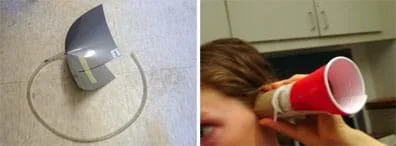 Example student-made hearing aids (ear trumpets).Copyright 2008 Lesley Herrmann, ITL Program, University of Colorado at Boulder.
- Conclude the activity with a class discussion using questions provided in the Assessment section. Ask teams how well their ear trumpets helped them hear and if they could recognize the direction of the sounds more accurately. Have them refer to their evaluations (testing data) as part of the discussion.
- (optional or assign as homework) Have students complete the Conclusion questions on the last page of their worksheets.
- amplify
- To increase the loudness of a sound.
- biomedical engineer
- A person who blends traditional engineering techniques with the biological sciences and medicine to improve the quality of human health and life. Biomedical engineers design artificial body parts, medical devices, diagnostic tools, and medical treatment methods.
- ear trumpet (ear horn)
- A passive, funnel shaped device used to gather sound energy in the form of waves, and direct them into the ear canal.
- hearing aid
- A biomedical device used to assist hearing, consisting of a microphone, an amplifier and a circuit.
- pitch
- The property of a sound measured by its perceived frequency.
Pre-Activity Assessment
First Worksheet: Have students record their observations on the Shhh... Did You Hear That? Worksheet (PDF), which asks them to listen quietly and describe the sounds around them as either soft or loud, low-pitched or high-pitched. Review their answers to gauge their mastery of the subject.
Activity Embedded Assessment
Second Worksheet: Have students follow the engineering design process steps, and document designs and testing results using the Sounds All Around Design & Evaluation Worksheet (PDF). After students have finished their worksheets, have them compare answers in a class discussion.
Post-Activity Assessment
Class Discussion: To conclude, ask the groups how well their ear trumpets helped them hear and whether they could recognize the direction of the sounds more accurately when using them. Have them refer to their worksheet evaluations to compare testing results. Ask the students:
- What shapes worked best? What materials worked best?
- If you had permanent hearing loss, would your ear trumpet be a practical device?
- What makes your ear trumpet difficult to use?
- What properties would an ideal hearing aid device have?
- Warn students of the dangers of putting sharp or small objects into their ears.
- Students should not walk around the classroom with blindfolds on.
Have some Q-Tips on hand for cleaning ears.
Introduce students to more information on musical sound and frequency with the Teach Engineering Making Music lesson.
- For lower grades, have students choose and rank pitches for four sounds instead of six.
- For higher grades, have students keep track of the cost of materials used to make hearing aid devices.
For good photographs and information on ear trumpets and hearing-aids, see the Hearing Center Online's Ear Wax Museum: A History of Making Your Hearing Better website at: http://www.hearingcenteronline.com/museum.shtml
For additional photographs and information on ear trumpets, see the Phisick's Antique Ear Trumpet Gallery, available through the Deafness and Hearing website at: http://www.deafness-and-hearingaids.net/2007/12/04/antique-ear trumpets/
- Biomedical Engineering and the Human Body
Contributors
Lesley Herrmann; William Surles; Malinda Schaefer Zarske; Denise W. Carlson
Supporting Program
Integrated Teaching and Learning Program, College of Engineering, University of Colorado Boulder
Acknowledgements
The contents of this digital library curriculum were developed under a grant from the Fund for the Improvement of Postsecondary Education (FIPSE), U.S. Department of Education and National Science Foundation GK-12 grant no. 0338326. However, these contents do not necessarily represent the policies of the Department of Education or National Science Foundation, and you should not assume endorsement by the federal government.
Copyright
2008 by Regents of the University of Colorado.