
We've Come a Long Way, Baby!
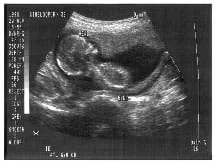 Ultrasound of human fetus at four months.Copyright Jim Gathany, US Department of Health and Human Services http://phil.cdc.gov/PHIL_Images/04182000/00005/Ultrasound_lores.jpg
Students discuss several human reproductive technologies available today — pregnancy ultrasound, amniocentesis, in-vitro fertilization and labor anesthetics. They learn how each technology works, and that these are ways engineers have worked to improve the health of expecting mothers and babies.
Like other animals, human beings instinctively use any resources available to ensure the survival of their species. Engineers respond to this human need by creating technological solutions to reproductive problems. Technologies such as ultrasound, amniocentesis, in-vitro fertilization and anesthetics improve medical care and increase the rate of successful births, thus protecting the human species.
After this lesson, students should be able to:
- Define four reproductive technologies: pregnancy ultrasound, amniocentesis, in-vitro fertilization and labor anesthetics.
- Describe how engineers create technologies to improve the health of mothers and babies.
- Develop, communicate, and justify an evidence-based scientific explanation regarding the functions and interactions of the human body
Grade 7
Do you agree with this alignment?
- Advances and innovations in medical technologies are used to improve healthcare.
Grades 6-8
Do you agree with this alignment?
Students should know how human babies are made. A general familiarity with the human reproductive system helps students understand reproductive technologies.
Several factors affect the number of babies born in a country in any given year, so consider the statistics mentioned earlier within the appropriate contexts. Social factors, such as socio-economic status, marital status, access to reproductive care, the perception of wealth and abundance in a region, and any major health trends, have an effect on these numbers. Biological factors, such as maternal age, family predispositions toward complications, medical history and maternal health practices, also influence the likelihood of an individual woman's carrying a pregnancy through to a live birth. Therefore, the number of live births, and conversely the infant mortality rate, of a country is best understood as a summation of several data points instead of as one data point.
Below are brief summaries of the more detailed information in the four reproductive technology handouts provided with the associated activity, You're the Expert. In addition to the words provided in the Vocabulary/Definitions section, see the vocabulary handout, also provided with the same associated activity.
Pregnancy Ultrasound
Pregnancy ultrasound is a method of seeing the fetus and female pelvic organs during pregnancy. An ultrasound machine sends out high-frequency sound waves that bounce off body structures to create images. More details are provided in the Pregnancy Ultrasound Handout in the associated activity. Less frequently, another method is performed with the probe placed in the patient's vagina (transvaginal ultrasound scanning). This technique often complements conventional ultrasound techniques by providing better detail.
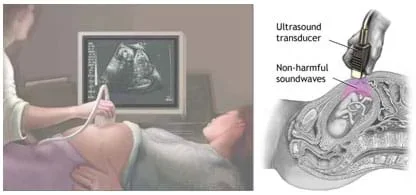 An ultrasound is performed on a pregnant woman.Copyright Medline Plus, US National Library of Medicine and the National Institutes of Health http://www.nlm.nih.gov/medlineplus/ency/presentations/100197_1.htm http://www.nlm.nih.gov/medlineplus/ency/presentations/100197_2.htm
Amniocentesis
Amniocentesis is a common prenatal test in which a small sample of the amniotic fluid surrounding the fetus is removed and examined. It is the most common prenatal test used to diagnose chromosomal and genetic birth defects. More details are provided in the Pregnancy Amniocentesis Handout provided in the associated activity.
In-Vitro Fertilization
In-vitro fertilization, commonly referred to as IVF, is the process of fertilization by manually combining an egg and sperm in a laboratory dish. When the IVF procedure is successful, the process is combined with a procedure known as embryo transfer, in which the embryo is placed in the woman's uterus. More details are provided in the In-Vitro Fertilization Handout provided in the associated activity.
Labor Anesthetics
Biomedical engineers devise medical methods for relieving childbirth pain; some can eliminate most of the pain. Labor medications fall under certain categories. Examples include: analgesics, systemic-analgesics, general anesthesia, local infiltration anesthesia, narcotics, epidurals, walking epidurals, spinal blocks and pudendal blocks. More details are provided in the Labor Anesthetics Handout provided in the associated activity.
How long do you think human reproduction and birth has been occurring? And has human reproduction been successful without any scientific, medical or engineering intervention? Yes, for thousands of years. The evidence lies in the fact that our species has survived! So, why would we need biomedical engineers to conduct any research related to reproduction? Some pregnancies and births have medical issues, such as the baby being born prematurely, labor complications with the mother, birth defects, and other situations that are preventable with prenatal health measures.
Biomedical engineers — along with specialized chemical, electrical, mechanical and optical engineers — invent the instruments and procedures that help doctors to be more effective in treating their pregnant patients. These engineers, along with doctors and nurses, have had a great effect on births in the US. In fact, the infant mortality rate has plummeted from 58.1 deaths per 1,000 live births in 1933 to 6.63 deaths per 1,000 live births in 2004. Prenatal care by pregnant mothers, which typically involves pregnancy ultrasound technologies and Doppler devices, significantly reduces the chance of premature births, reducing the amount of infant health complications and the number of infant deaths.
Several reproductive technologies have had a significant influence on the success with which women go through pregnancy and labor. Can you think of any? (Possible answers: Pregnancy ultrasound, amniocentesis, in-vitro fertilization, labor anesthetics, labor induction medications, incubators, artificial insemination, all the equipment used to monitor the health of premature infants, and more...) What are they, and how did they help?
Today, let's examine four reproductive technologies — pregnancy ultrasound, amniocentesis, in-vitro fertilization and labor anesthetics.
- Pregnancy ultrasound is a method of seeing the fetus and female pelvic organs during pregnancy. An ultrasound machine sends out high-frequency sound waves that bounce off body structures to create an image. (Optional: Show students an example, such as the attached Ultrasound Image (PDF).)
- Amniocentesis is a common prenatal test in which a small sample of the amniotic fluid that surrounds a fetus is removed and examined. This is the most common prenatal test used to diagnose chromosomal and genetic birth defects.
- In-vitro fertilization is the process of fertilization by manually combining an egg and sperm in a laboratory dish. When the IVF procedure is successful, the process is combined with a procedure known as embryo transfer, which places the embryo into the woman's uterus.
- Labor anesthetics are various types of medication that help alleviate a woman's pain during labor. Different anesthetics are appropriate for different mothers and different labor conditions. As an example, perhaps you have heard of an epidural (a shot into the spinal cord delivering drugs that partially numb the lower body for a period of time).
These are four of many reproductive technologies designed and refined by engineers, and used by doctors and medical specialists, to improve the prenatal health and safety of women during pregnancy and childbirth. After the birth, a number of other technologies created by engineers are available to help care for newborns, such as physical monitoring devices, diagnostic testing equipment, and respiratory support for premature infants. Together with people in the medical field, biomedical engineers improve human health and survival.
Back to our initial question, why do we need reproductive technologies in the first place when reproduction and birth occur naturally? (Reinforce the answer given earlier — because of complications that can be avoided with prenatal care or resolved with treatment.)
Let's review the four reproductive technologies that we have learned about (write on the board and have students raise their hands to describe what they know about each):
- Pregnancy ultrasound
- Amniocentesis
- In-vitro fertilization
- Labor anesthetics
Were engineers involved in helping to invent these technologies? What about doctors? (Yes to both.) Mothers were involved in developing these advances, too. What do you think they might have contributed? (Answers: First of all, some of the doctors and engineers may have themselves been mothers. Apart from that, they gave doctors and engineers feedback about what they needed to be healthier and more comfortable.) Are these implemented reproductive technologies important to you? To our society?
- amniocentesis
- A common prenatal test in which a small sample of the amniotic fluid surrounding the fetus is removed and examined to diagnose chromosomal and genetic birth defects.
- anesthetic
- A substance that causes lack of feeling or awareness.
- assisted reproductive technology
- A set of techniques to help a woman achieve pregnancy after other surgical and hormonal methods have failed, encompassing controlled ovarian hyperstimulation (COH) and intrauterine insemination (IUI), in-vitro fertilization-embryo transfer (IVF-ET), gamete intrafallopian transfer GIFT and zygote intrafallopian transfer (ZIFT). Abbreviated as ART.
- biomedical engineering
- The application of engineering techniques to the understanding of biological systems and the development of therapeutic technologies and devices. Kidney dialysis, pacemakers, synthetic skin, artificial joints, reproductive technologies, and prostheses are some products and processes of biomedical engineering. Also called bioengineering.
- engineer
- A person who applies his/her understanding of science and math to creating things for the benefit of humanity and our world.
- in vitro fertilization
- Fertilization by manually combining an egg and sperm in a laboratory dish. Abbreviated as IVF.
- insemination
- To impregnate by intercourse or by artificially injecting semen into the uterus.
- prenatal
- Existing or taking place before birth.
- trimester
- In human pregnancy, a period of time lasting approximately three months.
- ultrasound
- A method of seeing the fetus and female pelvic organs during pregnancy. An ultrasound machine sends out high-frequency sound waves that bounce off body structures to create an image. Also called a sonogram.
Pre-Lesson Assessment
Discussion Topic: Ask students to recall any examples they have heard of technology being used in relation to reproduction. Have they ever seen an ultrasound image of a fetus inside a woman's uterus? Have they heard of women using drugs to ease childbirth pain? Some students may have heard of these topics from family experiences.
Post-Introduction Assessment
Voting: Ask a true/false question and have students vote by holding thumbs up for true and thumbs down for false. Tally the votes and write the totals on the board. Give the right answer.
- True or False: The four reproductive technologies we just mentioned were invented by engineers during the last ten years. (Answer: False. All of these technologies have been in existence for several decades.)
- True or False: If a mother has the money to pay for advanced reproductive treatments, she can avoid the possibility of a miscarriage. (Answer: False. Unfortunately, any pregnancy is subject to the risk of a miscarriage.)
Lesson Summary Assessment
Flashcards: Have each student on a team create a flashcard with a question on one side and its answer on the other. If the team cannot agree on the answers, they should consult the teacher. Pass the flashcards to the next team. Each member of the team reads a flashcard, and everyone attempts to answer it. If they are right, they pass the card to the next team. If they feel they have another correct answer, they should write it on the back of the flashcard as an alternative. Once all teams have compelted all the flashcards, clarify any questions. Sample questions:
- True or False: Amniocentesis is the most common prenatal test used to diagnose chromosomal and genetic birth defects? (Answer: True)
- True or False: A pregnancy ultrasound uses the sound waves made by the movement of the fetus to generate an image. (Answer: False. The ultrasound uses a transmitter that sends and receives waves, and measures the time they take to bounce back.)
- Is there more than one type of labor anesthetic? (Answer: Yes. There are many types of labor anesthetics.)
- True or False: The likelihood that a woman will give birth to twins decreases if she uses in-vitro fertilization. (Answer: False. The likelihood increases.)
- What types of engineers work with medical doctors and patients to develop prenatal health technologies? (Answer: Biomedical engineers, along with engineers specializing in medical applications from chemical, electrical, mechanical and optical engineering.)
Homework
Educational Literature: Individually or in groups, have students design and mock up informational pamphlets about each reproductive technology. The audience could either be the same audience as in the lesson (a group of engineering students unfamiliar with the topic), or it could change to include women at a pregnancy clinic, etc.
Since there is so much vocabulary to learn for this lesson, give students a quiz in which they must match each vocabulary word to its definition.
Have students debate any societal issues surrounding reproductive technologies. Write points and counterpoints on the board. Since this topic could evoke strong feelings, emphasize the skill aspect of debating over the emotional aspect. Prenatal care includes doctor's visits using tools and technologies designed by engineers.Copyright The National Women's Health Information Center http://www.womenshealth.gov/pregnancy/pregnancy/doctors.cfm.
See example ultrasound images at the MedlinePlus Medical Encyclopedia at http://www.nlm.nih.gov/medlineplus/ency/article/003778.htm or the CDC's Public Health Image Library at http://phil.cdc.gov/phil/
Amniocentesis, Medical References, Quick References: Fact Sheets. Updated August 2008. March of Dimes Foundation. Accessed February 17, 2009. http://www.marchofdimes.com/professionals/14332_1164.asp
Durham, Janelle. Transition to Parenthood: Some Statistics for Pregnancy, Labor and Birth. January 2003. Janelle Durham. Accessed February 17, 2009. http://transitiontoparenthood.com/ttp/foreducators/ceinfo/stats.htm
The Fertility Race: Statistics. Updated September 20, 1999. American Public Media. Accessed February 17, 2009. http://americanradioworks.publicradio.org/features/fertility_race/common/stats.shtml
Grossman, Neil. Pregnancy Ultrasound. Medical Encyclopedia. Updated January 29, 2009. Medline Plus, U.S. National Library of Medicine and the U.S. National Institutes of Health. Accessed February 17, 2009. (information and photographs) http://www.nlm.nih.gov/medlineplus/ency/article/003778.htm
In-Vitro Fertilization: IVF. Updated May 2007. American Pregnancy Association. Accessed February 17, 2009. http://www.americanpregnancy.org/infertility/ivf.html
Kochanek, Kenneth and Martin, Joyce. Supplemental Analyses of Recent Trends in Infant Mortality. Last reviewed October 15, 2008. Centers for Disease Control and Prevention, U.S. Department of Health and Human Services. Accessed February 17, 2009. http://www.cdc.gov/nchs/products/pubs/pubd/hestats/infantmort/infantmort.htm
Medications for Labor, Labor and Birth. Pregnancy-Info.Net. Accessed February 17, 2009. http://www.pregnancy-info.net/labor_medication.html
Contributors
Kristin Field; Malinda Schaefer Zarske; Denise W. Carlson
Supporting Program
Integrated Teaching and Learning Program, College of Engineering, University of Colorado Boulder
Acknowledgements
The contents of this digital library curriculum were developed under grants from the Fund for the Improvement of Postsecondary Education (FIPSE), U.S. Department of Education and National Science Foundation (GK-12 grant no. 0338326). However, these contents do not necessarily represent the policies of the Department of Education or National Science Foundation, and you should not assume endorsement by the federal government.
Copyright
2008 by Regents of the University of Colorad