
Aqua-Thrusters!
Students construct small-sized model rocket-powered boats—"aqua-thrusters"—that are made from film canisters propelled by carbon dioxide gas produced from a chemical reaction between antacid tablets and water. They make predictions and experiment to observe the effect that surface area of this simulated solid rocket fuel has on the resulting rocket thrust. A worksheet is provided to guide the experiment.
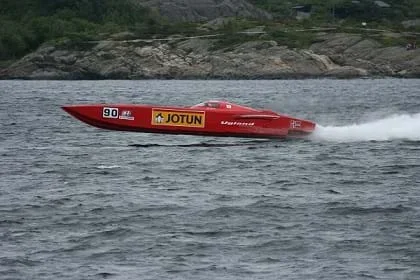 Students test fuel variations in their own mini-powerboats.Copyright 2007 liknes, Wikimedia Commons https://commons.wikimedia.org/wiki/File:Jotun_powerboat.jpg
Engineers design powerful propellants to launch rockets into space. To design propellants with enough thrust, they must understand the chemical properties of various propellants. Factors such as propellant weight are also considered for space and air flight.
After this activity, students should be able to:
- Explain that thrust can be created by a chemical reaction and what affects it.
- Compare the motion of a model rocket-boat to a rocket designed to travel in space.
- Describe some of the factors that engineers consider when choosing propellants for rocket design.
- 4.4.1 Appropriate measurement tools, units, and systems are used to measure different attributes of objects and time.
Grade 4
Do you agree with this alignment? - 3.4.3 Time and attributes of objects can be measured with appropriate tools.
Grade 3
Do you agree with this alignment?
- Identify and describe the variety of energy sources
Grade 4
Do you agree with this alignment?
- Models are used to communicate and test design ideas and processes.
Grades 3-5
Do you agree with this alignment? - Energy comes in different forms.
Grades 3-5
Do you agree with this alignment?
- 4-PS3-4 Apply scientific ideas to design, test, and refine a device that converts energy from one form to another.
Grade 4
This resource focuses on the following Three Dimensional Learning aspects of NGSS:
Science & Engineering Practices- Apply scientific ideas to solve design problems.Do you agree with this alignment?
Disciplinary Core Ideas- Possible solutions to a problem are limited by available materials and resources (constraints). The success of a designed solution is determined by considering the desired features of a solution (criteria). Different proposals for solutions can be compared on the basis of how well each one meets the specified criteria for success or how well each takes the constraints into account.Do you agree with this alignment?
- Energy can also be transferred from place to place by electric currents, which can then be used locally to produce motion, sound, heat, or light. The currents may have been produced to begin with by transforming the energy of motion into electrical energy.Do you agree with this alignment?
- The expression "produce energy" typically refers to the conversion of stored energy into a desired form for practical use.Do you agree with this alignment?
Crosscutting Concepts- Science affects everyday life.Do you agree with this alignment?
- Energy can be transferred in various ways and between objects.Do you agree with this alignment?
- Engineers improve existing technologies or develop new ones.Do you agree with this alignment?
- Most scientists and engineers work in teams.Do you agree with this alignment?
Do you agree with this alignment? - Apply scientific ideas to solve design problems.
- 5-PS1-4 Conduct an investigation to determine whether the mixing of two or more substances results in new substances.
Grade 5
This resource focuses on the following Three Dimensional Learning aspects of NGSS:
Science & Engineering Practices- Conduct an investigation collaboratively to produce data to serve as the basis for evidence, using fair tests in which variables are controlled and the number of trials considered.Do you agree with this alignment?
Disciplinary Core Ideas- When two or more different substances are mixed, a new substance with different properties may be formed.Do you agree with this alignment?
Crosscutting Concepts- Cause and effect relationships are routinely identified, tested, and used to explain change.Do you agree with this alignment?
Do you agree with this alignment? - Conduct an investigation collaboratively to produce data to serve as the basis for evidence, using fair tests in which variables are controlled and the number of trials considered.
Each group needs:
- 1 antacid tablet, such as Alka-Seltzer™ brand; do not use Tums™ brand; prepared by splitting in half and crushing one half-tablet into powder
- 1 film canister; film canisters are readily available at no charge from camera shops and stores where photographic film is processed, such as grocery stores, Target, Wal-mart and Costco; these businesses recycle the canisters and are often willing to donate them for educational use; most often, they have the solid black canisters (see Figure 1, center), which are good for this activity; the elliptical-shaped canisters used for Advantix® film also work for this activity (see Figure 1, left)
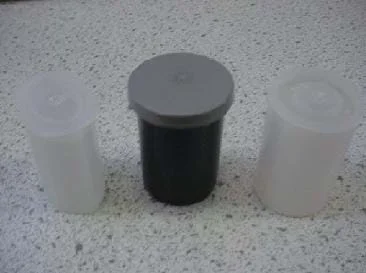 Figure 1. Example film canisters.Copyright 2003 Jeff White, College of Engineering and Applied Science, University of Colorado Boulder
- 1 stopwatch or a clock with a second hand
- small piece of construction paper, a strip of heavy tape (such as electrical tape), or a small cutout of dense foam
- Aqua-Thruster Worksheet (PDF), one per student
To share with the entire class:
- pin, to poke holes in the plastic film canister lids
- scissors
- blunt object such as a heavy textbook or brick
- safety glasses, enough pairs for the largest group
- large sink, tub or other plastic/glass container to hold water
An introduction to thrust and Newton's laws of motion.
Have you ever been in a boat? How did it move? Did it use a motor? How about a paddleboat? They move when you use your legs to push the spinning pedals. Let's think about Maya in her canoe. How does she move the canoe? She uses her own energy to move through the water using paddles that she dips into the water using her arms. If she were on a sailboat, the wind would push her along. Do you think Maya's canoe or any other boat could be powered with a rocket? Yes, it can! Rockets burn propellant—which is a combination of fuel and oxygen—to create enough thrust to get into space. What is thrust? That's right, it is the forward motion of an object as a force pushes away from the object in the opposite direction.
Today, we will make a mini rocket-powered boat using an antacid tablet and water. The antacid and water form a chemical reaction and produce a gas, just like the solid propellant on a real rocket. If we capture this gas and then release it, we can create thrust. How might we control how much thrust is generated by a propellant? (Brainstorm ideas with students.)
When propellants burn, an immense amount of pressure is created. This pressure is released through the nozzle or opening of a container. The smaller the nozzle that the chemical reaction pressure is forced through, the more thrust—or forward motion—is created. Think about a garden hose. Have you noticed that if you make the nozzle on the garden hose smaller, then the water comes out in a faster stream? This is the type of stream you use to wash your car compared to the more open nozzle and slower stream you may use to water plants.
As Tess' engineering team you must acquire a good understanding of the chemical reaction occurring in the rocket. You must understand the different factors that affect the thrust, such as the type of propellant, the temperature, the pressure, and whether the propellant makes the rocket move forward in a smooth or choppy motion. With all this dangerous fuel onboard, Tess' engineering team must do a good job designing the thrust system so that everyone is safe and the mission is a success. Engineers need to consider all of these factors when choosing propellants and designing containers for propellants. Are you ready to build your rocket-boats? Let's go!
(Note: For the purpose of this activity, the terms "rocket-boat" and "aqua-thruster" are used interchangeably.)
Before the Activity
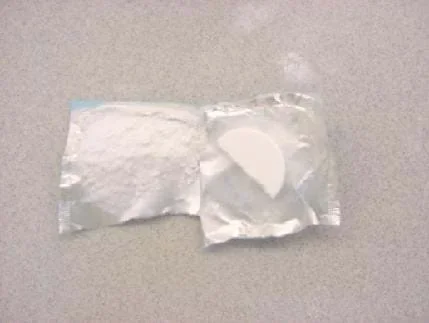 Figure 2. The experiment compares solid "rocket" fuel (antacid) in powder (left) and tablet (right) form.Copyright 2003 Jeff White, College of Engineering and Applied Science, University of Colorado at Boulder
- Gather materials and make copies of the Aqua-Thruster Worksheet (PDF).
- Remove the antacid tablets from their packaging and break them in half. Prepare the the crushed half-tablets, cleaning up any spilled white powder. Refer to Figure 2 and the Troubleshooting Tips section.
- Use a pin to poke a small hole into each film canister lid, the smaller the better. Positioning the hole as close to the edge as possible without hitting the seal is best (see Figure 3).
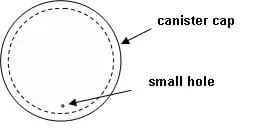 Figure 3. Canister cap with hole.Copyright 2004 Jeff White and Luke Simmons, College of Engineering and Applied Science, University of Colorado Boulder
- Fill the LARGE sink or plastic/glass tub with water.
With the Students: Test 1
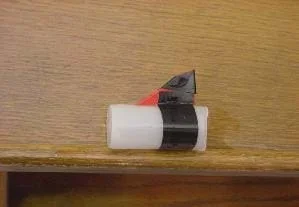 Figure 4. A rocket-boat or aqua-thruster with a keel.Copyright 2003 Jeff White, College of Engineering and Applied Science, University of Colorado Boulder
- Divide the class into student pairs. Hand out the worksheets.
- Give each group a film canister and lid with a pinhole already poked into it.
- Have students make and attach a fin or keel to their aqua-thrusters. Use a small piece of dense foam, folded construction paper or even tape doubled over on itself and cut to a fin shape. Doing this helps the model speedboats keep their pinhole nozzles in the water and travel straight (see Figure 4).
- Have each student sketch his/her team's aqua-thruster on the worksheet and predict how long they think the thrust will last.
- Give each group a solid half-tablet. (Note: Only give out antacid tablets as needed so that the instructor knows that all tablets are accounted for and used appropriately in the experiment.)
- One group at a time, have students fill their canister 3/4 full of water from the sink, drop in a solid half-tablet, snap on the lid, start the stopwatch, and set it in the water. Make sure the pinhole nozzle is under water! Note: Make sure the students in the testing group wear safety glasses.
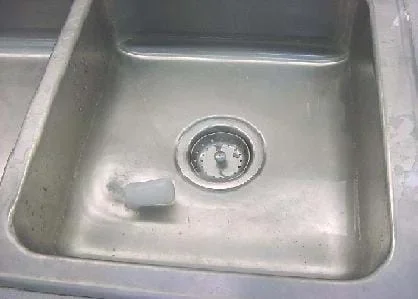 Figure 5. An aqua-thruster moving in a sink.Copyright 2003 Jeff White, College of Engineering and Applied Science, University of Colorado Boulder
- Have students stop the stopwatch when the thrust fully ends. Then, direct them to complete the Test 1 section of the worksheet while other teams conduct their tests.
With the Students: Test 2
- Direct the teams to repeat repeat the experiment with a crushed half-tablet.
- Once testing is done, direct each student to complete the rest of the worksheet.
- thrust
- The forward motion of an object as a force pushes away from the object in the opposite direction.
Pre-Activity Assessment
Brainstorming: In small groups, have students engage in open discussion. Remind them that no idea or suggestion is "silly" when brainstorming. All ideas should be respectfully heard. Ask the students:
- Is there any way that we can control how much thrust is generated by a propellant?
Prediction: Have students predict the following:
- Will more thrust be generated when using a solid or crushed tablet?
Activity Embedded Assessment
Worksheet: Have students record measurements and follow along with the activity using the Aqua Thruster Worksheet. (PDF) After students have completed the worksheet, have them compare answers with their peers. Review student data and answers to gauge their engagement and comprehension.
Post-Activity Assessment
Concluding Discussion: Ask the students the following questions and discuss as a class:
- What is creating the thrust? (Answer: The water being expelled from the hole produces an equal and opposite force forward, as described by Newton's third law of motion.)
- After the tests, we saw almost no water left in the canisters. Was the water turned into a gas by the reaction? (Answer: No, the water allowed the solid particles in the antacid to mix and react.)
- Was the water pushed out of the small nozzle by the expanding gas created by the reaction? (Answer: Yes, as the mass of the water was pushed out of the nozzle, a force was generated forward on the canister.)
- Does propellant with a more surface area produce more or less thrust than one with less surface area? (Answer: It produces more thrust since more propellant can react more to produce more energy. Compare this to the time it takes to eat a lollipop if you lick it copared to breaking it into pieces with your teeth. More surface area is created by breaking the candy into pieces, helping it to dissolve faster. The same is true with a solid fuel.)
- Will more thrust be generated by using a solid tablet or a crushed tablet? (Answer: The crushed tablet generates more thrust since it has more surface area.)
- What state of matter is created when an antacid tablet is combined with water, forming a chemical reaction? (Answer: A gas made of carbon dioxide.)
Engineering Applications: Ask students to reflect upon their aqua-thrusters. Engineers often create prototypes or models of designs before they build the full-scale real objects, structures or products. If students were engineers challenged to design a life-sized rocket boat for use in a lake or ocean, what would they need to consider for the real design? Have students come up with a list or discuss what they would need to learn more about before building the real thing. (Example answers: Consider the propellant type, temperature, pressure, safety of the design, whether the propellant makes the boat move forward in a smooth or choppy motion, and the size or conditions in the body of water.)
Re-Design Practice: Have students list on their Aqua-Thrust Worksheets (PDF) any design or fabrication changes they would make to their rocket-boats to make them work better next time. Review student answers to gauge their depth of understanding.
Remind students not to put the antacid tablets (crushed or solid) in their mouths; eating a solid tablet could make a student very sick.
Hand out antacid only as necessary; do not give each group a "supply" in advance.
Require students to wear safety glasses when testing their aqua-thrusters.
In order to effectively use half-tablets of antacid in both solid and powder form, use the following suggested preparation method:
- Use scissors to cut a two-tablet packet down the middle (between the two tablets).
- Take both tablets out and break them each in half as evenly as possible.
- Place one half of each of the tablets back into its packet.
- Hold the open end shut and use a blunt object to crush the half tablet in the packet. This takes some practice but works well. Repeat for the other tablet. Now you have two crushed half tablets nicely contained in their packets and two solid half-tablets!
- Have students try canister caps with different sized pinholes to see how that affects the thrust.
- Have students alter their designs so they simulate a catamaran by using two film canisters connected together side-by-side. Have them put half-tablets in each canister. Assign them each to write a paragraph about what they observed.
- Have students create a mega aqua-thruster. Instead of providing a film canister, give teams small plastic water bottles or any other bottles with screw-on tops. See if they can generate thrust by using multiple antacid tablets, or baking soda and vinegar. Remind students that weight becomes an issue with these larger bottles and thus more propellant is required.
- Rockets
- Keep in Touch: Communications and Satellites
- Newton Gets Me Moving
- Using Thrust, Weight & Control: Rocket Me into Space
- Blast Off: Generating Rocket Thrust with Propellants
- Fuel Mystery Dis-Solved!
- Aqua-Thrusters!
- Pop Rockets
- Learn to Build a Rocket in Five Days or Your Money Back
- Where Am I: Navigation and Satellites
Contributors
Jeff White; Brian Argrow; Luke Simmons; Jay Shah; Malinda Schaefer Zarske; Janet Yowell
Supporting Program
Integrated Teaching and Learning Program, College of Engineering, University of Colorado Boulder
Acknowledgements
The contents of this digital library curriculum were developed under grants from the Fund for the Improvement of Postsecondary Education (FIPSE), U.S. Department of Education, and National Science Foundation (GK-12 grant no. 0338326). However, these contents do not necessarily represent the policies of the Department of Education or National Science Foundation, and you should not assume endorsement by the federal government.
Copyright
2006 by Regents of the University of Colorado