
Solar Power
In this activity, students learn how engineers use solar energy to heat buildings by investigating the thermal storage properties of some common materials: sand, salt, water and shredded paper. Students then evaluate the usefulness of each material as a thermal storage material to be used as the thermal mass in a passive solar building.
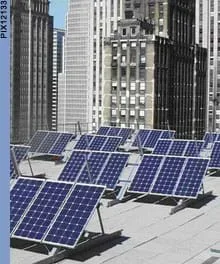 Figure 1. Roof-top solar panels.Copyright US Department of Energy, Federal Energy Management Program, http://www.eere.energy.gov/
Engineers design technologies that can turn sunlight into electricity to power households and businesses. For example, photovoltaic arrays and concentrating mirrors harness the Sun's energy and generate heat or electricity for general use. Engineers continually develop better ways to efficiently capture the Sun's plentiful energy capabilities.
After this activity, students should be able to:
- Understand and explain how passive solar heating works.
- Describe the difference between passive and active solar heating.
- Describe materials that are appropriate for use as thermal mass and insulation in passive solar heating.
- Explain how engineers design passive and active solar heating systems for buildings.
- 5.4.2.a Graph points on the coordinate plane to solve real-world and mathematical problems.
Grade 5
Do you agree with this alignment? - 5.3.1 Visual displays are used to interpret data.
Grade 5
Do you agree with this alignment? - 3.3.1.a Represent and interpret data.
Grade 3
Do you agree with this alignment? - 4.4.1 Appropriate measurement tools, units, and systems are used to measure different attributes of objects and time.
Grade 4
Do you agree with this alignment?
- Energy comes in many forms such as light, heat, sound, magnetic, chemical, and electrical
Grade 4
Do you agree with this alignment? - Identify and describe the variety of energy sources
Grade 4
Do you agree with this alignment?
- CCSS.Math.Content.4.MD.B Represent and interpret data.
Grade 4
Do you agree with this alignment? - CCSS.Math.Content.5.G.A Graph points on the coordinate plane to solve real-world and mathematical problems.
Grade 5
Do you agree with this alignment? - CCSS.Math.Practice.MP2 Reason abstractly and quantitatively.
Grades K-12
Do you agree with this alignment? - CCSS.Math.Practice.MP5 Use appropriate tools strategically.
Grades K-12
Do you agree with this alignment?
- Energy comes in different forms.
Grades 3-5
Do you agree with this alignment?
- 4-PS3-2 Make observations to provide evidence that energy can be transferred from place to place by sound, light, heat, and electric currents.
Grade 4
This resource focuses on the following Three Dimensional Learning aspects of NGSS:
Science & Engineering Practices- Make observations to produce data to serve as the basis for evidence for an explanation of a phenomenon or test a design solution.Do you agree with this alignment?
Disciplinary Core Ideas- Energy can be moved from place to place by moving objects or through sound, light, or electric currents.Do you agree with this alignment?
- Energy is present whenever there are moving objects, sound, light, or heat. When objects collide, energy can be transferred from one object to another, thereby changing their motion. In such collisions, some energy is typically also transferred to the surrounding air; as a result, the air gets heated and sound is produced.Do you agree with this alignment?
- Light also transfers energy from place to place.Do you agree with this alignment?
- Energy can also be transferred from place to place by electric currents, which can then be used locally to produce motion, sound, heat, or light. The currents may have been produced to begin with by transforming the energy of motion into electrical energy.Do you agree with this alignment?
Crosscutting Concepts- Energy can be transferred in various ways and between objects.Do you agree with this alignment?
Do you agree with this alignment? - Make observations to produce data to serve as the basis for evidence for an explanation of a phenomenon or test a design solution.
Each group should have:
- 1 cardboard box (shoe boxes w/ removable lids work well)
- 1 paintbrush
- black paint
- newspaper (to put under the boxes while painting)
- 4 small metal cans (such as soup or vegetable cans)
- 1 cup sand
- 1 cup salt
- 1 cup water
- 1 cup shredded paper
- 1-cup measuring cup
- 5 thermometers
- masking tape
- chopsticks or plastic utensils for stirring
- potholders/hot mitts
- 4 Solar Power Data Sheet (one per student)
Note: Try to collect cans that are approximately the same size. Have students bring cardboard boxes and cans from home.
People have been using the Sun to heat their homes for centuries. This is called passive solar heating. Passive solar heating systems use only the structure (floors, walls, windows) to collect, store and distribute heat from the Sun in the winter and reject heat from the Sun in the summer. Have you every touched the side of a building that has been in the sun or sat in a sunny spot on the carpet? It feels warmer. That is because of passive solar heating. The light from the sun is turned into heat. People from different cultures and regions throughout history have used passive solar heating to keep warm. The ancient dwellings at Mesa Verde National Park, in southwestern Colorado, incorporate passive solar design concepts in their designs.
Passive solar design can be used in most parts of the world, but it works best in places with clear skies. Do you know why this is true? (Answer: More energy can be harnessed when a solar system is exposed to more Sun.) Passive systems are used most commonly for smaller buildings, although some aspects (such as daylighting — that is windows, shading, etc.) can be used in commercial construction. In colder climates, passive solar design is used for heating purposes, and in hot climates, it is actually used for cooling purposes.
Another type of solar heating is active solar heating. Active solar heating collects the Sun's energy in solar collectors, converts the energy into heat, and uses the heat to warm fluid (water, air or alcohol) that circulates through a building. Active solar heating systems use mechanical and electrical components to control the movement of a warmed fluid. Active systems require more advanced design, installation and maintenance than passive systems.
Scientists estimate that the amount of solar energy received by the Earth in one day is enough to supply our current energy needs for 30 years! The amount of solar energy that reaches one acre of land in the U.S. is about equal to the energy value of eleven barrels of oil. Energy from sunlight can be converted to useable energy by a variety of technologies designed by engineers. Two different technologies, photovoltaic arrays and concentrating mirrors, change light into electricity. Many different types of engineers are designing these technologies to help reduce air pollution and to help use renewable energies.
Background
Photovoltaic Cells
Commonly called solar or PV cells, photovoltaic cells have powered satellites for decades. Solar cells are also located on calculators, road signs and outdoor lights. Currently, photovoltaic cells are made of certain materials, called semiconductors, of which silicon is the most common. Whenever light hits a PV cell, the cell absorbs some of the light's energy. This energy can knock electrons loose from the atoms of the semiconductor material. An electrical device on the PV cell forces these loose electrons to move in a particular direction, thus creating an electric current. Metal contacts at the top and bottom of a photovoltaic cell — like the terminals on a battery — connect the PV cell to an electric circuit. This circuit may be the electrical system of a building or a single device (like a solar calculator).
Solar electric systems for homes and businesses can be stand-alone systems (utility independent) or linked to the utility grid (called grid-tie or utility-interface systems). In stand-alone systems, the consumer produces all their own electricity with PV or a combination of PV other sources. Most stand-alone systems require batteries to store electricity for use during the night and cloudy periods. In grid-tie systems, the consumer uses electricity produced by their solar panels and can sell excess to or buy extra electricity from the utility company. Grid-tie systems may or may not have battery storage components.
The design, production, and installation of photovoltaic systems require many different types of engineers. Materials engineers, electrical engineers and physicists develop the materials and circuitry of the photovoltaic cells. Mechanical engineers, materials engineers and manufacturing engineers design the systems that produce PV cells. Electrical engineers and civil engineers design photovoltaic systems for homes and businesses. Engineers and scientists are working to make solar electricity feasible for everyone. One promising development is making PV cells from thin films rather than single silicon crystals. This technique may make photovoltaic systems more affordable.
Solar Concentrators
Engineers are also working on several other technologies (besides PV cells) to generate electricity from sunlight. One of the most efficient methods appears to be types of power plants that produce electricity by concentrating and converting the Sun's energy into high-temperature heat using various mirror configurations. The heat is then channeled through a conventional generator.
The most common type of solar concentrator is a power-tower system. The Sun's energy is concentrated by a field of hundreds or even thousands of mirrors (called heliostats) onto a receiver located on top of a tower. This energy heats molten salt flowing through the receiver, and the salt's thermal energy is then used to generate electricity in a conventional steam generator. Engineers use molten salt because it retains thermal energy efficiently, and it can be stored for hours or even days until it is needed to generate electricity. This is important since we use electricity even when we do not receive sunlight (at night or during overcast days).
A second kind of solar concentrator being developed by engineers is a trough system. This technology concentrates the Sun's energy with parabolic-curved, trough-shaped reflectors onto a receiver pipe running along the inside of the curved surface. This energy heats oil flowing through the pipe, and the heat energy is then used to generate electricity in a conventional steam generator.
Solar Water Heaters
A solar water heater works by exposing a fluid to the Sun, which warms up and then harvests that energy in a collector. If a passive solar water heater is used, water that is heated directly by the Sun is stored for use as needed and then natural convection circulates the water.
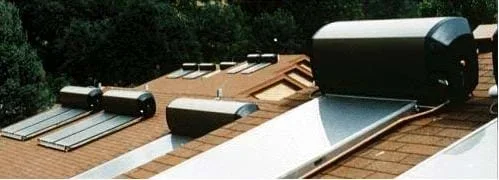 Figure 2. Solar water heaters.Copyright US Department of Energy, Federal Energy Management Program, http://www.eere.energy.gov/femp/pdfs/FTA_solwat_heat.pdf photo by Jim Schwerm.
Unfortunately, solar water heaters cannot always meet the hot water demand of a home. Conventional water heaters can provide additional heating of the stored water. Typical solar water heaters reduce the need for conventional water heating by about two-thirds. Today's solar water-heating systems can provide 50%–80% of a typical household's hot water demand, depending on the local climate, system size and type. Water heating systems that use a solar water heater to provide most of the heating with a gas water heater used to supply any additional heating are the most efficient and reliable.
Before the Activity
- A few days before the activity, collect boxes and cans from students. The boxes should be large enough to accommodate four cans with thermometers.
- The day before the activity, have each team paint the outside of a cardboard box black.
- Discuss the ideas of solar heating/cooling as a class. Ask students what they know about solar power and how it works.
- Set up stations for each filling material: sand, salt, water, shredded paper, measuring cups or jars.
- Make copies of the Solar Power Data Sheet.
With the Students
- Divide students into groups of 4.
- Distribute four cans, five thermometers, and one pre-painted box to each team of students. Have teams put identifying tags or stickers on their box.
- Ask students to rip off 8 3-4" pieces of masking tape. On four pieces of the tape, have students write their team name. Put one label on each of the cans. On the remaining four pieces of tape, groups should write the contents of the can (sand, salt, water, shredded paper, etc.). Put one piece of tape on each of the four cans.
- Have each team member put one cup of filling in the appropriately-labeled can and carefully place a thermometer in the can. (Note: When filling a container with sand or salt, fill the container half way, add the thermometer, and then put in the rest of the filling.)
- Have students record the initial temperature of each filling on their Solar Power Data Sheet.
- Ask students to place all their containers inside their box, but leave the top off for now.
- Next, if using shoe boxes, it may be necessary to cut a small hole for each thermometer in the top: have students mark the spot for each thermometer on the lid of the box and cut out as small of hole as possible for each thermometer. (Note: you may have to help kids with this task, as thermometers can easily break.)
- Take the containers and boxes outside to a sunny location.
- Have students carefully place the lid on their boxes. (Note: If it was necessary to cut holes in the box lid, be sure to remind students to thread their thermometers through the small holes that they previously created.) Use a piece of tape to secure the lid, if necessary.
- As a class, measure and record the outside temperature. Have students record the temperature on their Solar Power Data Sheet.
- Leave the boxes undisturbed for 30 minutes.
- Take spare thermometers outside. Have teams take turns opening their boxes. Each team should take the temperature of the air inside the box (using the spare thermometer) and record the temperature of the contents in each can on their Solar Power Data Sheet. Remind them to replace the box lid when they are finished.
- Leave the boxes undisturbed for another 30 minutes. Repeat the previous step at least two more times.
- Have each student construct a graph showing how the temperature in the box and the temperature of each material changed with time. Ask students to identify any patterns and relationships using the data and graph.
- Clean-up Reminder: the cans, newspaper, and shredded paper can be recycled. The salt and sand can be collected and reused. Any newspaper with paint on it should be thrown away.
Pre-Activity Assessment
Asking Questions: Ask students to come up with and list questions about solar heating/cooling and what problems they could fix (i.e., what it is, how it works). Make sure to tell them as engineers, what would they think are important questions to ask. Make sure students keep their questions in mind while conducting the activity and write down more questions that come up.
Activity Embedded Assessment
Graphing: Have each student construct a graph showing how the temperature in the box and the temperature of each material changed over time. Ask students to identify any patterns and relationships using the data and graph.
Post-Activity Assessment
Answering Questions: Have students re-visit and answer the questions they posed in the Pre-Assessment using what they learned. Point out to students the importance of engineers asking questions in the beginning in order to better understand the problem.
Roundtable: Have students work in their teams. Ask the class a question with several possible answers. Students on a team make a list, each one writing an answer and passing the paper on to the next person. Ask for details and supporting evidence from the activity. Have the teams share their responses with the class.
- Have students discuss if any of the materials would be suitable as a thermal mass? Remember ask for details and supporting evidence from the activity. (Answer: Materials that are slow to heat up and cool down provide thermal mass because they store more energy per degree of temperature change.)
- Have students make a recommendation for which type of insulating material they would like to have as the insulation for their passive solar-heated home. Ask for details and supporting evidence from the activity. Let them know that this is one job of engineers who work with solar heating. (Answer: Insulating materials, such as shredded paper, can also be used in passive solar design because they slow the rate of heat transfer in and out of buildings through the walls, floors, and roof.)
- Do they think all materials would work equally well at keeping a home insulated for cooling purposes? (Answer: Students should answer no, based on their investigation.)
- Discuss why the boxes were painted black. How does color affect solar energy absorbed? (Answer: Darker colors absorb heat.) How could this affect what color clothing they might choose to wear in the summer and winter? (Answer: You may choose to wear light-colored or white clothing on hot days and dark colors or cold days.) How can you apply this information to the idea of solar energy collection by engineers? (Answer: Extend this concept to living in warm or cold areas.)
- Where else do you think engineers could design solar heating systems besides houses? (Answer: Schools, pools, cars, almost any where that requires heating.) Which of these would better for passive solar heating and which would be better for active solar heating?
- Engineers also can convert sunlight into electricity using solar photovoltaic arrays and concentrating mirrors. Where do you think this would be useful? (Answer: Anyplace that uses electricity or stores electricity.)
If necessary, students should wear gloves or potholders to handle the cans as they may become quite hot in the sun.
Students should use caution when making holes in their box lids (if necessary), as thermometers can easily break causing cuts.
Each container should have approximately the same volume of material in order to conduct an accurate comparison.
It may be necessary to cut holes in the lids of the boxes if you have thermometers that are taller than the box.
- Repeat the activity, but have some students use ice-cold water, some students use warm water, and some students use hot water. What is the final temperature for each? Compare the amount that the temperature changed in the three cases. Should the fluid that enters a solar collector be cold, warm, or hot? (Answer: Cold, as it maximizes the rate of heat transfer to the fluid.)
- Ask students to suggest other types of insulating materials and test them using the procedure in this activity. Compare them to the original materials.
- Have teams of students make posters about different solar technologies or aspects of solar systems (i.e., the importance of thermal mass in passive solar design, stand-alone vs. grid-tie PV systems, etc.). Invite other classes to a poster session where students discuss the topic they have chosen.
- Organize a tour of a home or facility that uses one or more solar technologies.
- Invite a solar designer/engineer to give a presentation to the class.
- Have students design posters for a campaign encouraging Americans to use solar energy more.
- Build solar cookers and invite another class to have a solar picnic. Have students explain how each type of solar cooker works. (Note: avoid cooking eggs or meats.)
- Have students prepare short reports or presentations about the alternative building systems mentioned in this lesson plan. What are their characteristics, advantages and disadvantages?
- Have students research building techniques and materials used around the world. Which systems use components of passive solar design?
- Research straw bale construction and structural insulated panels (SIPs) for structures.
For 3rd grade, use one activity apparatus and discuss and graph the data as a class.
For 4th grade students, do the activity as is.
For 5th grade students, compile each team's temperature measurements for each material. Have students find the average temperature value at each time step. Make graphs using the averaged temperature values for each material. Have students put on potholders or gloves and carefully stir the contents of each can occasionally and watch to see which temperature falls the slowest and which falls the fastest. Which material stores (holds) thermal energy from the Sun best?
Activity Adapted from: Solar Now, Inc., July 27, 2003, solarnow.org
California Energy Commission, https://www.energy.ca.gov/
Goswami, D. Yogi, Kreith, Frank, and Kreider, Jan F. Principles of Solar Engineering, Taylor & Francis Group, 2nd edition, 2000.
How Stuff Works, www.howstuffworks.com/solar-cell.htm
Snow, Theodore. The Dynamic Universe: An Introduction to Astronomy, Minnesota: West Publishing Company, 1988.
Solar Cookers International, www.solarcooking.org
Steen, Anthena S., Steen, Bill, Bainbridge, David and Eisenberg. The Straw Bale House, Vermont: Chelsea Green Publishing Company, 1994.
Sustainable Building Sourcebook, https://p2infohouse.org/ref/20/sourcebook/www.greenbuilder.com/sourcebook/PassiveSol.html
Texas State Energy Conservation Office, www.infinitepower.org/lessonplans.htm
U.S. Department of Energy, Energy Efficiency and Renewable Energy, www.eere.energy.gov
There are many pictures of various solar technologies available from the National Renewable Energy Laboratories at: www.nrel.gov
Photos of all types of solar cookers can be found at: solarcooking.org/images/gallery.htm
Contributors
Amy Kolenbrander; Jessica Todd; Malinda Schaefer Zarske; Janet Yowell
Supporting Program
University of Colorado Boulder, Integrated Teaching and Leaning Program and Laboratory
Acknowledgements
The contents of this digital library curriculum were developed under a grant from the Fund for the Improvement of Postsecondary Education (FIPSE), U.S. Department of Education and National Science Foundation GK-12 grant no. 0338326. However, these contents do not necessarily represent the policies of the Department of Education or National Science Foundation, and you should not assume endorsement by the federal government.
Copyright
2005 by Regents of the University of Colorado.