
Design of Lighting Systems: Light It Up!
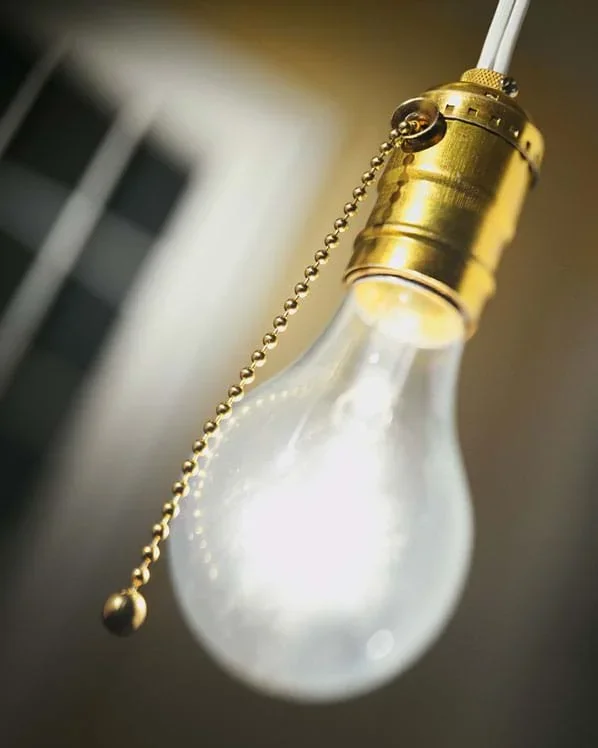 Incandescent light bulb.Copyright 2004 Microsoft Corporation, One Microsoft Way, Redmond, WA 98052-6399 USA. All rights reserved.
Through an introduction, and extended learning from associated activities, students explore the design of lighting systems and the electromagnetic spectrum. Students learn about the concept of daylighting as well as two types of light bulbs (lamps) often used in energy-efficient lighting design. Students learn how the application of something as simple, and free, as natural light can help them improve the future of generations to come.
Can you imagine modern-day houses without light? What if you had to study with a candle instead of a desk lamp? It would be simple if our houses used natural light as its major source of light, but that is not realistic since not all homes have 24-hours of sunlight at their disposal. Therefore, the best type of lighting and the effective use of natural sunlight is key in effectively lighting a home. Lighting within buildings and homes is a major consideration that impacts ongoing energy expenditures as well as the environment. To maximize a building's energy efficiency, engineers study the behavior of light and manipulate it to provide maximum output for minimal cost of operation. Recommendations might include implementing a series of daylighting techniques to reduce the need for costly artificial lighting, and/or carefully selecting light fixtures to meet the lighting needs of particular rooms. Using more energy-efficient bulbs reduces the operation costs of a building's lighting and contributes to a cleaner environment, which ultimately contributes to our own health, happiness and safety.
After this lesson, students should be able to:
- Define energy efficiency in relation to the lighting design of a house or structure.
- Discuss the use of daylighting vs. artificial lighting in the engineering design of a structure.
- Identify different energy forms, and calculate their amounts by measuring their defining characteristics
Grades 9-12
Do you agree with this alignment? - Differentiate among the characteristics of mechanical and electromagnetic waves that determine their energy
Grades 9-12
Do you agree with this alignment?
- Energy can be grouped into major forms: thermal, radiant, electrical, mechanical, chemical, nuclear, and others.
Grades 9-12
Do you agree with this alignment? - STEL-4P Evaluate ways that technology can impact individuals, society, and the environment.
Grades 9-12
Do you agree with this alignment?
- HS-PS4-5 Communicate technical information about how some technological devices use the principles of wave behavior and wave interactions with matter to transmit and capture information and energy.
Grades 9-12
This resource focuses on the following Three Dimensional Learning aspects of NGSS:
Science & Engineering Practices- Communicate technical information or ideas (e.g. about phenomena and/or the process of development and the design and performance of a proposed process or system) in multiple formats (including orally, graphically, textually, and mathematically).Do you agree with this alignment?
Disciplinary Core Ideas- Solar cells are human-made devices that likewise capture the sun's energy and produce electrical energy.Do you agree with this alignment?
- Information can be digitized (e.g., a picture stored as the values of an array of pixels); in this form, it can be stored reliably in computer memory and sent over long distances as a series of wave pulses.Do you agree with this alignment?
- Photoelectric materials emit electrons when they absorb light of a high-enough frequency.Do you agree with this alignment?
- Multiple technologies based on the understanding of waves and their interactions with matter are part of everyday experiences in the modern world (e.g., medical imaging, communications, scanners) and in scientific research. They are essential tools for producing, transmitting, and capturing signals and for storing and interpreting the information contained in them.Do you agree with this alignment?
Crosscutting Concepts- Systems can be designed to cause a desired effect.Do you agree with this alignment?
- Modern civilization depends on major technological systems.Do you agree with this alignment?
- Science and engineering complement each other in the cycle known as research and development (R&D).Do you agree with this alignment?
Do you agree with this alignment? - Communicate technical information or ideas (e.g. about phenomena and/or the process of development and the design and performance of a proposed process or system) in multiple formats (including orally, graphically, textually, and mathematically).
- DCI.PS4.B.69-12.8 Electromagnetic radiation (e.g., radio, microwaves, light) can be modeled as a wave of changing electric and magnetic fields or as particles called photons. The wave model is useful for explaining many features of electromagnetic radiation, and the particle model explains other features.
Grades 9-12
Do you agree with this alignment?
A basic understanding of the properties of light, including the visible spectrum, reflection and refraction of light.
Visible Light Spectrum
The part of the electromagnetic spectrum visible to the human eye is called the visible light spectrum. The visible light spectrum includes the range of wavelengths from about 380 to 750 nanometers. All colors distinguishable by the human eyes and brain can be created by one or more of these wavelengths mixed together.
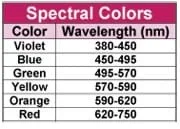 Table 1. Spectral colors and their ranges of wavelengths.
Because human eyes can distinguish wavelengths, we can see the various colors of the visible light spectrum. For example, a blue marker does not give off blue light; it simply absorbs all wavelengths of visible light shining on it except the group of wavelengths we distinguish to be "blue." Our eyes identify that reflected light as blue. White objects reflect nearly all wavelengths of visible light, explaining why you do not see white in the visual spectrum, and also why white objects are so good at reflecting light. By contrast, black objects absorb nearly all wavelengths of visible light, and black is also not seen in the visual spectrum.
Refraction
The speed of light in a vacuum (absence of any matter) is exactly 299,792,458 meters per second. In reality, light passes through a medium (in our case, the atmosphere) that slows it down slightly. The speed of light in a vacuum is denoted by c, and is the absolute maximum speed it can attain. In every other case, the speed of light is slowed to some fraction of c. This reduction of speed is indicated by a refractive index,

where c is the maximum speed of light described earlier and v is the speed of light in the specific medium. The refractive index is 1 for light in a vacuum and greater than 1 (1.33 for water, 1.003 for air) in other mediums.
Due to the change in speed of light, it also changes direction slightly. This is most easily observed when light passes from one medium to another. For example, if you place a pencil in a half-filled glass of water, the pencil appears to bend slightly at the surface of the water.
Reflection
When light strikes a surface, a fraction of it is absorbed or transmitted, and a fraction of it is reflected, depending on the surface. A highly reflective surface, such as a mirror, hardly absorbs or transmits any light, leaving it all to be reflected. Whenever light is reflected on a surface, it is reflected at an angle equal to the angle of incidence (see Figure 3).
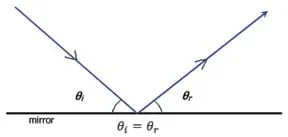 Figure 3. Light reflection on mirror. Өi = ӨrCopyright Copyright © ITL Program, University of Colorado Boulder.
How Light Is Produced
When the electrons in an atom become excited (for example, from being heated), light photons are released. When the atom gains or loses energy, the change is expressed by the movement of electrons. Electrons are temporarily boosted to a higher orbital, further away from the nucleus of the atom. Then, almost immediately, the electron returns to its original orbital, emitting the extra energy in the form of a photon. A very high temperature (about 4,000 °F, or 2,200 °C) is required to emit a considerable amount of visible light in an incandescent light bulb.
What causes a rainbow to appear when it rains or after it has just rained? What is responsible for the beautiful aurora borealis that appears over the northern sky? These amazing optical phenomena can be described by the behavior of light. Visible light is all around us, we use it every day, and we could not live without it!
In the US today, people often take one of the most common engineering technologies for granted — the light bulb. Imagine what life might have been like before the 1880s, when Thomas Edison invented the first long-lasting electrical lighting system. Without an "on call" source of light that could be turned on with the flip of a switch, people were dependent upon the availability of natural light. Sunlight could light up the insides of buildings during the day, while at night, oil lamps and candles would be required. In some ways, taking advantage of natural light is just as important now was it was before electrical lighting systems were available. Today our reasons to make good use of natural lighting include reducing energy consumption and improving the indoor atmosphere. We use the term "daylighting" to describe the design of introducing natural lighting into a building or structure by means of specifically-placed technologies and processes. Refer to the Daylighting Design activity to have students design and build model houses and incorporate daylighting system based on lesson material.
Daylighting can often be an excellent substitute for artificial lighting inside homes and buildings. Not only does it reduce the need for costly electric lights, it creates a more pleasurable atmosphere in which most people prefer to work. When used appropriately, natural light can completely eliminate the need to operate certain lights inside a structure during the day. A work environment with natural lighting also reduces the likelihood of mood disorders such as seasonal affective disorder, while promoting good health and lowered energy costs.
To optimize the way we get and disperse light throughout a building, we must have a good understanding of the behavior of light. The first and most important question to answer is "what is light?" The easy part is defining it; the harder part is describing how it behaves. Light is simply electromagnetic radiation of a wavelength that is visible to the human eye (about 380 to 750 nanometers). This portion of the electromagnetic spectrum falls between infrared and ultraviolet radiation. This light allows us to see the objects around us and differentiate between their colors.
Two general types of light bulbs (called lamps) are commonly used to illuminate modern houses and structures. First, incandescent lamps are devices consisting of a glass bulb filled with an inert gas surrounding a filament of tungsten wire. Electrical current is passed through the filament, heating it to very high temperatures. The heated element gives off energy as visible light and infrared radiation. Incandescent bulbs are very inefficient — only 10% of the heat energy is emitted as visible light! See Figure 1 for the components that make up incandescent lamps.
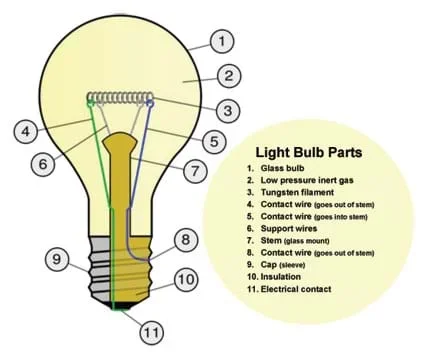 Figure 1. Major parts of a modern incandescent light bulb.Copyright Fastfission, Wikimedia Commons {PD} http://commons.wikimedia.org/wiki/File:Incandescent_light_bulb.svg
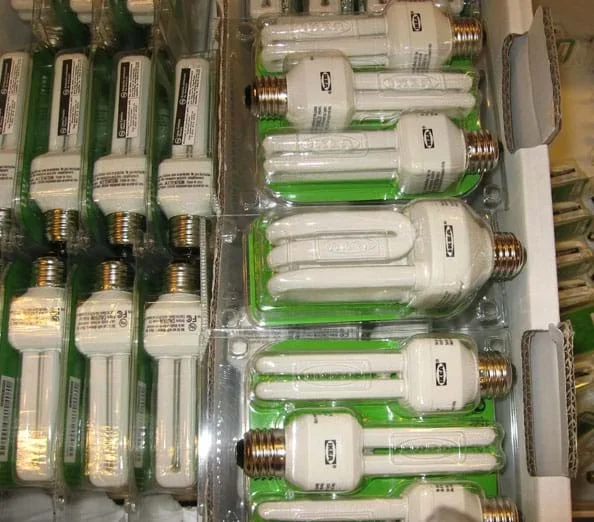 Figure 2. Compact fluorescent light bulbs.Copyright 2008 Denise W. Carlson. Used with permission.
The second type of light bulb is a fluorescent lamp. Fluorescent lamps (or CFLs, meaning compact fluorescent lamps, see Figure 2) consist of two main parts — a gas-filled tube and a magnetic or electronic ballast. Electrical current from the ballast flows through the gas, causing it to emit ultraviolet radiation. This ultraviolet radiation excites a white phosphor coating on the inside of the tube, causing it to emit visible light. Compared to incandescent lamps, this process of creating artificial light is more energy efficient because it takes much less energy to excite the atoms inside. As a result, CFLs do not give off nearly as much (wasted) heat as incandescent lamps. The popularity of CFLs has steadily increased over the last decade due to their cost-saving, energy-efficient benefits. They use much less energy to produce the same amount of light, and last up to 10 times longer than modern incandescent lamps. Fluorescent lamps typically emit a much whiter color of light because of the way they operate. This type of light is generally considered to be less pleasant than incandescent light, but advances are being made to make CFLs mimic the type of light from incandescent lamps.
To provide lighting for interior spaces and/or times of day when natural light is not available, engineers create lighting systems that often include these two types of lamps. When designing a lighting system for any structure, engineers also take into consideration factors such as the position of the sun, or solar geometry. The orientation of the space to the position of the sun makes a difference in the placement of windows, which is especially important in the implementation of daylighting systems. Students can expand their understanding of light and building design in the Model Greenhouses activity by considering thermal energy from the sun when designing a model greenhouse.
The lighting in a house or structure is important so its occupants can go about their normal routines during both day and nighttime hours. Engineers who design lighting systems consider how buildings will be used by their occupants and determine the optimal placement of lighting within structures. Not only is it important for these engineers to consider light sources outside of the structure (such as the sun), but they must also design indoor lighting systems that are suitable and adequate for the tasks conducted within. When designing for high energy efficiency, the most cost-effective forms of lighting focus on daylighting systems and use of incandescent lamps with CFLs.
- absorption
- A process in which the energy of a photon is absorbed by an object, and usually re-emitted as thermal energy.
- daylighting
- The use of natural light, through the placement of windows or other transparent media and reflective surfaces, to provide internal illumination for a building.
- fluorescent light
- A lamp that produces light through the illumination of phosphorous coating by gas-produced ultraviolet radiation.
- incandescent light
- A lamp that produces light by passing electricity through a thin filament (usually tungsten) that glows brightly.
- photon
- The particle responsible for carrying electromagnetic radiation of all wavelengths (including visible light).
- reflection
- The process by which a surface turns back a portion of the radiation that strikes it.
- refraction
- The bending of light as it decreases in speed when passing from one medium to another.
- resistor
- A device used in an electrical circuit to oppose the flow of an electric current (for example, a light bulb).
- transmittance
- The fraction of incident light at a specified wavelength that passes through a sample.
- visible light
- Electromagnetic radiation of wavelengths between 380 and 750 nanometers. Its behavior is reminiscent of both particles and waves.
Pre-Lesson Assessment
Question/Answer: Ask students the following questions and discuss as a class:
- What part of the electromagnetic spectrum can be seen by human eyes and brains? (Answer: Humans can see the portion of the electromagnetic spectrum that is called the visible light spectrum.)
- What is refraction of light? (Answer: Refraction of light is the bending of light as it decreases in speed when passing from one medium to another, such as from air to water.)
- When our eyes focus on an object, what are they really picking up on? (Answer: Our eyes see the rays of light that are reflected off a specific object.)
Post-Introduction Assessment
Class Discussion: Ask students the following question and discuss as a class:
- Why is it important to understand the behavior of light when designing and building any type of structure, such as a house, school, store, hospital or office building? (Possible answers: Engineers must understand how light behaves so they can successfully illuminate an interior space. Some spaces might be used by people during different times of the day and night. If engineers do not understand how light reflects and refracts within a structure, their placement of windows and daylighting techniques might worsen the interior lighting conditions, cause unwanted heat gain during certain seasons and prevent the creation of optimal designs that work for people.)
- Compared to just a few decades ago, buildings are being designed with more access to daylight. Why is this so? (Possible answers: Architects and engineers do not want to be solely reliant on electrical light because it does not provide the same health benefits as natural light. Lighting is one of the many consumers of building electricity - people are now more cognizant of electricity use because the generation of electricity by fossil fuels is a major contributor to climate change.
Lesson Summary Assessment
Class Discussion: Ask students the following question and discuss as a class:
- Why is it important for an engineer to carefully design the lighting system for a house? What role might daylighting play in the design, and how is the overall efficiency of the house affected? (Possible answers: Lighting is one of the most important parts of any structure for obvious reasons. We must design lighting systems to accommodate all the needs of the people using the spaces, while minimizing energy consumption. Daylighting plays a huge role in reducing energy consumption while bringing in desirable natural light. It provides a great way to improve the overall energy efficiency of the building.)
- Look at the lighting in this classroom? Does it depend mostly on daylighting or artificial light (lamps)? How might you redesign the classroom space to use more daylighting? How could you make the space more energy efficient? (Possible answers: Replace incandescent lamps with fluorescent lights, add more windows, add windows in the doors, etc.)
- In the event of a flood or a similar natural disaster, why is a building with good daylighting advantageous? (Possible answer: Because a building with good daylighting is not totally dependent on electricity for its lighting needs; the interior areas of these buildings are typically well lit during the daytime. Because of this, people can still occupy (or find their way out of) such buildings after natural disasters occur.)
Have students observe the different lighting fixtures in their homes and determine which use incandescent bulbs and which use other types, such as fluorescent. Have them make lists of all the lighting devices found in their homes, and make recommendations for any lighting that could be changed to accommodate CFLs instead of incandescent lamps.
Compact Fluorescent Lamp. Last updated November 26, 2008. Wikipedia, The Free Encyclopedia, Wikimedia Foundation, Inc. Accessed November 30, 2008. http://en.wikipedia.org/wiki/Compact_fluorescent_lamp
Harris, Tom. How Light Bulbs Work. Last updated February 19, 2002. How Stuff Works.com. Accessed November 30, 2008. http://www.howstuffworks.com/light-bulb.htm
Incandescent Light Bulb. Last updated November 30, 2008. Wikipedia, The Free Encyclopedia, Wikimedia Foundation, Inc. Accessed November 30, 2008. http://en.wikipedia.org/w/index.php?title=Incandescent_light_bulb
Psychological Effects of Light. Window and Door Manufacturers Association. Accessed November 30, 2008. https://www.wdma.com/IndustryInformation/NationalWindowSafetyWeek/tabid/81/Default.aspx
Contributors
Landon B. Gennetten; Lauren Cooper; Malinda Schaefer Zarske; Denise W. Carlson; Janet Yowell
Supporting Program
Integrated Teaching and Learning Program, College of Engineering, University of Colorado Boulder
Acknowledgements
The contents of this digital library curriculum were developed under a grant from the Fund for the Improvement of Postsecondary Education (FIPSE), U.S. Department of Education and National Science Foundation GK-12 grant no. 0338326. However, these contents do not necessarily represent the policies of the Department of Education or National Science Foundation, and you should not assume endorsement by the federal government.
Copyright
2007 by Regents of the University of Colorado.