
Blood Cell Basics
Students make a proportional model of blood out of red gelatin, a plastic bag, and rice. They learn about the different components that make up blood and investigate what happens when the arteries and veins experience buildup from cholesterol. They will then work in pairs to brainstorm ways to clean our clogged arteries.
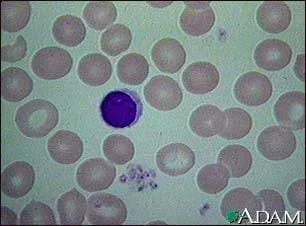 Figure 1. Normal red blood cells.Copyright Medline Plus, http://www.nlm.nih.gov/ medlineplus/ency/imagepages/1218.htm
Engineers have developed ways of administering blood transfusions when someone loses a lot of blood in an injury or surgery. They have developed artificial blood, which provides an alternative to a blood transfusion when real blood is either not available or there is not time to test for blood type. Also, engineers have developed equipment for detecting blood diseases like diabetes.
After this activity, students should be able to:
- Identify the different composites of blood and their functions.
- Describe the relative amounts and size of the components of blood.
- List several possible complications associated with the circulatory system and how engineers have helped combat such problems.
- 6.1.1.c.vi Use common fractions and percents to calculate parts of whole numbers in problem situations including comparisons of savings rates at different financial institutions
Grade 6
Do you agree with this alignment? - 5.3.1 Visual displays are used to interpret data.
Grade 5
Do you agree with this alignment?
- Assess further scientific explanations regarding basic human body system functions
Grade 5
Do you agree with this alignment? - Create and evaluate models of human body systems and organs
Grade 5
Do you agree with this alignment?
- CCSS.Math.Content.6.RP.A.3c Find a percent of a quantity as a rate per 100 (e.g., 30% of a quantity means 30/100 times the quantity); solve problems involving finding the whole, given a part and the percent.
Grade 6
Do you agree with this alignment?
- Technological advances have made it possible to create new devices, to repair or replace certain parts of the body, and to provide a means for mobility.
Grades 3-5
Do you agree with this alignment? - STEL-2F Describe how a subsystem is a system that operates as part of another, larger system.
Grades 3-5
Do you agree with this alignment?
For each group:
- paper to draw on
- colored pencils or crayons
- 1 freezer-strength, sealable, sandwich-size plastic bag
- 5-8 grains of white rice
- ½ cup prepared red gelatin
- paper towels
- attached worksheets (one per student)
For the entire class to share (optional):
- microscopes (as many as possible/available)
- blood cell slides (Note: Human blood smear slides can be ordered from Fisher Scientific for about $4 each. Go to: http://www.fishersci.com/ecomm/servlet/cmstatic?href=index.jsp&store=Scientific&segment=scientificStandard&&storeId=10652
- Blood Cell Model Worksheet (pdf)
- Blood Cell Model Worksheet (doc)
- Blood Cell Math Worksheet (pdf)
- Blood Cell Math Worksheet (doc)
- Blood Cells Under a Microscope Worksheet (pdf)
- Blood Cells Under a Microscope Worksheet (doc)
- Blood Cells Under a Microscope Vocabulary Worksheet (pdf)
- Blood Cells Under a Microscope Vocabulary Worksheet (doc)
- Blood Cells Under a Microscope Vocabulary Worksheet – Answer Key (pdf)
- Blood Cells Under a Microscope Vocabulary Worksheet – Answer Key (doc)
Today, we are talking about the circulatory system. The circulatory system is made up of the heart, veins, arteries and blood. Despite some misconceptions, the heart is not one big, open organ through which blood runs. Instead, it is about the size of your fist and is broken into four separate chambers ─ or rooms. There are two upper and two lower chambers. The upper chambers are called the atriums (left and right) and only receive blood from the body. The lower chambers are called the ventricles (left and right), and their task is to send blood out to the body.
Most of us have had a cut before. Did you bleed? What did the blood look like? It may have looked red and felt sticky. Blood is made up of many different things: plasma (5%), water (50%), white blood cells and platelets (1%), and red blood cells (44%). The plasma is a water and salt substance that contains the blood's proteins and suspends the cells. The white blood cells are known as the army and fight off infections and diseases. Platelets are the smallest cells in the blood that form clots to stop the flow of blood in case you have an injury. Red blood cells contain hemoglobin, which is responsible for carrying oxygen to your body. Blood has many important jobs!
Blood has many more red blood cells than white blood cells, which contribute to our blood's red color. Blood cells flow through the capillaries in single file so that maximum oxygen and nutrient exchange will occur. It is important for bioengineers to understand and know the amounts of cells in blood in order to understand how to help people whose circulatory system is not working properly or need blood transfusions (replacement blood) when they have lost too much blood due to severe injury or oftentimes during surgery.
Unfortunately, sometimes the heart can become blocked by fat, which does not allow the blood to flow through your body. Your body needs oxygen to survive, so imagine what would happen if you could not get blood moving through your body to obtain this essential oxygen. The body's arteries can become clogged due to heart diseases, which can then cause heart attacks; engineers, therefore, work to create devices to clear such blockages. One common procedure used to clear clogged arteries is called angioplasty. During this procedure, a tiny balloon is inserted into the clogged artery and is then inflated. The artery opens, and then the doctor places a device called a stent into the artery to keep it open after the procedure is completed. This allows the blood to flow through the area of the artery that was previously blocked.
Engineers also manufacture artificial blood, organs and equipment to monitor the human body. They save lives by developing better ways of administering blood transfusions (giving a person back the blood they have lost) when someone loses a lot of blood due to an injury or during surgery. They have created artificial blood, which can be used in a blood transfusion when real blood is either not available or there is not time to test for blood type. Also, engineers have developed equipment for detecting blood diseases like diabetes. Biomedical engineers design medical equipment for hospitals to take better care of patients. Have you seen a microscope? Microscopes and many other devices are designed by engineers. Can you think of other things that need special equipment to view? (Possible answers: planets, stars, tiny insects, etc.).
Getting blood to all the parts of your body is the most important function of the circulatory system. In this activity, we are going to make fake blood to show the proportion of white blood cells to red blood cells. We will also see how red blood cells are very flexible because they need to fit through very small capillaries to get oxygen to every part of our bodies. After we make a model of blood today, we are going to invent ways to clean our clogged arteries, just like engineers!
Day/Night Before the Activity
- Prepare red gelatin, and cut into approximate ½ cup sections.
Before the Activity
- Make copies of Blood Cell Model Worksheet and Blood Cells Under a Microscope Worksheet (for optional section). Each student should have their own worksheet(s).
- Have all materials set out.
- If available, set up the microscopes with the blood cell slides. Be sure to focus the microscope for the clearest view. Do not allow students to adjust the slides or microscopes.
- Make up your own drawing of a blood cell on an overhead transparency or a white/chalk board. Leave the overhead project off or cover the drawing with butcher paper so that the students do not see it before the activity.
With the Students
- Divide class into teams of two students.
- Hand out necessary supplies to each group. (Note: Because this process can be timely, you may want to have one student from each group come up to get the supplies.) Have one student hold open their sandwich bag, and place one ½ cup square of gelatin in their bag.
- Remind students NOT to handle their gelatin or other supplies just yet.
Part 1: Model of a blood cell
- First, ask the students where their heart is located. Give them a moment to point to their chests (or other locations if they are unsure). Then, have them point to the center of their chests and then move their fingers over about an inch or two to their left. This is where their heart is located in the chest cavity.
- Next, write the following activity directions either on the board, on an overhead or on a handout. If students follow verbal instructions well, have them follow along as you read the instructions.
- Very carefully open the gelatin bag.
- Place about 6 grains of rice in their bag.
- Seal the bag very carefully.
- Group the rice together in one corner of the bag.
- Have students carefully squeeze the bag to move the rice around. Discuss what it feels like, how it looks. Write student responses on the board.
- Using their Blood Cell Model Worksheet, have students draw a diagram of their model. Ask them to label the white and red blood cells on their diagram.
- Ask the students the following questions:
- Why are there only a few white blood cells? (Answer: The rice represents the white blood cells, and as we learned, there are very few white blood cells in our blood ─ only about 1%.)
- Why is it so squishy? (Answer: The red blood cells, water and plasma are represented by the gelatin. The red blood cells, in particular, have to be very flexible in order to travel through tiny arteries, called capillaries.)
- Have the students write a descriptive paragraph about their blood cell. (Possibly only for older students, younger students could write in pairs)
- Next, have a five groups (10 students) stand in the front of the classroom. Instruct 2 students to pretend they are blood, and the rest to pretend they are cholesterol (blockage). The students that are the cholesterol line up in twos (standing one foot apart from one another). Now have the blood pass between them. Have the cholesterol students stand right next to each other. The blood will not be able to pass anymore (or at least not easily, if at all). This is what happens when a heart attack occurs. Explain to the students that engineers design medical equipment that helps doctors remove these cholesterol clogs.
- Lastly, students will design a way to clean out blocked arteries. Ask them what kinds of heart problems people can have, who fixes them, and why engineers would study the heart. Encourage teams to name their engineering company. Ask them to come up with a way to clean out blocked arteries and encourage them to be creative with their designs: there is no wrong answer. Have students draw a picture of their design and present it to another team or the entire class.
Part 2: Blood cells under a microscope (Optional)
- Using the Blood Cells Under a Microscope Worksheet, have the students individually draw on the left side of the paper what they perceive a blood cell looks like.
- Students then share with their team partner their drawing, explaining what they believe a blood cell looks like.
- Have students move to a microscope, student by student. They can draw numbers to decide which student(s) goes first (based on the number of microscopes and blood cell slides available).
- Each student will be given the opportunity to view the blood cell slide through the microscope.
- On the right side of the divided paper, the students should draw what they saw when looking at the blood cell through the microscope.
- Ask students to answer the question on the bottom of their worksheet.
- Have students return to their partners and share their drawings, describing what the blood cell looked like through the microscope.
- Share your own blood cell drawing on the overhead or white/chalk board.
- Discuss the various parts of the blood cell. Label these different parts on your drawing. Encourage the students to find these parts on their own drawings.
- Optional: Have students complete the Blood Cells Under a Microscope Vocabulary Worksheet.
Pre-Activity Assessment
Voting: Ask a true/false question and have students vote by holding thumbs up for true and thumbs down for false. Count the votes and write the totals on the board. Give the right answer.
- True or False: The heart has five chambers. (Answer: False, the heart has 4 chambers.)
- True or False: The upper chambers of the heart are called the atriums and only receive blood from outside the heart. (Answer: True)
- True or False: White blood cells are a water and salt substance that composes 55% of the blood. (Answer: False, plasma is a water and salt substance that composes 55% of the blood. White blood cells fight off infections and diseases and compose 1% of the blood.)
- True or False: Red blood cells are very flexible, so they can pass through very small capillaries to bring oxygen wherever it is needed. (Answer: True)
Activity Embedded Assessment
Worksheet/Drawing: Have the students draw and label their blood cell on the Blood Cell Model Worksheet; review their answers to gauge their mastery of the subject.
Group Questions: During the activity, ask the groups discussion questions as directed in procedures above.
Post-Activity Assessment
Graphing Practice: Assess students' understanding of the concepts by assigning the Blood Cell Math Worksheet which has the students complete a pie chart on the components of blood.
Problem Solving: Present the class with the following problems and ask the students to calculate the number of red and white blood cells present in the blood based on the following percentages. Use a calculator and give the students a whole number for the volume of blood.
Red blood cells – 44%
White blood cells – 1%
Plasma – 5%
Water – 50%
- 100 ml of blood. (Answers: 44 ml red blood cells, 1 ml white blood cells, 5 ml plasma, 50 ml water.)
- 200 ml of blood. (Answer: 88 ml red blood cells, 2 ml white blood cells, 10 ml plasma, 100 ml water.)
Student-Generated Definitions: On a white/chalk board, or designated word wall, write the four composites of the blood cell (white blood cell, red blood cell, plasma, water), and generate a class comprehensible definition.
Microscopes are expensive and should not be mishandled. Remind students to not turn the knobs or attempt to remove the blood cell slide from its carriage.
Slides should be handled with care, as slide edges can easily cut.
Students should use caution when kneading their bags of gelatin, as the bags could pop if they squeeze too hard.
Some students may already know the various composites of the blood. Allow them to become the experts and assist others in the class.
Obviously, this activity could be very messy. The red gelatin will stain if it comes in contact with skin or clothing. Some simple precautions can help avoid a headache later, such as asking students to use a paper towel to cover their area . (This will make your sanitation engineers very happy!)
Students should also be reminded of the rules when working with messy things. Keep items to yourself and clean up anything that spills.
Remind student NOT to unseal their bags of gelatin.
Have students create a model blood cell out of modeling clay.
Discuss various heart diseases that may obstruct blood flow.
Have students research blood cells from other animals. Are they the same or different from human blood cells?
Have students investigate what would happen if your white blood cell count increased or decreased? What would happen if your blood did not have platelets?
Fischer Scientific, fischersci.com – Catalogs, Science Education, Histology Slides for Students, http://www.fishersci.com/wps/portal/PRODUCTDETAIL?LBCID=00270973&aid=2429601
MedlinePlus Medical Encyclopedia, Red Blood Cells, Normal, http://www.nlm.nih.gov/medlineplus/ency/imagepages/1218.htm
Contributors
Jessica Todd; Julie Marquez; Sara Born; Malinda Schaefer Zarske; Janet Yowell
Supporting Program
Integrated Teaching and Learning Program, College of Engineering, University of Colorado Boulder
Copyright
2004 by Regents of the University of Colorado.