
Do You Have the Strength?
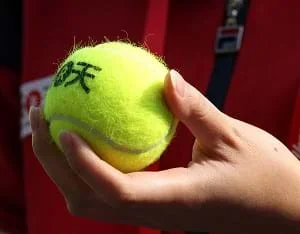 Students squeeze a tennis ball to model the strength of the human heartCopyright Wikimedia Commons http://upload.wikimedia.org/wikipedia/commons/2/23/Tennis_ball_in_hand_-_2011_Japan_Open.jpg%601q1%60q%601
In this activity, students squeeze a tennis ball to demonstrate the strength of the human heart. Working in teams, they think of ways to keep the heart beating if the natural mechanism were to fail. The goal of this activity is to get students to understand the strength and resilience of the heart.
Engineers design instruments to help (or replace) the heart when something goes wrong. For example, they have designed tiny stents (a wire mesh tube used to prop open an artery during an angioplasty) to place in clogged arteries, they have developed a mechanical heart, and they have designed replacements for veins and heart valves. Engineers also develop surgical equipment and medical equipment to locate and monitor heart rates. Aerospace engineers are working to combat the loss of heart muscle in space. These engineers are trying to counter the microgravity affects by developing exercise equipment (treadmills, bicycles, etc.) for astronauts to keep their hearts healthy while traveling in space (astronauts usually work out at least two hours a day).
After this activity, students should be able to:
- Explain the heart as a pump.
- Use data analysis and graphing to describe and model the strength of the heart.
- Describe engineers as creating devices to keep the heart strong and functioning.
- 5.4.2.b Represent real world and mathematical problems by graphing points in the first quadrant of the coordinate plane, and interpret coordinate values of points in the context of the situation.
Grade 5
Do you agree with this alignment? - 5.3.1 Visual displays are used to interpret data.
Grade 5
Do you agree with this alignment?
- Assess further scientific explanations regarding basic human body system functions
Grade 5
Do you agree with this alignment? - Create and evaluate models of human body systems and organs
Grade 5
Do you agree with this alignment?
- CCSS.Math.Content.5.G.A.2 Represent real world and mathematical problems by graphing points in the first quadrant of the coordinate plane, and interpret coordinate values of points in the context of the situation.
Grade 5
Do you agree with this alignment? - CCSS.Math.Content.5.MD.B Represent and interpret data.
Grade 5
Do you agree with this alignment?
- Technological advances have made it possible to create new devices, to repair or replace certain parts of the body, and to provide a means for mobility.
Grades 3-5
Do you agree with this alignment? - STEL-2F Describe how a subsystem is a system that operates as part of another, larger system.
Grades 3-5
Do you agree with this alignment?
- 3-5-ETS1-1 Define a simple design problem reflecting a need or a want that includes specified criteria for success and constraints on materials, time, or cost.
Grades 3-5
This resource focuses on the following Three Dimensional Learning aspects of NGSS:
Science & Engineering Practices- Define a simple design problem that can be solved through the development of an object, tool, process, or system and includes several criteria for success and constraints on materials, time, or cost.Do you agree with this alignment?
Disciplinary Core Ideas- Possible solutions to a problem are limited by available materials and resources (constraints). The success of a designed solution is determined by considering the desired features of a solution (criteria). Different proposals for solutions can be compared on the basis of how well each one meets the specified criteria for success or how well each takes the constraints into account.Do you agree with this alignment?
Crosscutting Concepts- People's needs and wants change over time, as do their demands for new and improved technologies.Do you agree with this alignment?
Do you agree with this alignment? - Define a simple design problem that can be solved through the development of an object, tool, process, or system and includes several criteria for success and constraints on materials, time, or cost.
For each group:
- Paper and pencil
- 1 tennis ball
- Tennis Ball Squeeze Worksheet
The heart is a special muscle that never gets tired. The heart is able to alter the flow of blood through the body depending on the body's requirements. Have you ever noticed that your heart beats harder when you are exercising, stressed or frightened? Even at times when you heart has to work harder, it has to produce a force strong enough so that blood can reach all the parts of your body. Blood carries oxygen, and even the tips of your fingers and toes need oxygen to work properly.
The heart works like a pump: it pushes blood around your body through your blood vessels. The harder you are working (i.e., exercising), the faster your heart pumps blood through your body. Have you used a pump to get air into a bicycle tire or a basketball? How about pumping water from a well with a hand pump? Either way, you can become tired from pumping too long. The heart has to stay strong and healthy so that it can keep efficiently pumping throughout your entire life. Pumps can break down with use, and the heart can become clogged or break down just like any other pump. Sometimes, the heart can become clogged with fat when we eat too many fatty foods. If the heart stops pumping, our body is in big trouble!
Engineers design instruments to help (or replace) the heart when something goes wrong. For example, they have designed tiny devices to place in a clogged artery to allow blood to flow. Also, they have developed a purely mechanical heart for someone whose heart is no longer working properly, and they have even designed replacements for veins and heart valves. Engineers also develop surgical equipment to assist doctors and help patients survive during surgery.
How strong do you think your heart is? Well, today we are going to do a short activity that will help us discover how strong the heart muscle really is. Then we will take that new knowledge and think like engineers who design devices to help the heart pump work properly.
Before the Activity
- Gather all necessary supplies.
- Print out the Tennis Ball Squeeze Worksheet for each student.
With the Students
- Ask students how strong they think their heart is. Record responses on the board. Let's see if we can be as strong as our heart.
- Divide students into groups of two.
- Pass out materials to each group.
- Tell one student to hold the tennis ball in their strongest hand (generally, their writing hand).
- Squeeze the ball as hard as possible; then, release the grip without dropping the ball.
- Tell students that this is very similar to the force of one pump of the heart, but the difference is that the heart does not get tired.
- Now, have the student squeeze the tennis ball as fast and as hard as they can for ten seconds, 30 seconds, and one minute. Their partner should count the number of squeezes, and record the results on the Tennis Ball Squeeze Worksheet.
- Switch ball squeezer and counter, and repeat steps 4-7.
- Share the group results with the entire class. Discuss with the students if it became harder to squeeze the tennis ball as time passed. Did anyone's hand hurt after squeezing for one minute? Imagine if you had to squeeze that tennis ball all day without stopping. You might get tired! That is how strong your heart is!
- Engineers design devices to fix the heart when something has gone wrong. Ask the students to imagine that they must design a heart. Have them brainstorm ways to keep the heart pumping for ten years, plus have the strength to move blood through the body.
Pre-Activity Assessment
Discussion Questions: Solicit, integrate and summarize student responses.
- How strong do you think your heart is? How hard does it need to pump to push blood throughout your body?
Activity Embedded Assessment
Worksheet: Have the students record measurements and follow along with the activity on their Tennis Ball Squeeze Worksheet. After students have finished their worksheet, have them compare answers with their peers.
Post-Activity Assessment
Engineering Poster: Using the knowledge they learned about the strength of the heart, have students create a poster of a design of a device to fix the heart when something has gone wrong. Have them title their posters with an engineering firm name that they make up (e.g., Shaky Heart Engineering Firm). Have the students work in teams of two to four if possible.
Emphasize squeezing as hard as they can to get the true strength effect of the heart.
Some students may be able to squeeze the tennis ball more than others. Explain that all students would get tired if they had to squeeze the tennis ball for longer than a minute.
Have students research how heart disease can affect the strength of the heart. What needs to be done to prevent these diseases from occurring?
Have students pretend that they are speaking as the heart in their own body. Have them write a letter or a daily journal describing the activities that they have to do to keep up their strength.
Have the students build prototypes of their artificial heart designs using available materials.
For older students, have them create a line graph of the number of squeezes over time on the Tennis Ball Squeeze Worksheet. Encourage students to be detailed and creative in their drawings of an artificial heart or pumping device.
For younger students, have the students create a bar graph of the number of squeezes over time on the Tennis Ball Squeeze Worksheet, instead of a line graph. Conduct the final engineering brainstorm as a short class discussion.
Contributors
Jessica Todd; Julie Marquez; Sara Born; Denali Lander; Malinda Schaefer Zarske; Janet Yowell
Supporting Program
Integrated Teaching and Learning Program and Laboratory, University of Colorado Boulder
Acknowledgements
The contents of this digital library curriculum were developed under a grant from the Fund for the Improvement of Postsecondary Education (FIPSE), U.S. Department of Education and National Science Foundation GK-12 grant no. 0338326. However, these contents do not necessarily represent the policies of the Department of Education or National Science Foundation, and you should not assume endorsement by the federal government.
Copyright
2004 by Regents of the University of Colorado.