
The Heart of the Matter
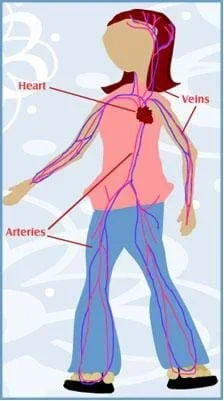 Figure 1. The circulatory systemCopyright GirlsHealth.gov, http://www.4girls.gov/body/body_tool2.htm
This lesson describes how the circulatory system works, including the heart, blood vessels and blood. Students learn about the chambers and valves of the heart, the difference between veins and arteries, and the different components of blood. This lesson also covers the technology engineers have developed to repair the heart if it is damaged. Students also understand how the circulatory system is affected during spaceflight (e.g., astronauts lose muscle in their heart during space travel).
Engineers continue to help protect the heart by developing technological devices to repair it. Artificial heart valves made of metal were developed to replace faulty valves (e.g., valves that do not fully close, which allows blood to flow in the wrong direction). NASA engineers used the technology that the fuel pumps in the Space Shuttle were based on to help design a tiny ventricular assist pump (which helps pump blood through the body). Artificial hearts were developed by engineers to keep hospitalized patients alive while they are waiting for a heart transplant. Engineers are currently working on creating completely internal, artificial hearts. Understanding the circulatory system is also important in order for engineers to keep astronauts healthy during spaceflight (e.g., to help prevent the heart from losing muscle mass during space travel).
After this lesson, students should be able to:
- Explain the function of circulatory system.
- Describe the heart as a pump.
- List some devices that engineers have created to help the heart.
- Describe how spaceflight affects the circulatory system.
- Human body systems have basic structures, functions, and needs
Grade 5
Do you agree with this alignment?
- Technological advances have made it possible to create new devices, to repair or replace certain parts of the body, and to provide a means for mobility.
Grades 3-5
Do you agree with this alignment? - STEL-2F Describe how a subsystem is a system that operates as part of another, larger system.
Grades 3-5
Do you agree with this alignment?
- CCC.8.3-5.8 Engineers improve existing technologies or develop new ones to increase their benefits, to decrease known risks, and to meet societal demands.
Grades 3-5
Do you agree with this alignment? - CCC.9.3-5.3 Knowledge of relevant scientific concepts and research findings is important in engineering.
Grades 3-4
Do you agree with this alignment? - CCC.4.3-5.2 A system can be described in terms of its components and their interactions.
Grades 3-5
Do you agree with this alignment?
Lesson 1, Spaced Out, of this unit is useful to introduce the space aspect of this lesson.
The circulatory system consists of the heart, the vascular system (arteries, capillaries and veins), and blood. Its purpose is to transport oxygen and nutrients to the entire body, as well as collect metabolic waste products (e.g., urea and carbon dioxide) and deliver them to the excretory organs (e.g., kidneys and lungs). This system also plays a role in the immune system as it helps defend against infections. The circulatory system also aids the endocrine system by transporting hormones.
The Heart, Blood and Valves
The heart is a four chambered, muscular organ (about the size of your fist) that pumps blood throughout the body (see Figure 2). The vascular system is made up of arteries which carry blood away from the heart, capillaries where the exchange of gases and nutrients takes place between blood cells and body tissues, and veins which return deoxygenated blood to the heart. Together, these blood vessels provide an efficient delivery route for blood throughout the body. Blood cells are the actual vehicles that transport the nutrients and waste products. Blood also helps regulate body temperature and protects humans from bleeding to death after an injury occurs by creating a barrier or clot. Blood is made up of 5% plasma, 50% water, 44% red blood cells, and 1% white blood cells and platelets. Red blood cells are donut-shaped cells that are 90% hemoglobin ─ a ribbon-like material that carries oxygen and gives blood its bright red color (see Figure 3). Refer to the associated activity Blood Cell Basics for students to illustrate the different components that make up blood, and brainstorm ideas for cleaning clogged arteries. Hemoglobin turns red when oxygenated. Every living human has either A, B, AB, or O type blood. Type O is known as the universal donor, but humans with this blood type can only receive type O. Type AB is known as the universal receiver, but any humans with other blood types cannot receive it. Types A and B only can receive O, or their respective blood type, and donate to AB. Blood can be a mystery!
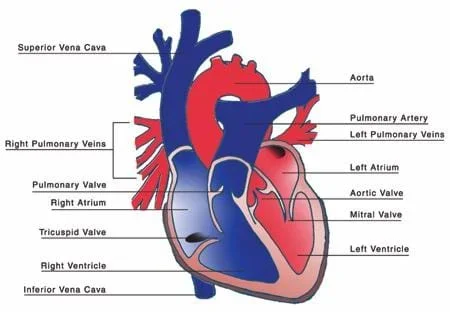 Figure 2. The heart.Copyright National Heart, Lung and Blood Institute, http://www.nhlbi.nih.gov/health/dci/Diseases/asd/asd_heartworks.html
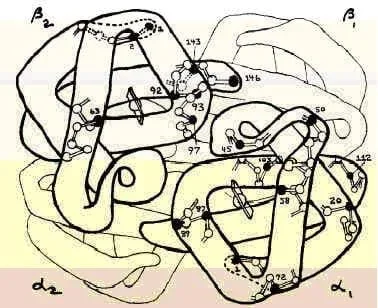 Figure 3. HemoglobinCopyright U.S. Environmental Protection Agency, National Exposure Research Laboratory, http://www.epa.gov/nerlesd1/chemistry/ice/48aasms.htm
The blood's journey begins in the right atrium where it is collected from the body via the superior vena cava (blood from the head and upper body) and the inferior vena cava (blood from the lower body). The oxygen from this blood has been used by the body and contains waste products such as carbon dioxide. It is then pumped through the tricuspid valve into the right ventricle. The blood then travels through the pulmonary valve and into the pulmonary artery, which takes the blood to the lungs to pick up oxygen. (Note: arteries usually carry oxygenated blood while veins carry non-oxygenated blood; the only exception is the pulmonary artery and the pulmonary vein where it is reversed.) In the lungs, the red blood cells (specifically the hemoglobin) pick up oxygen and release carbon dioxide so that it can be expelled from the body through exhalation. This oxygen-rich blood then travels from the right and left lungs (through the right and left pulmonary veins) into the left atrium of the heart. It then flows through the mitral valve and into the final chamber of the heart (the left ventricle). The left ventricle then pumps the blood through the aortic valve to the aorta. The aorta transports the blood to the rest of the body to deliver oxygen and nutrients and pick up waste products (notice how the wall of the left ventricle is thicker, as this extra muscle is needed since this chamber of the heart has to pump the blood the farthest ─ throughout your entire body). The blood then returns to the heart and the cycle begins again. The entire cycle takes only about 20 seconds! Students can better visualize how strong this muscle is by squeezing a tennis ball (which is equivalent to the strength needed to make the heart pump) with the associated activity Do You Have the Strength?
Heart disease is one of the leading causes of death in both men and women. Valves are particularly important to the proper functioning of the heart because they act as doors that open and close, directing and controlling the flow of the blood through the heart. The valves actually keep the blood from flowing backwards! If there is a problem ─ such as narrowing or leaking valves, these valves may be repaired or replaced with natural or artificial valves. Natural valves usually come from human donors (cadavers), while artificial valves were developed by engineers and are made of metal. One drawback of having an artificial valve is that it is necessary to take medication to prevent blood clots for the rest of that person's life. There are modified natural valves that come from animal donors, such as pigs and cows. NASA engineers used the technology that the fuel pumps in the Space Shuttle were based on to help design a tiny ventricular assist pump.
Engineers have also designed artificial hearts. Some of these devices, which may only consist of the ventricles and valves (see Figure 5), are only intended to keep hospitalized patients alive while they are waiting for a heart transplant. The artificial heart is sewn to the remaining atria (top half of the heart) and is connected by tubes from the heart through the chest to a power-generating console that operates and monitors the artificial heart. Again, this in only a temporary fix while the patient awaits a complete heart transplant (which usually comes from a human donor). However, engineers are working on perfecting completely internal, artificial hearts that would use hydraulic pumps and internal batteries.
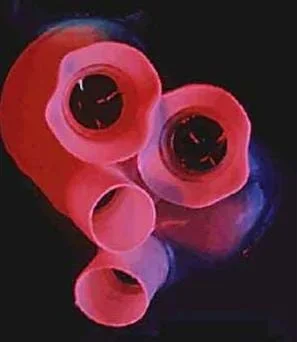 Figure 4. The four heart valves of an artificial heart.Copyright U.S. Food and Drug Administration, http://www.fda.gov/oc/opacom/kids/html/artificial_heart.htm
Microgravity and Its Effect on the Heart
One of the first changes the body undergoes in space is a fluid shift. Without gravity, all the fluids in the body (primarily water) shift toward the head. This results in a phenomenon often referred to as the "puffy-head, bird-legs" syndrome since the legs lose fluid and the head gains it. The brain interprets this "excess" fluid as something it needs to get rid of ─ making astronauts feel less thirsty and increase the output of urine (see Figure 6). This leads to an overall decrease of fluids and electrolytes (e.g., sodium and potassium), which ultimately leads to a decreased blood plasma level. Less blood plasma causes a reduction in the red blood cell mass. This blood loss affects the heart because it now has less blood to pump in addition to the fact that it does not have to overcome the force of gravity anymore (i.e., pumping blood from the feet back up to the heart is easier without gravity). Since the heart does not have to work as hard in space, it loses muscle and shrinks in size (due to, simply, lack of exercise). These changes are not really a problem until the astronauts return to Earth, as their bodies are simply adapting to the environment.
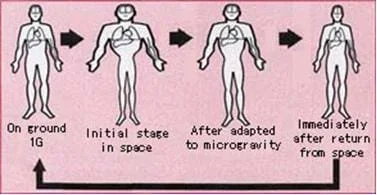 Figure 5. Fluid shift in the human bodyCopyright National Aeronautics and Space Administration, http://www.nasa.gov/audience/forstudents/5-8/features/F_When_Space_Makes_You_Dizzy.html
When astronauts return to Earth, their bodily fluids are redistributed once again and settle in the legs/lower body as gravity pulls the fluid back down. This leaves an absence of fluids (including blood) in the head, which oftentimes leads to fainting and anemia. The heart muscle is also weakened since it has not had to work as hard in space (remember, is loses muscle mass due to lack of exercise). Engineers are trying to counter these affects by developing exercise equipment (treadmills, bicycles, etc.) for astronauts to keep their hearts healthy in space. Astronauts generally work out at least two hours a day to maintain their health and muscle strength. Astronauts also drink a lot of water right before they return to Earth to increase the amount of fluid in their body, and decrease their post-flight symptoms.
The heart is so important to life that the ancient Egyptians thought of it as the center of personality. To them, the heart was even more important than the brain! We know that without it, we would die. The heart weighs a little more than half a pound and is only the size of a clenched fist; yet, it pumps 2,000 gallons of blood through about 60,000 miles of blood vessels each day! Think about a gallon of milk; now think about 2,000 of those gallon bottles. That is a lot of blood being pumped every day! Blood has some very important jobs: it is what provides our bodies with oxygen, removes waste from our organs, and helps us recover from diseases. Blood travels around our body through blood vessels, such as veins and arteries. We call this bodily system the circulatory system. Circulatory sounds like the word "circle," and the heart pumps blood around our body in a closed loop ─ like a circle ─ through veins and arteries.
What is a pump? Have you ever used a bicycle pump to inflate a flat tire on your bicycle? Well, a bicycle pump actually pushes air into your tires until they are full ─ making your bike ready to go. The heart is essentially a pump, but instead of air, it pushes blood through your body in blood vessels. Pumps can break down with use, and in thinking about the heart as a pump, it too can become clogged or break down ─ just like any other pump. Sometimes when we eat too many fatty foods, the heart can become clogged with fat. If the heart stops pumping, our body is in big trouble!
Have you ever listened to your heartbeat through a stethoscope? What do you hear? You can distinctly hear a lub-dub sound. This is the sound of the valves in your heart opening and closing. ("Lub" is when the two upper chambers, or the atriums, are pumping the blood into the ventricles. "Dub" is when the ventricles are pumping the blood to either the lungs or the body.) The harder you are working (e.g., exercising), the faster your heart pumps blood through your body (because the body needs more oxygen when it is working hard). If you do not have a stethoscope, you can feel your pulse by pressing your fingers (do not use your thumb) against the inside of your wrist or the side of your neck. Refer to the associated activity The Beat Goes On to have students explore various ways to take their pulse during various activities and calculate their heart rate in beats per minute at different time intervals. The blood flowing through the body can be felt because every heartbeat (i.e., every time the ventricles are pumped) sends a surge of blood through the body. Size also affects how fast the heart beats. Very large mammals can have a heartbeat of 20 to 30 BPM (beats per minute) and very small animals can have heart rates exceeding 500 BPM. The average human heart rate is around 60-100 BPM (while at rest) ─ translating to more than 30 million beats per year and about 2.5 billion beats in a 70-year lifetime. That's a lot of pumping by your heart!
Biomedical engineers work with doctors to develop mechanical hearts and valves, artificial veins, and devices to clean fat build-up on arterial walls. Additionally, they create devices to monitor the heart during and after surgery. Engineers also save lives by developing better ways of administering blood transfusions (giving a person back the blood they have lost) when someone loses a lot of blood in an injury or during surgery. They have also created artificial blood, which provides an alternative to a blood transfusion when real blood is either not available or there is not time to test for blood type. Also, engineers have developed equipment for detecting blood diseases, such as diabetes. In fact, new technologies are being invented almost daily.
Just as we have seen how spaceflight has an impact on the muscular, skeletal and digestive systems, it also affects the circulatory system. Astronauts lose heart muscle as well as blood while in space. Because of the lack of gravity, the blood in an astronaut's body moves up towards their head, and their body decreases its total amount of blood and fluids that it is producing. With less blood, their heart does not have to work as hard to pump the blood around their body. However, upon their return to Earth, the heart suddenly has to work harder when the blood returns to the astronaut's lower body due to the presence of gravity. This causes them to become dizzy and sometimes faint when they return to the Earth. Engineers help counter these effects by developing special equipment for spaceflight, such as exercise equipment, to keep the heart strong.
The heart, blood vessels, and blood work together to provide our bodies with oxygen and remove waste products from them every day and night. What do we call this system again? That's right, the circulatory system! We will learn more about how oxygen is transferred to the red blood cells in the respiratory system lesson, but today we learned about how the heart is like a pump and sends the blood throughout our body.
How do engineers help keep our circulatory system happy? Well, they have designed a few things that help out our heart. Who can name one? (Possible answers: Engineers design mechanical hearts and valves, artificial veins, artificial blood and devices to clean fat build-up on arterial walls, as well as detect blood diseases.) What happens to the astronaut's circulatory system in space? (Answer: Without gravity, blood rushes to the astronaut's head, and their body makes less blood and fluids. The heart has to work less hard to move less blood around the body, which causes the astronauts to lose some muscle mass (of their heart). However, when the astronauts return to Earth, their bodies produce more blood and the heart suddenly has to work harder.)
Each component of the circulatory system works very hard, and we can all help our systems out by eating healthy foods, not smoking, and staying active by playing sports and exercising. A healthy heart ensures a long and happy life!
- aortic valve
- The heart valve between the left ventricle and the aorta.
- arteries
- Blood vessels that carry blood away from the heart.
- atrium
- Chambers in the heart that receive blood; heart have a left and right atrium.
- bpm
- Beats Per Minute.
- cardiac muscle
- The muscle that makes up the walls of the heart.
- circulatory system
- The body's delivery system that brings nutrients and oxygen to all parts of the body and removes waste from the same parts.
- heart
- The four-chambered, hollow, muscular organ that pumps blood through the body.
- hemoglobin
- Protein inside of red blood cells; turns red when oxygenated.
- lungs
- Organ that receives oxygen and carries carbon dioxide out of the body.
- mitral valve
- The heart valve between the left atrium and the left ventricle.
- plasma
- A water and salt substance composing 55% of the blood.
- platelets
- The smallest cells in the blood that form clots (i.e., scabs) whenever a blood vessel is broken.
- pulmonary valve
- The heart valve between the right ventricle and the pulmonary veins.
- red blood cells
- Making up 44% of the blood, red blood cells are very flexible so they can pass through very small capillaries to deliver oxygen wherever it is needed; have no nucleus.
- tricuspid valve
- The heart valve between the right atrium and the right ventricle.
- urea
- A water soluble compound found in the urine of all mammals; also called carbamide.
- veins
- Blood vessels that return blood to the heart.
- ventricle
- Chambers in the heart that pump the blood; hearts have a left and right ventricle.
- white blood cell
- Making up only 1% of the blood, white blood cells are known as the army in your blood; fight against disease by producing antibodies.
Pre-Lesson Assessment
Know / Want to Know / Learn (KWL) Chart: Before the lesson, ask students to write down in the top left corner of a piece of paper (or as a group on the board) under the title, Know, all the things they "already know" about the circulatory system. Next, in the top right corner under the title, Want to Know, ask students to write down anything they "want to know" about the circulatory system. After the lesson, ask students to list in the bottom half of the page under the title, Learned, all of the things that they "have learned" about the circulatory system. Ask students to name a few items for each and write them on the board.
Discussion Questions: Ask a discussion question to get students to think about the upcoming lesson. After soliciting answers, explain that these questions will be answered during the lesson.
- What is the heart?
- What is blood?
- What does blood do in the body?
- How does spaceflight affect the circulatory system?
Post-Introduction Assessment
Voting: Ask a true/false question, and have students vote by holding thumbs up for true and thumbs down for false. Count the number of true and false, and write the number on the board. Give the right answer.
- True or False: Engineers save lives by developing better ways of administering blood transfusions and detecting blood diseases, such as diabetes. (Answer: True)
- True or False: Eating fatty foods does not affect our heart. (Answer: False, eating fatty foods can cause fat build up in our arteries, making our heart work harder.)
- True or False: An astronaut's circulatory system is changed in space. (Answer: True, the body produces less blood, the blood rushes to the astronaut's head and the heart does not have to pump as hard.)
- True or False: Engineers design artificial hearts, blood vessels and blood to help our bodies get oxygen and remove waste. (Answer: True)
- True or False: The sound our heart makes when it is pumping is "lub-a-dub-dub" and we can only find this beat in our wrists. (Answer: False, the heart's rhythm is "lub-dub," and it can be detected in many parts of your body, including your wrists and neck. Engineers have designed equipment to help monitor our heartbeat while in the hospital.)
Lesson Summary Assessment
Know / Want to Know / Learn (KWL) Chart: Finish the remaining section of the KWL Chart as described in the Pre-Lesson Assessment section. Ask students to list in the bottom half of the page under the title, Learned, all of the things that they "have learned" about the circulatory system. Ask students to name a few items and write them on the board.
Flashcards: Break the students into teams of 2-3. Each student on a team creates a flashcard with a question on one side and the answer on the other. If the team cannot agree on the answers, they should consult the teacher. Pass the flashcards to the next team. Each member of the team reads a flashcard, and everyone attempts to answer it. If they are right, they can pass on the card to the next team. If they feel they have another correct answer, they should write their answer on the back of the flashcard as an alternative. Once all teams have done all the flashcards, clarify any questions.
- Some terms to use could include: blood, heart, circulatory system, pump, biomedical engineer, heart in space, astronaut, artificial blood, exercise, pulse
Take a Franklin Institute virtual reality tour of the heart at: http://www.fi.edu/learn/heart/index.html.
Watch the video "The Heart and How It Works" (from Our Wonderful Body Series; Coronet, 1992).
Conduct a cardiac demonstration: "How Cardiac Output and Exercise are Related" at http://www.nsbri.org/HumanPhysSpace/ (click on Focus 2, then Student Investigations, and finally on SI 1).
Conduct a demonstration on fluid shift during space flight: "Can the Puffy-Head, Bird-Legs" Syndrome be Simulated in a Classroom on Earth?" at http://www.nsbri.org/HumanPhysSpace/ (click on Focus 2, then Student Investigations, and finally on SI 2).
Conduct a demonstration on fluid shift and how it related to exercise during spaceflight: "Does the Headward Fluid Shift Affect Cardiac Output During Periods of Exercise" at http://www.nsbri.org/HumanPhysSpace/ (click on Focus 2, then Student Investigations, and finally on SI 3).
Canright, Shelly. National Aeronautics and Space Administration, For Students (Grades 5-8), Features and News, Student Features, "When Space Makes You Dizzy," July 29, 2004. www.nasa.gov Accessed May 10, 2006
Carnegie Mellon, The Quest for Artificial Blood, "To the four million Americans who receive transfusions annually, a shortage of blood is a matter of life and death," January 2001, http://www.cmu.edu/news/news_stories/01stories/01_blood.html, accessed May 10, 2006.
The Franklin Institute Science Museum, The Franklin Institute Online, The Heart: An Online Exploration, 1996, http://www.fi.edu/biosci/preview/heartpreview.html, accessed May 10, 2006.
Grange, Andrew H. U.S. Environmental Protection Agency, Environmental Sciences, Office of Research and Development, National Exposure Research Laboratory, Ion Composition Elucidation (ICE), "Mass Determination of Intact alpha-Chain Hemoglobin Adducts to within 0.2 Da Using Mass Peak Profiling from Selected Ion Recording Data with Electrospray Ionization."
Lujan, Barbara and White, Ronald. National Space Biomedical Research Institute, Human Physiology in Space, Houston, TX: GPO, 1995,http://www.nsbri.org/HumanPhysSpace/, accessed May 10, 2006.
National Aeronautics and Space Administration, Center for Aerospace Information, Scientific and Technical Information (STI), "Space Shuttle Spinoffs," October 21, 2005, http://www.sti.nasa.gov/tto/shuttle.htm, accessed May 10, 2006.
Parker, Steve. How the Body Works, London: Dorling Kindersley Limited, 1994.
U.S. Department of Health and Human Services, National Institutes of Health, National Heart, Lung and Blood Institute, Atrial Septal Defect, "How the Heart Works," http://www.nhibi.nig.gov/health/dci/Diseases/hhw/hhw_whatis.html, accessed May 10, 2006.
U.S. Department of Health and Human Services, The National Women's Health Information Center (NWHIC), Office on Women's Health, GirlsHealth.gov, Body – Becoming a Woman, Learn about your whole body – from your heart to your bones," March 2006.
U.S. Food and Drug Administration, Center for Devices and Radiological Health, CDRH Consumer Information, New Device Approval, "Syncardia Temporary CardioWest Total Artificial Heart (TAH-t) - P030011," November 3, 2004.
U.S. Food and Drug Administration, Department of Health and Human Services, FDA Kids', "Yorick: Artificial Heart," www.fda.gov Accessed May 10, 2006
Wikipedia, The Free Encyclopedia, "Hemoglobin," www.wikipedia.org Accessed May 10, 2006
Contributors
Jessica Todd; Julie Marquez; Sara Born; Teresa Ellis; Denali Lander; Malinda Schaefer Zarske; Janet Yowell
Supporting Program
Integrated Teaching and Learning Program, College of Engineering, University of Colorado Boulder
Acknowledgements
The contents of this digital library curriculum were developed under a grant from the Fund for the Improvement of Postsecondary Education (FIPSE), U.S. Department of Education and National Science Foundation GK-12 grant no. 0338326. However, these contents do not necessarily represent the policies of the Department of Education or National Science Foundation, and you should not assume endorsement by the federal government.
Copyright
2006 by Regents of the University of Colorado.