
Spaced Out
Students are introduced to the space environment, learning about the major differences between the environment on Earth and that of outer space (atmosphere, radiation, microgravity)— and the engineering challenges that arise because of these differences. To prepare students for the upcoming lessons on the human body, they are challenged to think about how their bodies would change and adapt in the unique environment of space.
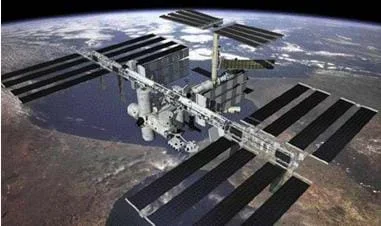 Figure 1. The International Space Station.Copyright NASA Glen Research Office http://space-ower.grc.nasa.gov/ppo/projects/iss/img/iss.jpg
Aerospace engineers study the space environment in order to ensure the health and safety of both astronauts and people on Earth. By studying this environment, engineers are able to design vehicles such as the space shuttle and International Space Station (ISS) which keep astronauts safe from the harsh elements of space for long periods of time. For example, engineers designed special tiles to provide protection from temperature extremes, constructed special exercise equipment to keep astronauts in shape, and even invented a pen that could write in the absence of gravity. In addition to keeping astronauts safe during spaceflight, understanding radiation can help diagnose and hopefully prevent cancer, cataracts and other detrimental effects to people on Earth.
After this lesson, students should be able to:
- Describe the major differences between the environment of Earth and outer space.
- Describe some of the engineering challenges associated with spaceflight.
- Explain how the human body changes and adapts to its surrounding environment.
- Use evidence to develop a scientific explanation on how organisms adapt to their habitat
Grade 4
Do you agree with this alignment? - Identify the components that make a habitat type unique
Grade 4
Do you agree with this alignment? - Compare and contrast different habitat types
Grade 4
Do you agree with this alignment?
- Technological advances have made it possible to create new devices, to repair or replace certain parts of the body, and to provide a means for mobility.
Grades 3-5
Do you agree with this alignment? - STEL-2J Demonstrate how tools and machines extend human capabilities, such as holding, lifting, carrying, fastening, separating, and computing.
Grades 3-5
Do you agree with this alignment?
- 5-PS2-1 Support an argument that the gravitational force exerted by Earth on objects is directed down.
Grade 5
This resource focuses on the following Three Dimensional Learning aspects of NGSS:
Science & Engineering Practices- Support an argument with evidence, data, or a model.Do you agree with this alignment?
Disciplinary Core Ideas- The gravitational force of Earth acting on an object near Earth's surface pulls that object toward the planet's center.Do you agree with this alignment?
Crosscutting Concepts- Cause and effect relationships are routinely identified and used to explain change.Do you agree with this alignment?
Do you agree with this alignment? - Support an argument with evidence, data, or a model.
Outer space is a unique environment that is very different from Earth. It is necessary to understand as much as possible about this environment as well as the human body in order to ensure the success of future manned missions to space. The goal of this unit is to teach students about and generate interest in the complexities of the human body and its relationship to the space program by using a spaceflight theme. Each lesson first looks at how a particular system of the body works on Earth and then explores how the space environment affects its functionality.
This first lesson "launches" the unit by examining how the space environment differs from Earth. The three major differences are: atmosphere (vacuum in space), radiation (high level of dangerous particles), and gravity (weightlessness in space).
Atmosphere
The first difference between the Earth and space is the atmosphere. The atmosphere of the Earth is composed of a very specific mixture of gases. Air is primarily oxygen (21%) and nitrogen (78%), with very small amounts of gases such as argon, carbon dioxide, water vapor, neon, helium, krypton, xenon, hydrogen, and methane making up the remainder (see Figure 2). Engineers provide astronauts with oxygen and nitrogen and remove carbon dioxide from the air to keep them alive and healthy. So why don't they just use pure oxygen so they just have to transport one type of gas? The main reason is that breathing pure oxygen over long periods of time is toxic to the human body. Another reason is that pure oxygen is extremely combustible. Along with providing air for the astronauts, engineers also must design a sturdy structure that can maintain atmospheric pressure and minimize air leaks. This pressure is important because it is what pushes the air in and out of the lungs; astronauts could not breathe without it.
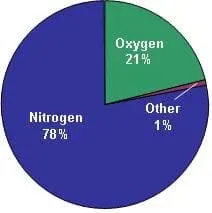 Figure 2. The Earth's air compositionCopyright NASA, Remote Sensing Tutorial http://rst.gsfc.nasa.gov/Sect14/AtmosGraph.jpg, modified by Janet Yowell, University of Colorado at Boulder, 2006.
Another problem caused by the lack of an atmosphere is temperature extremes. In direct sunlight, space can reach temperatures of 150° C (302° F), while in shadows they can be as low as -270° C (-454° F). These temperatures far exceed the typical human body temperature of 37° C (98.6° F). One of the ways that engineers solved this problem was by designing special black and white tiles to cover the outside of the shuttle (see Figure 3). A space shuttle requires ~24,000 unique tiles, each one with a serial number that provides its size, shape, and location. The reason that the tiles are white on the top and black on the bottom of the shuttle is to provide the astronauts with another means of thermal control. They are able to roll the shuttle on its side, one way or the other, depending on if it is getting too hot or cold (that is, they point the black surface towards the sun if it is too cold and the white side if it is too hot).
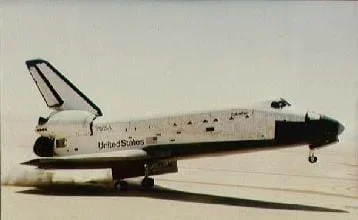 Figure 3. A U.S. space shuttle makes a safe landing.Copyright NASA, Kennedy Space Center's Science, Technology and Engineering http://science.ksc.nasa.gov/mirrors/images/images/pao/STS1/10060380.jpg
Radiation
Radiation, the second difference between the Earth and space, is another engineering challenge involved with the space environment. Solar flares are continuously blasting energetic radiation into space (see Figure 4). Galactic cosmic radiation (GCR), which is produced in distant supernova explosions, is particularly harmful to human DNA (see Figure 5). GCR consists of rapidly moving (median velocity ~0.95 times the speed of light), heavy, positive ions that can pierce through cells and smash apart DNA ─ leading to cancer. Electromagnetic (such as gamma rays; see Figure 6) and other types of particulate radiation (such as high mass and energy [HZE] particles and solar energetic [SPE] particles) can also cause significant damage to the human body. Radiation is cumulative, and the amount of energy absorbed in the body is measured in RAD (radiation absorbed dose).
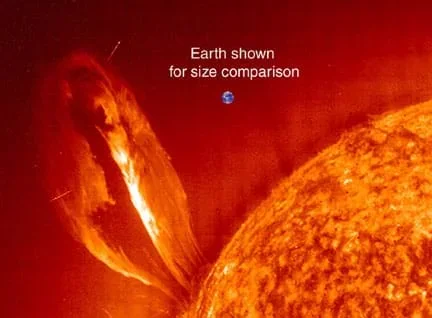 Figure 4. Solar flare.Copyright NASA, Celestial Exploration Activity http://learn.arc.nasa.gov/planets/0/compare.html
Humans obtain radiation either genetically or by exposure. This collective amount of radiation can cause tissue damage, loss of fertility, lens thickening, cancer induction, and even death. Each individual reacts differently to similar amounts of radiation; however, sickness usually occurs around 25-30 RAD and 320-540 RAD is lethal. The average exposure in the U.S. is ~52 mRAD/year compared to ~84.5 - 253.5 mRAD/typical shuttle flight (less than 14 days). On Earth, humans are protected from most of the sun's ultraviolet rays (non-ionizing) and its gamma rays (ionizing radiation) by the atmosphere as well as the magnetic field of the Earth.
Currently, engineers use polyethylene and water bags as shielding for the astronauts, particularly around the astronaut's sleeping quarters. Future shielding methods could include liquid hydrogen, a small magnetic field around the spacecraft, or some kind of pharmaceutical to prevent the body from absorbing radiation.
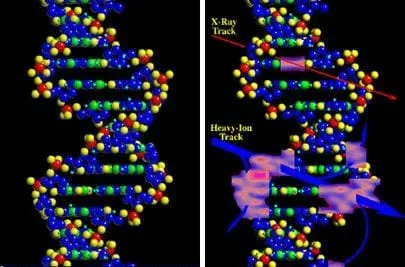 Figure 5. Effects of radiation on human DNACopyright NASA, Johnson Space Center, Human Adaptation and Countermeasures Office http://srhp.jsc.nasa.gov/
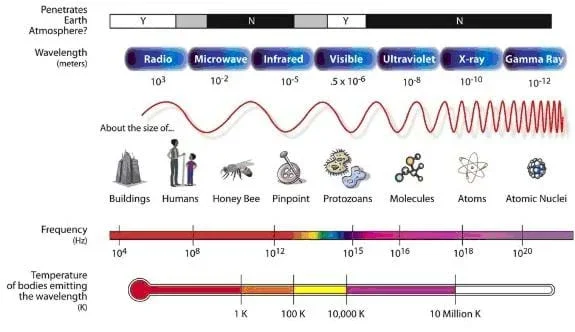 Figure 6. The electromagnetic spectrum.Copyright NASA, Goddard Space Flight Center http://universe.nasa.gov/images/lifecycles/EM_Spectrum.jpg
Gravity
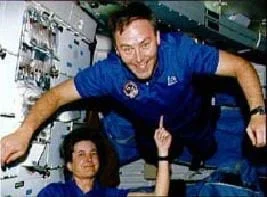 Figure 7. Astronauts in microgravity.Copyright NASAexplores http://media.nasaexplores.com/lessons/04-010/images/microgravity.jpg
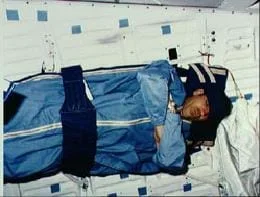 Figure 8. A sleeping astronaut in a spacecraft.Copyright NASAexplores http://www.nasaexplores.com/show2_articlea.php?id=02-008
The final difference between Earth and space is gravity. Gravity is the dominant force on Earth that pulls everything to the surface. In space, items are in a constant state of free-fall (such as the same effect you feel when you ride some amusement park rides, such as the "Tower of Terror" at Disney World). Gravity makes the movement of objects difficult but makes it easy to keep objects stationary. In space, however, movement of objects is easy, but keeping objects in place is challenging (see Figure 7). When designing the shuttle and ISS, engineers incorporated restraints, elastic bands, Velcro and magnets to keep objects and people in place (see Figure 8).
Weightlessness is studied on Earth using a C-9 aircraft that flies in a repeated parabola pattern (the weightless scenes of the Apollo 13 movie were filmed in the KC-135 or "Vomit Comet"). Weightlessness is achieved at the peak of the parabola for ~30 seconds; while at the bottom of the trajectory, objects weigh almost twice as much. This rapidly changing weight sensation often results in motion sickness, hence the nickname the "Vomit Comet."
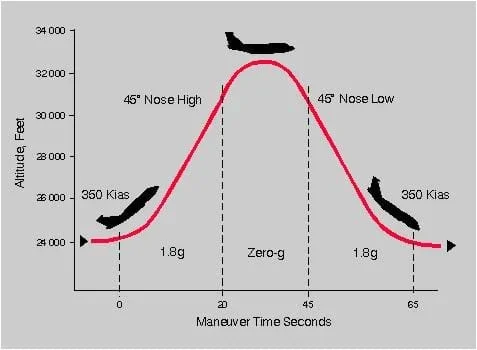 Figure 9. KC-135 aircraft flight trajectory.Copyright Sandia National Laboratories http://www.sandia.gov/media/NewsRel/NR2001/images/kc135tra.gif
What does your body need to survive and stay healthy on Earth? Primarily, your body's needs are basic — yet essential — for survival: air, water, food, shelter, etc. How are these things provided on Earth? Air is all around us in the atmosphere; water can be either bought or accessed from a faucet; food is available at grocery stores; and shelter is something we have (or find) to stay comfortable, and sometimes, even alive (because exposure to extreme cold or hot conditions can result in death). Are these things available in space? Not in the same way. If you were an astronaut and traveled into space, how would you survive? Well, you would need to bring everything you need in space with you from Earth, then recycle the things you bring, and also possibly use resources available in space.
Could you go outside your spacecraft without a spacesuit? (Answer: No) Without protection in this severe environment, you would die in less than a minute. You would lose consciousness due to the lack of oxygen, the absence of air pressure would cause your blood and other body fluids to boil, and your tissues or internal organs would expand (but not explode, as depicted in some science fiction films) and finally, ultimately freeze. You would also be exposed to extreme temperatures, radiation from the sun (on Earth you might get a sunburn from the sun's UV rays in 15-20 minutes, but in outer space you could get second degree burns in 15-20 seconds!), and micrometeoroids that could hit and severely injure you. Yikes!
The first step to staying healthy in space is to understand the differences between Earth and space. The three main differences between the two environments are (write these on the board): the amosphere or air (it's a vacuum in space, which means there is no air to breathe), extreme radiation from the sun, and gravity (it is weightless in space; we call that microgravity). These are our three words for today: atmosphere or air, radiation and gravity. In future lessons, we will look at how these environmental differences (particularly microgravity) affect each system of the body (respiratory, circulatory, etc.).
There are a lot of challenges that engineers need to think about when designing spacecraft and planning space missions. Can you think of what they are? Engineers need to make sure that any spacecraft they design will provide all the necessary elements to keep humans alive (oxygen, water, food), protect them from the space environment (provide adequate pressure and shielding from radiation and micrometeoroids/orbital debris), and maintain their health as much as possible (exercise equipment, nutrition, hydration, etc.). Today, we are going to learn more about what engineers can do to help keep humans safe in space.
Understanding the differences between Earth and outer space allows humans to safely travel between both worlds. Every spacecraft that engineers design must be able to keep astronauts safe from the harsh space environment. Do you remember the three big differences we mentioned between Earth and space? (Answer: atmosphere, radiation and gravity)
An astronaut's spacesuit is a good example of how engineers accounted for these three differences. The suit's backpack contains oxygen for astronauts to breathe and to pressurize the suit. Underneath the suit, astronauts wear long underwear that has tubes running through it to control temperature extremes. Water is pumped through these tubes in order to keep the astronauts cool. The helmet has a reflective shield that can be pulled down over the face to protect the astronaut from radiation exposure (severe sunburns). The astronauts are tethered to the spacecraft and have a small jetpack on their back in order to maneuver around in the microgravity (little gravity) environment. Together, these inventions enable astronauts to safely leave the spacecraft and explore space.
The space environment provides a one-of-a-kind laboratory where engineers and scientists can learn valuable information about the human body. One thing will become clear as we learn more about the human body in space: the human body is extremely dynamic (always changing) and adapts to its surrounding environment over time.
- atmospheric pressure
- The force exerted by the gas molecules in the air on any surface area in contact with them.
- convection
- Heat transfer caused by external force.
- energy
- Capacity for work or vigorous activity.
- environment
- The conditions that surround one; surroundings.
- force
- A cause of motion, activity or change.
- gravity
- Attractive force between any two objects (strength of force depends on mass and distance of objects).
- microgravity
- Environment in which there is very little net gravitational force (free-falling) object.
- radiation
- Energy transmitted as rays, or waves, in the form of particles.
- temperature
- Measure of energy; the degree of heat in a body or environment.
- vacuum
- Absence of matter; a state of emptiness; a void.
Pre-Lesson Assessment
Brainstorming: As a class, have students engage in open discussion. Remind them that in brainstorming, no idea or suggestion is "silly." All ideas should be respectfully heard. Take an uncritical position, encourage wild ideas and discourage criticism of ideas. Have students raise their hands to respond. Write their ideas on the board.
- What makes outer space different from the Earth? (For example, there is no air in space.)
- How can engineers create an environment in space in which humans can survive and function? (For example, bring oxygen masks. On the board, use arrows or lines to connect engineering solutions to the earllier list.)
Post-Introduction Assessment
Student-Generated Questions: Solicit, integrate and summarize student responses. Have students write down questions they have about the human body in space and then discuss the questions with the class. Group the questions into human body systems and answer one or two each time you get to the corresponding system.
Lesson Summary Assessment
Drawing: Have students draw pictures of themselves as astronauts on spacecraft. Have them include everything they might need (either draw or list items, such as a sketch of an oxygen mask or the word "air to breathe"). Tell them to be creative and try to accurately depict the three differences between Earth and space that were discussed ─ gravity, radiation and atmosphere. For example, show the microgravity environment by drawing floating hair or objects not resting on tables unless they are strapped down.
Conduct A Recipe for Air activity in the Air Pollution unit, in which students use M&Ms to create a pie graph that expresses their understanding of the composition of air. The students discuss why knowing this information is important to engineers.
Conduct the Air Pressure activity in the Up, Up and Away! – Airplanes unit, in which students discuss the units of pressure and get a sense of just how much air pressure is pushing on them.
Students can undertake this fun art project and make a galactic montage using coffee filters, markers, and construction paper. Visit NASA's Space Place website at https://spaceplace.nasa.gov/galaxy-montage/en/.
Armstrong, Dennis. National Aeronautics and Space Administration, Missions: Shuttle and Station, From Nose Cap to Body Flap, February 23, 2004, http://www.nasa.gov/missions/shuttle/f_omdp3.html
Barry, Patrick L. National Aeronautics and Space Administration, The Science and Technology Directorate at NASA's Marshall Space Flight Center, Science@NASA, The Right Stuff for Super Spaceships, http://science.nasa.gov/headlines/y2002/16sep_rightstuff.htm
Cloutier-Lemasters, Nicole. National Aeronautics and Space Administration, Johnson Space Center, Press Release #J04-051, ed. John Ira Petty, October 25, 2004, http://www.nasa.gov/centers/johnson/news/releases/2004/J04-051.html
Fisher, Diane. National Aeronautics and Space Administration, "Space Place," Make a GALEX Galaxy Montage, September 8, 2005, http://spaceplace.nasa.gov/galaxy-montage/
Lochner, Jim. National Aeronautics and Space Administration, Goddard Space Flight Center, Exploration of the Universe Division, High Energy Astrophysics Science Archive Research Center, "Imagine the Universe," Electromagnetic Spectrum: Measuring the electromagnetic spectrum, 1997-2005, http://imagine.gsfc.nasa.gov/docs/science/know_l1/emspectrum.html
Lujan, Barbara F. and White, Ronald J. Human physiology in space: A curriculum supplement for secondary schools, National Aeronautics and Space Administration: Houston, TX, 1994.
National Aeronautics and Space Administration (NASA), Celestial Exploration Activity, http://learn.arc.nasa.gov/planets/0/compare.html
National Aeronautics and Space Administration (NASA), Goddard Space Flight Center, Exploration of the Universe Division, http://universe.nasa.gov/images/lifecycles/EM_Spectrum.jpg
National Aeronautics and Space Administration (NASA), Johnson Space Center, Human Adaptation and Countermeasures Office http://hacd.jsc.nasa.gov/labs/biostatistics.cfm
National Aeronautics and Space Administration (NASA), Kennedy Space Center's Science, Technology and Engineering http://science.ksc.nasa.gov/mirrors/images/images/pao/STS1/10060380.jpg
National Aeronautics and Space Administration (NASA), NASAexplores.
National Aeronautics and Space Administration (NASA), Remote Sensing Tutorial.
Sandia National Laboratories, http://www.sandia.gov/media/NewsRel/NR2001/images/kc135tra.gif
Contributors
Teresa Ellis; Denali Lander; Malinda Schaefer Zarske; Janet Yowell
Supporting Program
Integrated Teaching and Learning Program, College of Engineering, University of Colorado Boulder
Acknowledgements
The contents of this digital library curriculum were developed under a grant from the Fund for the Improvement of Postsecondary Education (FIPSE), U.S. Department of Education and National Science Foundation GK-12 grant no. 0338326. However, these contents do not necessarily represent the policies of the Department of Education or National Science Foundation, and you should not assume endorsement by the federal government.
Copyright
2006 by Regents of the University of Colorado.