
Our Amazing Skeleton
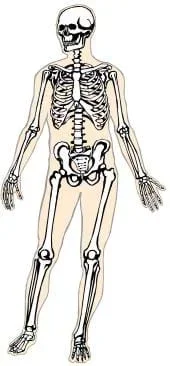 Our amazing skeleton!Copyright 2004 Microsoft Corporation, One Microsoft Way, Redmond, WA 98052-6399 USA. All rights reserved.
This lesson covers the topic of human bones and joints. Students learn about the skeleton, the number of and types of bones in the body, and how outer space affects astronauts' bones. Students also learn how to take care of their bones here on Earth to prevent osteoporosis ─ or weakening of the bones.
Engineers, particularly biomedical engineers, need to understand how our bones work in order to help take care of our bodies. Engineers who work at NASA are especially interested in how outer space affects astronauts' bones. Bones work together with muscles and joints to produce movement. The human body has many examples of joints, which engineers can mimic when designing machines that improve our lives (machines that save lifes, breathe for people who cannot breathe on their own, exercise muscles, monitor our vital organs, etc). Biomedical engineers create state-of-the-art technology that contribute to the health, happiness and safety of humans. Engineers really make a difference!
After this lesson, students should be able to:
- Describe bones and joints and what happens to them in outer space.
- Explain how we can keep our bones strong here on Earth.
- Compare joints in the body to joints in machines.
- Human body systems have basic structures, functions, and needs
Grade 5
Do you agree with this alignment?
- Technological advances have made it possible to create new devices, to repair or replace certain parts of the body, and to provide a means for mobility.
Grades 3-5
Do you agree with this alignment?
- CCC.4.3-5.2 A system can be described in terms of its components and their interactions.
Grades 3-5
Do you agree with this alignment?
Most adults have 206 bones in their bodies, which are grouped into two categories: the axial skeleton and the appendicular skeleton. The axial skeleton includes the skull, ribs and breastbone. The appendicular skeleton includes appendages such as the arms, legs, hands and feet. There are 80 bones in the axial skeleton and 126 in the appendicular skeleton.
Types of Bone
There are two main types of bone: compact and cancellous (see Figure 4). Compact bone is the dense, hard outer shell of bone that resembles a honeycomb. Compact bone is made of many Haversian systems, also called osteons. A Haversian system consists of an inner blood vessel in a Haversian canal, which is then surrounded by concentric layers of calcified material called lamellae. These lamellae have cavities called lacunae, where the osteocytes, or mature bone cells, are trapped. In order to stay alive, these osteocytes must have access to the nearby blood vessels, so there are small canals, called canaliculi, which provide connections between the blood vessels and the osteocytes.
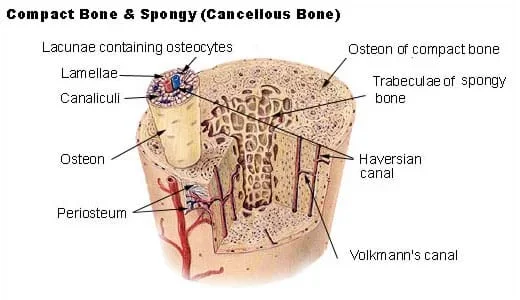 Figure 4. The two types of bone: compact and cancellous (spongy).Copyright U.S. National Cancer Institute's Surveillance, Epidemiology and End Results (SEER) Program
Cancellous bone is the inner, spongy bone. It also contains canaliculi, but instead of connecting to Haversian canals, these canaliculi connect to irregular cavities that contain bone marrow. These cavities are next to bars of bone called trabeculae, which help make the bone strong, and they follow the line of stress placed on the bone. If the line of stress changes, the trabeculae can rearrange themselves so that they still follow the line of stress.
Bone Shapes
There are four types of bone shapes: long, flat, short, and irregular. Long bones are long, and are found in our legs and arms. Flat bones are flat and often curved, and can be found in our head and vital in protecting our brain. Short bones are almost cube shaped, and are found in our wrist and ankles. Irregular bones are ones that do not fit into any of the other groups.
Bone Marrow
Bone marrow is a soft tissue that is found in the long bones (like the femur and the humerus) and fills the spaces between the trabeculae. There are two types of bone marrow: red and yellow. Babies have only red marrow; as we age, however, some of the red marrow becomes yellow and is then used for fat storage. Blood cell formation ( hematopoiesis) takes place primarily in the red bone marrow, where red blood cells, white blood cells and platelets are formed. Sometimes, when people are very, very sick, they undergo a bone marrow transplant, in which bone marrow from a healthy person is removed and given to the sick person.
Movement
Bones combine with joints and muscles to allow for all sorts of movement. (Refer to Bioastronautics, Lesson 2: Move Your Muscles, for more information on muscles.) Engineers use many different kinds of joints in everyday applications. Think about structures around us: in the body, a ball and socket joint can be found in the hip, where the femur attaches. This is similar to a car's gear shifter. The hinge on a door is like the attachment between the ulna and the humerus in the elbow ─ called a hinge joint. The carpal bones in your wrist are joined together by plane joints, which allow small sliding movements.
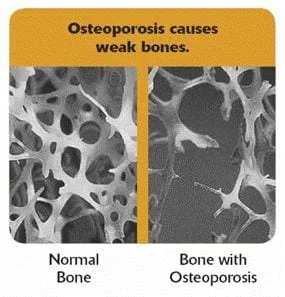 Figure 1. Normal bone vs. bone with osteoporosis.Copyright U.S. Department of Health and Human Services, Office of the Surgeon General, http://www.surgeongeneral.gov/ library/bonehealth/docs/Osteo10sep04.pdf
Today we are going to learn about amazing skeletons. The skeleton is made up of joints and bones. Most adults have 206 different bones that make up their skeleton; infants are actually born with about 300 bones, and some fuse together as you grow. Our bones have many pretty important jobs to play: they allow us to move ─ by working together with our muscles, and they also protect our organs ─ such as our stomach, brain and heart. Without our bones, we would be like bowls of wiggly Jell-O®! Can you imagine that? Because our bones are so important, we need to work hard to keep them strong and healthy.
What do you think happens when we do not take good care of our bones? We get big holes in them! This is called osteoporosis (see Figure 1), and it weakens the bones. If your bones get weak, you will be at a much higher risk for breaking one of them, and that can really hurt.
What should you do to take care of your bones? The two most important things are to eat a healthy diet and get plenty of exercise. Kids should try to exercise for at least one hour every single day. As you grow, your bones need to make new bone, and the best way to do this is through weight-bearing exercise. Weight-bearing just means that your bones have to carry some weight, even simply the weight of the rest of your body. So, soccer, basketball, dance, jogging or even jumping rope are all weight-bearing exercises, but swimming and bike riding are not. If you work hard to develop super-strong bones now, you will have a lot less problems with your bones when you are older!
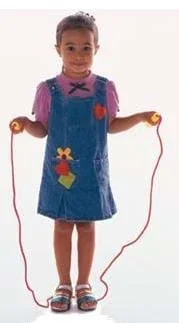 Figure 2. Weight-bearing exercises like jumping rope help us grow and maintain healthy and strong bones.Copyright 2004 Microsoft Corporation, One Microsoft Way, Redmond, WA 98052-6399 USA. All rights reserved.
Kids also need to eat a lot of calcium ─ found in green, leafy vegetables, and in dairy products like milk, cheese and yogurt. If you do not eat enough calcium, your bones will not be very strong. Your body also needs Vitamin D in order to absorb the calcium. Vitamin D is very easy to get: if you are outside in the sunshine, the sun will cause your skin to start making Vitamin D for you!
What are joints? Joints are the points where one bone connects to another. They work to hold bones in the skeleton together, and they help the bones in the skeleton move. Bones combine with joints and muscles to allow for all sorts of movement. There are many types of joints in our bodies. Put your arm straight out in front of you. Now touch your finger to your nose. Your elbow is a hinge joint, it moves like a hinge on a door, allowing you to bend your arm to touch your nose. Now, move your arm all the way around in a big circle. Your shoulder is a ball and socket joint. It can move in all directions. Lastly, move your wrist around. Some of the joints in your wrist are plane joints, and they move in small sliding motions. There are other joints in our necks, skull and backbone as well. Students can use the hands-on associated activity Fascinating Friction! to help practice comparing and differentiating between different types of joints. Students will also learn how engineers apply their knowledge of reducing friction in machines to also help the human body reduce friction.
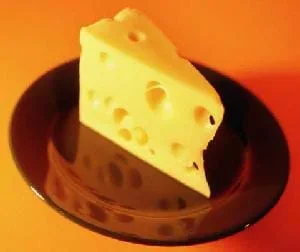 Figure 3. Dairy products ─ cheese ─ helps make bones strong.Copyright 2004 Microsoft Corporation, One Microsoft Way, Redmond, WA 98052-6399 USA. All rights reserved.
When people on Earth get older, they can develop osteoporosis (weakening of the bones). But, the same thing can happen to astronauts in the microgravity environment of space. Astronauts have a real problem with their bones when they travel into outer space, as they actually lose a lot of their bone mass and density. Their bones literally shrink! How do you think engineers can help astronauts have healthy bones in space? Well, engineers first need to learn about bones and joints first to be able to make suggestions for healthy astronauts.
One special type of engineer is a biomedical engineer. Biomedical engineers help design ways to keep our bodies healthy and help heal our bodies when we get sick or hurt. Some biomedical engineers are studying the problem of osteoporosis, and some biomedical engineers are figuring out how to help our bones heal after they break. Engineers who work for NASA are figuring out the best ways to help the astronauts have healthy bones while they travel in space. Let's learn some more about bones and how engineers can help us keep them strong and healthy!
What happens to our bones as we age? (Answer: As we age, we risk getting osteoporosis in our bones.) How we can prevent or slow this process? (Answer: Exercise, good nutrition, eating green leafy vegetables, drinking lots of milk, and getting enough sunshine all help to prevent or slow osteoporosis.) Which kinds of exercises really help our bones? (Answer: Weight-bearing exercises, such as walking, dance, soccer, etc. help our bones. Swimming would not be the best choice for our bones because the water aids in carrying/holding up our weight.)
How much exercise do you think you get per day? Can you think of any way to get more exercise into your day? (Hopeful answers: The goal should be at least one hour of exercise per day for children. Exercise ideas include: walking to school, running or jumping rope during recess, joining a sports team and playing outside with friends and family.)
Let's think about the different types of bones in our body. We have long bones in our legs and arms. We have short bones in our wrists and ankles, and we have irregular bones that do not fit under the short and long, like our ribs. Can you remember the types of joints we talked about? Well, we have hinge joints, like our elbows. We have ball and socket joints, like our shoulders. We also have other joints in our wrists, backbone and skull. Can you think of things in everyday life that work like our joints? (Answer examples: ball and socket – joystick for computer games; hinge— door, laptop lid, suitcase, cabinet doors, dolls, etc.) Engineers learn about how bones and joints work and then use what they learned to create all sorts of everyday (and extraordinary) things!
Our bones, joints and muscles all work together to help us move. This is a lot like teamwork. Teamwork is obviously very important for our bodies to move efficiently. And, like our bodies, engineers work in teams so that they can be super effective.
- haversian system
- The basic structural unit of compact bone; also called osteons.
- compact bone
- Dense bone consisting of tightly packed Haversian Systems.
- cancellous bone
- Inner, spongy bone.
- bone marrow
- The soft tissue that fills most bone cavities and produces red blood cells, white blood cells and platelets (red marrow primarily); or stores fat (yellow marrow).
- hematopoiesis
- Blood cell formation.
- lamella
- Concentric layers of calcified material laid around blood vessels.
- lacunae
- Cavities that hold osteocytes within lamellae.
- canaliculi
- Small canals that connect blood vessels to osteocytes within lacunae.
- osteoblasts
- Cells that make new bone.
- osteoclasts
- Cells that absorb or break down bone.
- osteocytes
- Mature bone cells.
- osteon
- See Haversian System.
- trabeculae
- Small bars of bone – part of cancellous bone structure.
- ball and socket
- A joint in which a ball moves within a socket (such as in the hip).
- hinge joint
- A joint that allows motion in only one plane.
- plane joint
- A joint in which both surfaces are almost planes.
Pre-Lesson Assessment
Guessing Game: Ask the students the following questions and write down their answers on the board. Tell them that the correct answers will be revealed during the course of the lesson, and they should try to remember the answers until the end of class. The questions are:
- What do our bones do for us? (Possible answers: Protect our organs, support our bodies, allow us to move.)
- How many bones are in our bodies? (Answer: Grownups have 206 bones. Babies have more, but they fuse together as they grow up!)
- What do we need to do to keep our bones strong? (Answer: Participate in regular weight-bearing exercises, eat calcium-rich foods and get enough sunshine.)
- What happens to our bones when we get older? (Answer: They lose mass and density, becoming weak ─ called osteoporosis.)
- What happens to astronauts' bones in outer space? (Answer: They lose mass and density and become weaker ─ just like osteoporosis occurs here on Earth.)
Post-Introduction Assessment
Answers to the Guessing Game: Go over the answers to the Guessing Game questions (questions and answers are given above in the Pre-Introduction Assessment section). Circle the correct answers on the board if they were already given by the students, and write down the correct answers if not yet given.
One and Done: Ask the students to think of an exercise that would help keep bones strong. Students should raise their hands (or indicate thumbs up) when they have an example. (Possible answers: Baseball, walking, swimming, running, skipping, soccer, etc.). Call on students at random to state their answer (the sport and description of the weight-bearing collision). Students put their hands down once they have contributed an answer. No repeat answers permitted.
Lesson Summary Assessment
Roundtable: Break the class into teams of 3–5 students. Ask the class a question with several possible answers. Have the students on each team make a list of answers by taking turns writing down ideas on a piece of paper. Students pass the list around the group until all ideas are exhausted. Have teams read aloud the answers and write them on the board. Ask the students:
- What is something in everyday life that works like a joint and which joint is it like? (Answer example: door - hinge joint)
Friction Boggle!: Repeat the same activity as above, except when the teams read aloud their answers and write them on the board, ask if any other teams came up with the same idea. If any other teams have the same answer on their sheet, they have to cross that answer out on their list. The team that ends up with the most "unique" ideas, wins!
Acrostic Poem: Have students write the word BONE vertically along the left side of a piece of paper and then fill in a word or sentence for each of the four letters (i.e., B – Big and small, bones help us all, O - One of my favorite bones is the clavicle, N – NASA engineers are studying what happens to astronauts' bones in outer space, E – Exercise is the key to growing healthy and maintaining strong bones).
Have students check out books from the library with pictures of bones. They should share their findings with the class.
Read the U.S. Department of Health and Human Services' 2004 Surgeon General's Report on Bone Health and Osteoporosis: What It Means To You at: http://training.seer.cancer.gov/anatomy/skeletal/tissue.html
Check out the Centers for Disease Control and Prevention's creative website for girls on developing strong bones: http://www.bestbonesforever.gov/
Allen, Ian. Australian Broadcasting Company, ABC Science Online, The Lab, News in Science, "Bone Grown on Glass Could Help Fractures," October 20, 2000.
Bedford, Anthony and Fowler, Wallace. Engineering Mechanics: Statics Second Edition. Addison Wesley Longman, Inc: 1999.
Farley, Dixie. U.S. Food and Drug Administration, FDA Consumer Magazine, "New Ways to Heal Broken Bones," April 1996.
Fox, Stuart Ira. Human Physiology. Seventh Edition. New York, NY: McGraw Hill, 2002.
Healthcommunities.com, oncologychannel, "Lukemia," February 8, 2005,
Morrison, Stacy. National Aeronautics and Space Administration, Lyndon B. Johnson Space Center, The Virtual Astronaut, September 30, 2005, "Bone Up on Bones Activity."
Morrison, Stacy. National Aeronautics and Space Administration, Lyndon B. Johnson Space Center, The Virtual Astronaut, September 30, 2005, "Weight of the World Activity."
National Center for Chronic Disease Prevention and Health Promotion, Division of Nutrition and Physical Activity, Centers for Disease Control and Prevention, The National Bone Health Campaign, Powerful Girls Have Powerful Bones.
Parker, Steve. How the Body Works. London: Dorling Kindersley Limited, 1994.
Petty, John Ira. National Aeronautics and Space Administration, Space Biology Outreach Program - Web of Life, Feature: "Weak in the Knees - The Quest for a Cure for Osteoporosis," February 25, 2006.
Snare, Carolyn Carter. National Aeronautics and Space Administration, "Shaken, Not Stirred: Mixing Vibrations With Genetics May Help Reduce Bone Loss for Astronauts," November 2002.
U.S. Department of Health and Human Services. The 2004 Surgeon General's Report on Bone Health and Osteoporosis: What It Means To You. U.S. Department of Health and Human Services, Office of the Surgeon General, 2004.
U.S. National Cancer Institute's Surveillance, Epidemiology and End Results (SEER) Program, Training Website, "Structure of Bone Tissue."
U.S. National Institutes of Health, National Cancer Institute, Dictionary of Cancer Terms.
U.S. National Institutes of Health, NIH Clinical Center, Office of Dietary Supplements, "Dietary Supplement Fact Sheet: Vitamin D."
Contributors
Jessica Todd; Sara Born; Abigail Watrous; Denali Lander; Malinda Schaefer Zarske; Janet Yowell
Supporting Program
Integrated Teaching and Learning Program, College of Engineering, University of Colorado Boulder
Acknowledgements
The contents of this digital library curriculum were developed under a grant from the Fund for the Improvement of Postsecondary Education (FIPSE), U.S. Department of Education and National Science Foundation GK-12 grant no. 0338326. However, these contents do not necessarily represent the policies of the Department of Education or National Science Foundation, and you should not assume endorsement by the federal government.
Copyright
2006 by Regents of the University of Colorado.