
Tornado Damage!
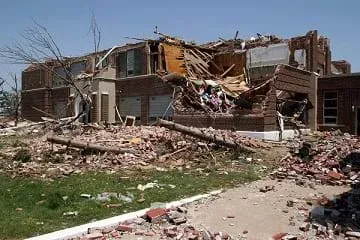 Students learn about tornados and their damage.Copyright Greg Henshall / FEMA http://commons.wikimedia.org/wiki/File:FEMA_-_30070_-_Greensburg_High_School_tornado_damage_in_Kansas.jpg
Students learn about tornadoes, the damage they cause, and how to rate tornadoes. Specifically, students investigate the Enhanced Fujita Damage Scale of tornado intensity, and use it to complete a mock engineering analysis of damage caused by a tornado. Additional consideration is given to tornado warning systems and how these systems can be improved to be safer. Lastly, students learn basic tornado safety procedures.
Engineers learn from failures to improve structures for recurring events and natural disasters, such as tornados. Engineers also invent scales or systems to use as measurement tools. For example, engineers use the Enhanced Fujita Damage Scale (EF-Scale) to classify tornadoes based on measured wind speeds and degree of damage to certain types of structures. In order to improve the lives of those in the path of natural disasters, engineers implement a two-pronged approach to safety. First, advanced warning systems are in place to give people more time to react to impending disaster. Also, due to the fact that it is impossible to ensure that people are never in the path of a tornado or hurricane, engineers conduct post-disaster damage analysis in order to improve structures and better safeguard against property damage and injury.
After this activity, students should be able to:
- Understand that windstorms and tornadoes affect humans by causing property damage and loss of life.
- Understand and use the Enhanced Fujita Tornado Damage Scale of tornado intensity rates.
- Understand that engineers develop early-warning systems to give those in the path of tornados additional time to respond and get to safety.
- Understand that engineers use damage analysis to develop better procedures and stronger structures to withstand tornadoes.
- Analyze and interpret data identifying ways Earth's surface is constantly changing through a variety of processes and forces such as plate tectonics, erosion, deposition, solar influences, climate, and human activity
Grade 5
Do you agree with this alignment? - Develop and communicate an evidence based scientific explanation around one or more factors that change Earth's surface
Grade 5
Do you agree with this alignment?
- Structures need to be maintained.
Grades 3-5
Do you agree with this alignment?
- MS-ESS3-2 Analyze and interpret data on natural hazards to forecast future catastrophic events and inform the development of technologies to mitigate their effects.
Grades 6-8
This resource focuses on the following Three Dimensional Learning aspects of NGSS:
Science & Engineering Practices- Construct an oral and written argument supported by empirical evidence and scientific reasoning to support or refute an explanation or a model for a phenomenon or a solution to a problem.Do you agree with this alignment?
Disciplinary Core Ideas- Mapping the history of natural hazards in a region, combined with an understanding of related geologic forces can help forecast the locations and likelihoods of future events.Do you agree with this alignment?
Crosscutting Concepts- The uses of technologies and any limitations on their use are driven by individual or societal needs, desires, and values; by the findings of scientific research; and by differences in such factors as climate, natural resources, and economic conditions. Thus technology use varies from region to region and over time.Do you agree with this alignment?
- Graphs, charts, and images can be used to identify patterns in data.Do you agree with this alignment?
Do you agree with this alignment? - Construct an oral and written argument supported by empirical evidence and scientific reasoning to support or refute an explanation or a model for a phenomenon or a solution to a problem.
- Paper and pencils
Natural disasters, such as winter storms, floods, thunderstorms, hurricanes, forest fires and tornadoes happen all over the United States. They can cause millions and even billions of dollars' worth of damage. Tornadoes in particular can be very destructive and harmful to humans. According to the American Society for Civil Engineers, tornadoes in Oklahoma and Kansas on May 3, 1999, caused 49 deaths and over $1 billion in damage for this one day alone!
Tornadoes are large columns of rotating wind that can carry debris for miles. Tornadoes can only lift heavy objects like houses, trains and cars over short distances, but paper items have been found even 100 miles away from where they were originally lifted by a tornado. Furthermore, aircraft pilots have reported seeing debris fluttering through the air at high altitudes near the thunderstorm where a tornado was occurring.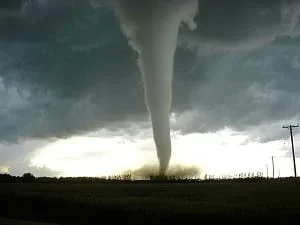 Copyright http://en.wikipedia.org/wiki/2007_Elie,_Manitoba_tornado#/media/File:F5_tornado_Elie_Manitoba_2007.jpg
Tornadoes typically produce winds up to and over 250 mph (and, in rare circumstances, 379 mph). According to NOAA, about 1,000 tornadoes are reported across the United States in an average year, causing about 80 deaths and over 1,500 injuries. Approximately, 45 percent of these deaths were people living in mobile homes. A lot of injuries result from objects being tossed around by a tornado. With those statistics in mind, it is easy to see why it is important for engineers to build buildings that can withstand the ferocious forces of a tornado.
So how are tornadoes measured? Dr. T. Theodore Fujita developed a damage scale that relates the degree of damage to the intensity of the wind. Dr. Fujita's method, so aptly named the Fujita Tornado Damage Scale — or F-scale, has an error in it because different structures can withstand wind forces (buildings versus bridges versus mobile homes) differently. The wind speeds on the F-scale have never been scientifically tested and proven. The scale has 6 possible tornado ratings: Category F0 (light damage, <73 mpg winds) to Category F5 (incredible damage and 261-318 mph winds).
Can you think of any other reasons why it would be hard to rate a tornado? Well, damage also depends on how long the winds of a tornado last and what type of debris and objects might hit structures from the vortex of a tornado. As our methods for measuring the weather in and around tornados has improved, so has our tornado rating system. As of 2007, scientists now use the Enhanced Fujita Scale (called the EF-Scale) to rate tornados. This new scale adjusts the earlier Fujita Scale that was used until 2007.
Some communities do not have any tornado preparedness procedures, but there are ways to tell if you are in danger of encountering a tornado, specifically via two types of warnings issued by the National Weather Service. The first is a tornado watch, which means weather conditions make tornadoes likely, but does not mean that they will occur. The next is a tornado warning, which means a tornado has been sighted either by Doppler radar or on the ground. This is when you must immediately find shelter. Safe places to "ride out" a tornado are storm cellars, basements, or interior rooms that have no windows. If you are in a mobile home, leave it immediately, as tornadoes like to pick these structures up or completely flatten them.
Today we are going to be safety engineers and study the EF-Scale as well as pictures of structures that have been damaged by tornadoes. Using what we have learned to describe some of the characteristics of tornados, and we will create a flyer to educate people about the warning signs of a tornado and help describe what to do if you live in an area with tornado activity.
Before the Activity
- Get books/reference materials on tornados and tornado damage at the library or online.
- Gather paper and pencils, enough for each student.
- Make copies of the Enhanced Fujita Tornado Damage Scale (PDF), Tornado Damage KWL Chart (PDF) and Tornado Safety Handout (PDF), one for each group.
With the Students
- Discuss natural disasters with students and how they can seriously hurt people who are unprepared for a disaster. Ask students if they know of any natural disasters (they may have seen something about a tornado, hurricane, major flood, big snow storm or forest fire on the news). See http://www.redcross.org/ for more information.
- With students, brainstorm the damage that tornadoes can cause. Write their responses on the chalk/white board.
- Have students get into groups; pass out any available books/references on tornadoes.
- Hand out the Enhanced Fujita Tornado Damage Scale (PDF) and discuss the different types of tornados that occur. If computers are available, have students do a search for different-sized tornados. For example: "EF0 site:noaa.gov" searches the NOAA site for any/all EF0 tornados. If computers are not available, have students use images in library books to increase their understanding of tornado damage.
- Have the students pretend that they are Civil Engineers, and they need to assess damage and rate tornados. Pass out a picture (PDF) of a damaged building to each group. Have students, based on their research on the Enhanced Fujita Scale, explain to the rest of the class which class of tornado passed through and why they believe the rating to be a certain category. (There is no wrong answer if they can clearly explain why). If students were not able to conduct their own research on tornado damage, then have them make an educated guess as to the severity of the tornados pictured.
- Have the students brainstorm different warning signs for potential tornado activity. Write their answers on the board, and focus on those things which we can see with our own eyes, as opposed to radar or pressure drops.
- Pass out the Tornado Safety Handout (PDF). Have students create a folded paper brochure on tornado safety for their community. This activity pretends that the community does not have any knowledge of signs of tornados or procedures for tornado safety, and it is the responsibility of the Civil Engineers to find ways to correct the deficiencies. Some suggestions could include: building standards that all houses have a storm cellar or basement, community storm shelters for mobile home parks or public places, warning sirens, weather radios, community safety workshops, or banning mobile homes in tornado alley. The students can be as creative as they want; there are no wrong answers.
Pre-Activity Assessment
Discussion Questions: Discuss the effects of a tornado. Ask the students if they have ever seen, live, or on TV, any tornado damage. What did the tornado do? How much damage was there?
KWL Chart: Have students write down what they know about tornados and tornado damage under the "Know" column of the Tornado Damage KWL Chart (PDF).
Activity Embedded Assessment
Brainstorming: Have students brainstorm reasons that tornados cause damage and how engineers could help prevent some of the damage.
KWL Chart: Students should record their brainstorming ideas under the "Want to Know" section of the Tornado Damage KWL Chart.
Post Activity Assessment
KWL Chart: Students should record what they have learned in the "Learned" column of the Tornado Damage KWL Chart. Afterwards, lead a discussion of what students have learned, soliciting responses and recording them on the board.
Tornado Damage Survey: Have students, based on the Enhanced Fujita Scale, explain to the rest of the class which class of tornado passed through and why they believe the rating to be a certain category. (There is no wrong answer if they can clearly explain why.)
Civil Engineer: Have students create a folded paper brochure on tornado safety for a person who is moving into Tornado Alley.
Invite a structural or civil engineer to discuss building designs that help prevent loss during windstorms.
Research hurricanes and see how they compare to tornados.
http://www.tornadoproject.com/
http://www.noaa.gov/tornadoes.html
http://www.asce.org/pressroom/publicpolicy/ka0100_windhazard.cfm
http://www.nssl.noaa.gov/
http://www.spc.noaa.gov/faq/tornado/f-scale.html
http://www.chaseday.com/tornadoes.htm
http://www.redcross.org/
- Natural Disasters: Earthquakes, Volcanoes, Tornadoes & More
Contributors
Jessica Todd; Melissa Straten; Malinda Schaefer Zarske; Janet Yowell; Melissa Stewart
Supporting Program
Integrated Teaching and Learning Program, College of Engineering, University of Colorado Boulder
Acknowledgements
The contents of this digital library curriculum were developed under a grant from the Fund for the Improvement of Postsecondary Education (FIPSE), U.S. Department of Education, and National Science Foundation GK-12 grant no 0338326. However, these contents do not necessarily represent the policies of the Department of Education or National Science Foundation, and you should not assume endorsement by the federal government.
Copyright
2004 by Regents of the University of Colorado.