
Energy Detectives at Work
Students search for clues of energy around them. They use what they find to create their own definition of energy. They also relate their energy clues to the engineering products they encounter every day.
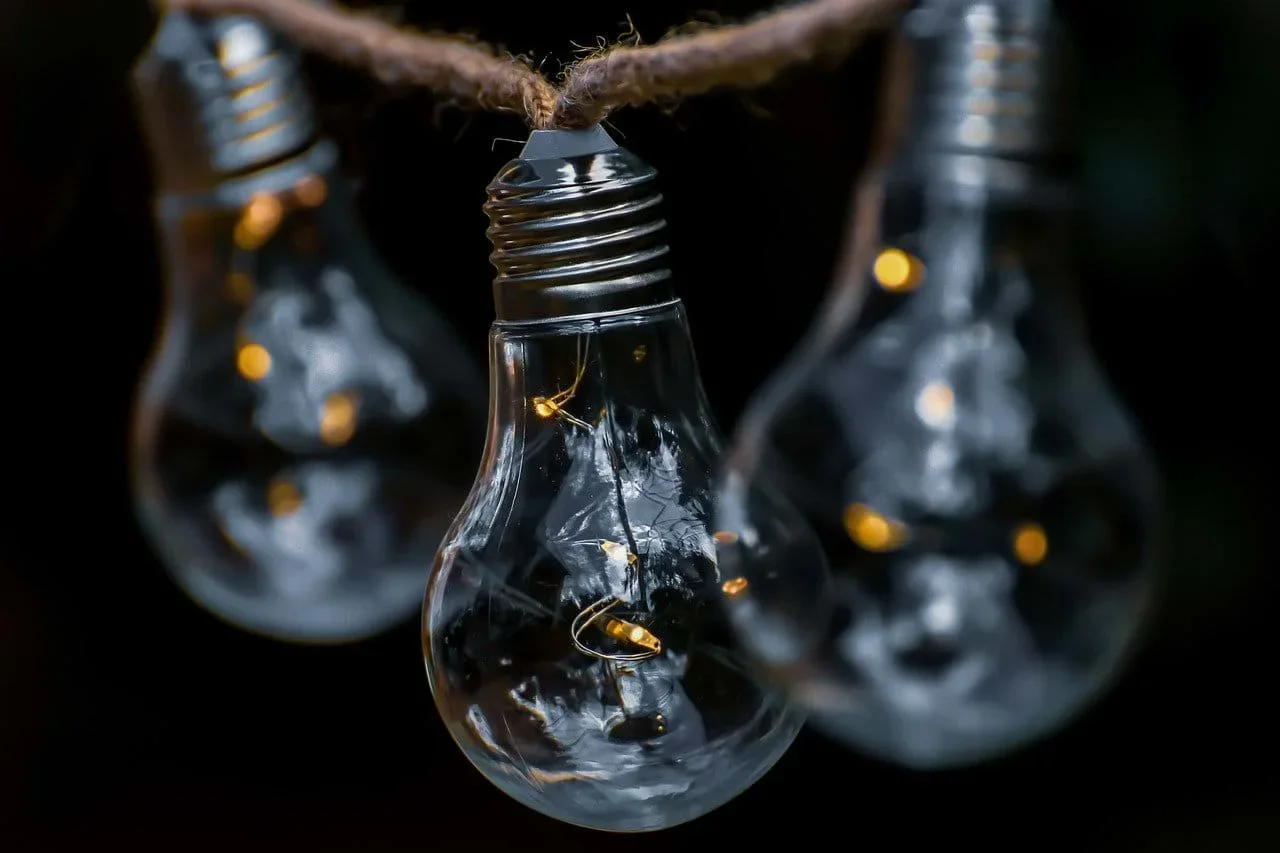 Students explore energy sources in their classroom.Copyright 2020 Alexas_Fotos, Pixabay, https://pixabay.com/photos/light-bulb-energy-nature-5352822/
Energy is all around us. Engineers study the different forms of energy to help create things that make our lives easier, such as appliances and assistive technologies. Energy is also considered when designing auditoriums, buildings, bridges, and space flight. In consideration of energy, engineers need to understand the characteristics of energy, where it comes from and how it can be transformed and transferred. Engineers need to be able to locate energy and its sources visually and quantitatively. Building systems engineers who install or maintain lighting or heating and ventilation systems in buildings examine the building for its sources of energy.
After this activity, students should be able to:
- Define energy.
- Determine what energy is, where it comes from and how it can be used.
- Identify and describe the variety of energy sources
Grade 4
Do you agree with this alignment?
- Energy comes in different forms.
Grades 3-5
Do you agree with this alignment? - Tools, machines, products, and systems use energy in order to do work.
Grades 3-5
Do you agree with this alignment?
- 4-PS3-2 Make observations to provide evidence that energy can be transferred from place to place by sound, light, heat, and electric currents.
Grade 4
This resource focuses on the following Three Dimensional Learning aspects of NGSS:
Science & Engineering Practices- Make observations to produce data to serve as the basis for evidence for an explanation of a phenomenon or test a design solution.Do you agree with this alignment?
Disciplinary Core Ideas- Energy can be moved from place to place by moving objects or through sound, light, or electric currents.Do you agree with this alignment?
- Energy is present whenever there are moving objects, sound, light, or heat. When objects collide, energy can be transferred from one object to another, thereby changing their motion. In such collisions, some energy is typically also transferred to the surrounding air; as a result, the air gets heated and sound is produced.Do you agree with this alignment?
- Light also transfers energy from place to place.Do you agree with this alignment?
- Energy can also be transferred from place to place by electric currents, which can then be used locally to produce motion, sound, heat, or light. The currents may have been produced to begin with by transforming the energy of motion into electrical energy.Do you agree with this alignment?
Crosscutting Concepts- Energy can be transferred in various ways and between objects.Do you agree with this alignment?
Do you agree with this alignment? - Make observations to produce data to serve as the basis for evidence for an explanation of a phenomenon or test a design solution.
Each group needs:
- Energy Detective Worksheet (PDF)
- pen or pencil
Energy is something we use every day. We do not always think about it, but we are using energy even when we walk or sit up straight. Energy is being used when we open the refrigerator or turn on the oven, and energy is around us when we listen to a song or watch a television. There are so many types and sources of energy that sometimes energy is hard to define.
We know that energy may be seen in the form of light when we turn on a light bulb. It also may be felt in the form of heat when that light bulb is on for a long time. We know it takes energy to run a race and sometimes when we do not have much energy left we feel tired. Can you tell us anything else you know about energy?
Engineers use energy in almost everything they create. When an engineer designs a new piece of medical equipment, it is important to think about the energy required by the equipment, as well as what type and how much energy is needed to build the equipment in a factory.
Engineers who design new devices may need to become "energy detectives" as they figure out what types of energy sources are available for them to use in a particular situation. There may not always be electrical energy available or solar energy available for every project. (For example: How would you keep your food cool in a desert if you had no electricity? How would you keep the air a comfortable temperature in a spaceship? How would you see if you were in a dark cave or on a boat with no electrical plug for a lamp?)
Today, we are going to work for an engineering firm that helps design new buildings for schools. To help the firm, we need to find out where all the sources of energy are located around our school that may be useful in helping us design the new building. This will help get us closer to understanding what energy is.
Before the Activity
- Gather materials and make copies of the Energy Detective Worksheet. (PDF)
With the Students
- Divide the class into teams of two students each.
- Pass out the worksheets. Point out that the goal is to search for answers as to what energy is.
- Review several sources of energy with the class. (Examples: Electricity, people, wind, solar, food, gas, oil, wood, plants, etc.)
- Tell the students that they are energy detectives working for an engineering firm that does energy evaluations on schools. The engineering firm needs to know where the different sources of energy are within the school area.
- Based on the clues given in the handout, have teams of students go in search of evidence that will help them find energy sources. This can be done in the classroom, or assign student teams to investigate different areas in and around the school.
- Give students 20-30 minutes to find as many energy sources as possible.
- Have each team agree on a group definition for energy that uses the information they found. This is what they will report to the engineering firm. Write this definition on the worksheet.
- Conclude by having each team share its definition of energy with the class, which represents the engineering firm. Allow the class to ask questions of each team to clarify what they have learned.
- detective
- A person who investigates and obtains evidence or information.
- energy
- The ability to do work.
- engineer
- A person who uses scientific and mathematical knowledge to solve practical problems.
Pre-Activity Assessment
Brainstorming: As a class, have students engage in open discussion to identify different ways we use energy. Remind them that in brainstorming, no idea or suggestion is "silly." All ideas should be respectfully heard. Take an uncritical position, encourage wild ideas and discourage criticism of ideas. Have them raise their hands to respond. Write their ideas on the board. Some examples they may come up with include stoves for cooking, heating our homes, lighting lamps. Note that the many devices mentioned by students are ways engineers have used energy to benefit society. Before they could create any of these inventions, they first had to learn about the properties or characteristics of energy.
Activity Embedded Assessment
Worksheet: Have the students work in pairs to complete the Energy Detective Worksheet (PDF). Review their answers to gauge their mastery of the subject. Students should use their answers to come up with a group definition of energy.
Post-Activity Assessment
Engineering Report: Have students present their definition of energy and where it may be found in and around the school to the rest of the class, who acts as the engineering firm. Allow the class to ask questions of the pairs to clarify what they have learned.
Class Discussion: As a class, discuss how you can feel, see and hear energy (for example, solar, wind and sound energy). Examples of the use of energy include the wind pushing us on a windy day, or moving a sailboat or a kite. Discuss other examples of energy, such as the sun, and how it is used. Have the students come up with their own examples.
If not much time is available, ask students to think about answers as to what energy is and how it is used in their homes. This way, the students can stay in their seats or work in groups of two or three.
Ask students to list examples of the different types of energy that surround their homes, school and town. For example, students in some towns can name nuclear power as the source for their electricity; while students in other locations take showers with water heated by solar panels.
- For upper grades, have students look up the definition of energy in the dictionary and compare this with the physics definition (ability to do work) and the definition they created on their own.
- For upper grades, have students make up a list of clues that they can find at home that support the definition: "Energy is the ability to do work."
Dictionary.com. Lexico Publishing Group, LLC. Accessed September 21, 2005. (Source of some vocabulary definitions, with some adaptation) http://www.dictionary.com
Contributors
Sharon D. Perez-Suarez; Natalie Mach; Malinda Schaefer Zarske; Denise W. Carlson
Supporting Program
Integrated Teaching and Learning Program, College of Engineering, University of Colorado Boulder
Acknowledgements
The contents of this digital library curriculum were developed under grants from the Fund for the Improvement of Postsecondary Education (FIPSE), U.S. Department of Education and National Science Foundation (GK-12 grant no. 0338326). However, these contents do not necessarily represent the policies of the Department of Education or National Science Foundation, and you should not assume endorsement by the federal government.
Copyright
2005 by Regents of the University of Colorado