
Will It Fly?
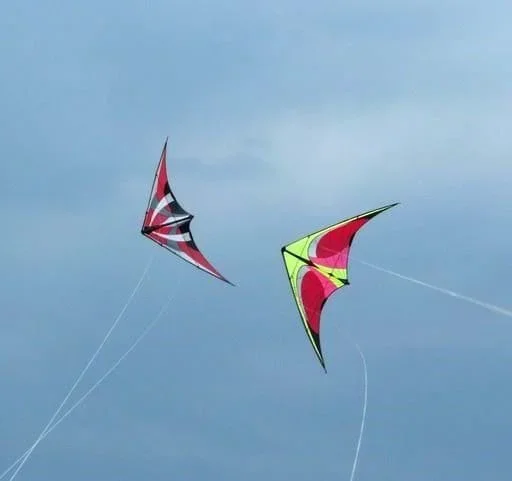 Will it fly?Copyright 2008 Aarondoucett, Wikimedia Commons http://commons.wikimedia.org/wiki/File:Pairs_kites.jpg
Students learn about kites and gliders and how these models can help in understanding the concept of flight. They learn about the long history of human experimentation with kites, the eventual achievement of flight with the invention of airplanes, and the pervasive impact of the airplane on the modern world (pros and cons). Then students move on to conduct the associated activity, during which teams design and build their own balsa wood glider models and experiment with different control surfaces, competing for distance and time. They apply their accumulated existing knowledge (from previous lessons and activities in this unit) about the four forces affecting flight and modifiable airplane components, and apply an engineering design methodology to develop sound gliders. To conclude, they reflect on and communicate the reasoning and results of their design modifications.
Orville and Wilbur Wright were inventors who might be considered early aeronautical engineers. When they designed their first airplane, they built balsa models and kites to test how well it would fly. Modern engineers do the same thing when designing airplanes. Engineers today also use computers to test aspects of their designs before they build the real thing. Doing this less expensive, easier and quicker since they can learn from their failures while using the small-size, inexpensive models instead of making costly mistakes using full-size prototype airplanes.
After this lesson, the students should be able to:
- Identify the four forces affecting flight.
- Describe the evolution of flight design through history.
- Explain why engineers build models before a final product.
- Give examples of how aircraft models can be modified to improve flight.
- Research and critically evaluate data and information about the advantages and disadvantages of using fossil fuels and alternative energy sources
Grade 6
Do you agree with this alignment?
- STEL-6D Engage in a research and development process to simulate how inventions and innovations have evolved through systematic tests and refinements.
Grades 6-8
Do you agree with this alignment?
- 5-PS2-1 Support an argument that the gravitational force exerted by Earth on objects is directed down.
Grade 5
This resource focuses on the following Three Dimensional Learning aspects of NGSS:
Science & Engineering Practices- Support an argument with evidence, data, or a model.Do you agree with this alignment?
Disciplinary Core Ideas- The gravitational force of Earth acting on an object near Earth's surface pulls that object toward the planet's center.Do you agree with this alignment?
Crosscutting Concepts- Cause and effect relationships are routinely identified and used to explain change.Do you agree with this alignment?
Do you agree with this alignment? - Support an argument with evidence, data, or a model.
- MS-ETS1-4 Develop a model to generate data for iterative testing and modification of a proposed object, tool, or process such that an optimal design can be achieved.
Grades 6-8
This resource focuses on the following Three Dimensional Learning aspects of NGSS:
Science & Engineering Practices- Develop a model to generate data to test ideas about designed systems, including those representing inputs and outputs.Do you agree with this alignment?
Disciplinary Core Ideas- Models of all kinds are important for testing solutions.Do you agree with this alignment?
- The iterative process of testing the most promising solutions and modifying what is proposed on the basis of the test results leads to greater refinement and ultimately to an optimal solution.Do you agree with this alignment?
Do you agree with this alignment? - Develop a model to generate data to test ideas about designed systems, including those representing inputs and outputs.
So far in this unit, students have learned about the four forces affecting flight and variables involved in the engineering design of airplane models. This lesson leads them further through the thought processes behind airplane design and invites them look at the historical aspect of airplane design through the design of simple gliders. Students also have the opportunity to discuss some implications of historical and modern aircraft.
The social history of flight is pretty diverse. People have always looked to the heavens to determine the cycles of seasons, agriculture and life. Humans have dreamed about being able to fly to the heavens just as birds do. Mythological stories tell us about birds and other winged creatures that fly gods and their chariots through the sky and in and out of the clouds. Humans had the desire to emulate the gods by creating flying machines.
As knowledge of the universe grew, the connection between the heavens and mythological flight faded, and the desire to achieve flight remained. The ancient Chinese tried to sail through the air by attaching themselves to kites, one of the most significant inventions leading to flight. Other flight pioneers such as Leonardo da Vinci and the Wright brothers have made modern flight a reality. Throughout history and into modern space exploration, individuals have taken steps towards this dream, often with injuries and sometimes with fatal outcomes. Nevertheless, efforts continue and there is no turning back. Aviation has become part of the mindset of our world.
Air flight has changed society, from the development of small, crude airports servicing short flights to large, state-of-the-art terminals services quick, convenient travel through the air to far away destinations. You can see the influence of flight in literature, art, comics, music, movies and television. Space flight has always been a desire of humans as well, and space aviation is another large industry, dealing with both known and unknown realms.
Over thousands of years, thoughts of flight have been an underlying force in social development. From one point of view, flight has been very beneficial, bringing people closer together, allowing a new job market for people with flight-related talents, helped inspire creativity, and opened up a world of possibilities to exploration outside of Earth. However, some would argue that flight has been detrimental as well, as it has made warfare more intense, can be attributed to an increase in pollution, and is costly, taking money from other areas of need.
What are different types of aircraft? Today we are going to talk about kites and gliders.
How many of you have flown a kite before? What are the parts of the kite? (Answer: A basic kite has wings, a supporting structure, and a tail.) Is a kite made from light or heavy materials? (Answer: Usually light.) Does a heavy kite fly well in little wind? (Answer: No, you need a lot of wind to lift a heavy kite.) Do we all agree that it takes more wind to lift a heavy kite? Why is that? (Look for answers that mention the need to overcome larger gravitational forces.) In what direction does gravity act? (Answer: Down.)
How many of you have seen fancy a kite that performs tricks? How about kites that have multi-levels? Can the person flying the kite move the kite around a lot? Who thinks a kite is just a toy? Well kites are not just toys! They can be a good tool for learning about airplanes, and especially about glider flight! A glider is any aircraft that flies without an engine.
Engineers can learn a lot about the flight patterns of a glider by first building a kite model of the glider. They can hold it by hand (if it is small enough to control) and observe its flight patterns when they vary any number of components: the wing shape and size, its position on the kite's body, the structure of the entire body of the kite, and various tail assemblies.
Early experimenters of flight built kites that resembled the glider or powered vehicle that s/he hoped to build later. Some of these kites were full-sized, resembling the glider or airplane they intended to fly later but using less-expensive materials. Sometimes experimenters placed weights on the kite to observe how specific weight being carried would change the flight pattern. The Wright Brothers were among those who built several kites of increasingly larger size before they built their gliders and powered aircraft. They used the kites and model gliders to experiment with wing warping and how much weight a kite or glider could carry before failing.
What can you learn from flying a kite? (Answer: You can learn how much wind needs to be present to overcome weight (lift); how wind affects the way the kite flies; how to control the kite's movement to not crash.) What can you learn from building a glider? (Answer: You can learn about flight patterns, how control surfaces affect flight, how much weight a design can hold, how much lift is created by wing shapes, etc.)
Not all engineering is well thought out the first time around. Sometimes, the best designs are accidental and emerge through a lot of experimentation. You are going to have an opportunity to use all of the information you have learned about aircraft flight to design and then redesign a balsa glider to increase its flight time and distance with the associated activity Balsa Glider Competition.
(After completion of the associated activity, lead a class discussion about students' glider designs.) What modifications did you make to your glider? Did it make the glider work better? What could you do next time to make the glider perform even better? Do you think it is a good idea for engineers to design glider models before they build a real glider? Why or why not? (Encourage reasoning based on the knowledge gained from the previous lessons. Expect students to share their results and make connections.)
- glider
- An aircraft similar to an airplane but without an engine.
- kite
- A light frame covered usually with paper or cloth, with a stabilizing tail, and designed to be flown in the air at the end of a long string.
- control variable
- A standard that an experimental model is measured against.
- balsa
- Light weight wood that is easily manipulated in making airplanes.
- distance
- The amount of space between two things, objects or points.
- design
- A plan, sketch or outline made to serve as a guide or pattern.
Pre-Lesson Assessment
Brainstorming: As a class, develop a list of different aircraft or things that fly. The list might include toys, models, arrows, sports equipment, various types of airplanes, helicopters, drones, etc. Encourage wild ideas and discourage criticism of any ideas.
Post-Introduction Assessment
Question/Answer: Ask students questions and have them raise their hands to respond.
- What can you learn from flying a kite? (Possible answers: You can learn about how much wind needs to be present to overcome weight [lift]; how wind affects the way the kite flies; how to control the kite's movement.)
- What can you learn from building a glider? (Possible answers: You can learn about flight patterns, how control surfaces affect flight, how much weight a design can hold, how much lift is created by wing shapes, etc.)
- True or False: All of the best engineering designs come from well-thought-out plans. (Answer: False, it is rare that a well-conceived and polished design idea is the first idea. Sometimes, the best designs are accidental ideas and/or improvements that occur during experimentation and turn out to be better than the original design idea.)
- Review the concepts from the previous lessons that can affect flight. What is the affect of weight on flight? What do control surfaces have to do with how an airplane flies? Are bigger wings better or worse for a glider?
Lesson Summary Assessment
Venn Diagram: Have students create a Venn diagram to compare and contrast the different types of aircraft that have been discussed.
- Have students draw three overlapping circles. Label one circle with kite, the second circle with glider and the last circle with airplane. Direct students to list all of the observations the three types of aircraft have in common in the overlapping sections and all observations of what is different for each aircraft in the outside circle sections.
Class Debate: Divide the class into two groups. Have one group argue for (agree with) the topic and one group talk against (disagree with) the topic. Give the groups a few minutes to come up with their arguments before the class debate.
- Topic: The flying machine (aircraft) has changed society for the better. (As examples: pro-aircraft students might discuss transportation advances and globalization, and con-aircraft students might discuss pollution consequences, high carbon footprint and/or increased warfare capabilities.)
Cartoon Character: Cartoon characters such as Bugs Bunny have often been sent into flight missions to escape a situation. Create your own cartoon sketch of a character in flight. Your character could be in a glider or airplane, or maybe hanging from a kite. Make sure to label one of the four forces (drag, lift, weight or thrust) acting on the character and have your character saying something about how the force is affecting them.
Assign students to research and report on other early models of aircraft and the engineers/inventors who developed them.
Have students research kite-flying tricks. How can the tricks accomplished by different kites be explained in terms of the four forces affecting flight?
Suggest that students redesign their gliders for other factors, such as carrying cargo. Whose glider can carry the most pennies and still fly a distance?
Turner Toys & Hobbies: Smart toys for smart kids. http://turnertoys.om/index.php?p=404
- Up, Up and Away! - Airplanes
- Can You Take the Pressure?
- May the Force Be with You: Lift
- May the Force Be with You: Weight
- May the Force Be with You: Thrust
- May the Force Be with You: Drag
- Take Off with Paper Airplanes
- Airplane Tails & Wings: Are You in Control?
- Airplanes Everywhere: Land, Water, Sky, Oh My!
- Will It Fly?
- Future Flights: Imagine Your Own Flying Machines!
Contributors
Tom Rutkowski; Alex Conner; Geoffrey Hill; Malinda Schaefer Zarske; Janet Yowell
Supporting Program
Integrated Teaching and Learning Program, College of Engineering, University of Colorado Boulder
Acknowledgements
The contents of this digital library curriculum were developed under grants from the Fund for the Improvement of Postsecondary Education (FIPSE), U.S. Department of Education and National Science Foundation (GK-12 grant no. 0338326). However, these contents do not necessarily represent the policies of the Department of Education or National Science Foundation, and you should not assume endorsement by the federal government.
Copyright
2004 by Regents of the University of Colorado