
Future Flights: Imagine Your Own Flying Machines!
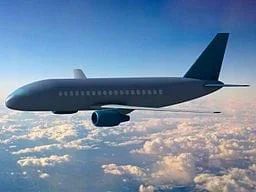 This silent efficient low-emissions commercial transport aircraft design looks ordinary but is an advanced aircraft that may be in service in 2030.Copyright 2020 NASA/Northrop Grumman, Wikimedia Commons http://commons.wikimedia.org/wiki/File:Northrop_Grumman_SELECT_concept_2010.jpg
As a conclusion to the Airplanes unit, this lesson encourages students to think creatively. After learning about the invention process and reviewing the concepts learned in the unit, they conduct the open-ended associated activity. Student teams design their own flying machines based on their knowledge of the forces involved in flight, the properties of given materials, and the ways in which their flying machine might benefit society. Students learn first-hand how the brainstorming process contributes to imaginative thinking and inventing—a technique engineers use to come up with new products or alter existing products.
When designing new airplanes, engineers often use idea-generating techniques such as brainstorming. Since engineers almost always work in teams, the ability to work together to come up with ideas and solutions is very important. Engineers share their thoughts and build upon each other's ideas to come up with creative design solutions. Not only do engineers need to be able to apply their knowledge to solve a problem, but they also need to be able to communicate their knowledge and ideas to their team members to effectively brainstorm.
After this lesson, students should be able to:
- Work in a group to brainstorm ideas.
- Describe the invention design process.
- List some important inventions and inventors in history.
- Describe how engineers use the invention process.
- Design an airplane that takes into account relevant scientific principles of flight.
- Research and critically evaluate data and information about the advantages and disadvantages of using fossil fuels and alternative energy sources
Grade 6
Do you agree with this alignment?
- Brainstorming is a group problem-solving design process in which each person in the group presents his or her ideas in an open forum.
Grades 6-8
Do you agree with this alignment? - STEL-6D Engage in a research and development process to simulate how inventions and innovations have evolved through systematic tests and refinements.
Grades 6-8
Do you agree with this alignment?
- MS-ETS1-1 Define the criteria and constraints of a design problem with sufficient precision to ensure a successful solution, taking into account relevant scientific principles and potential impacts on people and the natural environment that may limit possible solutions.
Grades 6-8
This resource focuses on the following Three Dimensional Learning aspects of NGSS:
Science & Engineering Practices- Define a design problem that can be solved through the development of an object, tool, process or system and includes multiple criteria and constraints, including scientific knowledge that may limit possible solutions.Do you agree with this alignment?
Disciplinary Core Ideas- The more precisely a design task's criteria and constraints can be defined, the more likely it is that the designed solution will be successful. Specification of constraints includes consideration of scientific principles and other relevant knowledge that is likely to limit possible solutions.Do you agree with this alignment?
Crosscutting Concepts- The uses of technologies and any limitations on their use are driven by individual or societal needs, desires, and values; by the findings of scientific research; and by differences in such factors as climate, natural resources, and economic conditions.Do you agree with this alignment?
- All human activity draws on natural resources and has both short and long-term consequences, positive as well as negative, for the health of people and the natural environment.Do you agree with this alignment?
Do you agree with this alignment? - Define a design problem that can be solved through the development of an object, tool, process or system and includes multiple criteria and constraints, including scientific knowledge that may limit possible solutions.
What is the invention design process?
The invention design process is a method that helps people come up with new, creative, useful and/or helpful ideas. The invention process can be taught to some degree. Many people have defined methods to do this, including the SCAMPER method (Eberle, 1996). Each letter in SCAMPER stands for a type of thinking process that helps during brainstorming: substitute, combine, adapt, modify/minify/magnify, put to other uses, eliminate and rearrange. At this level of design, it is simpler to start with some brainstorming work to get the creative ideas flowing, and then let students get to work. Brainstorming is often the first step in any creative process.
How does the SCAMPER process for invention work?
Here's an example of how the SCAMPER technique works when brainstorming or inventing. Take a common household object like a wire coat hanger. The first step is to substitute: can you substitute another shape or material for the coat hanger? Perhaps your idea could be made out of pipe cleaners, or perhaps the coat hanger could be reworked into a square instead of a triangle. Next, we look at combining. Can we combine the coat hanger with Velcro® so more clothes can attach to it? Can we combine it with a fragrance, so your clothes smell better? Then we go to adapt: What could be adapted on the coat hanger to make it more useful? Would two hooks work better than one? Next, what could we modify/minify/magnify, and ask what could be bigger, or smaller, and so on. The final steps are: eliminate and rearrange. Here we try and find what can be removed from the coat hanger or what can be moved on it.
What is a patent?
A patent is a governmental grant to the inventor of a product that gives the inventor the privilege to exclude others from making the same invention. In the U.S., patents are provided for by the Constitution (Article 1, Section 8). The first law relating to patents was put into effect in 1790, and the U.S. Patent Office was established in 1836. In most countries, a patent has a limited time frame. In the U.S. a patent expires in 17 years.
Have you ever thought of something that would make your life easier and wish that someone would invent that item? Have you ever invented a new recipe or concoction in the kitchen? What did it taste like? What did it look like? Have you ever built a go-cart or modified a scooter or skateboard? Inventing is an important part of the design process. Inventing can be spontaneous or driven by necessity. Engineers use the invention design process as they dream up new ideas for tools, buildings, chemical mixtures, airplanes and so many more.
Many common items in use today were the ideas of creative thinkers who thought "outside the box." Some inventions, such as pacemakers and artificial hearts, have saved countless lives. Some discoveries, such as electricity, fundamentally alter our lives. The invention of electricity led to many other products: light bulbs, electric stoves, heaters, etc. Even the two-way radio wristwatch from the Dick Tracey comics is now a reality!
Inventions in the realm of flight date back to Leonardo da Vinci (1452-1519), who, in his notebooks, sketched ideas for inventions that today are realities, such as helicopters, parachutes and airplanes. Sir George Cayley invented a glider in 1804. The Wright brothers invented the first powered airplane in 1903. Seaplanes were invented in 1912, and in 1933, the Boeing Company designed the first modern airliner, the Boeing 247. Sometimes, inventors apply for patents to protect their ideas from being copied and used by somebody else. The jet engine was patented in 1930 by Frank Whittle in Britain. Later, in 1983, the Stealth fighters (planes that are difficult to detect using radar) were made public.
Inventing plays a crucial role in engineering. Most engineers work on making new or improved designs that are basically new inventions. The invention process involves brainstorming, adapting, synthesizing, modifying and of course, testing and redesigning. Have any of you seen the movie, "Apollo 13"? In this movie, a spacecraft has lost most of its power and needs to find a way to get back to Earth with only the materials they have on board. Basically, the NASA commander told the Apollo 13 crew that they had specific objects on their spacecraft to work with, and they had to use them to get home. The engineers then had to figure out how to get the spacecraft home with limited resources and in a limited amount of time. To do this, they had to be creative thinkers and use the invention process. Refer to the Design a Flying Machine activity to have students act as innovative engineers to design a flying machine of the future! We are going to learn more about the invention process during this lesson.
As a class, ask students to share and discuss what they liked about the invention design process.
Then have each team briefly share its flying machine design with the class—relating how they incorporated the concepts of drag, thrust, lift, etc., and how they utilized different types of materials in the craft. If that takes too much time, have students do the same in smaller groups.
- invention
- A new device, method or process developed from study and experimentation.
- patent
- A grant made by a government that confers upon the creator of an invention the sole right to make, use and sell that invention for a set period of time.
- brainstorm
- To solve a problem with a group of people where spontaneous ideas are contributed and then built upon.
Pre-Lesson Assessment
Discussion Questions: Solicit, integrate, and summarize student responses. Ask the students:
- Have you ever thought of something that would make your life easier, and wish someone would invent that item? Have you ever invented a new recipe or concoction in the kitchen? What did it taste like? What did it look like?
Post-Introduction Assessment
Voting: Ask a true/false question and have students vote by holding thumbs up for true and thumbs down for false. Tally the votes and write the number on the board. Give the right answer.
- True or False: Leonardo Da Vinci had an early design for a helicopter? (Answer: True)
- True or False: The Wong brothers invented the first powered airplane in 1903. (Answer: False; it was the Wright brothers.)
- True or False: A patent confers the rights of a product to its inventor for three years? (Answer: False; 17 years.)
- True or False: Engineers often use the design process to help them create new things. (Answer: True)
- True or False: Boeing designed the first modern airplane. (Answer: True)
- True or False: The inventing process is quick and takes little effort. (Answer: False; the invention process often takes many years and lots of effort to complete one product.)
Lesson Summary Assessment
Inventor's Log: Have students develop an inventor's log for an invention of their choosing , either something real or something they create. Require the log to include the following:
- The name of the invention
- At least one drawing of the invention, but probably additional sketches as the invention is altered and improved
- A business plan for the invention: Who will buy it? How much will it cost to make? How much will it cost to buy? How long does it take to make it? Where will it be sold?
- A marketing ad for the invention: a TV commercial, newspaper or magazine ad, or website
- A signature and date by the teacher and at least one other student to act as witnesses and to make the log "official"
Jeopardy Game: Conduct a jeopardy game as a way to test all the concepts in the Airplanes unit. In jeopardy, contestants are given answers and they must provide the correct matching questions to earn points. For ideas for the answers/questions, use vocabulary words and the Assessment section questions/answers in each lesson plan.
If time does not permit completion of the Design a Flying Machine associated activity, do the following as a quicker alternative to ensure students understand drag, thrust, lift and weight and can apply these concepts in an engineering design challenge. In pairs, challenge students to envision and sketch a design of a flying machine, or plane that is built using common household supplies (such as paper, cardboard, toothpicks, wooden craft sticks, etc.). Most importantly, require teams to outline how their designs consider the forces and principles of drag, thrust, lift and weight. For each sketch, have students turn in the design along with answers to the following questions:
- What materials (and how much of each) are proposed in your sketch?
- What is drag and how does drag affect flight? (Answer: Drag is resistance to motion through a fluid, such as the atmosphere in the case of an airplane. The more drag, the more resistance on the airplane.) How does your design consider this?
- What is thrust and how does thrust affect flight? (Answer: Thrust is the forward-directed force developed in a jet or rocket engine as a reaction to the high-velocity rearward ejection of exhaust gases or a propeller.) How does your design consider this?
- What is lift and how does lift affect flight? (Answer: Lift is the net upward force created when the air pressure below the wing is greater than the air pressure above the wing.) How does your design consider this?
- What is weight and how does weight affect flight? (Answer: Weight is the force with which a body is attracted to Earth or other celestial body, equal to the product of the objects mass and gravitational acceleration. Weight affects flight by counteracting lift and needs to be considered when choosing a building material.) How does your design consider this?
Additional extension ideas:
- Have students research and/or develop a patent form as a class. Apply these to their futuristic inventions or airplane designs.
- Have students rresearch and develop a business plan for getting inventions to market.
- Have students develop a marketing plan for different futuristic inventions.
- Have students study/research modern or historical inventions as they relate to the topic of flight, or inventions in general if students developed an interest.
Inventions & Inventors: Volume 1: Air & Space. Danbury, CT: Grolier Publishing, 2000.
U.S. Patent and Trademark Office. http://www.uspto.gov/main/patents.htm
Eberle, Bob. Scamper: Creative Games and Activities for Imagination Development. Waco, TX: Prufrock Press, 1996.
Stanish, Bob. Unconventional Invention Book. Good Apple, 1988.
Stanish, Bob. Sunflowering. Good Apple, 1988.
- Up, Up and Away! - Airplanes
- Can You Take the Pressure?
- May the Force Be with You: Lift
- May the Force Be with You: Weight
- May the Force Be with You: Thrust
- May the Force Be with You: Drag
- Take Off with Paper Airplanes
- Airplane Tails & Wings: Are You in Control?
- Airplanes Everywhere: Land, Water, Sky, Oh My!
- Will It Fly?
- Future Flights: Imagine Your Own Flying Machines!
Contributors
Tom Rutkowski; Alex Conner; Geoffrey Hill; Malinda Schaefer Zarske; Janet Yowell
Supporting Program
Integrated Teaching and Learning Program, College of Engineering, University of Colorado Boulder
Acknowledgements
The contents of this digital library curriculum were developed under grants from the Fund for the Improvement of Postsecondary Education (FIPSE), U.S. Department of Education and National Science Foundation (GK-12 grant no. 0338326). However, these contents do not necessarily represent the policies of the Department of Education or National Science Foundation, and you should not assume endorsement by the federal government.
Copyright
2004 by Regents of the University of Colorado