
Go with the Energy Flow
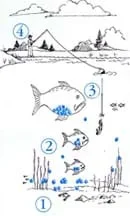 Figure 1. An aquatic environment food chain.Copyright National Institutes of Health, http://orf.od.nih.gov/ Environmental+Protection/Mercury +Free/MercuryHealthHazards. htm#foodchain
Students learn about energy and nutrient flow in various biosphere climates and environments. They learn about herbivores, carnivores, omnivores, food chains and food webs, seeing the interdependence between producers, consumers and decomposers. Students are introduced to the roles of the hydrologic (water), carbon, and nitrogen cycles in sustaining the worlds' ecosystems so living organisms survive. This lesson is part of a series of six lessons in which students use their growing understanding of various environments and the engineering design process, to design and create their own model biodome ecosystems.
Understanding energy flow and transfer is important for many engineering applications. Some engineers must consider how to avoid and exploit heat loss/gain in their building designs. Other engineers must understand the direct application of energy in determining the type of fuel used to power essential and everyday appliances and tools. Since our weather and climates result from heat transfer and energy flow, engineers who design sensor and reporting equipment must understand these cycles. From this knowledge, they also design meteorological computer modeling systems that generate information and tools to make weather predictions and forecasts.
After this lesson, students should be able to:
- Describe the importance of energy flow and nutrient cycles in sustaining Earth's ecosystems.
- Diagram the flow of energy through simple food chains and food webs.
- Relate how engineers use their knowledge of energy flow through systems in the design of new technologies.
- Compare and contrast different habitat types
Grade 4
Do you agree with this alignment? - Create and evaluate models of the flow of nonliving components or resources through an ecosystem
Grade 4
Do you agree with this alignment?
- Energy comes in different forms.
Grades 3-5
Do you agree with this alignment? - STEL-2F Describe how a subsystem is a system that operates as part of another, larger system.
Grades 3-5
Do you agree with this alignment?
- 5-ESS2-1 Develop a model using an example to describe ways the geosphere, biosphere, hydrosphere, and/or atmosphere interact.
Grade 5
This resource focuses on the following Three Dimensional Learning aspects of NGSS:
Science & Engineering Practices- Develop a model using an example to describe a scientific principle.Do you agree with this alignment?
Disciplinary Core Ideas- Earth's major systems are the geosphere (solid and molten rock, soil, and sediments), the hydrosphere (water and ice), the atmosphere (air), and the biosphere (living things, including humans). These systems interact in multiple ways to affect Earth's surface materials and processes. The ocean supports a variety of ecosystems and organisms, shapes landforms, and influences climate. Winds and clouds in the atmosphere interact with the landforms to determine patterns of weather.Do you agree with this alignment?
Crosscutting Concepts- A system can be described in terms of its components and their interactions.Do you agree with this alignment?
Do you agree with this alignment? - Develop a model using an example to describe a scientific principle.
- 5-LS2-1 Develop a model to describe the movement of matter among plants, animals, decomposers, and the environment.
Grade 5
This resource focuses on the following Three Dimensional Learning aspects of NGSS:
Science & Engineering Practices- Develop a model to describe phenomena.Do you agree with this alignment?
- Science explanations describe the mechanisms for natural events.Do you agree with this alignment?
Disciplinary Core Ideas- The food of almost any kind of animal can be traced back to plants. Organisms are related in food webs in which some animals eat plants for food and other animals eat the animals that eat plants. Some organisms, such as fungi and bacteria, break down dead organisms (both plants or plants parts and animals) and therefore operate as "decomposers." Decomposition eventually restores (recycles) some materials back to the soil. Organisms can survive only in environments in which their particular needs are met. A healthy ecosystem is one in which multiple species of different types are each able to meet their needs in a relatively stable web of life. Newly introduced species can damage the balance of an ecosystem.Do you agree with this alignment?
- Matter cycles between the air and soil and among plants, animals, and microbes as these organisms live and die. Organisms obtain gases, and water, from the environment, and release waste matter (gas, liquid, or solid) back into the environment.Do you agree with this alignment?
Crosscutting Concepts- A system can be described in terms of its components and their interactions.Do you agree with this alignment?
Do you agree with this alignment? - Develop a model to describe phenomena.
- 5-PS3-1 Use models to describe that energy in animals' food (used for body repair, growth, motion, and to maintain body warmth) was once energy from the sun.
Grade 5
This resource focuses on the following Three Dimensional Learning aspects of NGSS:
Science & Engineering Practices- Use models to describe phenomena.Do you agree with this alignment?
Disciplinary Core Ideas- Food provides animals with the materials they need for body repair and growth and the energy they need to maintain body warmth and for motion.Do you agree with this alignment?
- The energy released [from] food was once energy from the sun that was captured by plants in the chemical process that forms plant matter (from air and water).Do you agree with this alignment?
Crosscutting Concepts- Energy can be transferred in various ways and between objects.Do you agree with this alignment?
Do you agree with this alignment? - Use models to describe phenomena.
Some knowledge about environments and ecosystems, as introduced in Lesson 1 of the Biodomes unit.
Numerous cycles contribute to the energy and nutrient flow that naturally occurs in various ecosystems in Earth's biosphere to sustain life and maintain a balance between plants and animals. During this lesson, use images (available in the attached PowerPoint presentation, Energy Cycles Visual Aids (PPT)) to expand on these concepts. For example, Figure 3 is suitable for use in class and is also included in the assessment worksheet (in the form of a quiz) for students completing the Lesson Summary Assessment section.
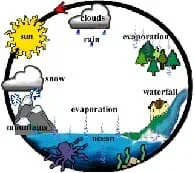 Figure 4. The hydrologic (water) cycle.Copyright City of Lincoln, NE, http://www.lincoln.ne.gov/city/pworks/water/ funfacts/images/cycle.gif.
Hydrologic (Water) Cycle
The hydrologic cycle identifies the flow of water, a necessary resource for life, in a cyclic fashion. In the water cycle, water transpires from plants and trees and evaporates from bodies of water and soils, then returns to the Earth by precipitation. The hydrologic cycle is an important part of the food chain and is useful to consider in conjunction with the food web because animals and plants cannot survive without water. Show students an animation of Figures 4, available at the City of Lincoln, Nebraska, website: http://www.lincoln.ne.gov/city/pworks/water/funfacts/wtrcycle.htm . Integrate information on the hydrologic cycle based on the level of the class or if students wish to know more about the dynamics and transitions from land to water, water to atmosphere and then back from the atmosphere to land and water.
Carbon Cycle
Another important nutrient cycle is the carbon cycle. Figure 5 illustrates the flow of carbon as it circulates from land and water by photosynthesis and respiration from phytoplankton, terrestrial plants and trees. The plants and trees take in the carbon dioxide (fixation) and release only oxygen. Their decomposition then releases the carbon back to the soil and the atmosphere. Carbon is also released to the atmosphere in the form of carbon dioxide by combustion of fossil fuels for transportation, power and industrial processes. Carbon fixation and circulation is important because it is a building block of life and is elemental to the physical mass of all living things, which are composed, in some proportion, of carbon.
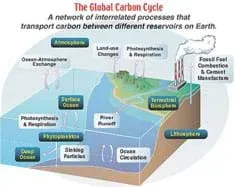 Figure 5. The carbon cycle.Copyright Lawrence Berkeley National Laboratory, University of California, U.S. Department of Energy, http://www.lbl.gov/
This cycle occurs between the water and atmosphere as well as between terrestrial plants and trees and the atmosphere. Another part of the carbon cycle incorporates happenings that occur beneath the Earth's surface. Organic carbon settles in bodies of water, stored in sediment. This sediment, when trapped in the layering process of sedimentary rock, is eventually converted to fossil fuel, coal or crude oil, which engineers extract to refine and use as fuel.
Nitrogen Cycle
The nitrogen cycle is another major nutrient cycle in the Earth's biosphere (see Figure 6). Nitrogen gas is taken in by biota, plants and trees through respiration and is released back into the soil. Some nitrogen forms nitrate or nitrite in soils and some is released to the atmosphere as nitrogen gas. Nitrogen is a life-supporting nutrient and is a primary ingredient in fertilizer, which is applied for agricultural purposes. Agricultural runoff also doses the soil with nitrogen. In addition, any consumer that ingests plants, vegetables or other organic material that has been involved in nitrogen absorption, releases nitrogen in its own waste in the form of urea. Herbivores and omnivores are the primary sources of this form of nitrogen.
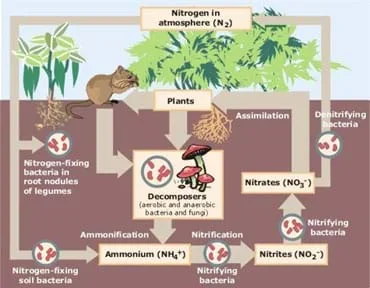 Figure 6. The nitrogen cycle.Copyright U.S. Environmental Protection Agency, http://www.epa.gov/
What is an environment? (Answer: An environment is the surrounding area that an organism lives in, including the air, water, food and energy needed for that organism to survive.) Can you think of an example? (Possible answers: Mountains, tree forests, river valleys, snow and water environments, as well as hot and cold climate environments, such as tropical rain forests and tundra.) What do you think supports these environments or keeps them running? What fuels the animals and plants that live within the environments and ecosystems we just discussed? It's energy! Today we are going to learn about how energy moves through an environment or ecosystem and how this knowledge helps us build a better biodome.
Why did you eat your most recent meal? (Many will say they were hungry, or that they wanted something sweet or salty.) We know that we have to eat to provide ourselves with the raw materials that help us to move, grow and stay healthy. Our food gives us the energy we need to perform daily activities. Do you know of other sources of energy and for what they are used? For example, fossil fuels (oil and coal) and renewable energy (solar or wind) are used for transportation, heating, cooling and electricity. Did you know that energy actually flows around in a system? For example, the energy in fossil fuels is changed into the heat or power that we need to run appliances or heat our homes — that energy moves from one form to another. It is the same with the food we eat; our bodies take the energy from the food and turn it into energy to move and grow. Many engineers study how energy moves through systems. Have you seen the latest running shoes for athletes? Engineers design new running shoes by looking at how energy moves from a person's legs to the ground upon which they are running. Environmental engineers study how energy moves through an ecosystem.
Have you heard of a food chain? A food chain traces the energy of nutrients through the organisms that eat them (see Figure 1). This includes the production of the vegetables, fruit, cheese, eggs or meat that you had for breakfast or will have for lunch or dinner. Energy is in all this food! From where does the energy in food come? Well, all the energy in food starts with the sun! Let's see if we can draw an example of this. (Write one or more of the example food chains in Figure 2 on the classroom board or overhead projector.)
 Figure 2. Example food chains.Copyright ITL Program, College of Engineering, University of Colorado at Boulder, 2006.
The arrows in these food chains illustrate the direction of energy flow — starting with the sun providing nutrients to producers, which use photosynthesis to become food for consumers. What are producers and consumers? A producer is any organism that is capable of making its own food, usually through photosynthesis, such as a plant. A consumer is any organism that gets its food by eating producers or other organisms. What I just drew on the board are examples of simple food chains that show how energy moves from one place to another. A food web is what happens when one organism gets energy from more than one source, such as a human eating vegetables, ham and cheese. Refer to the Got Energy? Spinning a Food Web activity for Students to learn about energy flow in food webs.
How do we use the energy that is in the food we eat? We need energy to move, keep warm (we give off heat all the time, and this heat energy comes from the food we eat) grow, think, stay healthy and stay alive! Any energy that is left is stored in our bodies. Only a fraction of the energy that an herbivore, or plant eater, gets from the plant food that it eats becomes part of its body (its mass). The rest of the energy from the plant food is lost as waste (in droppings) or is used up (for movement, keeping warm or just surviving). The same goes for carnivores, or meat eaters, and omnivores, organisms that eat both meat and plants. When a carnivore or omnivore eats another animal, only a fraction of the energy from its animal food is incorporated into its body. Energy is lost at each link in the food chain because the living things pass on much less energy than they receive. This energy loss means that most food chains are only four or five links long. Discarded plant and animal (organic) materials eventually decompose, returning energy, in the form of nutrients, to the soil.
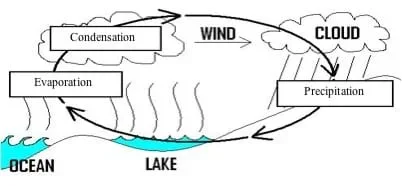 Figure 3. Elements of the hydrologic (water) cycle.Copyright Malinda Zarske, ITL Program, College of Engineering, University of Colorado at Boulder, 2005.
The food chain alone is not responsible for the survival of plants and animals, humans. It is important to recognize that other nutrients, such as carbon, nitrogen, oxygen and water, also play a part in maintaining the ecosystems in which the living organisms of the world depend. How could we survive without water or air? Just as energy flows through organisms and the environment, these other nutrients also flow through the biosphere in cycles. For example, part of the water cycle includes water evaporating from rivers and oceans into the atmosphere where it builds up in clouds (condensation) and returns to the ground as rain or snow (precipitation) (see Figure 3).
Energy flow is something that engineers consider when designing systems and technologies. Whether they are dealing with existing technologies in our buildings, or new, cool mp3 players, or new technologies to help developing communities, or new fuels to power all of the things we use and rely upon every day, how energy flows is important to engineers. Similarly, all things in nature rely on a flow of energy to sustain themselves; plants and animals are all part of a network of energy flow. In addition, different weather and climates happen as a result of how energy flows through the biosphere. Weather systems are of particular interest to engineers who design sensors, measurement devices and meteorological computer models that help us predict weather patterns and inform weather forecasting.
(Optional: Show students the attached PowerPoint presentation, Energy Cycles Visual Aids (PPT), containing food chain, water cycle, carbon cycle and nitrogen cycle images.)
Today, let's think about how we might get energy, and other nutrients, such as water, carbon, nitrogen, and oxygen, into our biodomes for organisms to survive. Will we have any food chains in our biodomes? Any ideas? Following the lesson, students can complete the Biodomes Engineering Design Project: Lessons 2-6 activity to design and create a model biodome with a particular environment.
What did we learn today? We learned that everything in the biosphere is connected by energy and nutrients in a web of cycles. We also learned how important the flow of energy and nutrients are through the biosphere to help organisms move, grow and survive. We learned that food chains and food webs show the flow of energy, where sunlight is converted to food for producers by photosynthesis, which then becomes food for consumers. Some of these consumers are food for still other consumers and so on. Can you give an example of a simple food chain for us? (Have a few students describe example food chains.) What is a producer? (Answer: A producer is any organism that is capable of making its own food, usually through photosynthesis, such as a plant.) What is a consumer? (Answer: A consumer is any organism that gets its food by eating producers or other organisms.) Why do engineers study the flow of energy through the biosphere? (Answer: Engineers need to understand how energy flows through a system in order to design technologies such as heating for buildings, new electronic devices, new technologies to help developing communities, or new fuels to power all of the things we use and rely upon daily.)
- biodome
- A human-made, closed environment containing plants and animals existing in equilibrium.
- biosphere
- The part of the Earth's atmosphere that is capable of supporting life and includes both living and nonliving things.
- carnivore
- An animal that eats only meat.
- carbon cycle
- The continuous circulation of carbon atoms in the biosphere as a result of photosynthetic conversion of carbon dioxide into complex organic compounds by plants, which are consumed by other organisms: the carbon returns to the atmosphere in the form of carbon dioxide as a result of respiration, decay by fungi, bacteria, etc., and combustion of fossil fuels.
- combustion
- The process by which fuel burns. For this to occur, three elements are required: Fuel, heat and oxygen.
- condensation
- The process in which water vapor changes into liquid water.
- consumer
- An organism requiring complex organic compounds for food, which it obtains by preying on other organisms or by eating organic matter.
- decomposition
- The breakdown of a substance into different parts or simpler compounds. Decomposition can occur due to heat, chemical reaction, decay, etc.
- ecosystem
- A functional unit consisting of all the living organisms (plants, animals and microbes) in a given area, and all the nonliving physical and chemical factors of their environment, linked together through nutrient cycling and energy flow. An ecosystem can be of any size — a log, pond, field, forest or the Earth's biosphere — but it always functions as a whole unit.
- energy
- The capacity for vigorous activity; available power; the capacity to do work. For example, I eat chocolate to get quick energy.
- engineer
- A person who applies scientific and mathematical principles to creative and practical ends such as the design, manufacture and operation of efficient and economical structures, machines, processes and systems.
- evaporation
- The process whereby atoms or molecules in a liquid state (such as water) gain sufficient energy to enter the gaseous state (such as water vapor).
- environment
- The surroundings in which an organism lives, including air, water, land, natural resources, flora, fauna, humans and their interrelationships. (Examples: Tundra, coniferous forest, deciduous forest, grassland prairie, mountains and rain forest.)
- food chain
- A sequence of organisms, each of which uses the next, lower member of the sequence as a food source. Source: U.S. Environmental Protection Agency: http://www.epa.gov/OCEPAterms/fterms.html.
- food web
- A complex network of many interconnected food chains and feeding interactions.
- herbivore
- An animal that eats only plants.
- hydrologic cycle
- The continuous cycle of evaporation and condensation that controls the distribution of the Earth's water as it evaporates from bodies of water, condenses, precipitates, and returns to those bodies of water.
- nitrogen cycle
- The continuous circulation of nitrogen in nature, consisting of a cycle of chemical reactions in which atmospheric nitrogen is compounded, dissolved in rain, and deposited in the soil, where it is assimilated and metabolized by bacteria and plants, eventually returning to the atmosphere by bacterial decomposition of organic matter.
- omnivore
- An animal that eats both plants and animals.
- photosynthesis
- The process in green plants by which carbohydrates are made from carbon dioxide and water using sunlight as the energy source.
- precipitation
- Water falling, in a liquid or solid state, from the atmosphere to Earth (e.g. rain, snow, hail).
- producer
- Any organism that is capable of producing its own food, usually through photosynthesis.
- respiration
- The process in which an organism uses oxygen for its life processes and gives off carbon dioxide and water.
- transpiration
- The process by which water absorbed by plants, usually through the roots, is evaporated into the atmosphere from the plant surface, principally from the leaves.
- water cycle
- See hydrologic cycle.
Pre-Lesson Assessment
Pre-Unit Quiz: To gauge how well the lesson concepts were learned by the students, conduct an overall pre/post assessment of this lesson by administering the Energy & Nutrient Flow Concept Quiz (PDF) to the class before beginning the lesson. Then, after completion, administer the same (post-lesson) quiz to the same students and compare pre- to post- scores.
Discussion Questions: Solicit, integrate and summarize student responses. Ask the class:
- Why did you eat your most recent meal? (Discussions points: Many will say they were hungry, or they wanted to eat something tasty. We must eat to provide us with the raw materials to enable us to move, grow and stay healthy. Food gives us energy.)
- From where does your lunch come? From where does a ham and cheese sandwich come? (Discussion points: Introduce the idea of food chains by asking the class to trace the production of the ham or cheese or eggs, etc., in all the types of lunch foods they see in the cafeteria daily. Talk about the energy in the food and where it has come from, bringing them around to the idea that all the energy in food ultimately derives from the sun.)
Post-Introduction Assessment
Bingo: Provide each student with a sheet of paper to draw a large tic-tac-toe board (a 3 x 3 grid with 9 squares) that fills the entire paper. Have students write a lesson vocabulary term in each square. (Choose from: food web, food chain, producer, consumer, herbivore, carnivore, omnivore, energy, environment, biosphere, engineer.) Next, have each student work in pairs to define the vocabulary terms and read the correct definitions aloud to the class. Students cross off a word for each correct definition. The goal is three in a row. Alternative method: Have students walk around the room and find a student who can accurately define one vocabulary term. Students must find a different student for each term. When a student has all terms completed s/he shouts "Bingo!" Continue until two or three students have bingo. Ask the students who shouted "Bingo!" to give definitions of the vocabulary terms.
Lesson Summary Assessment
Concept Worksheet: Have students complete the attached Energy & Nutrient Flow Concept Quiz (PDF); review their answers to gauge their mastery of the subject.
Post-Unit Quiz: If you administered the Energy & Nutrient Flow Concept Quiz (PDF)before beginning this lesson, conclude by administering the same quiz to the class again, after concluding the lesson and activity. Compare pre- to post- scores to gauge the impact of the lesson on students' learning.
Diagramming: Have students draw one or two simple food chains or food webs to describe the source of something they have eaten recently. Each food chain or web should start with the sun and then move to producers and associated consumers. Make sure the students draw arrows to indicate the flow of energy from one stage to the next. Discuss with them how engineers might make similar energy flow diagrams when looking at materials for new technologies.
For example, cheese sandwich.
Sun ==> grass ==> cow ==> milk ==> made into cheese eaten by humans
Sun ==> wheat ==> wheat grain made into bread eaten by humans
Have students who finish early use the Internet to view an excellent animation of the nitrogen cycle at the Olympic National Park website: https://www.nps.gov/index.htmOr, show the entire class the animation and tie in the nitrogen cycle by discussing how nitrogen acts as a fuel that is circulated through the environment by consumers, producers and decomposers.
Assign students to find out more about the various nutrient cycles in the biosphere, including the carbon, nitrogen and hydrologic cycles. See the Lesson Background & Concepts for Teachers section for more information and illustrations as well as the attached Energy Cycles Visual Aids (PPT)PowerPoint presentation file.
See the water cycle in action with this animated diagram by the City of Lincoln, Nebraska: http://www.lincoln.ne.gov/city/pworks/water/funfacts/wtrcycle.htm(click to start animation).
See the nitrogen cycle in action with this animation on the Olympic National Park (WA) website.
Bush, Mark B. Ecology of a Changing Planet, Second Edition. Saddle River, NJ: Prentice Hall, 2000.
Dictionary.com. Lexico Publishing Group, LLC. Accessed December 5, 2006.
Terms of Environment: Glossary, Abbreviations and Acronyms. Last updated October 2, 2006. U.S. Environmental Protection Agency. www.epa.gov. Accessed December 5, 2006.
Contributors
Christopher Valenti; Malinda Schaefer Zarske; Denise Carlson
Supporting Program
Integrated Teaching and Learning Program, College of Engineering, University of Colorado Boulder
Acknowledgements
The contents of this digital library curriculum were developed under a grant from the Fund for the Improvement of Postsecondary Education (FIPSE), U.S. Department of Education and National Science Foundation GK-12 grant no. 0338326. However, these contents do not necessarily represent the policies of the Department of Education or National Science Foundation, and you should not assume endorsement by the federal government.
Copyright
2005 by Regents of the University of Colorado.