
Cleaning Up with Decomposers
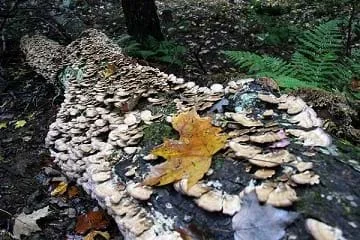 What is the role of decomposers in the environment?Copyright https://www.flickr.com/photos/usfwsmidwest/15457906071/
Students investigate decomposers and the role of decomposers in maintaining the flow of nutrients in an environment. Students also learn how engineers use decomposers to help clean up wastes in a process known as bioremediation. This lesson concludes a series of six lessons with a hands-on associated activity in which students use their growing understanding of various environments and the engineering design process, to design and create their own model biodome ecosystems.
Bioremediation is any process that uses natural living things to return an environment altered by contaminants to its original condition. Engineers use decomposers such as earthworms, fungi and bacteria in environmental clean-up efforts through bioremediation, for example, to clean up oil and chemical spills. Bioremediation technology examples include bioventing, landfarming, bioreactors and biostimulation. This use of biological agents to restore damaged eco-systems to healthier states is especially beneficial because it has less impact on the natural environmental than other processes. Also, some engineers design new products so they decompose on purpose, such dissolvable stitches, packing material, temporary tear duct plugs, plastic grocery bags, biodegradable plates and flatware.
After this lesson, students should be able to:
- Define decomposers.
- List two examples of decomposers and how they affect the environment.
- Explain how engineers use decomposers for bioremediation of the environment.
- Compare and contrast different habitat types
Grade 4
Do you agree with this alignment? - Create and evaluate models of the flow of nonliving components or resources through an ecosystem
Grade 4
Do you agree with this alignment?
- STEL-2F Describe how a subsystem is a system that operates as part of another, larger system.
Grades 3-5
Do you agree with this alignment? - STEL-4I Explain why responsible use of technology requires sustainable management of resources.
Grades 3-5
Do you agree with this alignment?
- 5-LS2-1 Develop a model to describe the movement of matter among plants, animals, decomposers, and the environment.
Grade 5
This resource focuses on the following Three Dimensional Learning aspects of NGSS:
Science & Engineering Practices- Develop a model to describe phenomena.Do you agree with this alignment?
- Science explanations describe the mechanisms for natural events.Do you agree with this alignment?
Disciplinary Core Ideas- The food of almost any kind of animal can be traced back to plants. Organisms are related in food webs in which some animals eat plants for food and other animals eat the animals that eat plants. Some organisms, such as fungi and bacteria, break down dead organisms (both plants or plants parts and animals) and therefore operate as "decomposers." Decomposition eventually restores (recycles) some materials back to the soil. Organisms can survive only in environments in which their particular needs are met. A healthy ecosystem is one in which multiple species of different types are each able to meet their needs in a relatively stable web of life. Newly introduced species can damage the balance of an ecosystem.Do you agree with this alignment?
- Matter cycles between the air and soil and among plants, animals, and microbes as these organisms live and die. Organisms obtain gases, and water, from the environment, and release waste matter (gas, liquid, or solid) back into the environment.Do you agree with this alignment?
Crosscutting Concepts- A system can be described in terms of its components and their interactions.Do you agree with this alignment?
Do you agree with this alignment? - Develop a model to describe phenomena.
Some basic information about food chains, plants and animals, as covered in the Biodomes unit, Lessons 3, 4 and 5.
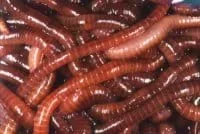 Copyright Oak Ridge National Laboratory, http://www.esd.ornl.gov/BMAP/soil.htm.
Worldwide, more than 5,500 named species of earthworms are known. They exist almost everywhere except for polar and arid climates. They range in size from 2 cm to more than 3 m. With no eyes or legs, worms tunnel through the soil, breathing through their skin. They travel underground by moving their segmented bodies through muscular contractions that shorten and lengthen their body. Worms can replace or replicate lost segments, although this ability varies between species and depends on the extent of the damage.
Earthworms are helpful when we want to compost dead organic matter, add nutrients to soils, and aerate the soil. As earthworms move through the organic material in soils, they eat. Like humans, earthworms cannot digest everything they eat. What they cannot digest is released as waste called castings, which add important nutrients to the soil. Also, as earthworms move from place to place, they create burrows that mix up the soil and aerate it so air and water can penetrate
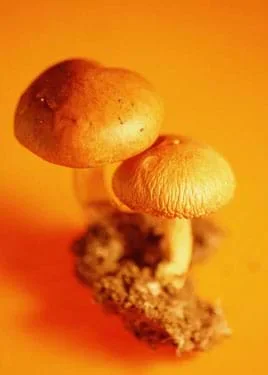 Copyright 2004 Microsoft Corporation, One Microsoft Way, Redmond, WA 98052-6399 USA. All rights reserved.
The more than 50,000 known species of fungi vary from unicellular yeasts to multicellular mushrooms. They are all eukaryotes that digest their food externally and absorb nutrients into their cells. Fungi are typically found in warm, moist places that provide the atmosphere required to live and grow. Fungi absorb their food through hyphae, which are threadlike tubes that make up their bodies. Hyphae actually grow into the desired food source and release digestive juices that help to break down the food source into smaller particles that can be absorbed. Fungi feed on both living and dead organisms, and can even be responsible for the death of an organism. Some fungi also serve as decomposers — organisms that break down into chemicals the dead plant and animal matter that would otherwise cover our planet.
Fungi can also be used to produce food, such as bread, cheese and plain mushrooms. Fungi can be responsible for both the cause and cure of various diseases. Example human diseases caused by fungi include athlete's foot and ringworm. Penicillin, a well-known antibiotic that has saved millions of lives, is made from a fungus.
Let's think about different plants and animals. We have learned about the basic needs of plants and animals — food, water and energy. We also know that animals can be classified by how and what they eat. Who can tell me where plants get their energy to make food? (Answer: The sun.) What are the three words we use to classify what animals eat? (Answer: Carnivores, herbivores and omnivores.) Let's play a game. Let's see how many different plants and animals we can name in two minutes. (Ask students to raise their hands and give a plant or animal name. Do not allow any repeats.) Did we mention worms? How about fungus or mold? Today we are going to learn about a special group of organisms that include earthworms and fungi and the cool things that they do for the environment and us.
Does anyone know what group I am talking about? Well, earthworms and fungi fall into a category called decomposers. Decomposers are living organisms that breaks down other living and non-living things into smaller parts. When plants and animals die, they become food for these decomposers. Decomposers can recycle dead plants and animals into chemical nutrients such as carbon and nitrogen that are released back into the soil, air and water as food for living plants and animals. So, decomposers can recycle dead plants and animals and help keep the flow of nutrients available in the environment.
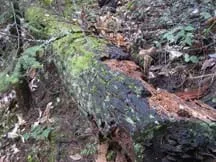 Plants, animals and ecosystem conditions are all working to decompose this tree trunk, returning nutrients to the environment to be used again.Copyright 2006 Denise W. Carlson, ITL Program, College of Engineering, University of Colorado Boulder
Earthworms are animal decomposers that eat dead plants and animals. When they eat, they take in nutrients from microorganisms as well as soil and tiny pebbles. Worms then deposit wastes that are rich in nutrients such as nitrogen and phosphorus that helps the soil. As worms move through the soil, they also help loosen the soil so air can circulate; this helps plants to grow. One thing to remember is that earthworms need moist environments to survive. If they dry out, they have trouble burrowing into the soil and they die.
Fungi are another type of decomposer. Fungi include things like mushrooms, mildew, mold and toadstools. Fungi are not actually plants because they do not make their own food using photosynthesis. Instead, they contain chemicals that help them break down and absorb food from dead plants and animals around them. Many fungi are helpful to humans. Penicillin and other antibiotic medicines are made from fungi. Mushrooms, truffles and yeast are edible or used in making meals that we eat. Some fungi are used to make industrial chemicals that, in turn, make things like stonewashed denim for jeans. Other fungi are highly poisonous and should never be eaten by people.
Both scientists and engineers need to know about decomposers and how they interact with the environment. Why do you think engineers might want to know something about decomposers? What kind of things might engineers need to break down into smaller parts? Well, many engineers are concerned with pollution and how it affects an environment. Toxic oil spills in the ocean and even sewage in a city are things that engineers want to break down so they are no longer harmful to humans or ecosystems. Environmental engineers help to clean up toxic areas through a process called bioremediation.
Who thinks they know what bioremediation is? Well, let's break down the word. "Bio" is the study of life. What word does "remediation" sound close to? Remedy is a treatment or cure that corrects something that is wrong or makes you sick. So, bioremediation is basically fixing something that is wrong by using living things. Bioremediation uses decomposers and green plants to return the environment that has been damaged by contaminants or pollution back to its original, healthy state. When do you think bioremediation may have problems? Well, decomposers are unable to break down some substances, such as metals, and they remain harmful to the environment. Engineers are working on ways to recycle those materials and use them for new things. Refer to the Biodomes Engineering Design Project: Lessons 2-6 activity to have students continue the engineering design process while considering such factors as bioremediation. So, sometimes bioremediation is a lot like recycling — helping to break down old things and make new things!
Today we learned about decomposers. What are decomposers? (Answer: Any living organism that breaks down other living and non-living things into smaller parts.) Who can name an example of a decomposer? (Possible answers: Earthworms, bacteria and fungi.) How do these decomposers help the environment? (Answer: Decomposers can help break down dead plants and animals into nutrients, creating food for living plants and animals.)
Environmental engineers must learn about decomposers; they use decomposers to help them with bioremediation. Who remembers what bioremediation is? It is using decomposers help fix an environment that has been damaged by contaminants or pollution. Now, let's think like engineers. Could we use bioremediation to clean up an oil spill? Yes! How about some land next to a factory that dumped chemicals on the soil? Yes! These are both good places to use bioremediation. When might it be hard for engineers to use bioremediation? Well, maybe in a situation with substances, such as metals, that cannot be broken down by decomposers. Or, in situations when no decomposers are available to use.
- biodome
- A human-made, closed environment containing plants and animals existing in equilibrium.
- bioremediation
- The use of natural living things, such as plants, worms, bacteria and fungi, to clean up polluted soil or water in a more environmentally friendly way.
- decomposer
- Living organisms that break down living and non-living matter into smaller parts.
- decomposition
- The breakdown of a substance into different parts or simpler compounds. Decomposition can occur due to heat, chemical reaction, decay, etc.
- fungus
- An example eukaryote decomposer. Fungi break down plant matter into nutrients that makes soil healthier. Includes mushrooms, molds and mildews. Fungus (singular), fungi (plural).
- earthworm
- An example animal decomposer. Worms burrow in soil and feed on soil nutrients and decaying organic matter. In compost piles, worms break down food wastes into healthy soil.
- ecosystem
- A functional unit consisting of all the living organisms (plants, animals and microbes) in a given area, and all the nonliving physical and chemical factors of their environment, linked together through nutrient cycling and energy flow. An ecosystem can be of any size — a log, pond, field, forest or the Earth's biosphere — but it always functions as a whole unit.
- engineer
- A person who applies scientific and mathematical principles to creative and practical ends such as the design, manufacture and operation of efficient and economical structures, machines, processes and systems.
- environment
- The surroundings in which an organism lives, including air, water, land, natural resources, flora, fauna, humans and their interrelationships. (Examples: Tundra, coniferous forest, deciduous forest, grassland prairie, mountains and rain forest.)
Pre-Lesson Assessment
Discussion Topic: Ask the class: What do worms and mushrooms have in common? Working in small groups, have students think of an answer and write it down, then share during a class discussion. After soliciting answers, explain that these questions will be answered during the lesson.
Idea Web: Ask students to brainstorm a list of pollutants. What effects do these pollutants have on our environment and us? Do they know of possible solutions for reducing these types of pollutants? Tell students that today we will be learning about another way to clean up pollutants in the environment.
Post-Introduction Assessment
Food Web Connection: Have students think about the role of worms and fungi in a food chain or food web. Do the decomposers link the food chain or web back towards the beginning (that is, provide food for seeds and plants)? Have them explain how worms and fungi contribute to the environment remaining healthy.
Can You Find the Decomposers?: Show the students pictures or make a list on the board of animals and plants, some of which are decomposers. Ask the students to identify which animals and plants they think help to break things down, or decompose. Possible examples: Cats, snakes, turtles (animals); maple tree, rose, tomato (plants); earthworms, mushrooms and mold (decomposers).
Lesson Summary Assessment
Bioremediation Engineers: To help clean up an oil spill at an airport, engineers could use bioremediation, which is the use of decomposers help clean up an environment that has been damaged by contaminants or pollution. Ask the students to think of another pollution scenario in which engineers could use bioremediation. Have them write or draw how an engineer would use decomposers (and which ones) in that scenario to return the environment to a healthier condition.
Decomposition Send-a-Problem: Have students write their own questions about decomposers. Each student on a team creates a flashcard with a question on one side and the answer on the other. If the team cannot agree on an answer they should consult the teacher. Pass the flashcards to the next team. Each member of the team reads a flashcard and everyone attempts to answer it. If they are right, they pass the card on to another team. If they feel they have another correct answer, they can write it on the back of the flashcard as an alternative answer. Once all teams have tested themselves on all the flashcards, clarify any questions. (Example questions: True or false, worms are decomposers. True or false, decomposition is when plants produce fruit.)
Post-Unit Quiz: If you administered the Pre-Unit Quiz before beginning the Biodomes curricular unit, conclude the overall pre/post assessment of the unit (six lessons, with associated activities), by administering the Post-Unit Quiz (PDF) to the class after concluding this lesson and activity. Compare pre- to post- scores to gauge the impact of the curricular unit on students' learning.
Homework
Engineered to Decompose: Some engineers design new products so they decompose on purpose. Why? Have students research and report on examples. (Possible ideas: Dissolvable stitches, decomposable packing material, temporary tear duct plugs, decomposable plastic grocery bags, biodegradable picnic plates and flatware, potting containers.) What types of materials were used to make the items? (Usually natural materials, such as corn starch, collagen, silk, sugar cane fiber, etc.) Why might these items have different decomposition rates from each other? Thinking like an engineer, brainstorm to come up with other ideas for human-made items that would be helpful if they decomposed.
Ask each group to make a poster about decomposition. The groups can choose to focus on natural or human-made situations. Make the poster colorful with at least three key words labeled on the diagram.
If students are interested, have them investigate recycling or bioremediation and ask them to find real world examples to share with the class.
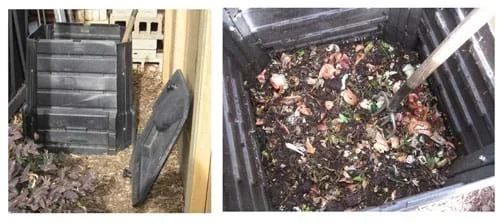 Copyright 2006 Denise W. Carlson, ITL Program, University of Colorado Boulder
Ask students to find out about composting. What is it? How does composting fit into the energy and nutrient cycles? How can composting help reduce our household waste that goes into a landfill and improve our garden soil?
Dictionary.com. Lexico Publishing Group, LLC. Accessed November 6, 2006. (Source of some vocabulary definitions, with some adaptation). http://www.dictionary.com
O'Neil, Dennis. Classification of Living Things: Linnaean Classification of Kingdoms. Last updated March 8, 2005. Dr. Dennis O'Neil, Behavioral Sciences Department, Palomar College, San Marcos, CA. Accessed October 11, 2006. http://anthro.palomar.edu/animal/table_kingdoms.htm
Padilla, Michael J. Science Explorer: From Bacteria to Plants. Upper Saddle River, NJ: Prentice Hall, 2002.
What are dissolvable stitches? How Stuff Works, Media Network. Accessed November 29, 2006. http://health.howstuffworks.com/question611.htm
Contributors
Katherine Beggs; Malinda Schaefer Zarske; Denise W. Carlson
Supporting Program
Integrated Teaching and Learning Program, College of Engineering, University of Colorado Boulder
Acknowledgements
The contents of this digital library curriculum were developed under a grant from the Fund for the Improvement of Postsecondary Education (FIPSE), U.S. Department of Education and National Science Foundation GK-12 grant no. 0338326. However, these contents do not necessarily represent the policies of the Department of Education or National Science Foundation, and you should not assume endorsement by the federal government.
Copyright
2005 by Regents of the University of Colorado.