
Planting Thoughts
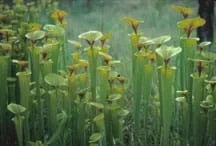 Pitcher plants, receptacles of moisture and sunshine.Copyright Forest Service, U.S. Department of Agriculture http://www.srs.fs.usda.gov/
Students gain an understanding of the parts of a plant, plant types and how they produce their own food from sunlight through photosynthesis. They also learn about transpiration, the process by which plants release moisture to the atmosphere. With this understanding, students test the effects of photosynthesis and transpiration by growing a plant from seed. They learn how plants play an important part in maintaining a balanced environment in which the living organisms of the Earth survive. This lesson is part of a series of six lessons in which students use their evolving understanding of various environments and the engineering design process, to design and create their own model biodome ecosystems.
Engineers take advantage of the natural characteristics of plants in many applications that improve technologies and make our lives more comfortable. They know that plants naturally serve as purifiers for the atmosphere, taking in carbon dioxide and releasing oxygen. Plants are put to use as purifying agents in biological water treatment processes installed at factories and industrial plants. Many treatment facilities rely on human-made lagoons of plants and purifying fauna to remove contaminants in water. In addition, engineers mimicked photosynthesis in their invention of solar panel cells that capture sunlight as a renewable source of energy.
After this lesson, students should be able to:
- List the basic functions and parts of plants.
- Describe how plants are an important part of maintaining a balanced environment.
- Explain how engineers use plants to create technologies that benefit humans.
- Identify the components that make a habitat type unique
Grade 4
Do you agree with this alignment? - Create and evaluate models of the flow of nonliving components or resources through an ecosystem
Grade 4
Do you agree with this alignment?
- STEL-2F Describe how a subsystem is a system that operates as part of another, larger system.
Grades 3-5
Do you agree with this alignment? - STEL-4I Explain why responsible use of technology requires sustainable management of resources.
Grades 3-5
Do you agree with this alignment?
- 5-LS1-1 Support an argument that plants get the materials they need for growth chiefly from air and water.
Grade 5
This resource focuses on the following Three Dimensional Learning aspects of NGSS:
Science & Engineering Practices- Support an argument with evidence, data, or a model.Do you agree with this alignment?
Disciplinary Core Ideas- Plants acquire their material for growth chiefly from air and water.Do you agree with this alignment?
Crosscutting Concepts- Matter is transported into, out of, and within systems.Do you agree with this alignment?
Do you agree with this alignment? - Support an argument with evidence, data, or a model.
Some familiarity with food chains and food webs as presented in Biodomes unit, lesson 3.
Plant Characteristics
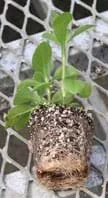 Copyright Natural Resources Conservation Service, U.S. Department of Agriculture http://www.wv.nrcs.usda.gov/
Plants (kingdom Plantae) are a group of living organisms that include trees, flowers, herbs and ferns. Several other organisms are often classified as and are closely related to plants, including fungi, some algae and bacteria. In fact, these organisms were once classified as plants and were later moved to new kingdoms of their own. We are most familiar with the multi-cellular land plants, called embryophytes. They include the plants with full systems of leaves, stems and roots. All of these plants have eukaryotic cells in which the genetic material is contained in a membrane-bound nucleus with cell walls composed of cellulose. Most of these plants also perform photosynthesis, a process in which they synthesize food from light, water and carbon dioxide. About 300 plant species do not actually photosynthesize but live as parasites on other plants. Plants are distinguished by having specialized reproductive organs protected by non-reproductive tissues.
A root is the part of a plant that usually grows downward into the soil. One main function of the root system is to anchor the plant firmly into the soil and support it during its stages of growth; this is known as fixation. Another function of the root is to absorb nutrients, water, salts and minerals from the soil; this is referred to as absorption.
Strong roots help plants remain healthy. If roots are diseased, typically the entire plant has a disease. Some plants have a thick, central root — a tap root— that has little or no branching. Other plant roots have several tiny hairy-like roots reaching out from the stem. If they look like bunches or clusters, they are called fibrous roots. Fibrous root systems are typical for grasses, radishes and other underground vegetables. Sometimes, plant roots make their way to the soil surface where they can be seen; these are called shoots. In many plants, these shoots turn into nearby new plants of the same kind. Some plants, such as orchids and cattails that grow in marshes and wetlands have a different type of root called respiratory or air roots. These plants do not typically root in soil, but grow on other living things, like the parasite mold on bread.
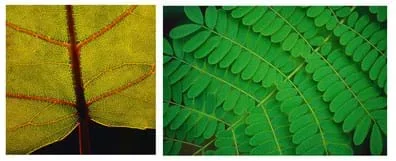 Copyright Microsoft Corporation, One Microsoft Way, Redmond, WA 98052-6399 USA. All rights reserved.
The leaves and roots take in nutrients and disperse them throughout the entire plant. A plant's stem draws the absorbed water and nutrients in by capillary action, and delivers them to the rest of the plant. Similar to humans, plants have a kind of circulatory system for this purpose. Some plants have rigid/stiff and strong trunks/stems, while others are more flexible and bendable. The stems of some plants are too weak to be upright; squash, watermelon, pumpkin and cucumber plants grow horizontally across the ground. Climber plants find support by attaching themselves to stronger elements, for example, vines, tomatoes and morning glory weeds.
Plants prepare their own food from air, water and sunlight using a process called photosynthesis. Since leaves are the primary location for this function/process, they are commonly referred to as the food factory of the plant. Take a close look at a leaf. This intricate part of a plant or tree consists of a stalk, called a petiole, and a blade, which is the thin, flat, expanded part of the leaf. Leaves are typically green during the growing season, indicating the presence of chlorophyll. While the leaf is green or contains chlorophyll, it can manufacture food using the sun, water and carbon dioxide. To obtain carbon, the leaf takes in the carbon dioxide gas in the air through many tiny openings called stomata or pores located on the under side of the leaf.
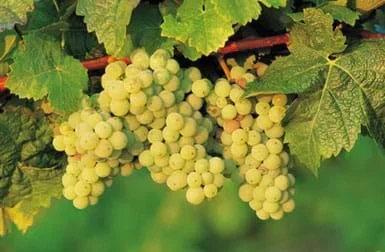 Copyright 2004 Microsoft Corporation, One Microsoft Way, Redmond, WA 98052-6399 USA. All rights reserved.
The two types of seed-producing plants are non-flowering and flowering. Non-flowering plants include ferns, algae, grass and some weeds. Flowering plants include roses, jasmine, tulips, trees and wildflowers. Examples of fruit trees that flower include apple, orange, peach and pear trees. Plants on the ground, such as watermelon or pumpkin, may also have flowers that turn into fruit or vegetables. Inside the fruits and vegetables are seeds. The seeds are dispersed to the environment when the fruit is ingested by an animal and discarded in their waste. Then, through germination, the seeds have the opportunity to start a new plant that is just like the parent plant.
Engineering with Plants
Engineers take advantage of the natural characteristics and processes of plants in many applications. All our forests and parks keep the air and water of our planet in good health, which is why they are often called the "lungs of Earth." We all know that trees help purify the air by absorbing pollutants, but they also reduce the amount of pollutants in sewer systems, and the amount of water-borne pollutants that reach streams and rivers. In this same way, all types of plants can be used to clean dirty air and water since they take in the air and water around them through their leaves and roots, and release clean oxygen and water back into the atmosphere.
Engineers incorporate plants into water treatment processes at factories and industrial facilities. It is common for engineers to include tiny plants, and human-made lagoons and wetlands in municipal biological water treatment processes. One company designed a series of engineered ecosystems at a highway rest area using plants, insects, snails and worms to clean the wastewater and recycle it back into the restrooms to flush toilets.
Phytoremediation is the engineered use of green plants to remove or render harmless soil or water contaminants including heavy metals, trace elements, organic compounds and radioactive compounds, or even suspended solids in storm water runoff. Since the 1990s, phytoremediation has been tested at 200+ sites nationwide. It is a low-tech and low-cost natural process cleanup technology. Some engineers have planted fast-growing trees with deep roots to clean up contaminated soil and groundwater. Others have reintroduced native shrubs and grasses at former mine and mill sites to clean up contaminated soil and groundwater when processing chemicals were discharged into tailings piles and unlined ponds. See the References section for sources of additional information on phytoremediation.
 This roadside landscaping is engineered design that uses vegetation to remove suspended solids from storm water before it enters the storm drain.Copyright Lara Larsen, RBF Consulting. All rights reserved.
The purpose of roadside landscaping is to treat storm water runoff before it enters a community's storm drain. Trees and vegetation clean and absorb storm water, and prevent erosion and landslides. The vegetation removes suspended solids, salts, oil, snow removal chemicals, and other waste from cars, keeping this pollution from entering the storm drain.
Other biofiltration examples of storm water treatment in city parks, parking lots and housing developments include green roofs (that reduce runoff) and rain gardens (designed with a dip at the center), and using native landscaping to collect and filter rainwater and runoff.
Engineers also creatively use plants to design eco-friendly "green products." Examples include everything from products made from recycled materials, to bamboo (a type of grass) floors, to kitchen cabinets made from wheat straw and sunflower seed husks, to many other types of plant-based building materials.
In addition, engineers have mimicked photosynthesis in their invention of solar panel cells that capture sunlight as a renewable source of energy. See the Biomimicry activity in Lesson 5 of the Biodomes unit for more information on engineering designs inspired by nature.
(Optional visual aid ideas: To introduce this lesson, it may be helpful to have a plant to show students. Perhaps bring in a few plants from a local nursery, planted in peat moss so they can be easily removed from their pot to expose the root structure and identify the plant parts. Or, plant a seed on a cotton ball a week or so in advance, and bring it to class to show students the roots that have grown into the cotton ball. Or, take everyone outside, and pull up a few weeds around the parking lot.)
How are plants similar to humans? Just like us, plants need food, water and energy (from the sun) to survive and grow. These are plants' "basic needs" because they are the essential things that they need to survive. Can you name your "basic needs" to survive and grow? As it turns out, we need many of the same things as plants to survive and grow; however, we also happen to need plants for food. And, besides the plants we eat, many other things that we eat must first eat plants to survive and grow.
 Copyright 2004 Microsoft Corporation, One Microsoft Way, Redmond, WA 98052-6399 USA. All rights reserved.
Who knows what a food chain or food web is? That's right, a food chain is a path of nutrients and energy moving through a series of organisms. For example, one food chain might be the sun's energy flowing to grass and vegetables, which are in turn eaten by pigs, which are in turn eaten by humans in the form of bacon or ham. Every food chain or food web starts with the sun, which gives plants the energy (or fuel) for photosynthesis. By photosynthesis, plants make sugar and oxygen. For this reason, we call plants producers, because they produce their own food using sunlight. Plants, in turn, become food for all types of consumers, which are organisms that get their food by eating producers or other organisms. Decomposers (such as bacteria and fungi) eventually break down all of these living things, returning nutrients to the soil and atmosphere to use again.
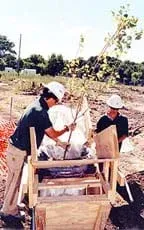 Fast-growing trees with deep roots are planted to clean up groundwater in Illinois.Copyright Argonne National Laboratory, U.S. Department of Energy http://www.anl.gov/
Engineers often use bacteria and plants to design things that help humans stay healthy. Some engineers use plants to treat dirty water and wastewater to make it clean for us to use as drinking water and tap water. In addition to taking in carbon dioxide and releasing oxygen, and taking in sunlight and producing food (sugars); plants also take in waste and bad stuff in water and break them down for us. You wouldn't want to drink a glass of dirty water, would you? No, you want clean water to drink so you stay healthy. Engineers design water treatment processes as well as lagoons, which are large ponds filled with plants and bacteria to treat the unclean water. Plants can also be used by engineers (and you, inside your house or school) to clean dirty air, since they take in the air around them through their leaves and release clean oxygen back into the atmosphere. Other plants, such as grasses, shrubs and trees, are specifically planted to clean up contaminated groundwater and soils.
There are many types of plants. The most recognizable plants are flowers, herbs and trees. Who can name an example of each of those? Well, a few other types of plants include ferns, grasses and moss. The parts of a plant are similar to the parts of the human body, in that each has a specific job to help the plant survive. Can you think of any plant parts? The main components of a plant are its roots, stem (or trunk), branches and leaves. Which of these parts helps a plant to breathe? Well, it takes in air through tiny pores on the leaves called the stomata. Which part of the plant takes in water? Plants mostly take in water through their roots. Even though the water they take in might be dirty, they release cleaned water through their leaves in a process called transpiration. Refer to the associated activity Plant Cycles: Photosynthesis & Transpiration to further illustrate to students this process by planting seeds and watch them grow in a variety of conditions. It is interesting to note that just like all living organisms, plants also have a life cycle. The plant cycle begins with a seed, which turns into a root, and eventually expands to a leaf (leaves), a flower(s) and even fruit and seeds, completing the cycle.
Plants are important to our survival, not only in our food chains and food webs, but in helping us clean up dirty water and air in our environment. Today, we are going to learn more about plants and how engineers can use them in creating things to help people stay healthy. Following the lesson, students can conduct the next in series hands-on design associated activity Biodomes Engineering Design Project: Lessons 2-6.
What does a plant need to survive? (Answer: Sunlight, water, energy.) How many parts of a plant can you name? (Draw a plant on the board. Have students identify roots, stem or trunk, branches, leaves.) Do you think a plant could survive if any one of the parts were completely removed? (Answer: It would probably not survive if it lost its main parts, those just listed.)
Let's consider the process of photosynthesis, in which energy from the sun enables the plant to make its own food. If photosynthesis occurs through exposure to sunlight, how might we test the process of photosynthesis to determine if plants really need sunlight to survive? How would you conduct an experiment to show if this is true? (Gather answers from the class.)
The ability for plants to take in carbon dioxide and sunlight, and release moisture and oxygen back into the air is a type of filtering process that engineers use for creating systems to improve air and water quality for humans. Plants help us preserve the environment! They are important to our own survival and the health of the planet because they are able to purify unclean water and air and help us maintain a sustainable and balanced environment.
- biodome
- A human-made, closed environment containing plants and animals existing in equilibrium.
- chlorophyll
- The green coloring matter of leaves and plants, essential to the production of carbohydrates by photosynthesis. Found in green plants and certain algae and bacteria.
- engineer
- A person who applies scientific and mathematical principles to creative and practical ends such as the design, manufacture and operation of efficient and economical structures, machines, processes and systems.
- environment
- The surroundings in which an organism lives, including air, water, land, natural resources, flora, fauna, humans and their interrelationships. (Examples: Tundra, coniferous forest, deciduous forest, grassland prairie, mountains and rain forest.)
- fibrous root
- A root system in which the roots are finely divided.
- fungi
- A group of organisms that lack chlorophyll and obtain nutrients from dead or living organic matter.
- plant cycle
- The life cycle of a plant: from a seed to seedling to flowers to fruits, and back to seeds again. Flowers become fruits and fruits have seeds inside them.
- photosynthesis
- The process in green plants by which carbohydrates are made from carbon dioxide and water using sunlight as the energy source.
- root
- The part of a plant that usually grows downward into the soil, anchoring the plant and absorbing nutrients and water.
- shoot
- A new or young growth that shoots off from some portion of a plant.
- stem
- The main stalk of a plant.
- stomata
- The pores found on the leaf of a plant.
- tap root
- A thick, central root having little or no branching.
- transpiration
- The process by which water absorbed by plants (usually via its roots) is evaporated into the atmosphere from the plant surface, principally from its leaves.
Pre-Lesson Assessment
Journal Reflection: If students do not already have an engineering journal, this lesson is perfect for starting one! Ask students to write a paragraph, in their science journal or on a sheet of paper, describing what they know about plants and how they help keep us in good health.
Post-Introduction Assessment
Drawing Activity: Have students diagram the parts of a plant and label their functions, both above and belowground. (Ideal to document in students' engineering journals.)
Question and Answer: Ask students questions and have them raise their hands to respond. Write their answers on the board.
- What are the three types of plants? (Possible answer: Herbs, shrubs and trees.)
- What is the process by which plants make their food? (Answer: Photosynthesis.)
- What is the part of the plant helps the plant to breathe? (Answer: Leaves and leaf pores, called stomata.)
- What do you call the process in which plants release water (moisture) back into the atmosphere? (Answer: Transpiration.)
- How do engineers use plants to help keep us in good health? (Answer: Engineers use plants to clean up dirty water and air, making it safe for humans to drink and breathe.)
Lesson Summary Assessment
Journal Reflection Addition: Have students add to their engineering journal entry (see above). Ask them to add a few sentences describing ways that engineers use plants in designing technologies to help keep humans healthy.
Human Matching: On 12 pieces of paper, write either the term or the definition for the following six vocabulary words. Ask class volunteers to come up to the front of the room; give each person one of the pieces of paper. One at a time, have each volunteer read what is written on his/her paper. By vote, ask the rest of the class to match terms to definitions. Have student "terms" stand by their "definitions." At the end, review the concepts.
- Sun: Provides plants with the energy or fuel for photosynthesis.
- Leaf: The part of a plant that helps it breathe.
- Root: The part of a plant that takes in water.
- Environmental engineer: An engineer who uses plants to design clean air and water treatment technologies.
- Photosynthesis: The process by which plants make sugar and oxygen.
- Transpiration: The process by which plants release cleaned water to the atmosphere.
Plant Population: Have students calculate the plant population density of their biodome: population density = (# of plants/seeds) divided by area (length x width).
Create a Leaf Press: Have students collect sheets of newspaper or plain paper, and two pieces of wood, or textbooks the size of the paper. After students have collected as many different leaves from different kinds of plants, trees and shrubs as they can find, give each student or team two sheets of paper. Demonstrate how to arrange the leaves between the sheets of paper. Make a pile of all the collections, then, place heavy wood, books or stones on top. Set aside the leaf press in an undisturbed location for a week, and then take a look.
Using Green Plants to Clean the Environment: Assign students to investigate and prepare a report on examples of phytoremediation — a cleanup technology for contaminated soils, groundwater and wastewater that is both low-tech and low-cost, defined as the engineered use of green plants to remove or render harmless such environmental contaminants as heavy metals, trace elements, organic compounds and radioactive compounds in soil or water.
Environmental Contamination: Have students find and research a chemical that could pollute plants. Have students bring in a list of chemicals that they think might be harmful to plants. Suggest they look at the ingredient list of many household cleaners, herbicides or search the Internet. Ask students to choose one chemical and write a paragraph that describes its toxic effects.
Biomimicry: Do students know the story of the invention of Velcro® or solar cells? Biomimicry is copying or imitating the special characteristics of naturally existing things (such as plants and animals) in human-made designs, products and systems. Assign students to research and report on one biomimicry example inspired by plants and report back to the class. See Internet links in the References section for more information on cockleburs and Velcro®
Bellis, Mary. The Invention of Velcro® – George de Mestral. Posted September 12, 1997. The Mining Company, About. http://inventors.about.com/ Accessed November 7, 2006.
Bush, Mark B. Ecology of a Changing Planet, Second Edition. Saddle River, NJ: Prentice Hall, 2000.
Chlorophyll. Last modified October 15, 2006. Wikipedia, the Free Encyclopedia. www.wikipedia.org Accessed October 18, 2006.
Dictionary.com. Lexico Publishing Group, LLC. Accessed November 2, 2006.
Farrell, Molly and Liz Van der Hoven and Tedann Olsen. Vermont Rest Area Uses Green Wastewater Treatment System. Posted May/June 2000. Public Roads, Vol. 63, No. 6. Federal Highway Administration, U.S. Department of Transportation. http://www.tfhrc.gov/pubrds/mayjun00/vermont.htm Accessed November 2, 2006.
Hinchman, Ray R., M. Christina Negri and Edward G. Gatliff. Phytoremediation: Using Green Plants to Clean Up Contaminated Soil, Groundwater and Wastewater. 1998. Argonne National Laboratory and Applied Natural Sciences, Inc. http://www.treemediation.com/Technical/Phytoremediation_1998.pdf Accessed November 6, 2006.
Phytoremediation: Using Plants to Clean Up Soils. Published June 2000 issue of Agricultural Research magazine, Vol. 48, No. 6. Last Modified: August 13, 2005. News & Events, Agricultural Research Center, U.S. Department of Agriculture. http://www.ars.usda.gov/is/AR/archive/jun00/soil0600.htm Accessed November 2, 2006.
The Remarkable Cocklebur, Worldwide Hitchhiker & Nature's Velcro®. Wayne's World, W.P. Armstrong. http://waynesword.palomar.edu/plapr98.htm Accessed November 7, 2006.
Using Phytoremediation to Clean Up Sites. Last updated March 1, 2006. Superfund, U.S. Environmental Protection Agency. www.epa.gov Accessed November 2, 2006.
Contributors
Christopher Valenti; Malinda Schaefer Zarske; Denise W. Carlson
Supporting Program
Integrated Teaching and Learning Program, College of Engineering, University of Colorado Boulder
Acknowledgements
The contents of this digital library curriculum were developed under a grant from the Fund for the Improvement of Postsecondary Education (FIPSE), U.S. Department of Education and National Science Foundation GK-12 grant no. 0338326. However, these contents do not necessarily represent the policies of the Department of Education or National Science Foundation, and you should not assume endorsement by the federal government.
Copyright
2005 by Regents of the University of Colorado.