
Classification Systems: Animals and Engineering
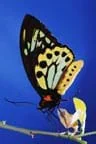 Students learn about the classification of animals and animal interactionsCopyright 2004 Microsoft Corporation, One Microsoft Way, Redmond, WA 98052-6399 USA. All rights reserved.
Students are introduced to the classification of animals and animal interactions. Students also use the associated activities to learn why engineers need to know about animals and how they use that knowledge to design technologies that help other animals and/or humans. This lesson is part of a series of six lessons in which students use their growing understanding of various environments and the engineering design process, to design and create their own model biodome ecosystems.
Many types of engineers are directly involved with animals. Environmental engineers who work with chemical spills or habitat restoration need to know which animals might be affected by their efforts. Through the ages, people have been inspired by animals and plants in the natural world. Biomimicry examples include the development of antibiotics and healing drugs, as well as the design of underwater sea vessels, airplanes, boats, Velcro® and rotary motors.
After this lesson, students should be able to:
- Describe the importance of using classification systems.
- List several basic animal classifications, including predator, prey, herbivore, carnivore and omnivore.
- Provide examples of predator and prey interactions.
- Explain how engineers use their knowledge of animal communities to create new technologies, including biodomes and environmental restoration.
- Compare and contrast different habitat types
Grade 4
Do you agree with this alignment? - Make a plan to positively impact a local ecosystem
Grade 4
Do you agree with this alignment?
- CCSS.Math.Content.3.MD.C.6 Measure areas by counting unit squares (square cm, square m, square in, square ft, and improvised units).
Grade 3
Do you agree with this alignment? - CCSS.Math.Content.4.OA.A.2 Multiply or divide to solve word problems involving multiplicative comparison, e.g., by using drawings and equations with a symbol for the unknown number to represent the problem, distinguishing multiplicative comparison from additive comparison.
Grade 4
Do you agree with this alignment?
- STEL-2F Describe how a subsystem is a system that operates as part of another, larger system.
Grades 3-5
Do you agree with this alignment?
- 3-LS4-3 Construct an argument with evidence that in a particular habitat some organisms can survive well, some survive less well, and some cannot survive at all.
Grade 3
This resource focuses on the following Three Dimensional Learning aspects of NGSS:
Science & Engineering Practices- Construct an argument with evidence.Do you agree with this alignment?
Disciplinary Core Ideas- For any particular environment, some kinds of organisms survive well, some survive less well, and some cannot survive at all.Do you agree with this alignment?
Crosscutting Concepts- Cause and effect relationships are routinely identified and used to explain change.Do you agree with this alignment?
- Knowledge of relevant scientific concepts and research findings is important in engineering.Do you agree with this alignment?
Do you agree with this alignment? - Construct an argument with evidence.
Classification Systems
Scientists and engineers classify things into categories to help our understanding of the relationships of organisms to each other. Linnaean (say li-nee-uhn) classification, originally developed by Swedish botanist Carolus Linnaeus, is a system widely used in biological sciences. The Linnaean taxonomy classifies living things into a system of order of relative characteristics. See Table 1 for an example Linnaean classification order for homo sapiens (humans).
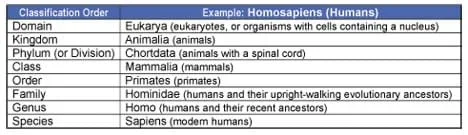 Table 1. Linnean classification, the taxonomic order for humans.Copyright Pacific Basin Information Node, National Biological Information Infrastructure, http://pbin.nbii.gov/taxonomy/moretax.html.
Biomimicry
People have called on nature's inspiration throughout humans' history. By observing animals, plants and natural processes, we gain insight into what works and what does not. As Janine Benyus said in her book, Biomimicry: Innovation Inspired by Nature:
"The core idea is that nature, imaginative by necessity, has already solved many of the problems we are grappling with. Animals, plants and microbes are the consummate engineers. They have found what works, what is appropriate, and most important, what lasts here on Earth. This is the real news of biomimicry: After 3.8 billion years of research and development, failures are fossils, and what surrounds us is the secret to survival."
For engineers, these observations of nature are helpful in both the design process and inspiring new inventions using natural technologies. Students can expand their knowledge by designing a product based off of nature with the Biomimicry: Natural Designs activity. There are many examples of biomimicry, with one of the most well-known being Velcro® — a product designed to behave like the cockleburs that stick to animals (and people) when they brush by the plant. For more examples, see the attached activity on biomimicry.
Who here has a pet? What type of pet do you have? (Write a list of student pets on the board.) Let's group these animals into different categories. (Have the class work in pairs or small groups to divide the list into different categories. After a few minutes, have the groups share their categories with the class. Example categories: big animals vs. small animals, animals that live inside vs. outside, etc.) How did you decide on your categories? Did you find things that some of the animals had in common? It is important to be able to classify objects into categories so we can study and understand all the patterns of similarities and differences between different living and nonliving things in the world.
Scientists have developed categories to separate different animals as well. They do this in a similar to what we just did — by finding physical characteristics that are unique to certain groups. Of course, there are other ways to classify animals. We could have separated the animals into groups by their behavior or how they get their food. For example, some animals are known as predators and others as prey. Have you heard of those before? A predator is an animal that hunts other animals to eat, such as a fox. Prey is the animal that is hunted and eaten, such as a rabbit.
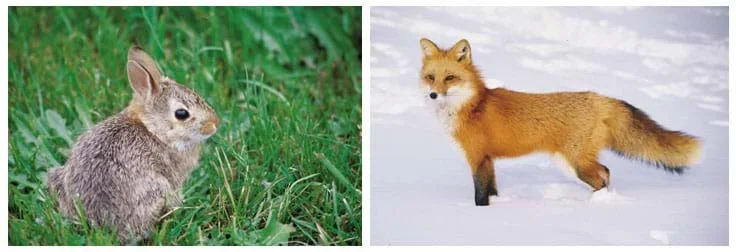 Copyright 2004 Microsoft Corporation, One Microsoft Way, Redmond, WA 98052-6399 USA. All rights reserved.
Another way to classify animals is by what type of food they eat. Different animals eat different things. An herbivore is an animal that only eats plants. A carnivore is an animal that only eats meat or other animals. Would a meat-eating animal be a predator or prey? (Answer: A predator.) What about an animal that eats both plants and meat? We call these animals omnivores. An omnivore is an animal that eats both plants and other animals. (For example: Skunks are omnivores; they eat insects [bees, grasshoppers, larvae], bird eggs, baby birds, amphibians, as well as fruit and berries.) Which type of animal are you?
Now, why would an engineer care about animals? Engineers work with animals in many different ways. Some engineers study specific animals in great detail and then imitate them to design a technology for use by humans. For example, chemical engineers look at sharks and how they defend themselves from bacteria in the ocean to create new antibiotics to keep humans healthy. The tuna inspired a new sea-going vessel that takes less energy to move. The wings of an airplane were originally designed after the wings of a bird. We call this biomimicry.
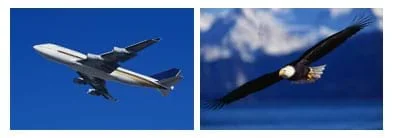 Copyright 2004 Microsoft Corporation, One Microsoft Way, Redmond, WA 98052-6399 USA. All rights reserved.
Environmental engineers want to protect animal homes for all kinds of animals, from fish to elephants. They might be involved in environment and resource management, and design technologies to help restore a habitat that was destroyed by natural or human caused disasters. They might work on an environment that has been wrecked by a flood or tornado, or a river that was polluted by a factory. It is important that engineers learn as much as possible about the animals they are working to protect. They must know what types of food each animal in that environment eats as well as its interaction with other animals and its ecosystem.
One way that engineers study how animals interact in an ecosystem is by creating a model of it. A biodome is a model that is designed to represent a particular environment and the community of organisms that live there. When constructing a biodome, engineers must be very careful with interactions between animal predators and prey. Why?
Nature exists through a delicate balance of predators and prey. Animals and plants are interdependent on other species to ensure their existence. A change in one population has an effect on all the other populations in the food chain. For example, grasshoppers eat grass, frogs eat grasshoppers, and snakes eat frogs. If there were so many grasshoppers that there was not enough grass for them to all eat, some grasshoppers might starve and die. A reduction in the grasshopper population would mean that less grass would be eaten. A smaller grasshopper population would also mean that there was less food for the frogs, and that some of the frogs might die. With fewer frogs the grasshopper population may increase. It may not be good to put animals in the biodome that are eaten to extinction by the other animals. Engineers incorporate predators and prey into their biodomes to provide the necessary environment and foods for animals and plant to survive in balance. Refer to the Biodomes Engineering Design Project: Lessons 2-6 activity to have students draw connections from past lessons and to demonstrate their understanding of designing for the basic needs of animals. Today, we are going to learn a little more about animal classification and animal interactions. This will help us think like engineers who are working to design or protect a specific environment.
Why do we need to classify things? It is important to be able to classify things so we can study how they work together or know where they belong. We organize things according to their patterns of similarities and differences. Today, we talked about classifying animals, but what are some other things we could classify? (Possible answers: Plants, books, minerals, toys, students — almost anything.)
What are some of the ways we can classify animals? We can classify them by their physical characteristics, where they live, or even what or how they eat. We learned that a predator is an animal that hunts other animals to eat, such as a fox. Prey is the animal that is hunted and eaten, such as a rabbit. An herbivore is an animal that only eats plants. A carnivore is an animal that only eats meat or other animals. An omnivore is an animal that eats both plants and other animals.
Ongoing predator-prey population changes are natural within an ecosystem. What happens to predators when there is a lot of prey for them to eat? (Answer: They thrive and their numbers increase.) What happens when the amount of prey decreases? (Answer: Some die; their numbers decrease.) Sometimes humans upset the natural balance of the predator-prey relationships, when they alter habitat, displace wildlife or favor one species over others. As a result, sometimes we need to protect a species to keep it from becoming extinct, or arrange for regulated hunting and trapping to keep other species from overpopulating.
What types of engineers might study animals? Environmental engineers study animals to help them figure out the best way to restore habitats and environments that have been damaged. These engineers might also help others study animal interactions in environments and ecosystems by designing and creating biodomes, or small models of environments and the many organisms that live together in balance. Many other engineers use biomimicry to learn from and imitate the characteristics of animals, as they develop new technologies that help humanity and our planet.
- biodome
- A human-made, closed environment containing plants and animals existing in equilibrium.
- biomimicry
- Copying or imitating the special characteristics of naturally existing things (animals, plants, etc.) in human-made designs, products and systems. From bios, meaning life, and mimesis, meaning to imitate.
- carnivore
- An animal that eats only meat.
- classification
- A way of grouping items together into categories based on similar characteristics or traits.
- ecosystem
- A functional unit consisting of all the living organisms (plants, animals and microbes) in a given area, and all the nonliving physical and chemical factors of their environment, linked together through nutrient cycling and energy flow. An ecosystem can be of any size — a log, pond, field, forest or the Earth's biosphere — but it always functions as a whole unit.
- engineer
- A person who applies scientific and mathematical principles to creative and practical ends such as the design, manufacture and operation of efficient and economical structures, machines, processes and systems.
- environment
- The surroundings in which an organism lives, including air, water, land, natural resources, flora, fauna, humans and their interrelationships. (Examples: Tundra, coniferous forest, deciduous forest, grassland prairie, mountains and rain forest.)
- habitat
- The natural home of a plant or animal.
- herbivore
- An animal that eats only plants.
- model
- (noun) A representation of something, sometimes on a smaller scale. (verb) To simulate, make or construct something to help visualize or learn about something else (as the living human body, a process or an ecosystem) that cannot be directly observed or experimented upon.
- omnivore
- An animal that eats both plants and animals.
- predator
- An animal that hunts other animals to eat. Predators may be carnivores or omnivores if they also eat plants.
- prey
- An animal that is hunted and eaten. Prey may be predators that are further down the food chain or animals that graze or scavenge instead.
Pre-Lesson Assessment
Discussion Topic: Ask students what kind of pets they have or animals that they have seen in their community. In pairs, have the students classify the various animals into groups. Discuss the different ways that the student pairs grouped their animals. (Example categories: Large vs. small, indoor vs. outdoor, water vs. land, colors, what they eat, etc.)
Post-Introduction Assessment
Animal Engineers? Ask students to write down the types of scientists and engineers that would need to know about animals. Ask them to list what types of animal relationships or interactions they think would be the most important to those scientists and engineers.
Envelope Categories: With students sitting in pairs or small groups, give each team an envelope full of names or pictures of different animals with various relationships and characteristics. Give the students 2-3 minutes to group these animals. (Examples: predators, prey, omnivores, herbivores, carnivores, land animals, sea animals, etc.). Have them work together to put the animals in groups. Check in with each team individually or as a class once each has completed the task. Have them share their categories with the class.
Lesson Summary Assessment
Eco-Conscious Engineering: Pick a local park or area that is different than the one that students live in, or print a map of an uninhabited environment on the planet. Tell the students that they are civil engineers who are planning to design a new apartment complex or small community on that site. As engineers, they want to be sensitive to the animals that already inhabit the environment. Have students make a list of the animals that live there, and have them determine the kinds of animal issues and interactions that might arise if they built there. Finally, have them list two or three possible solutions to their potential animal disruptions.
Biomimicry Roundtable: Form the class into teams of 3-5 students each. Ask the class a question with several possible answers. Have the students on each team make a list of answers by taking turns writing down ideas on a piece of paper. Students pass the list around the group until all ideas are exhausted. Have teams read aloud the answers and write them on the board. Ask the students:
- What are examples of biomimicry — things that people have designed to imitate (mimic) animals? (Possible answers: Boats, airplanes, antibiotics and healing drugs, underwater sea vessels, airplane wings, rotary motors, glow sticks, see more complete list in Procedure: Background section of the Biomimicry: Natural Designs activity.)
Have students calculate the animal population density of their biodome: population density = (# of animals/insects) divided by area (length x width).
Ask students to investigate how engineers are involved with animal biology. Offer extra credit to students who write a paragraph about how this knowledge can be applied.
Benyus, Janine M. Biomimicry: Innovation Inspired by Nature. New York, NY: William Morrow and Company, Inc., 1997.
Biomimicry: Learning from Nature. Accessed October 24, 2006. (Much good information) http://www.biomimicry.net/
Classification of Living Things: Linnaean Classification of Kingdoms. Last updated March 8, 2005. Dr. Dennis O'Neil, Behavioral Sciences Department, Palomar College, San Marcos, CA. Accessed October 24, 2006. http://anthro.palomar.edu/animal/table_kingdoms.htm
Dictionary.com. Lexico Publishing Group, LLC. Accessed October 24, 2006. (Source of some vocabulary definitions, with some adaptation) http://www.dictionary.com
Drumm, Laura. Scientific Classification. Last modified March 3, 2004. National Marine Mammal Laboratory, Alaska Fisheries Science Center, NOAA. Accessed October 24, 2006. http://www.afsc.noaa.gov/NMML/
Goodwin, Mark. Predators and Prey, and People. Last modified November 5, 2001. Missouri Conservationist Online. Accessed October 24, 2006. http://www.mdc.mo.gov/conmag/2001/11/10.htm
Kagan, Spencer. Cooperative Learning. Capistrano, CA: Kagan Cooperative Learning, 1994. (Source for roundtable assessment.)
- Biodomes
- Environments and Ecosystems
- Biodomes are Engineered Ecosystems: A Mini World
- Go with the Energy Flow
- Planting Thoughts
- Classification Systems: Animals and Engineering
- Cleaning Up with Decomposers
Contributors
Katherine Beggs; Malinda Schaefer Zarske; Denise Carlson
Supporting Program
Integrated Teaching and Learning Program, College of Engineering, University of Colorado Boulder
Acknowledgements
The contents of this digital library curriculum were developed under a grant from the Fund for the Improvement of Postsecondary Education (FIPSE), U.S. Department of Education and National Science Foundation GK-12 grant no. 0338326. However, these contents do not necessarily represent the policies of the Department of Education or National Science Foundation, and you should not assume endorsement by the federal government.
Copyright
2005 by Regents of the University of Colorado.