Simple Machines
Simple machines make the things we use in everyday life function.
Engineers use - and combine simple machines to design complex devices to make our lives easier! Simple machines are basic devices that help accomplish physical tasks with few or no moving parts. The six most common simple machines – inclined plane, wedge, screw, lever, pulley and wheel-and-axle – are designed to change the magnitude/direction of the force (remember, work = force x distance), ultimately making the task easier to perform.
The six most common Simple Machines
Pulley
A grooved circular disk (or disks) that guide a rope or cable pulled around its perimeter. With a single pulley engineers can change the direction of an applied force, such as pulling a rope down to lift a weight up. However, using a combination of pulleys in a pulley system can change both the amount and direction of the applied effort. Engineers design large machines, like cranes, bulldozers and elevators, with a system of pulleys to manipulate huge loads with a little force supplied by a relatively small motor.
Screw
An inclined plane that is wrapped around a cylinder. Engineers use screws in a variety of ways, including fasteners that are used to attach wood or metal; lifting screws that are used to lift heavy objects and dig holes; and bolts that are used with nuts to keep things together.

Lever
A long beam that rests on a point or support called a fulcrum. By positioning the fulcrum close to a heavy object and applying an effort from far away, levers can be used to lift enormous loads with ease. The object being moved by the lever is often called the load, or output force, while the force applied to the lever is called the effort, or input force. Crowbars are a commonly-used lever that help workers and carpenters easily extract nails from wood.

Wedge
An object that tapers to a thin edge and forces a substance apart. It can be used to split things apart, such as an ax, or to hold things, such as a doorstop. Engineers design modern cars and jets using the principle of a wedge to help them cut through the air by including a pointed wedge at the front.

Wheel & Axle
Composed of a circular wheel directly connected to a circular shaft or axle, this device rotates around the common axis and has the ability to increase a rotational force instead of a linear force. Engineers commonly refer to a rotational force as torque and use this simple machine to design and create the steering wheel, jet engine, mechanical gears, and even doorknobs.

Inclined Plane
A flat, sloping surface that is used for raising or moving heavy objects from one place to another. Inclined planes are used to lift loads that would otherwise be too heavy to lift straight up. The angle or the steepness of the inclined plane determines how much effort is required to move an object. The steeper the angle, the more effort is required. We see inclined planes used in ramps and switchback roads.
The simple machines used by ancient engineers to construct the pyramids in Egypt and the Colosseum in Rome are the same ones used by engineers today to build roller-coasters, skyscrapers and bridges in our modern world. We encounter simple machines in our everyday lives in devices like crowbars, wheelbarrows and highway ramps.
These simple machines leverage the unique phenomenon of mechanical advantage of the design and then engineers combine multiple simple machines to create more advanced tools like cars, bicycles, medical devices and 3D printers.
Simple Machines Curricula
Check out the resources below filled with various sensemaking tasks grounded in exploring everyday phenomena through the use of simple machines!
 LessonVideoAn Introduction to Inclined PlanesStudents are introduced to the concept of simple tools and how they can make difficult or impossible tasks easier. They begin by investigating the…
 ActivityVideoThe Benefits of Inclined Planes: Heave Ho!Students discover the scientific basis for the use of inclined planes. Using a spring scale, a bag of rocks and an inclined plane, student groups…
 ActivitySolid Rock to Building BlockStudents continue their pyramid building journey, acting as engineers to determine the appropriate wedge tool to best extract rock from a quarry and…
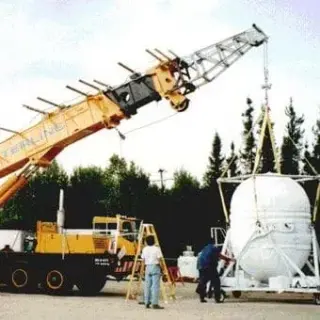 LessonVideoPowerful PulleysStudents continue to explore the story of building a pyramid, learning about the simple machine called a pulley. They learn how a pulley can be used…
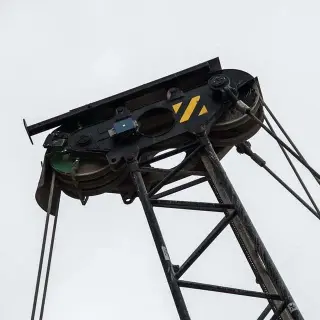 ActivityVideoPulley'ing Your Own WeightUsing common materials (spools, string, soap), students learn how a pulley can be used to easily change the direction of a force, making the moving…
 LessonVideoSlide Right on by Using an Inclined PlaneStudents explore building a pyramid, learning about the simple machine called an inclined plane. They also learn about another simple machine, the…
 LessonVideoEngineering: Simple MachinesSimple machines are devices with few or no moving parts that make work easier. Students are introduced to the six types of simple machines — the…
 ActivityModern Day PyramidsStudents investigate the ways in which ancient technologies — six types of simple machines and combinations — are used to construct modern buildings.…
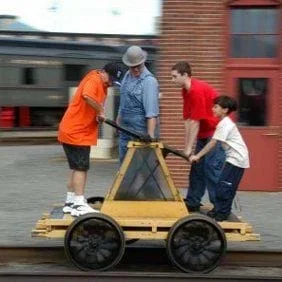 LessonVideoThe Advantage of MachinesIn this lesson, students learn about work as defined by physical science and see that work is made easier through the use of simple machines. Already…
 ActivityVideoA Simple Solution for the CircusIn this activity, students are challenged to design a contraption using simple machines to move a circus elephant into a rail car. After students…
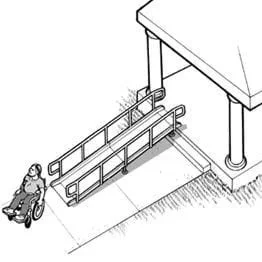 LessonJust Plane SimpleThis lesson introduces students to three of the six simple machines used by many engineers. These machines include the inclined plane, the wedge and…
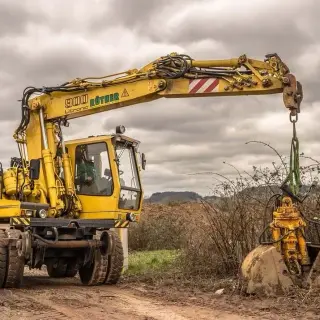 ActivityVideoTools and Equipment, Part IThrough a series of activities, students discover that the concept of mechanical advantage describes reality fairly well. They act as engineers…
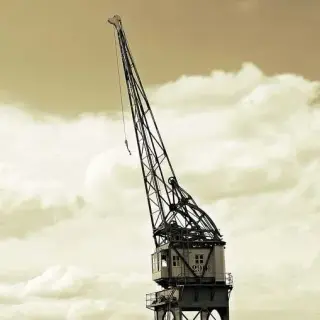 ActivityVideoMachines and Tools, Part IIIn this activity, students gain first-hand experience with the mechanical advantage of pulleys. Students are given the challenge of helping save a…
 LessonRube Goldberg and the Meaning of MachinesSimple and compound machines are designed to make work easier. When we encounter a machine that does not fit this understanding, the so-called…
 ActivityVideoSplash, Pop, Fizz: Rube Goldberg MachinesRefreshed with an understanding of the six simple machines; screw, wedge, pully, incline plane, wheel and axle, and lever, student groups receive…
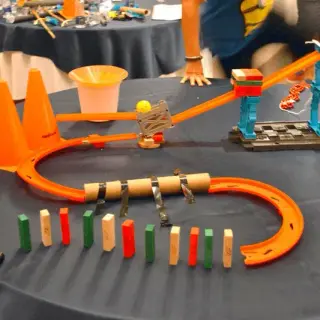 ActivityVideoSimple Machines and the Rube Goldberg ChallengeStudents research simple machines and other mechanisms as they learn about and make Rube Goldberg machines. Working in teams, students utilize the…