
Newton's Laws of Motion
Explain everyday phenomena that we see in the world around us.
Engineers use Newton's laws to navigate space travel, simulate vehicle collisions to improve safety measures and design simple devices like scissors!

A body at rest will stay at rest, and a body in motion will stay in motion, until acted upon by an outside force.

Force is equal to mass times acceleration. For an object with a constant mass (m), this law states that the force (F) is the product of an object’s mass and its acceleration (a): F = ma

For every action there is an equal and opposite reaction. This law is also known as the law of action and reaction.
Engineers apply Newton’s laws of motion in a wide range of designs involving stationary and moving objects, including structures such as bridges, vehicles such as rockets and aircrafts, and other commonly-used objects like seat belts, door knobs and medicine delivery systems.
Engineers must fully understand the workings of the natural physical laws so they can design objects that perform as expected and are safe to use.
Newton's Laws of Motion Curricula
Check out the curricula below to give students a push into making sense of everyday phenomena associated with Newton’s laws of motion!
Coming Soon!
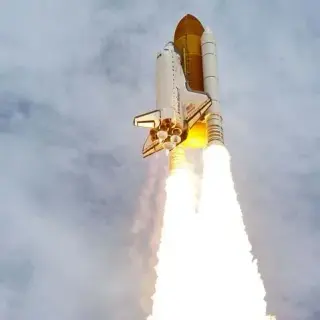 LessonNewton Gets Me MovingStudents explore motion, rockets and rocket motion while assisting Spacewoman Tess, Spaceman Rohan and Maya in their explorations. First they learn…
 ActivityVideoNewton Rocket CarThrough the use of small wooden cars, this activity demonstrates Newton's third law of motion—which states that every action has an equal and…
 ActivityVideoRocket PowerBy making and testing simple balloon rockets, students acquire a basic understanding of Newton's third law of motion as it applies to rockets. Using…
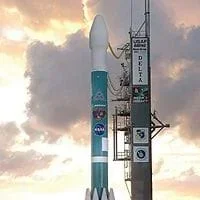 LessonVideoUsing Thrust, Weight & Control: Rocket Me into SpaceOne exciting challenge for engineers is the idea of exploration. Through the continuing storyline of the Rockets unit, this lesson looks more closely…
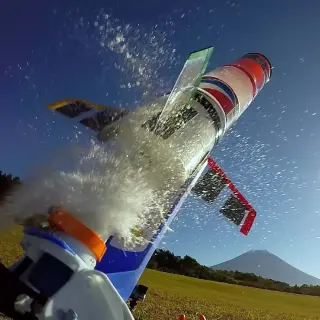 ActivityVideoPop RocketsStudents design and build paper rockets around film canisters, which serve as engines. An antacid tablet and water are put into each canister…
 LessonBlast Off: Generating Rocket Thrust with PropellantsRockets need a lot of thrust to get into space. Students learn how rocket thrust is generated with propellant. The two types of propellants are…
 ActivityVideoPhysics Tug of WarStudents learn about Newton's second law of motion: force = mass x acceleration. In other words, a heavy object requires a greater force to move than…
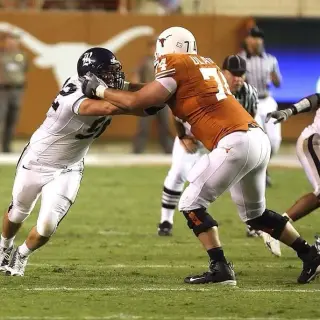 ActivityVideoSliding TextbooksIn the culminating activity of the unit, students explore and apply their knowledge of forces, friction, acceleration and gravity in a two-part…
 LessonWhat Is Newton's First Law?Students are introduced to the concepts of force, inertia and Newton's first law of motion: objects at rest stay at rest and objects in motion stay…
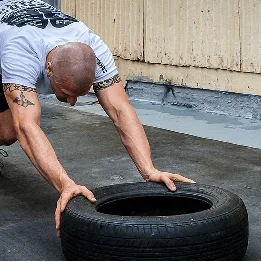 LessonWhat Is Newton's Second Law?Students are introduced to Newton's second law of motion: force = mass x acceleration. After a review of force, types of forces and Newton's first…
 LessonVideoWhat Is Newton's Third Law?Students are introduced to Newton's third law of motion: For every action, there is an equal and opposite reaction. They practice identifying…
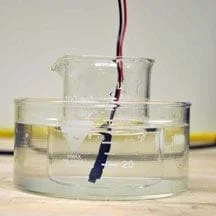 ActivityNewton's Law of CoolingStudents come to see the exponential trend demonstrated through the changing temperatures measured while heating and cooling a beaker of water. This…
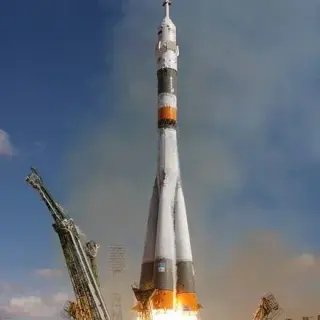 ActivityRocket Launch Time: Flying with StyleDuring the associated lesson, students have learned about Newton's three laws of motion and free-body diagrams and have identified the forces of…
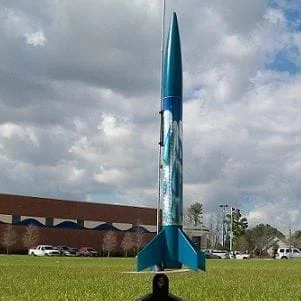 LessonRocketry Calculations: Houston, We Have a Problem!Students apply their mathematics and team building skills to explore the concept of rocketry. They learn about design issues faced by aerospace…
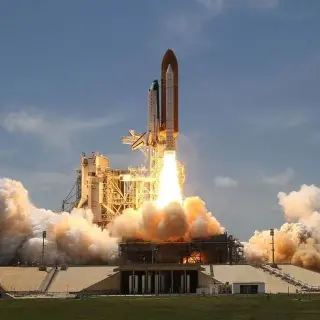 LessonRockets!Students are introduced to statics and dynamics, free-body diagrams, combustion and thermodynamics to gain an understanding of the forces needed to…
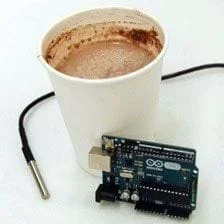 ActivityWhen Should I Drink My Hot Chocolate?Students act as food science engineers as they explore and apply their understanding of cooling rate and specific heat capacity by completing two…
 ActivityVideoSliders (for High School)In this hands-on activity, students learn about two types of friction — static and kinetic — and the equation that governs them. They also measure…
 ActivityHow to Pull Something HeavyStudents measure and analyze forces that act on vehicles pulling heavy objects while moving at a constant speed on a frictional surface. They study…