Waves
Whether they are mechanical or electromechanical, engineers study and use the real-world phenomena of waves to innovate and design products and processes that make our lives easier.
A wave is a disturbance in land, water, air or space that moves energy from one location to another. Waves cannot always be seen with the bare eye. Despite some waves being invisible, engineers still study waves of all types and sizes – from earthquakes to radio waves – to make our world a safer and better place.
Engineers must understand the properties of waves—such as wavelength, frequency, amplitude and speed —and how waves can differ from one another in order to design safe and effective products. Two main categories of waves interest engineers and scientists:
- A mechanical wave is an oscillation of matter that transfers energy through the matter. There are three types of mechanical waves:
- Transverse waves wherein the particles oscillate perpendicular to the direction that the wave travels.
- Longitudinal waves wherein the particles oscillate parallel to the direction that the wave travels.
- Surface waves wherein the particles oscillate both perpendicular and parallel, so they end up moving in a circle.
- Electromechanical waves are created as a result of vibrations between an electric field and a magnetic field. These waves have different frequencies and wavelengths and include radio waves, microwaves, infrared radiation, visible light, ultraviolet radiation, X-rays and gamma rays.
To predict how tsunamis will travel after an earthquake takes place under the ocean in order to issue warnings that protect public health, civil engineers must understand wave properties and how they travel.
Electrical engineers also use their understanding of wave properties when designing electronic products that we use every day so that radios tune in to the right stations, or your cell phone only picks up the calls meant for you.
Sound and acoustic engineers know that the shape of a room and its materials greatly impact how sound waves travel. Recording studios are designed in soundproof booths so that the recorded music does not contain unwanted external noise, while libraries and schools are designed to reduce a myriad of introduced noises to assure a quiet, non-distracting learning environment.
Waves Curricula
Make waves in your classroom with the resources featured here, by grade band, to inspire your K-12 students make sense of the phenomena of waves!
Coming Soon!
 ActivityVideoMake Some WavesIn this activity, students use their own creativity (and their bodies) to make longitudinal and transverse waves. Through the use of common items…
 LessonPlumbing the Deep - Using Sound Waves to SeeStudents learn about echolocation: what it is and how engineers use it to "see" things in the dark, or deep underwater. They also learn how animals…
 ActivityVideoSeeing and Feeling Sound VibrationsStudents examine the existence of sound by listening to and seeing sound waves while conducting a set of simple activities as a class or in pairs at…
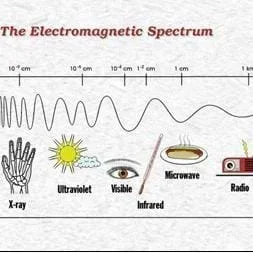 LessonVisible Light and the Electromagnetic SpectrumDuring this lesson, the electromagnetic spectrum is explained and students learn that visible light makes up only a portion of this wide spectrum.…
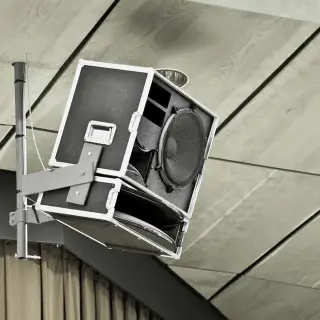 ActivityVideoTraveling SoundStudents explore how sound waves move through liquids, solids and gases in a series of simple sound energy experiments. Understanding the properties…
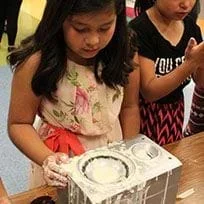 ActivitySound Visualization StationsStudents learn about sound and sound energy as they gather evidence that sound travels in waves. Teams work through five activity stations that…
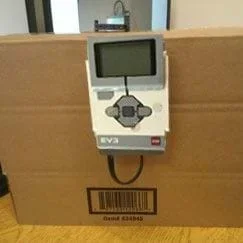 ActivityUltrasound ImagingStudents learn about ultrasound and how it can be used to determine the shapes and contours of unseen objects. Using a one-dimensional ultrasound…
 LessonThe Amazing AerogelAerogel, commonly called "frozen smoke," is a super-material with some amazing properties. In this lesson and its associated activity, students learn…
 LessonVideoEcholocation: Using Sound for SightEcholocation is the ability to orient by transmitting sound and receiving echoes from objects in the environment. As a result of a Marco-Polo type…
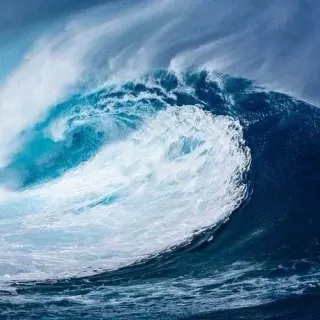 LessonVideoWaves and Wave PropertiesStudents learn about the types of waves and how they change direction, as well as basic wave properties such as wavelength, frequency, amplitude and…
 LessonRiding the Radio WavesStudents learn how AM radios work through basic concepts about waves and magnetic fields. Waves are first introduced by establishing the difference…
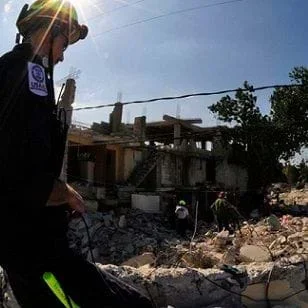 LessonSeismic Waves: How Earthquakes Move Through the EarthStudents learn about the types of seismic waves produced by earthquakes and how they move through the Earth. The dangers of earthquakes are presented…
 ActivityEarthquakes Living Lab: Finding Epicenters & Measuring MagnitudesStudents learn how engineers characterize earthquakes through seismic data. Then, acting as engineers, they use real-world seismograph data and a…
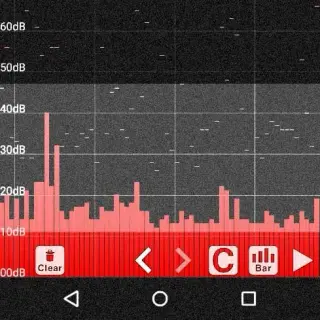 ActivityMonitoring Noise Levels with a Smart DeviceStudents learn the physical properties of sound, how it travels and how noise impacts human health—including the quality of student learning. They…
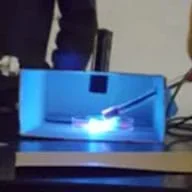 ActivityLab Research to Engineer a Phosphorescent BioplasticStudents gain first-hand experience with the steps of the scientific method as well as the overarching engineering design process as they conduct lab…
 ActivityWhat’s Your Angle? Assessing Wave RefractionsStudents observe wave refraction in different mediums. They trace the path of light waves of a laser entering a medium and exiting the medium. Then…
 ActivityDetecting Flaws With Sound: Exploring Non-Destructive Evaluation (NRE) TechniquesStudents engage in a hands-on exploration of non-destructive evaluation (NDE) through tap testing and sound analysis, using hammers to tap wooden…