Bernoulli's Principle
Bernoulli's Principle allows engineers to make sense of the fluid dynamics phenomenon.
It allows them to safely design the fluid flow in and around airplane wings, engines and medical delivery equipment.
A key concept in fluid dynamics, Bernoulli’s principle relates the pressure of a fluid to its speed. When the speed of a fluid increases, the pressure decreases, and vice versa. Bernoulli's equation can be used to approximate these parameters in water, air or any fluid that has low viscosity. The principle is named after Swiss mathematician and physicist Daniel Bernoulli who first published it in his book Hydrodynamica in 1738.
Derived from the principle of energy conservation, Bernoulli's equation tells us that the sum of the pressure, kinetic and potential energy along a streamline in a fluid flow must remain constant. The equation applies to the case of flow that is steady (not changing), has constant density and is inviscid (where the viscosity of the fluid is close to zero). The Bernoulli equation states that

where P is pressure, ρ is density, v is velocity, z is elevation/height above a reference plane, and g is gravitational acceleration. Understanding how Bernoulli's principle works enables engineers to leverage the nature of fluid pressure so their designs function correctly, efficiently and safely. Engineers make a world of difference!
Engineers use Bernoulli's principle in a wide range of applications in engineering fluid dynamics, from aerospace wing design, designing pipes for hydroelectric plants to designing medical equipment.
Bernoulli's Principle Curricula
Take a plunge into the resources featured here, by grade band, to help your students make sense of the fluid dynamics phenomenon of Bernoulli's Principle!
Coming Soon!
Coming Soon!
 ActivityVideoFun with BernoulliWhile we know air exists around us all the time, we usually do not notice the air pressure. During this activity, students use Bernoulli's principle…
 ActivityVideoWindy TunnelThrough this activity, Bernoulli's principle as it relates to winged flight is demonstrated. Student pairs use computers and an online virtual wind…
 LessonMay the Force Be with You: ThrustStudents study how propellers and jet turbines generate thrust. This lesson focuses on Isaac Newton's third law of motion for every action there is…
 LessonCan You Take the Pressure?Students are introduced to the concept of air pressure and use the associated activity to see how it is affected by different variables. They explore…
 ActivityVideoBuilding Tetrahedral KitesWorking in teams of four, students build tetrahedral kites following specific instructions and using specific materials. They use the basic processes…
 LessonFluid Power BasicsStudents learn about the fundamental concepts important to fluid power, which includes both pneumatic (gas) and hydraulic (liquid) systems. Both…
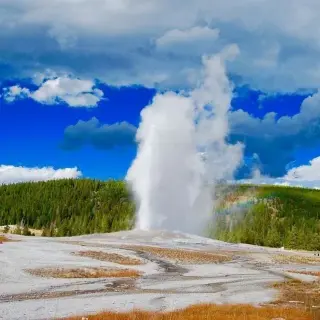 LessonBernoulli's PrincipleBernoulli's principle relates the pressure of a fluid to its elevation and its speed. Bernoulli's equation can be used to approximate these…
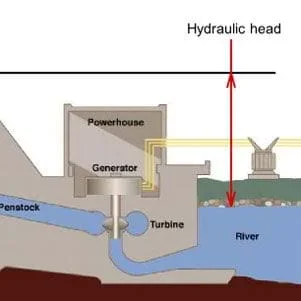 LessonVideoArchimedes' Principle, Pascal's Law and Bernoulli's PrincipleStudents are introduced to Pascal's law, Archimedes' principle and Bernoulli's principle. Fundamental definitions, equations, practice problems and…
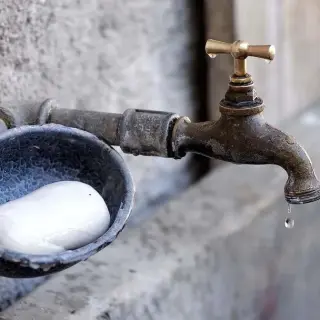 ActivityTippy Tap Plus PipingThe Tippy Tap hand-washing station is an inexpensive and effective device used extensively in the developing world. One shortcoming of the homemade…
 ActivityVideoA Shot Under PressureStudents use their understanding of projectile physics and fluid dynamics to find the water pressure in water guns. By measuring the range of the…